
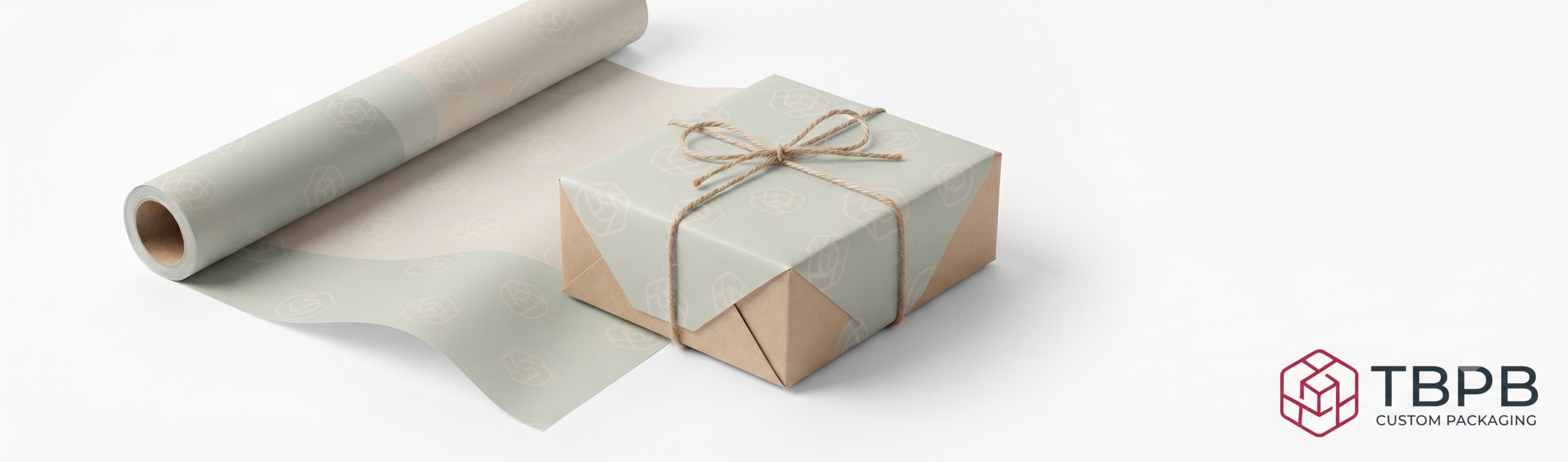


Custom wrapping paper is gift wrap printed with your own logo, pattern or artwork, supplied in sheets or rolls sized to the products you sell. TBPB prints it with no minimum order, and the price-beat guarantee means we will beat a written quote for the same specs.
Who uses printed wrapping paper, and why
Retail boutiques, florists, bakeries, gift shops, bookstores and corporate gifting teams all print their own wrap for the same reason: it turns every purchase into a small billboard that leaves the shop in a customer’s hands. A plain white sheet with a one-color logo repeat looks clean and costs little to print. A full-color seasonal pattern costs more effort, but it gets photographed and shared. Both approaches work, and the right one depends on how your customers actually use the wrap.
Paper weight, finish and what it does to folding
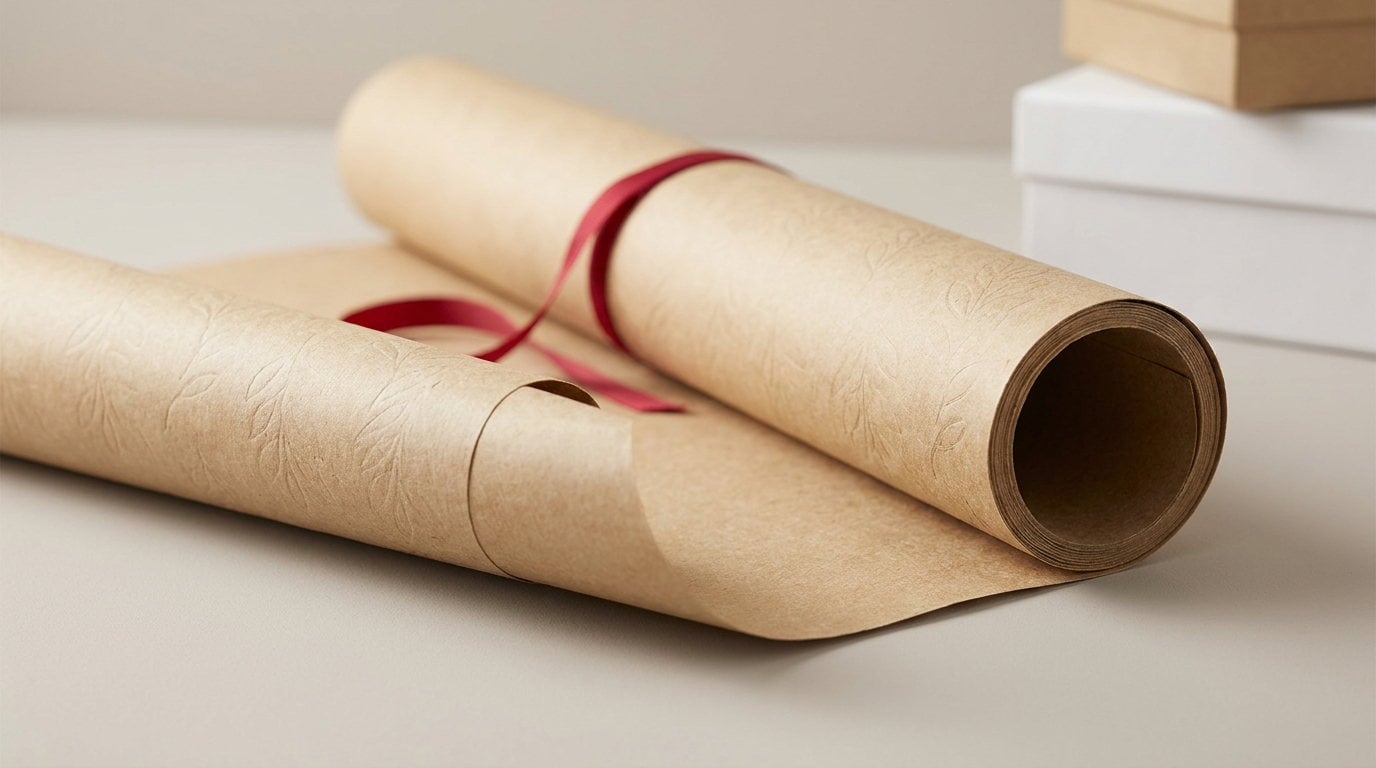
Wrapping paper sits between tissue and cover stock. Thin sheets fold sharply and crinkle at the corners, while heavier sheets hold a crisp edge but resist tight folds around small boxes. If you wrap by hand at a counter, choose a sheet that is forgiving; if customers wrap gifts at home, a slightly sturdier sheet survives being handled and taped. Uncoated kraft gives a natural, earthy look that suits food and craft brands. A coated or glossy finish makes color more vivid but shows creases more.
Printing on dark paper limits color options, so if you want a bright logo on kraft, ask us about the best ink approach before you commit.
Sheet or roll, and how big
Sheets work when you wrap standard items at a counter, like books or small boxes. Rolls make sense for varied item sizes, since you cut to fit. To size a sheet, place your largest typical product on a table, wrap a tape measure around it with some overlap, and use that as the minimum. Add about an extra inch or so for tucking. Under-sizing is the commonest mistake, and staff end up using two sheets for one parcel.
- Printed sheets or rolls in custom sizes
- One-color logo repeats, multi-color patterns or full-bleed designs
- Pantone matching for brand colors
- White or kraft paper options, subject to artwork
- Pairs with tissue, ribbon, belly bands and boxes
Building a full gift presentation
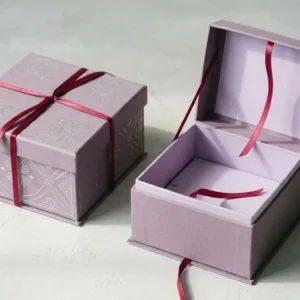
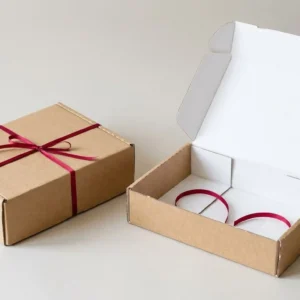
Wrapping paper rarely works alone. Pair it with custom tissue paper inside the box for a layered look, and use a belly band where a full wrap would be too much. For gift sets, our corporate gift boxes are a natural container. If you simply want the box itself to carry the branding, you may not need the paper at all, and we will say so. You can browse the wider custom retail packaging range as well.
If you plan to wrap food, soap or cosmetics directly, be careful. Wrapping paper is not automatically suitable for direct contact, and you are responsible for confirming that with your own regulatory adviser. TBPB prints the artwork you supply and makes no contact-safety claims.
Artwork tips from the print side
A pattern that repeats needs a clean tile, so the edges line up when sheets are cut or the roll runs on. If your logo is the main feature, space it generously. Tightly packed logos can look busy once the paper is folded, and the fold lines cut through them. Large designs get cropped at the edges, which is fine for a pattern but a problem for a name or a slogan, so keep any text away from the trim. Send vector artwork where you can, and flag your brand colors by Pantone reference so the printed result matches your signage and your boxes.
Finally, think about how the paper will be taped. Gloss and some coated stocks resist tape in warm rooms, so mention that if your staff use a lot of it.
Quote requests
Send your sheet size or roll width, your artwork or logo and the quantity you want, even if it is just one sample. TBPB confirms the layout and quotes it.
Frequently asked questions
Is there a minimum order for custom wrapping paper?
No. TBPB has no minimum order for custom wrapping paper. You can order a single sample sheet or roll to check the print, then order more once you are satisfied.
Should I order sheets or rolls?
Sheets suit counter wrapping of standard items. Rolls suit varied sizes since you cut to fit. If your products vary a lot, rolls are more flexible. If they are uniform, sheets are quicker and tidier.
What size sheet do I need?
Wrap a tape measure around your largest typical product with some overlap, then add about an inch for tucking. Under-sizing is the most common mistake, so lean slightly larger.
Can I print on kraft wrapping paper?
Yes, though kraft is darker, so bright colors and light logos need careful ink choices. Send your artwork and we will advise how it will look on kraft versus white paper.
What is the difference between wrapping paper and tissue paper?
Tissue is very thin and goes inside the box. Wrapping paper is heavier, holds a crisper fold and is used on the outside of a gift. Many brands use both for a layered presentation.
Is wrapping paper safe for direct food contact?
Do not assume so. If you want to wrap food, soap or cosmetics directly, confirm suitability with your own regulatory adviser. TBPB prints the artwork you supply and makes no contact-safety claims.
More Custom Retail Packaging
See the full Custom Retail Packaging range, or explore related options with no minimum order and our best-price guarantee: