
A bag that splits does it at the handle or along the bottom fold. Almost nothing else goes wrong. Which means most of what matters about a custom bag is settled before anyone talks about artwork, and it is settled by three choices: the handle, the paper weight, and how the bottom is built.
| Twisted paper handle | Rope-like, glued to a reinforcing patch inside the bag. Carries the most weight of the paper options and is what retail bags for heavier goods use. |
|---|---|
| Flat paper handle | A folded paper tape, also patched. Slightly less load than twisted, sits flatter in storage, and reads as tidier on a small boutique bag. |
| Die-cut handle | A hole punched through the top of the bag itself. Nothing is attached, so nothing can peel off, but the paper tears from the cut under load. Fine for light goods and gift work, wrong for anything with weight. |
| Rope or cotton cord | Knotted through eyelets. The most premium feel and the most durable. Slower to make, so allow for it in the schedule. |
| No handle | Merchandise bags, food service, anything handed across a counter. Removes the commonest failure point entirely. |
Ask for the weight in gsm and specify it against the heaviest thing the bag will ever hold, not the average. A boutique bag carrying a folded garment and a bag carrying two bottles of wine are not the same bag, however similar they look on the shelf. If you are unsure, tell us the product and its weight and we will specify rather than let you guess.
Virgin kraft is the natural brown, and it is the strongest of the paper options for its weight because the fibers have not been through a previous life. Recycled kraft is lighter on resources and gives up some tear strength at the same weight, so it usually needs to be specified a little heavier to do the same job. White kraft is bleached, which brightens the print surface and takes a small amount of strength with it.
The practical version: if the bag is carrying weight, start with virgin kraft. If it is carrying a message, white gives you a cleaner canvas.
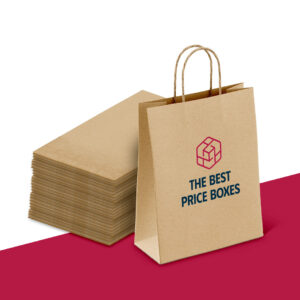
This catches out more first orders than anything else on this page. Printing on natural kraft is printing on a mid-brown ground, so colors come back muted and darker than the proof on screen. Pale blues go gray. Reds go brick. Anything pastel more or less disappears.
There are two honest ways through it. Design for kraft, using one or two strong colors, black, or a white ink that reads crisply against the brown. Or print on white paper if the artwork genuinely needs accurate color. What does not work is sending a full-color photographic design for a brown bag and hoping. Send us the artwork early and we will tell you which of the two you are looking at.
A square or self-opening bottom gives the bag a flat base, so it stands on a counter and holds its shape while it is being packed. That is the format for retail, takeout and grocery. A flat bag with no gusset lies down, stacks tightly and ships in a fraction of the space, which is what you want for anything sold flat, hung, or filled by machine.
Food service adds one more question: grease and moisture attack the bottom fold first, because that is where the glue and the folds meet. Anything hot, oily or damp needs a grease-resistant paper or a liner, and it needs to be raised at the quoting stage rather than after the first batch goes soft.
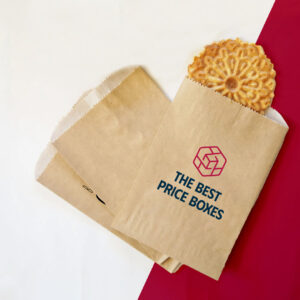
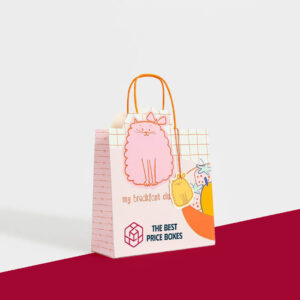
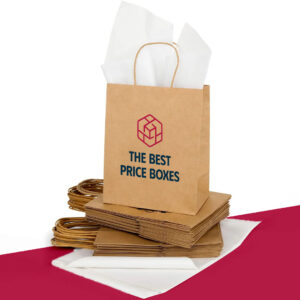
Custom paper bags is the general starting point when you know the size and want your branding on it. Kraft paper bags and kraft bags carry the natural brown look, white paper bags give the cleaner print surface, and brown paper bags cover the volume end. Custom gift bags sit at the presentation end, where the bag is part of the purchase rather than a way to carry it.
T-shirt bags are a different material entirely, and worth knowing about: these are the plastic vest-style carriers used at checkout, chosen for wet goods and volume rather than for looks.
Paper grocery bags and meal packaging bags are built to stand and take weight. Food gable bags, gable bags with an auto bottom and tuck-end gable bags close over the top and carry like a small box, which suits a packed meal or a bakery order better than an open sack.
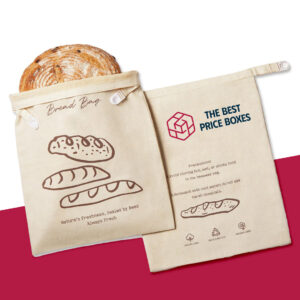
Cookie bags and reusable bread bags handle the counter and the shelf. Tin tie bags close and reopen with a folded metal strip, which is why coffee and granola use them: the customer reseals the bag every time without any packaging of their own.
Zip lock paper bags and window zip lock paper bags combine a paper outside with a resealable closure. The window version shows the product, which matters when the buyer is choosing between three bags on a shelf and cannot open any of them.
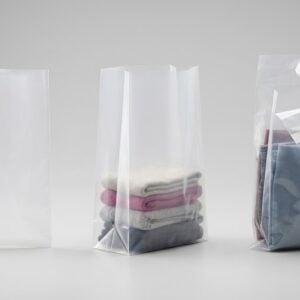
Flat bags are sealed on two or three sides with no gusset. They lie down, stack tightly, use less material per unit and ship in a fraction of the volume. They are the right answer whenever the product is merchandised in a bowl or a basket, hung on a hook, or dropped into a subscription box — anywhere the packaging is not being asked to stand on a shelf and sell itself.
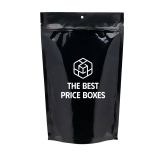
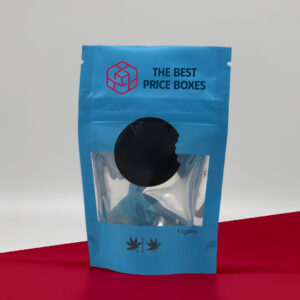
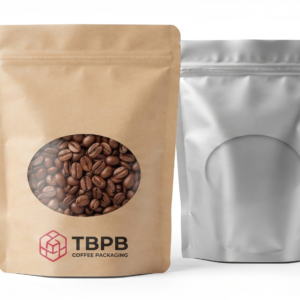
Stand-up pouches add a bottom gusset that opens out so the pack stands unsupported. That uses a little more material and a little more shipping volume, and it buys shelf presence. If your sales channel is a retail shelf, the pouch usually earns the difference back. If it is not, a flat bag does the same job for less.
No minimum order, so testing a size or a seasonal design before committing to volume is a normal order here. Sizes are built around your product rather than picked from a fixed list, design is free, samples are free, and shipping is free. Reorders run from the approved file.
Twisted paper, attached to a reinforcing patch, followed closely by rope or cotton cord. Die-cut handles hold the least, because the load pulls directly against the punched paper with nothing reinforcing it. If your product has real weight, that is the one to avoid.
You can print it, but you will not get the color you designed. The brown ground shifts everything toward it and mutes pale tones badly. For accurate photographic color, use a white or coated paper. For kraft, design in one or two strong colors, black, or white ink, which is where kraft looks its best anyway.
A bag with a square, glued bottom that opens flat when you snap it out, so it stands on its own and holds its shape while you pack it. Grocery sacks and most takeout bags are built this way. The alternative, a flat bag with no gusset, lies down and ships far tighter.
A gusset at the bottom. A flat bag is sealed on its edges and lies flat; a stand-up pouch has a folded base that opens so the pack stands upright. If a shelf is doing your selling, pay for the pouch. If the product is hung, boxed or sold from a basket, a flat bag does the same work with less material.
Specify against the heaviest thing the bag will hold rather than the typical one. Tell us the product and roughly what it weighs and we will put a number on it, which is more reliable than matching a bag you already have and hoping it was specified properly in the first place.
Yes, but it needs saying at the quoting stage. The bottom fold is where grease and moisture get through first, so those bags need a grease-resistant paper or a liner. A standard kraft bag will go soft and mark, whatever weight it is.