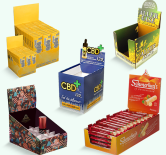

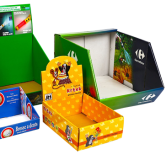
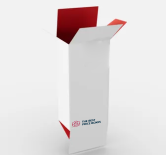
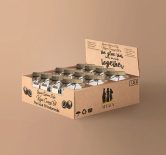
Choose kraft when you want a natural, handmade look and a one-color or simple print; choose white when you need true color, photos or a clean premium surface. The board color changes how your artwork prints far more than it changes how the box performs. TBPB makes both with no minimum order.
Reviewed by the TBPB packaging team, October 2026.
Quick facts
| Item | Answer |
|---|---|
| Minimum order | None. Order one box or thousands |
| Kraft surface | Natural brown paper, colors print darker and muted |
| White surface | Bright base, colors print closest to your file |
| Strength | Set by board thickness and construction, not color |
| How to compare | Quote both with identical size, quantity and print |
How does the color of the board change my printing?
Kraft board is brown, and that brown stays visible under any ink that is not fully opaque. Light colors and delicate tints shift toward tan. Dark inks, such as black, navy and deep green, read well. White board gives printing a bright base, so reds stay red and photos keep their detail.
Practical rule: if your logo is one dark color and the box is a statement of simplicity, kraft looks deliberate. If your brand relies on a bright pastel, a gradient or a product photo, it will look washed out on kraft and you should use white. Special inks, such as white ink on kraft, depend on the process, so ask us to confirm for your spec.
Which one fits my product?
Match the box to the brand story and the product, not to a trend. A candle maker or soap shop often does better with kraft. A skincare line, electronics accessory or gift set that sells on polish usually does better with white.
| Your situation | Better fit |
|---|---|
| Handmade, natural, craft-market brand | Kraft |
| Full-color photo or gradient on the box | White |
| One-color logo, low print coverage | Kraft or white |
| Premium unboxing, bright color branding | White |
| Shipping box that customers will see on the doorstep | Kraft hides scuffs better |
The scuff point is practical, not scientific. Shipping handling marks show up more on white, and a brown box hides a smudge better.
Is kraft really the cheaper or greener choice?
Not by default. Price depends on print coverage, size, board and quantity, so a heavily printed kraft box can cost more than a lightly printed white one. Color alone is not a cost lever. Ask for both quotes on the same specs.
The same goes for environmental claims. Both are paper products. What makes a box greener is the specific board, the recycled content and the printing, so ask for confirmation on your spec before you put a claim on your packaging. We do not make blanket sustainability claims for either color.
What does the choice look like on a real product?
Say you sell hand-poured candles in a box measuring 3 x 3 x 4 inches, with a one-color black logo and your name on the front. On kraft, the black reads strong and the brown base looks warm. On white, the same black logo looks crisp but plainer. Swap the logo for a pale pastel pattern and the answer flips, because kraft dulls it and white lets it show. Test it with one box of each before you commit to a run.
How do I test both before committing?
Order one box in each color with the same artwork, and look at them side by side in the light your customers will see them in: a shop shelf, a doorstep, a desk. Screens lie about kraft especially, because a monitor cannot show how brown paper absorbs ink.
- Pick your real artwork, not a placeholder.
- Request the same size and print coverage in kraft and white.
- Check dark text, light text and any color fill on each.
- Pick the one that makes your product look like what it is.
It costs little because there is no minimum, and it saves you from reordering a thousand boxes in the wrong color.
What should I not do?
Do not choose by assuming kraft is stronger or weaker. A thin kraft carton fails the same way a thin white one does. If your product ships by itself, look at mailer boxes, or our kraft mailer boxes for the natural look. For small light items, kraft pillow boxes are a common pick. For shelf products, see custom retail boxes. If you are weighing a bag instead of a box, our post on custom boxes versus poly mailers helps. The pillow box guide covers the small-item format.
Questions buyers ask
How to order
Send the dimensions and quantity through the quote form and ask for kraft and white on the same spec, even if you only need one box of each. We return a dieline and a price for both. Bring a written quote from another supplier and the price-beat guarantee applies. Free design help, free samples and free shipping are included. For how pricing works, read how much custom boxes cost.
Is kraft cheaper than white?
Often a little, but not always. Print coverage, size, board and quantity usually move the price more than the color of the board. Ask for a quote on both with the same specs and compare them line by line.
Which looks better when printed, kraft or white?
White shows colors as designed, so full-color artwork and photos look best on it. Kraft mutes color because the brown base shows through, which suits a one-color logo and a natural brand look. Ask us for a sample of your artwork on each.
Is kraft more eco-friendly than white?
Not automatically. Both are paper-based and can be recycled where paper recycling exists. Claims about recycled content or certifications depend on the specific board, so ask us to confirm for your spec instead of assuming.
Is kraft stronger than white?
Color does not decide strength. Board thickness, construction and flute type do. Compare the actual board spec on each quote instead of picking by color.
Is there a minimum order for kraft or white boxes?
No. Order one box or ten thousand, in either color. Ordering one of each is a cheap way to compare how your artwork looks on both.
How do I get a quote for kraft and white?
Send the same dimensions, quantity and print coverage for both through the quote form. We send back a dieline and price for each so you can compare side by side.