





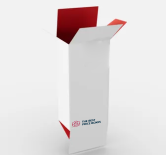
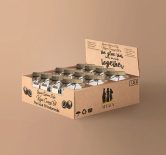
Yes, The Best Price Boxes makes custom apparel boxes with no minimum order, and we will beat any written quote you already have. Apparel packaging is sized from the folded garment in its heaviest fabric weight, never from the flat measurement and never from a competitor’s box. Get the depth wrong and you pay for it on every parcel forever, because carriers bill clothing on dimensions rather than on the scale.
Custom apparel box specs
| Spec | What you get |
|---|---|
| Minimum order | None. Box a capsule drop or a full season. |
| Constructions | Roll end tuck top mailer, two piece lid and base, rigid magnetic box, folding carton with a window, garment box with a deep base. |
| Board | E flute corrugated for mailers, B flute for heavier or longer journeys, greyboard wrapped in printed paper for rigid, SBS for retail cartons. |
| Common footprints | Around 10 by 8, 12 by 9, 14 by 10 and 16 by 12 inches, with depth set by garment weight and count. |
| Printing | Full color CMYK, Pantone spot colors, white ink on kraft, foil. Interior printing available. |
| Closures | Tuck flap, tear strip for easy opening, second adhesive strip for returns, magnetic lid on rigid builds. |
| Extras | Printed tissue, belly bands, stickers, thank you cards, ribbon pulls, garment bags. |
| Design | Free. Die lines, mockups and revisions included. |
| Samples | Free. |
| Shipping | Free. |
Size from the fold, in the heaviest fabric you sell
The same garment folded from a light jersey and from a heavyweight fleece are different products as far as the box is concerned. A 4 ounce tee and a 7 ounce tee can differ by half an inch in folded thickness, and a knitted hoodie folds to roughly double the depth of a woven shirt.
So fold the garment as it will actually ship, in your heaviest weight, and measure that. Then check the same box against the lightest, because a box sized to the heaviest will leave the lightest rattling, and movement is what creases a garment in transit.
| Garment | Typical interior footprint | Typical depth |
|---|---|---|
| One folded tee or light top | Around 10 by 8 inches | 1.5 to 2 inches |
| Two pieces, or a piece plus an insert card | Around 12 by 9 inches | 2.5 to 3 inches |
| Hoodie, sweatshirt or knitwear | Around 14 by 10 inches | Around 4 inches |
| Denim or heavy trousers | Around 14 by 10 inches | 3 to 4 inches |
| Dress or outerwear | Around 16 by 12 inches | 4 inches and up |
| Multi piece set or gift bundle | Around 16 by 12 inches | 4 inches and up |
Send us the folded garment and we build the die line to the real thing, which costs nothing and removes the guesswork entirely.
Depth is where the margin goes
Carriers bill on whichever is greater, actual weight or dimensional weight, and dimensional weight for domestic parcels is commonly length multiplied by width multiplied by height in inches divided by 139. Clothing is light for its bulk, so almost every apparel parcel is billed on dimensions.
A 14 by 10 by 4 inch box is 560 cubic inches, about 4 billable pounds. The same footprint at 3 inches is 420 cubic inches, about 3 billable pounds. One inch of depth, one pound of billable weight, on every order you ever ship in that box.
This is why apparel brands should design the box before they standardize the fold, not after. A slightly tighter fold that removes half an inch of depth pays for itself indefinitely.
Retail and direct to consumer are different problems
For retail, the box is a shelf object. It needs a clean front face, a size and variant identification a store can read quickly, and often a window so the fabric and color are visible. A two piece lid and base or a printed folding carton is the usual answer.
For direct to consumer, the box is a courier survivor and a brand moment. A roll end tuck top corrugated mailer does both, because it protects the garment, needs no tape, and gives you a large flat printable lid. It is the right default for almost every apparel brand shipping to customers.
For premium drops and collaborations, a rigid box inside a plain corrugated shipper is the format. Rigid is kept, and a kept box carries the brand for months.
Returns, which apparel has more of than anyone
Clothing has the highest return rate of any ecommerce category, so packaging that supports a return is worth more here than anywhere else.
Specify a tear strip for opening and a second adhesive strip for resealing. The customer opens cleanly, and if the fit is wrong they reseal the same box rather than hunting for tape or a second carton. That removes support contacts, removes a box from the waste stream, and makes the return feel like part of the service rather than a punishment.
It costs very little and it is one of the few packaging decisions that improves cost, experience and waste at the same time.
Print the interior
The outside of a mailer is scuffed by the courier network and seen for a few seconds on a doorstep. The interior arrives clean, is seen at the moment of opening, and is what gets photographed. Interior print costs a fraction of the tissue, stickers and cards most brands put inside the box, and unlike those it cannot fall out or be thrown away separately.
If the budget covers one printed surface, print the inside of the lid.
Kraft or white
Kraft costs less, hides handling marks and suits basics, workwear and sustainability led brands. Ink over brown loses light tones, so a pastel palette needs a white underbase or a white liner. White liner corrugated gives accurate photographic color at a higher price. A kraft exterior with a one color logo and a fully printed white interior is the compromise that works for the most brands.
What an apparel box is not right for
It is not the cheapest way to post a single low margin basic. A poly mailer beats a box on cost and on dimensional weight, and for a staple tee that is the honest recommendation. A printed box earns its place when the unboxing is part of the purchase, when the garment must arrive uncreased, or when the parcel is a gift.
It is also not right for hanging garments and tailoring, which need a deeper garment box or a different format entirely.
Related packaging
See t-shirt boxes for tee specific sizing, mailer boxes for the ecommerce format, rigid boxes for premium drops, and ecommerce boxes for right sizing across a whole range.
Frequently asked questions
Do you have a minimum order for apparel boxes?
No. There is no minimum, which is the point in fashion, because collections drop in small quantities and nobody wants a pallet of packaging for a capsule of fifty pieces.
How do I size a box for a hoodie?
Fold it as it will ship, in your heaviest fabric weight, and measure that. Most hoodies land near a 14 by 10 inch footprint with about 4 inches of depth. Knitwear folds thicker than woven fabric of the same weight, so measure the real garment.
Box or poly mailer?
Poly mailer for single low margin basics, where cost and dimensional weight dominate. Box when the garment must arrive uncreased, when the unboxing is part of the product, or when the parcel is a gift. Many brands run both and choose by order value.
How much does an extra inch of depth cost me?
On a 14 by 10 inch footprint, roughly a pound of billable weight per parcel, on every order, for as long as you use that box. It is usually a larger number than any difference in the price of the packaging itself.
Can customers reuse the box for returns?
Yes, with a second adhesive strip. The customer opens with the tear strip and reseals with the second strip. In apparel, where returns are common, it is one of the highest value details you can specify.
Can you beat a quote I already have?
Yes. Send the written quote with the specification and we will beat it on a like for like build. We will also model the dimensional weight of the size quoted, because on apparel that number usually matters more than the price of the box.
Get a quote for custom apparel boxes
Tell us the garments, the heaviest fabric weight you sell, how many pieces go in one box, and whether it ships to customers or into retail. Send us a folded sample if you can. Design, samples and shipping are free, there is no minimum order, and we will tell you honestly when a poly mailer would serve part of your range better.
No-minimum packaging by product
Same promise across every product line: no minimum order, a free quote, and we will work to beat your current price.
- Custom Boxes With No Minimum Order
- Mailer Boxes With No Minimum Order
- Mylar Bags With No Minimum Order
- Food Boxes With No Minimum Order
- Rigid Boxes With No Minimum Order
- Kraft Boxes With No Minimum Order
- Soap Boxes With No Minimum Order
- Candle Boxes With No Minimum Order
- Gift Boxes With No Minimum Order
- Coffee Boxes With No Minimum Order
- Cosmetic Boxes With No Minimum Order
- CBD Boxes With No Minimum Order
- Display Boxes With No Minimum Order
- Candy Boxes With No Minimum Order
- Subscription Boxes With No Minimum Order
- Cake & Bakery Boxes With No Minimum Order
- Stand-Up Pouches With No Minimum Order
- Jewelry Boxes With No Minimum Order
- Supplement Boxes With No Minimum Order
- Vape Boxes With No Minimum Order