





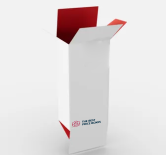
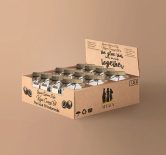
Yes, The Best Price Boxes makes custom t-shirt boxes with no minimum order, and we will beat any written quote you already have. A t-shirt box is sized around the folded garment rather than the flat one, so the number that matters is the fold. A retail folded adult tee sits at roughly 12 by 8 inches and about an inch thick, which is why so many apparel boxes cluster around a 12 by 9 footprint with the depth changing to match the piece count.
Custom t-shirt box specs
| Spec | What you get |
|---|---|
| Minimum order | None. Box a single capsule drop or a full season. |
| Constructions | Corrugated mailer box, two piece lid and base, rigid magnetic closure box, or a folding carton with a window. |
| Board | E flute corrugated for mailers, B flute where the parcel takes a beating, greyboard wrapped in printed paper for rigid. |
| Common footprints | Around 10 by 8, 12 by 9, 14 by 10 and 16 by 12 inches, with depth set by how many garments go in. |
| Printing | Full color CMYK, Pantone spot colors, white ink on kraft, foil. Inside printing is available and is the cheapest way to make an unboxing feel considered. |
| Finishes | Matte or gloss lamination, soft touch, spot UV, embossing, debossing, foil stamping. |
| Closures | Tuck flap, double sided tape strip, tear strip for easy opening, magnetic lid on rigid builds. |
| Extras | Printed tissue, belly bands, stickers, thank you cards, ribbon pulls. |
| Ships flat | Mailers and folding cartons ship flat. Rigid boxes ship assembled unless built as a collapsible rigid. |
| Design | Free. Dielines, mockups and revisions included. |
| Samples | Free. |
| Shipping | Free. |
Start with the fold, not the shirt
Apparel brands get box sizing wrong in one direction almost every time. They measure the garment flat, or they copy a size from a competitor, and the box arrives either loose enough that the tee slides and creases or tight enough that packing takes twice as long.
The right method is to fold the garment exactly the way it will ship, in the heaviest fabric weight you sell, then measure that. A standard retail fold on an adult tee lands close to 12 by 8 inches. A heavyweight tee folds thicker than a light one, so a box that works for a 4 ounce tee can be too shallow for a 7 ounce one. Hoodies are a different problem entirely and usually need double the depth of a tee.
| What goes in | Typical interior footprint | Typical depth |
|---|---|---|
| One folded tee | Around 10 by 8 inches | Roughly 1.5 to 2 inches |
| Two tees, or a tee plus an insert card | Around 12 by 9 inches | Roughly 2.5 to 3 inches |
| Three or four tees | Around 12 by 9 inches | Roughly 4 inches |
| One hoodie or sweatshirt | Around 14 by 10 inches | Roughly 4 inches |
| A multi piece set or a gift bundle | Around 16 by 12 inches | 4 inches and up |
Treat those as starting points, not answers. Send us the folded garment and we will build the dieline around the real thing, which is free and removes the guesswork completely.
Depth is the number that costs you money
Footprint is mostly a design decision. Depth is a shipping cost decision, and it is where apparel brands quietly lose margin.
Parcel carriers bill on whichever is greater, actual weight or dimensional weight. Dimensional weight for domestic parcels is commonly calculated as length multiplied by width multiplied by height in inches, divided by 139. A t-shirt weighs very little, so almost every apparel parcel is billed on dimensions rather than on the scale. That means every extra inch of unnecessary depth is charged on every order you ship, forever.
Work the example. A 12 by 9 by 4 inch box gives 432 cubic inches, which divides to about 3.1 billable pounds. Take the same box down to 12 by 9 by 2.5 inches and you get 270 cubic inches, about 1.9 billable pounds. Same garment, same footprint, more than a pound of billable weight removed on every single parcel. Getting depth right is the highest return decision in apparel packaging and it costs nothing to get right at the design stage.
Which construction fits which brand
| Construction | How it behaves | Best for |
|---|---|---|
| Corrugated mailer box | One piece, tuck front, ships flat, goes in the post on its own | Direct to consumer apparel, the default choice for most brands |
| Two piece lid and base | Lid lifts off a separate base, more presentation, needs an outer for posting | Retail, in store pickup, premium drops |
| Rigid magnetic box | Heavy greyboard wrapped in printed paper, magnetic lid, keepable | Luxury, limited runs, collaborations, gifting |
| Folding carton with window | Light paperboard, shows the garment through a die cut window | Shelf retail, multipack basics, gift sets |
If you ship direct to customers, start with the corrugated mailer. It is the only one of the four that both protects the garment in transit and carries your print on the outside, which means the customer sees your brand before they see the courier’s box. Everything else needs a second box around it.
Print on kraft or on white
Kraft mailers cost less and read as natural, which suits basics, workwear and sustainability led brands. The catch is color. Ink on kraft sits over a brown base, so light tones go muddy and pastels effectively disappear. If your logo is a single dark color, kraft is perfect. If your brand palette matters, either print white ink first as an underbase or specify a white outer liner.
White liner corrugated gives you accurate color and photographic print, at a higher cost per unit. A good middle path many brands use is a kraft exterior with a one color logo and a fully printed interior, so the outside stays cheap and understated and the moment of opening carries the design.
Inside printing, and why it is worth it
Interior print is the least expensive upgrade in apparel packaging. The exterior of a mailer gets scuffed by the courier network and is seen for a few seconds. The interior is seen at the exact moment the customer is most receptive, in clean condition, often photographed. A printed interior costs a fraction of what most brands spend on the tissue and stickers that go inside it, and it cannot fall out or be thrown away separately.
What a t-shirt box is not the right answer for
It is not the cheapest way to post a single basic tee. A poly mailer beats a box on both cost and dimensional weight, and for a low margin staple that is the honest recommendation. A printed box earns its place when the unboxing is part of what the customer is paying for, or when the garment must arrive uncreased, or when the parcel is a gift.
It is also not the right structure for hanging garments, tailoring or anything that must not fold. Those need a garment box with a deeper section or a completely different format.
Related packaging
Apparel brands usually order more than one format. See apparel boxes for the wider clothing range, shipping boxes for outer cartons and wholesale, rigid gift boxes for premium drops, and our shipping box size guide if you are working out dimensions across a whole product range.
Frequently asked questions
What size box do I need for a t-shirt?
Fold the tee the way you will ship it and measure that, in your heaviest fabric weight. Most single tee boxes land near 10 by 8 inches with 1.5 to 2 inches of depth. Two tees usually want a 12 by 9 footprint with about 3 inches of depth. Send us the folded garment and we will size it exactly.
Do you have a minimum order for t-shirt boxes?
No. There is no minimum, which is the point for apparel, because collections drop in small quantities and nobody wants a pallet of packaging for a capsule of fifty pieces.
Should I use a box or a poly mailer?
A poly mailer is cheaper and lighter for a single basic tee. A box is the right call when the garment must arrive uncreased, when the unboxing is part of the product experience, or when the parcel is a gift. Many brands run both and choose by order value.
Can I print the inside of the box?
Yes, and for apparel it is usually the single best value upgrade available. The interior is what the customer sees at the moment of opening, in clean condition, and it is what gets photographed.
Will a kraft box print my brand colors accurately?
Not without help. Kraft is a brown base, so light and pastel tones lose their strength. For accurate color on kraft we print a white underbase first, or you can specify a white outer liner instead.
Can the box go in the post on its own?
A corrugated mailer box can, and that is what most direct to consumer apparel brands use. A rigid box or a two piece lid and base needs an outer carton around it, because the wrapped paper surface scuffs badly in the courier network.
Can you beat a quote I already have?
Yes. Send the written quote with the specification and we will beat it on a like for like build. We will also tell you if the depth you have been quoted is costing you more in dimensional weight than the box itself.
Get a quote for custom t-shirt boxes
Tell us the garment, the fabric weight, how many pieces go in one box, and whether it ships direct to customers or into retail. Send us a folded sample if you can. Design, samples and shipping are free, there is no minimum order, and we will tell you if a poly mailer would serve you better for part of your range.