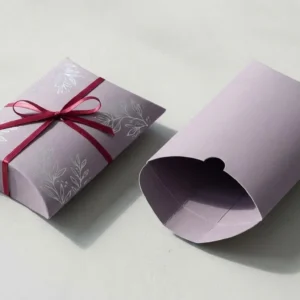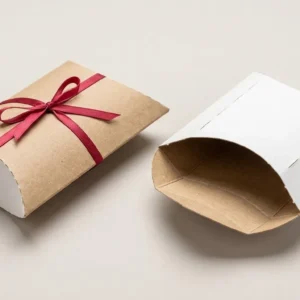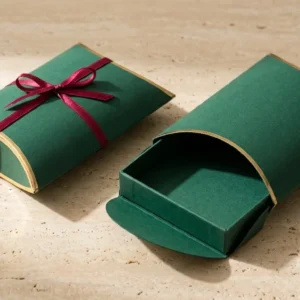

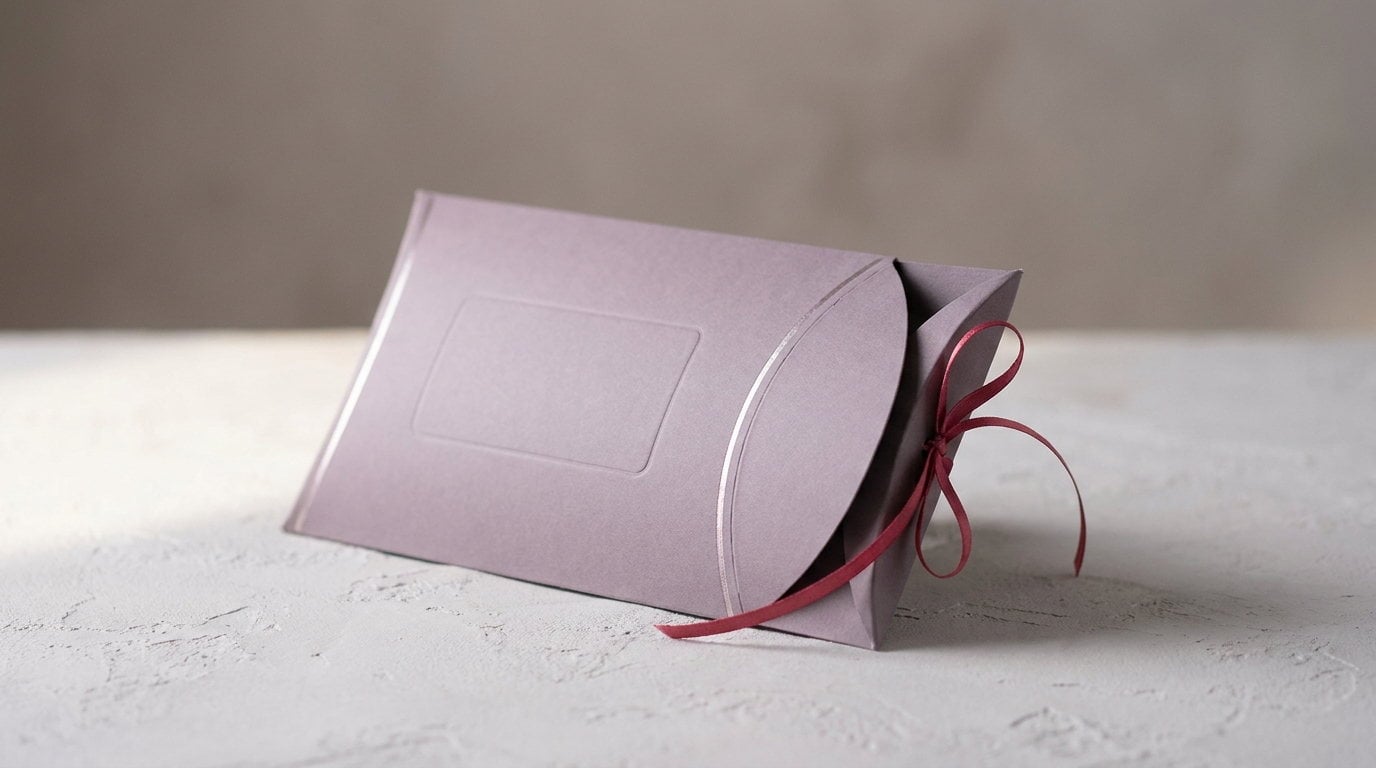


A custom pillow box is a curved, single-piece paperboard carton for small and lightweight products, and TBPB makes it with no minimum order. If you have a written quote for the same specs elsewhere, our price-beat guarantee means we beat it.
How a pillow box is built
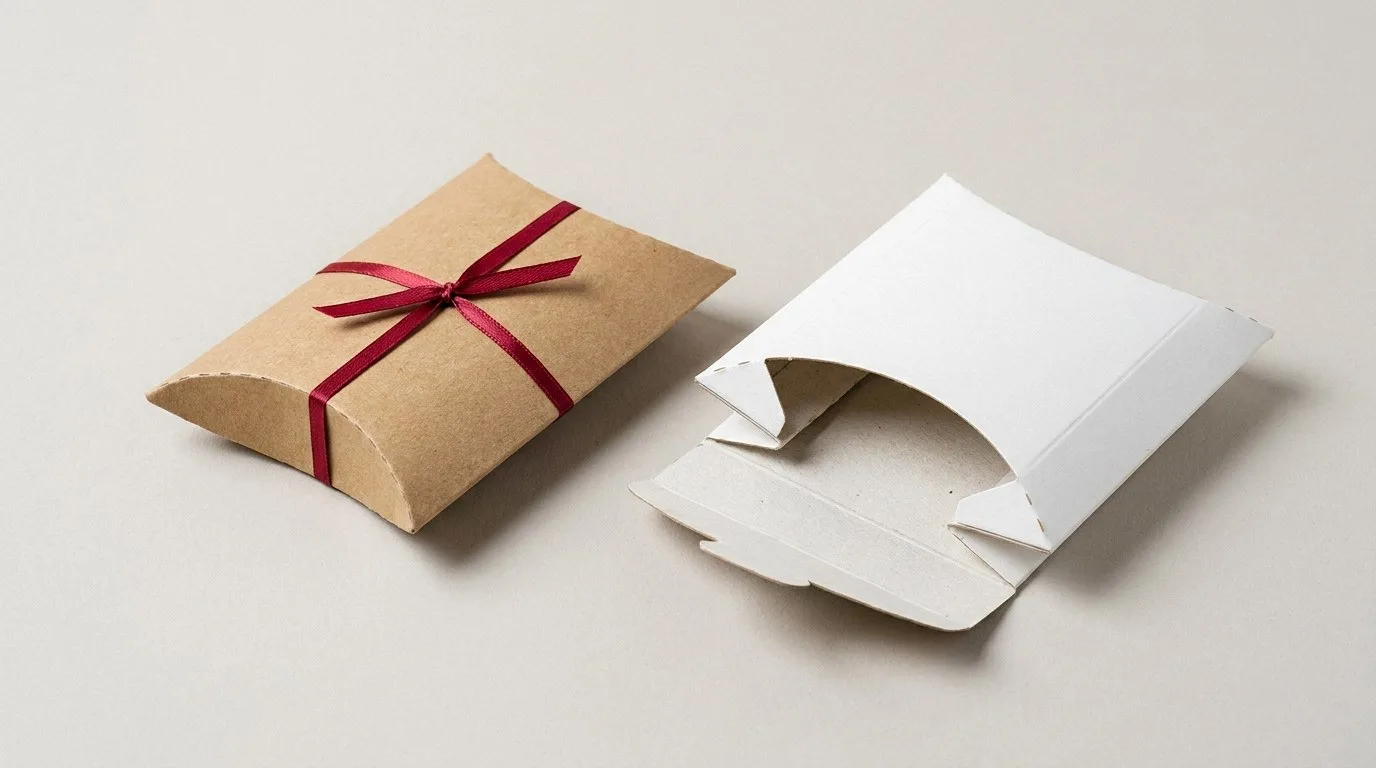
The box is cut from one flat sheet. Score lines run across the middle of the sheet so the long panels curve inward when you press the ends, and the ends fold and lock into each other. There is no glue on the closing end and no tape, which is why the box packs fast and ships flat. The curve is the structure. It is also the limit. Pillow boxes are good for light things and uncomfortable with heavy ones, because the curved wall flexes under weight and the locks loosen.
What fits and what does not
Good fits include earrings and necklaces on cards, bracelets, scarves, lip balm, soap bars, gift cards, tea sachets, candles in small sizes and other items that weigh little and do not have sharp edges. Poor fits include heavy glass, anything with corners that can poke through the curve, and items that need to stand upright on a shelf. For those, a straight-sided carton like a tuck top box gives better support. If the contents are edible, use a wrapper or bag first and check contact requirements with your own regulatory adviser. We print the artwork you supply.
Sizing a pillow box correctly
Measure the item in three directions, then think about the curve. A flat item like a scarf or card lies comfortably in a pillow box. A boxy item loses corner space to the curve. Add about 1/8 inch of clearance on the sides, and give the length a little extra so the lock closes without strain. If you can, send us the item or a photo with a ruler and we confirm the dimensions on the dieline before printing.
Board, print and finishing
Pillow boxes are usually printed on SBS paperboard in a 14 to 20 pt range, with a 350 gsm class sheet giving a smooth surface for sharp print. Kraft board gives a natural look, and a white interior works well for jewelry. Print options include CMYK, Pantone, matte or gloss aqueous coating, soft-touch lamination, spot UV and foil stamping. Foil on the logo reads well on a curved panel, though very fine foil lines can lose detail near the curve.
- Style: curved pillow carton, ends lock
- Board: SBS paperboard, kraft available
- Options: clear window, custom shape, inside print
- Finishes: CMYK, Pantone, matte or gloss, soft-touch, spot UV, foil
- Quantity: no minimum order
Related pillow box styles
If you want the item visible, our window pillow boxes add a clear cut-out. For a natural look, kraft pillow boxes are the logical choice. If your product is clothing or accessories, apparel pillow boxes are sized for that kind of fit. Treat packaging is covered by our pillow candy boxes, and all variants live in the custom pillow boxes category.
Testing before you scale
A pillow box can look right in a flat artwork proof and still behave differently once it is curved. The logo can land on the curve in a way that looks off-centre, and small type can wrap around the edge. With no minimum order, order one finished box, close it around your product, and look at it from the angle a customer will. If the front panel logo sits too close to the lock, move it. A short test saves a lot of reprinting.
Send your item dimensions and quantity, even if it is one, and TBPB will draw the dieline and quote it.
Frequently asked questions
Is there a minimum order for pillow boxes?
No. TBPB has no minimum order on pillow boxes. You can order one to check the fit, a few hundred for a shop, or many thousands for a retail program. The dieline is approved before printing, whatever the quantity.
How much weight can a pillow box hold?
Pillow boxes suit light items. The curved walls flex under weight and the locking ends can loosen if the contents are heavy. For anything dense, a straight-sided carton with a stiffer board is safer. Tell us what you are packing and we recommend a style.
Do pillow boxes need glue or tape?
No. The box ships flat, and the ends lock together when you press them, so there is no glue or tape in normal use. Some brands add a sticker or ribbon across the closure for a gifted look, but the box closes on its own.
Can I print the inside of the box?
Yes. Interior print is possible and works well for patterns, thank-you messages or care instructions. Mention it when you request the quote so the artwork and dieline include the inside surfaces, and so the setup is priced correctly.
What is a pillow box commonly used for?
Common uses include jewelry, accessories, scarves, gift cards, soap bars, lip balm and small favors. The shape suits flat or low-profile items that weigh little. If you sell heavier goods, a tuck top or a lid and base carton usually does the job better.
How do I size a pillow box?
Measure the item length, width and height, then allow about 1/8 inch per side, with a little extra length so the ends lock without bowing. Send us the item or a clear photo with a ruler and we confirm the final size on the dieline.
More Custom Pillow Boxes
See the full Custom Pillow Boxes range, or explore related options with no minimum order and our best-price guarantee: