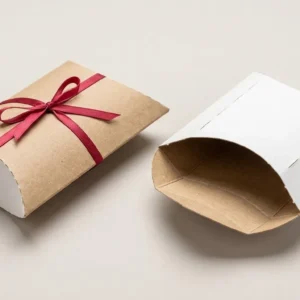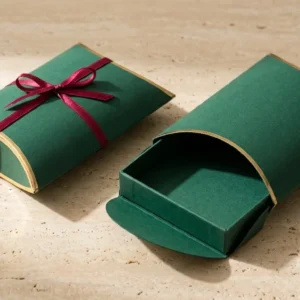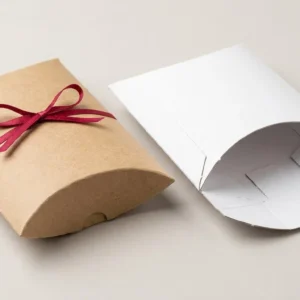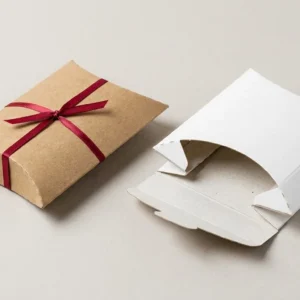

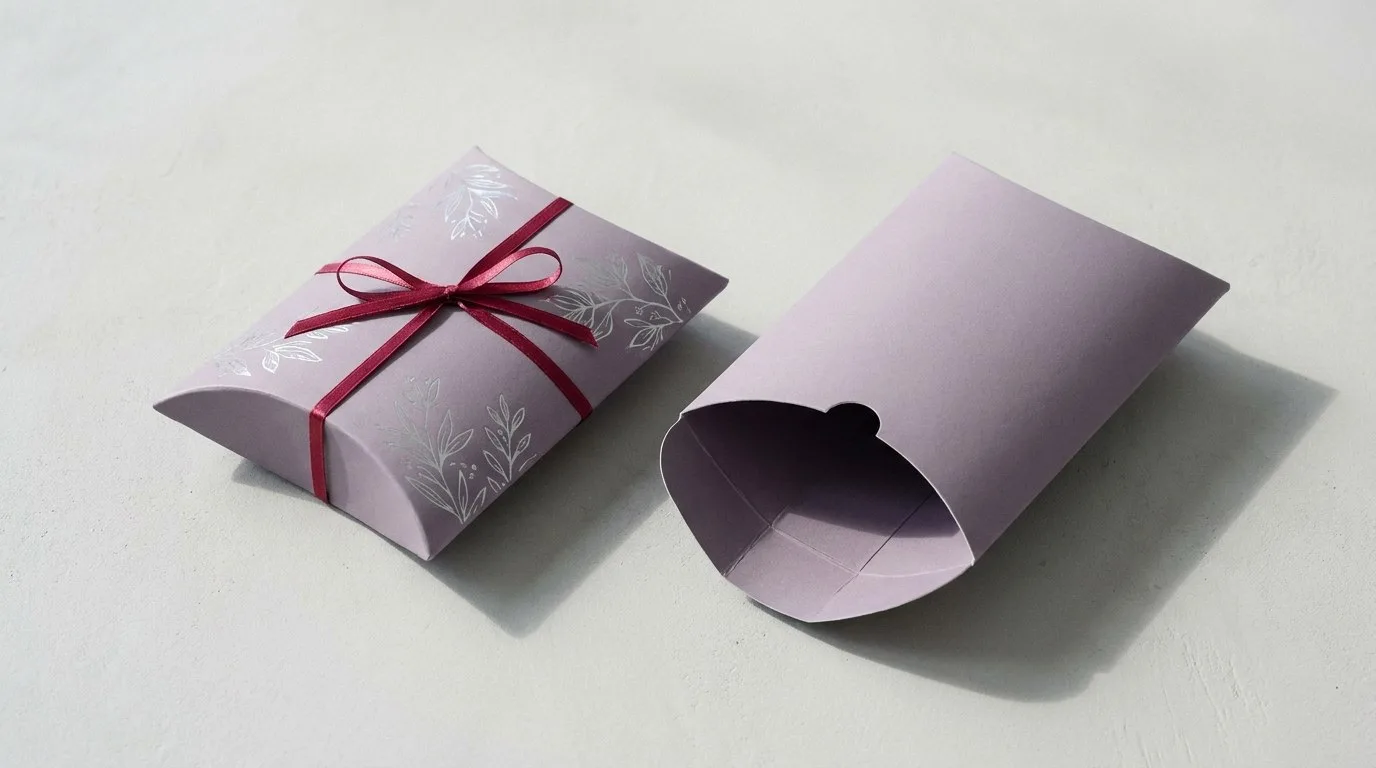


An apparel pillow box is a light paperboard carton with curved, gently pinched ends, used for folded socks, scarves, ties, gloves, baby clothing and similar soft goods. TBPB makes them custom with no minimum order, and we will beat a written quote for the same specs.
How a pillow box is built, and what that means for clothing
A pillow box is a single sheet of board with a glued side seam and two curved end flaps that tuck together. It ships flat and pops open into a rounded, cushion-like shape. Because the ends curve inward, the usable space is less than the outside dimensions suggest, and the box cannot take hard corners or bulky contents. That is fine for a rolled scarf or a pair of folded socks. It is the wrong shape for a thick sweater.
Sizing for folded garments
Fold or roll the garment exactly as you want the customer to receive it, then measure its length, width and thickness while lightly pressed. The thickness is what catches people out, since soft goods spring open and the curved ends squeeze them. Add about 1/8 inch per side, and leave a bit more depth for fluffy materials like wool. Tissue paper adds bulk too, so include it in your test. If you can send a folded sample, we will draw the dieline around the real item.
- Typical contents: socks, ties, scarves, gloves, handkerchiefs, baby clothes, hosiery
- Board: lightweight folding carton or kraft, usually 14 to 20 pt
- Print: CMYK or Pantone, full coverage or a single-colour logo
- Finishes: matte or gloss coating, spot UV, foil stamping
- Options: window patch, hang hole, custom length and depth
Printing for clothing brands
Apparel is visual, so the box has to say something quickly. Many labels print a bold pattern or colour field, with a small logo and the size or style on an end panel. Because a pillow box curves, avoid putting critical text on the bends, where it will distort. A matte finish gives a modern, quiet look. Kraft board suits natural fibres like cotton and wool, while a bright coated white sheet suits colourful kids’ wear.
Packing and presentation details
How you pack the garment changes how the box looks. A single sheet of tissue folded around a scarf stops the fabric rubbing against the print and gives a tidy reveal. For socks, a paper belly band inside the box keeps pairs together. If you sell sets, say three pairs, size one longer box rather than three small ones; a longer pillow box also looks less like an afterthought on the shelf. Keep the seam side in mind during design, because the glued seam sits on the back and your logo should face the other way.
When a different box is the better choice
A pillow box protects softly and opens easily, but it is not built for shipping. If these go in the post, put them inside a mailer, and our mailer boxes are made for that. To show the fabric, a window pillow box adds a clear patch. For flat folded shirts or heavier items, a tuck top box gives a sturdier, squared shape. The full pillow box range shows every variation.
Next step: send the folded size of your garment and the quantity, even if it is one box, and we will draw the dieline and quote it.
Frequently asked questions
What can I pack in an apparel pillow box?
Small, soft, foldable goods: socks, ties, scarves, gloves, handkerchiefs, hosiery and baby clothes. The curved ends limit the depth, so bulky items like thick sweaters will not fit well. Tell us the folded size and we confirm the fit before anything is printed.
How do I measure for a pillow box?
Fold or roll the garment as the customer will receive it, then measure length, width and thickness. Soft goods spring open, so measure with light pressure and include tissue if you use it. Add about 1/8 inch per side. A folded sample from you is the best reference.
Is there a minimum order for pillow boxes?
No. There is no minimum order. You can order one pillow box to test the fit with your garment, or thousands for a retail line. Starting with a single sample is useful because soft goods can behave differently from what you measure.
Can pillow boxes ship through the mail?
They are light cartons for display and gifting, not shipping protection. If you mail them, put the pillow box inside a mailer or poly bag so the curved ends do not crush. We can quote a matching mailer box alongside.
Can I add a window to show the garment?
Yes. A window patch lets customers see the fabric or pattern. The clear film makes recycling less simple, so some brands skip it and print a photo of the product instead. Tell us the window size and position you want.
Which board is best for apparel pillow boxes?
Light folding carton in the 14 to 20 pt range is usual, in coated white for bright colour or kraft for a natural look. Keep it light, since pillow boxes are cushion-shaped and not designed for heavy loads or hard stacking.
More Custom Pillow Boxes
See the full Custom Pillow Boxes range, or explore related options with no minimum order and our best-price guarantee: