







Yes, The Best Price Boxes makes custom shipping boxes with no minimum order, and we will beat any written quote you already have. A shipping box is specified by three numbers, not one. The interior dimensions decide whether the product fits and what the carrier bills you. The board grade decides whether the box survives. The flute decides how it behaves under a stack. Get those three right and almost every other decision follows.
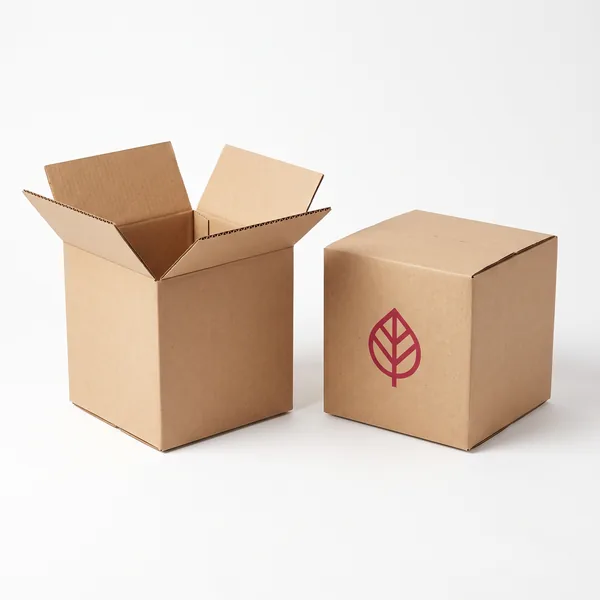
Custom shipping box specs
| Spec | What you get |
|---|---|
| Minimum order | None. Order one box to test the fit and the drop, then scale. |
| Standard style | Regular slotted container, the RSC. All four flaps the same depth, outer flaps meeting at the center. |
| Other styles | Full overlap, half slotted, one piece folder, five panel folder, die cut mailer. |
| Board | Single wall and double wall corrugated. C flute for general shipping, B flute for stiffer walls, E flute for print quality, double wall for heavy or stacked loads. |
| Common grades | 32 ECT single wall for general goods, 44 ECT double wall for heavy or long transit. Burst test grades available where a customer specifies them. |
| Sizes | Any interior dimension. We build the die line around the product, which is where the shipping savings come from. |
| Printing | One or two color flexo for economy, full color litho laminated or digital for retail quality exteriors and interiors. |
| Interior print | Available, and the cheapest way to make a plain outer box feel considered when it is opened. |
| Ships flat | Yes. Shipping boxes ship and store flat and are taped or glued at packing. |
| Certificate | Box maker’s certificate printed on the bottom flap where required. |
| Design | Free. Die lines, mockups and revisions included. |
| Samples | Free. |
| Shipping | Free. |
How to measure a shipping box, correctly
Shipping boxes are always quoted in interior dimensions, in the order length by width by depth. Length is the longer of the two dimensions of the open face. Width is the shorter one. Depth is the distance from the open face down to the bottom.
Two errors cause most of the reorders we see. The first is quoting exterior dimensions, which on double wall board can be close to half an inch larger per axis than the interior. The second is measuring a product without allowing for the void fill it needs. A fragile item wants roughly two inches of cushioning on every side, so a 6 inch product needs a 10 inch interior, not a 6 inch one.
ECT and burst test, and which one you actually need
This is the part of corrugated specification most buyers are quoted on and few are told the meaning of. There are two different tests, they measure different things, and they are not interchangeable.
The bursting test, often called the Mullen test, measures how much pressure the board resists before it ruptures. It is quoted in pounds per square inch. It predicts how a box survives puncture and rough handling.
The edge crush test, ECT, measures how much force the board takes on edge before it crushes, quoted in pounds per inch of edge. It predicts stacking strength, which is what determines whether the bottom box in a pallet survives the one above it.
The practical rule is straightforward. If your boxes are stacked, palletized or warehoused, ECT is the number that matters. If they travel alone through a parcel network and take knocks, burst strength matters more. Most modern parcel shipping is specified on ECT because it uses less fiber for the same practical performance.
| Common grade | Rough equivalent | Typically used for |
|---|---|---|
| 32 ECT single wall | Around 200 lb burst | General ecommerce, most parcels under about 65 lb |
| 44 ECT double wall | Around 275 lb burst | Heavy goods, palletized freight, long or multi leg transit |
| 48 ECT and above, double wall | Around 350 lb burst | Very heavy or high stack loads, industrial parts |
Those equivalences are approximate by design. They are conversion conventions used across the industry, not identities, because the two tests measure genuinely different failure modes. Anyone who tells you 32 ECT and 200 lb burst are the same thing is simplifying.
The box maker’s certificate
The small round or rectangular stamp printed on the bottom flap of a corrugated box is the box maker’s certificate. It states which test the board was certified to, either bursting strength or edge crush, along with the maximum size and the gross weight limit the box is rated for.
It is worth knowing what it says, for two reasons. It is your evidence of specification if a carrier disputes a damage claim. And it is how you check that what arrived is what you paid for. We print it where it is required and we will tell you when it is not.
Flutes, and what each one is for
Corrugated board is a fluted medium glued between liners. The flute size sets thickness, stiffness and print quality, and those three pull against each other.
| Flute | Approximate thickness | Character |
|---|---|---|
| A | Around 3/16 inch | Thickest common single wall. Best cushioning and stacking, poorest print surface |
| C | Around 5/32 inch | The general purpose shipping flute. Good stacking, good cushioning, acceptable print |
| B | Roughly 0.079 to 0.110 inch | Stiffer flat panels, better print than C, less cushioning. Common for retail ready shippers |
| E | Roughly 0.045 to 0.055 inch | Thin, excellent print surface. The standard for printed mailer boxes |
| F | Around 1/32 inch | Thinnest. Small retail packaging where corrugated strength is wanted at carton scale |
| BC and EB double wall | Two flutes combined | Heavy loads, stacking, long transit. BC is the common heavy duty combination |
The B and E figures above are taken from the corrugated board thickness ranges in the federal specification held by the US National Archives. A and C vary a little more between mills, which is why they are given as nominal fractions rather than ranges.
Dimensional weight, the cost nobody quotes you
Parcel carriers bill on whichever is greater, actual weight or dimensional weight. Dimensional weight for domestic parcels is commonly length multiplied by width multiplied by height in inches, divided by 139. For anything light and bulky, and that is most ecommerce, the dimensional figure wins and the box size is what you are actually paying for on every order.
Run the numbers before you standardize a size. A 12 by 10 by 6 inch box is 720 cubic inches, about 5.2 billable pounds. Reduce the depth to 4 inches and you get 480 cubic inches, about 3.5 billable pounds. That is a saving on every parcel for the life of the product, achieved at the design stage for nothing. It is the reason custom sizing beats buying stock boxes for any product you ship in volume, and it is usually a larger saving than the difference in the price of the box itself.
Box styles beyond the RSC
The regular slotted container is the default because it wastes the least board, but it is not always right.
A full overlap container has outer flaps that overlap completely, which doubles the board across the top and bottom. Use it where the contents are heavy and the top face takes load or abuse. A half slotted container is an RSC with no top flaps, effectively a tray, which suits parts that are lifted in and out repeatedly or that get a separate lid. A one piece folder wraps around flat products such as books and framed items and needs no tape on the sides. A five panel folder handles long narrow items such as rods and tubes that an RSC handles badly. A die cut mailer with a tuck front is the retail choice for direct to consumer, where the box is part of the product experience rather than a container.
Single wall or double wall
Single wall covers the large majority of parcel shipping and is the right default. Move to double wall when any of these are true. The gross weight is high, roughly above 65 pounds. The boxes will be stacked on a pallet, where the bottom box carries the whole column. The journey involves multiple handling legs or international freight. Or the contents are dense and concentrated, which loads the walls unevenly.
Double wall costs more per box and adds thickness, which adds dimensional weight. Specify it where the load justifies it, not everywhere, because on a light parcel it is money spent on strength that nothing is testing.
What a plain shipping box is not the right answer for
It is not a presentation box. A kraft RSC does its job and looks like what it is. If the customer opening it is the end consumer and the unboxing matters, a printed mailer box is the better format and is priced closer to a plain box than most people expect.
It is also not a substitute for correct void fill. A perfectly specified box with a loose product inside it will still fail, because the damage happens when the contents move, not when the walls give way.
Related packaging
See custom shipping boxes for the full range and current options, our shipping box size guide for common dimensions across product types, mailer box sizes for direct to consumer formats, and corrugated boxes for the wider material range.
Frequently asked questions
What does 32 ECT mean?
ECT is the edge crush test. A 32 ECT board withstands 32 pounds of force per inch of edge before crushing. It is the standard single wall grade for general ecommerce shipping and it predicts stacking strength, which is the failure mode that matters on a pallet.
What is the difference between ECT and burst test?
Edge crush test measures stacking strength. Burst test, or Mullen test, measures resistance to puncture and rough handling. They measure different failure modes, so the common equivalences between them are conventions rather than exact conversions. Choose ECT for stacked and palletized goods, burst strength for parcels that take knocks.
How do I measure a shipping box?
Always in interior dimensions, in the order length by width by depth. Length is the longer dimension of the open face, width is the shorter, and depth runs from the open face to the bottom. Add roughly two inches per side for void fill on anything fragile.
Do you have a minimum order for shipping boxes?
No. There is no minimum. That matters most on a first custom size, because the honest way to confirm a size works is to pack a real product into a real box and post it, not to approve a drawing.
Should I use single wall or double wall?
Single wall for most parcel shipping. Double wall when the gross weight is high, when the boxes will be stacked on pallets, when the journey involves multiple handling legs, or when the contents are dense and concentrated.
Can custom sizing really save money?
Usually yes, and not through the price of the box. Because carriers bill dimensional weight, removing unnecessary depth from a box reduces the billable weight of every parcel you ever ship in it. On a product shipped in volume that recurring saving is generally larger than any difference in the unit cost of the packaging.
Can you beat a quote I already have?
Yes. Send the written quote with the specification and we will beat it on a like for like build. Check that the quote states the board grade and whether the dimensions are interior or exterior, because quotes that leave those out are not comparable to each other.
Get a quote for custom shipping boxes
Tell us the product, its weight, the interior dimensions or just the item itself, whether the boxes get stacked or palletized, and how far they travel. We will specify the grade and the flute for the load rather than defaulting to the cheapest board. Design, samples and shipping are free, and there is no minimum order.