





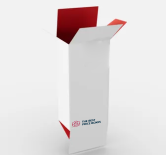
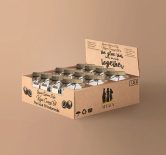
Yes, The Best Price Boxes makes custom corrugated boxes with no minimum order, and we will beat any written quote you already have. Corrugated is not cardboard. It is a sandwich, a fluted paper medium glued between flat liners, and the arch shape of those flutes is what gives it strength far beyond its weight. Understanding that structure is what lets you specify a box that survives without paying for board you do not need.
Custom corrugated box specs
| Spec | What you get |
|---|---|
| Minimum order | None. One box or a full run. |
| Wall types | Single face, single wall, double wall and triple wall. |
| Flutes | A, B, C, E and F, plus BC and EB double wall combinations. |
| Liners | Kraft, test liner, white top and fully bleached white, in a range of basis weights. |
| Grades | 32 ECT single wall through 48 ECT and above in double wall. Burst test grades available where specified. |
| Styles | Regular slotted container, full overlap, half slotted, one piece folder, five panel folder, die cut mailers, trays, partitions. |
| Printing | One and two color flexo direct to board, litho laminated or digital for full color photographic print. |
| Finishes | Aqueous coating, matte and gloss lamination on litho laminated work, spot varnish. |
| Sizes | Any interior dimension, built to the product. |
| Recycled content | Available, and corrugated is among the most widely recovered packaging materials. |
| Design | Free. Die lines, mockups and revisions included. |
| Samples | Free. |
| Shipping | Free. |
How corrugated board is made
A continuous web of paper passes between heated fluted rollers that press the arch pattern into it. Starch adhesive is applied to the tips of those arches and a flat liner is bonded to one side, producing single face board. Bond a second liner to the other side and you have single wall. Repeat the process with a second fluted layer between and you have double wall.
The arch is the whole point. A flat sheet of paper folds under load. The same paper formed into a row of arches resists compression from above and cushions impact from the side, and it does that while remaining mostly air, which is why corrugated is so strong for its weight and so cheap to ship empty.
That also explains its main weakness. The strength depends on the arches keeping their shape. Crush the flutes and the board never recovers, which is why a box that has been stacked badly is permanently weaker even when it looks fine.
Flutes, and choosing between them
| Flute | Approximate thickness | Character |
|---|---|---|
| A | Around 3/16 inch | Thickest common single wall. Best cushioning and stacking strength, poorest print surface |
| C | Around 5/32 inch | The general purpose shipping flute. Good stacking, good cushioning, acceptable print |
| B | Roughly 0.079 to 0.110 inch | Stiffer flat panels, better print than C, less cushioning. Common for retail ready shippers |
| E | Roughly 0.045 to 0.055 inch | Thin with an excellent print surface. The standard for printed mailer boxes |
| F | Around 1/32 inch | Thinnest. Small retail packaging that wants corrugated strength at carton scale |
| BC double wall | Combined | The common heavy duty combination. Stacking and long transit |
| EB double wall | Combined | Strength with a printable outer face |
The B and E figures above are the thickness ranges given in the federal corrugated board specification held by the US National Archives. A and C vary a little more between mills, so they are given as nominal fractions.
Choosing between them is simpler than it looks. If print quality is the priority, go thinner. If cushioning and stacking are the priority, go thicker. If you need both, use a double wall combination with a fine flute on the printed face.
Liners matter as much as flutes
The flute gets all the attention and the liners do much of the work. A liner is the flat paper on the outside faces, and its type and weight change both strength and appearance.
Kraft liner is brown, made largely from virgin fiber, and is the strongest per unit weight. Test liner is made largely from recycled fiber, costs less and is slightly weaker at the same weight. White top liner has a bleached surface on the outer face for print quality with a kraft or test body beneath. Fully bleached white liner gives the best print surface and the highest cost.
A common cost mistake is specifying a heavier flute when the real problem is a light liner. If your boxes are bulging or scuffing rather than crushing, the liner is usually the thing to change.
Humidity, the factor most specifications ignore
Corrugated board loses compression strength as it takes up moisture from the air. A box that comfortably holds a stack in a dry warehouse can fail in a humid one, or on a long sea journey, or in a refrigerated chain, and nothing about the specification on paper changes.
The effect is large enough to matter. If your boxes are stored in high humidity, shipped by sea, or used in chilled or frozen distribution, tell your supplier, because the correct answer is a higher grade or a moisture resistant treatment rather than the grade that works in the showroom.
This is one of the most common causes of a box that tested fine and failed in the field.
Single wall, double wall, triple wall
Single wall covers the large majority of parcel shipping and retail packaging, and is the right default.
Double wall is for high gross weight, roughly above 65 pounds, for palletized loads where the bottom box carries a column, for multi leg or international journeys, and for dense contents that load the walls unevenly.
Triple wall is industrial. Machinery, bulk containers, heavy parts, anything approaching a crate. It is rarely the right answer for consumer goods and is worth mentioning only so you know it exists.
Printing on corrugated, honestly
Flexographic printing goes directly onto the board and is the cheapest option. It handles line work, solid colors and type well. It does not handle photographic images or fine gradients, and on coarser flutes a large solid area shows washboarding, a faint ridged pattern following the flutes beneath.
Litho lamination prints a sheet offset and then laminates it to the board, giving full photographic quality at a higher cost. Digital printing sits between them and is the most direct route to full color on short runs, which is what makes no minimum orders practical in this material at all.
If a supplier quotes you photographic print direct to a C flute board, ask to see a sample before you commit.
Recycling, stated accurately
Old corrugated containers are one of the most widely recovered packaging materials in the world, and the fiber goes back into new board repeatedly. That is a genuine strength and it is verifiable.
Two things reduce it. Heavy wax coating, historically used for produce and cold chain, makes board difficult to recycle in normal streams, and recyclable alternatives now exist for most of those applications. Film lamination has a similar effect. If recyclability matters to you, specify an aqueous coating rather than a laminate and ask about wax alternatives.
Related packaging
See shipping boxes for board grades, ECT and the box maker’s certificate, mailer boxes for printed ecommerce formats, ecommerce boxes for right sizing and dimensional weight, and kraft boxes for the material.
Frequently asked questions
What is the difference between corrugated and cardboard?
Cardboard is a loose term usually meaning thick paperboard, a single solid layer, like a cereal carton. Corrugated is a fluted medium glued between flat liners, which is what gives it strength and cushioning. Shipping boxes are corrugated. Retail cartons are usually paperboard.
Which flute should I choose?
C flute for general shipping. B flute where you want stiffer panels and better print. E flute for printed mailer boxes. A flute where cushioning and stacking dominate. Double wall combinations where you need strength and a printable face together.
Does humidity really weaken a box?
Yes, substantially. Corrugated loses compression strength as it takes up moisture, so a box that holds a stack in a dry warehouse can fail in a humid one, at sea, or in a chilled chain. Tell your supplier the storage and transit conditions, not just the weight.
Do you have a minimum order for corrugated boxes?
No. There is no minimum. Digital printing on corrugated is what makes that practical, and it means you can prove a size on real shipments before committing.
Can you print photographs on corrugated?
Yes, using litho lamination or digital printing. Direct flexographic printing handles line work and solid colors but not photographic images, and on coarse flutes large solids can show a faint ridged pattern following the flutes.
Can you beat a quote I already have?
Yes. Send the written quote with the specification and we will beat it on a like for like build. Check that it names the flute, the liner and the grade, because a quote missing any of those is not comparable to one that has them.
Get a quote for custom corrugated boxes
Tell us the product, its weight, whether the boxes are stacked or palletized, how far they travel and in what conditions. We will specify the flute, liner and grade for the load rather than defaulting to the cheapest board that fits. Design, samples and shipping are free, and there is no minimum order.