







The main types of folding cartons are straight tuck, reverse tuck, auto-bottom (crash-lock), gable, pillow, sleeve and display cartons. They differ in how they close, how they open and how much weight they hold. The Best Price Boxes prints all of them with no minimum order, and we beat any written quote for the same specs.
What a folding carton is
A folding carton is a box cut and scored from a single sheet of paperboard, usually glued along one seam, and shipped flat. The customer or packer opens it up and closes it by tucking, locking or gluing a flap. Paperboard for these cartons generally runs from about 12 to 24 point in thickness, and the board you choose decides how the box feels and how much it can carry. It is the standard format for cosmetics, supplements, small food, candles and most things sold off a retail shelf.
Folding cartons are not shipping boxes. They protect a product on a shelf and in a master carton, not through a parcel network on their own. If the product is heavy or fragile, a corrugated mailer is the better outer. See our corrugated cardboard guide for that side of the decision.
Box styles and what each is good for
Straight tuck. Top and bottom flaps tuck in on the same side of the box. It opens like a book and suits cosmetics, cards and small gifts. See our tuck top boxes.
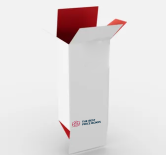
Reverse tuck. The two flaps tuck from opposite sides. The box stays upright, so it is the normal choice for tall, narrow items such as tubes and bottles. See reverse tuck end boxes.
Auto-bottom (crash-lock). The bottom snaps into place when the box is opened, which saves labor and holds heavier items such as jars. The top closes with a tuck or lid.
Gable. A boxy shape with a sloped top and a built-in handle. It suits gift sets and takeaway items. Browse gable boxes.
Pillow. A curved, pinched box for light, small objects such as jewelry and favors. Look at window pillow boxes or the pillow box range.
Sleeve. A wrap that slides over a tray or a product, adding branding without a full box. See sleeve boxes.
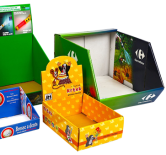
Display carton. Opens to sit on a counter and present the product. Compare custom display boxes.
How to choose between them
| If you sell | Start with |
|---|---|
| Tubes, bottles, tall narrow items | Reverse tuck |
| Cards, soap, flat gifts | Straight tuck |
| Jars, heavier cosmetics | Auto-bottom |
| Takeaway or gift sets | Gable |
| Light favors, jewelry | Pillow |
| Minimum order | None, on every style |
Pick by how the customer opens it and how the product sits, not by looks alone. A handsome box that is awkward to pack costs more in labor than a plain one saves. Finish matters as well, and our matte vs gloss lamination guide helps with that choice.
How to order
Measure the product in length, width and depth, then send those, the style you are considering and the quantity through the quote form. If you are unsure of the style, say what the product is and how it ships, and we will recommend one. We prepare a dieline and a proof for approval before production. Design help, samples and shipping are free on qualifying orders.
Questions buyers ask
What are the most common types of folding cartons?
Straight tuck, reverse tuck, auto-bottom, gable, pillow, sleeve and display cartons. Straight and reverse tuck are the most widely used for cosmetics, supplements and small retail goods.
Is there a minimum order for custom folding cartons?
No. You can order one carton as a sample or a full production run. There is no minimum quantity, and we will beat a written quote for the same specs.
What is the difference between straight tuck and reverse tuck?
On a straight tuck both flaps tuck on the same side. On a reverse tuck they tuck from opposite sides. Reverse tuck stands upright more neatly, so it suits tall, narrow products.
How thick is the paperboard in a folding carton?
Roughly 12 to 24 point, depending on the product. Lighter board suits cards and soap, heavier board resists crushing for dense items. Tell us the weight and we will recommend a thickness.
Can a folding carton ship products without another box?
Light, durable items can, but most cartons are shelf packaging and ship inside a master carton. For fragile or heavy goods, pack the carton inside a corrugated mailer.