

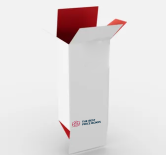
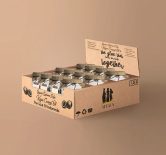
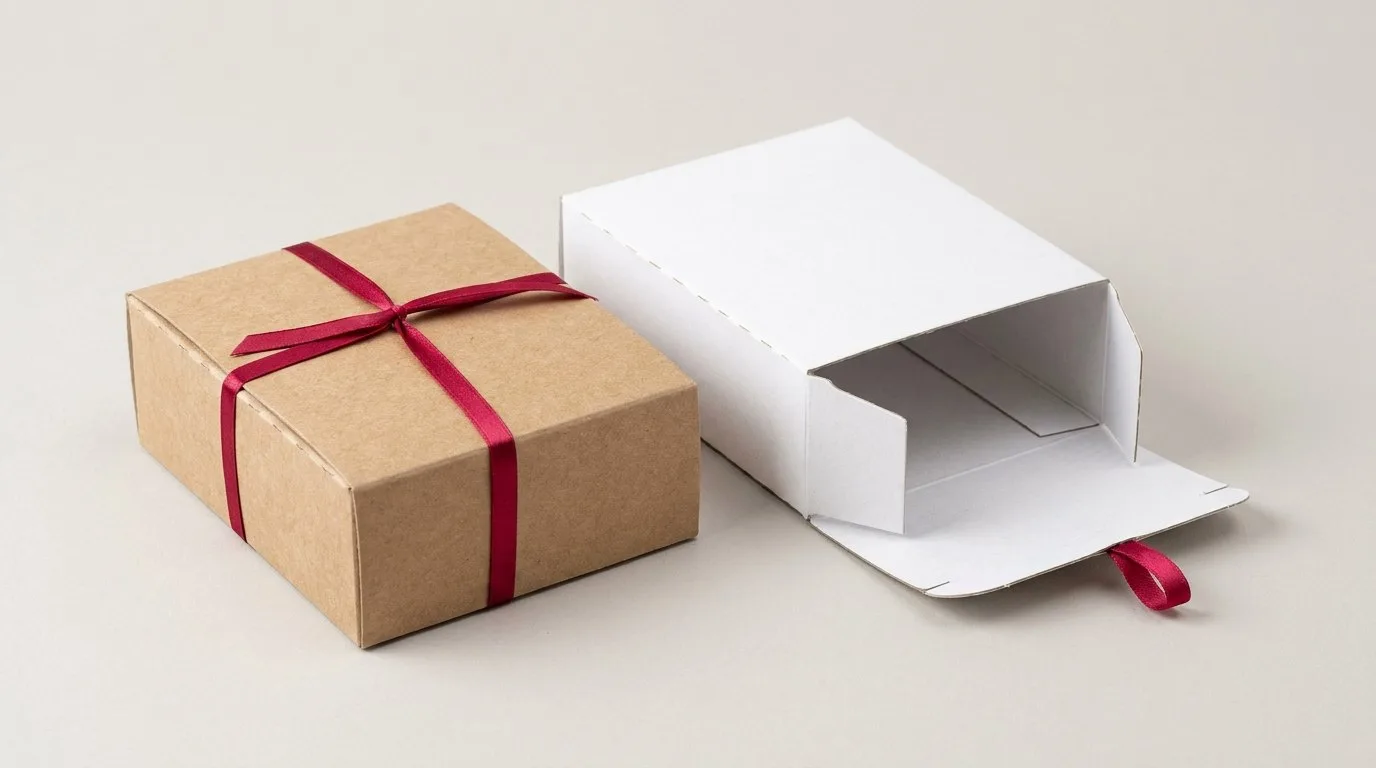
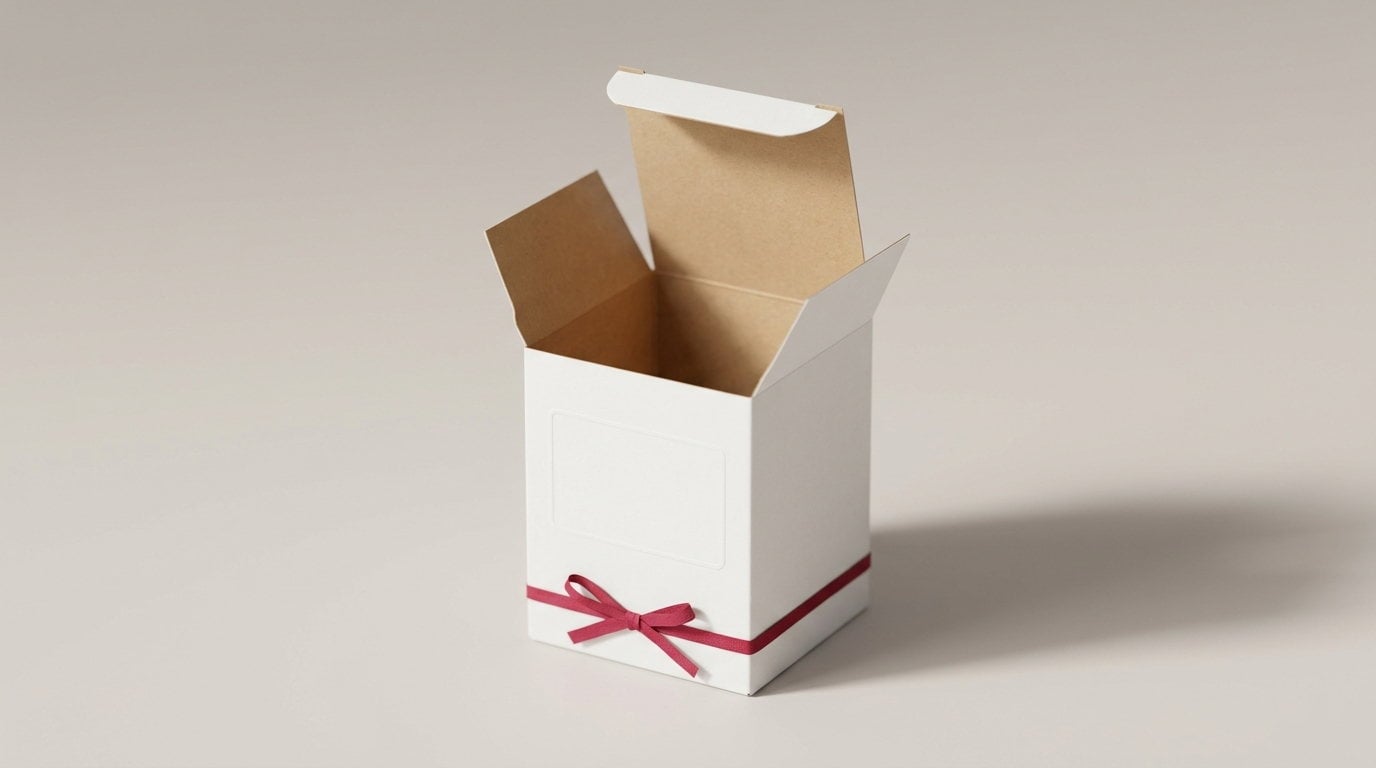


A reverse tuck end box is a printed folding carton with its two end flaps hinged on opposite long edges, so the top tucks in from the front and the bottom from the back. TBPB makes custom reverse tuck end boxes with no minimum order, and if you bring a written quote for the same specs we will beat it.
Why the flaps run opposite ways
On a straight tuck the opening flaps both hinge from the same side, which puts the tuck tab and the seam in the same place front and back. On a reverse tuck the top flap hinges from the back panel and the bottom from the front. That sounds like a small change, but it does two useful things. The front panel stays clean of any seam, which gives the artwork an uninterrupted face, and the layout nests tighter on the press sheet, so the board is used efficiently. If you are choosing between the two, our straight tuck end boxes are the sibling style with both flaps hinged on the same side.
Sizing a reverse tuck carton so it actually closes
Measure the product at its widest, deepest and tallest points, then add about 1/8 inch of clearance on each side. Too tight and the tuck tab buckles; too loose and the product rattles and the flap pops open in a shipping carton. Remember that the tuck tab needs depth, since it tucks inside the front panel, so very shallow cartons (under roughly an inch of depth) get awkward to close. Tell us if the product is heavy or has a pointed edge, because a heavy item leaning on the tuck flap is the usual cause of a bottom that pops open.
Board, print and finishing
Most reverse tuck cartons are folding carton paperboard, commonly 16 to 24 pt coated stock, with kraft board available for an uncoated natural look. Heavier board holds its shape better but is harder to tuck by hand, so we usually steer light items like lip balm, tea sachets or small tubes toward the lighter end and heavier goods toward thicker stock. Printing is CMYK with Pantone matching, and finishes include matte or gloss aqueous coating, soft touch lamination, spot UV, foil stamping and embossing.
- Custom size to your product, any quantity, no minimum order
- Coated paperboard or kraft board
- CMYK and Pantone colour matching, full-bleed printing on both sides of the board
- Matte, gloss, soft touch, spot UV, foil or emboss on request
- Optional insert or die-cut window where the product allows it
When another style is the better pick
If the box will be filled by machine or sealed with a tamper strip, a glued-bottom style is usually quicker, and our auto bottom boxes lock themselves when set up. For products that will hang on a peg, look at hang tab boxes. For a taller lid-style opening, tuck top boxes are the closer match. If you are shipping the cartons in a mailer, remember a tuck closure is not tamper evident unless you add a seal.
A word on artwork: keep important type and logos at least 1/8 inch away from every fold and cut line, and leave the glue flap area free of ink so the seam bonds cleanly. Send the artwork as vector files where you can. We check it against the dieline before anything goes to press, and flag anything that sits too close to a crease.
Next step: send us your product dimensions and the quantity you want, even if that is one carton, and we will draw the dieline and quote it.
Frequently asked questions
Is there a minimum order for custom reverse tuck end boxes?
No. TBPB has no minimum order, so you can order one carton for a sample or thousands for a launch. Quantity changes the unit price, and you can send a written quote from another supplier for the same specs so we can beat it.
What is the difference between a reverse tuck and a straight tuck end box?
On a straight tuck both end flaps hinge from the same long edge. On a reverse tuck they hinge from opposite edges, so the top opens from the back and the bottom from the front. Reverse tuck layouts usually nest better on the press sheet, which makes efficient use of board.
How do I choose the right size?
Measure your product at its widest, deepest and tallest points and add about 1/8 inch per side. Send those numbers with the quantity and we draw the dieline. If you have a sample product, tell us its weight too, since heavy items need sturdier board.
What board is used for reverse tuck end boxes?
Typically coated folding carton paperboard in the 16 to 24 pt range, or kraft board for an uncoated look. Lighter items suit thinner stock, and heavier items need thicker board so the bottom tuck holds. We recommend a weight once we know your product.
Can the box be printed inside as well as outside?
Yes. Both sides of the board can be printed, so the inside of the carton can carry instructions, a pattern or a message. Tell us when you send artwork. We print CMYK with Pantone matching and can add coatings such as matte, gloss or soft touch.
Do reverse tuck boxes need glue?
No. A reverse tuck carton usually ships flat with a glued side seam, and the customer folds and tucks the ends by hand. That keeps freight space low and makes assembly quick for small runs without any tape or adhesive at the ends.
More Box By Style
See the full Box By Style range, or explore related options with no minimum order and our best-price guarantee: