

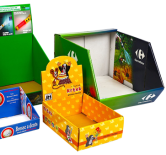
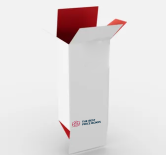
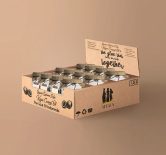
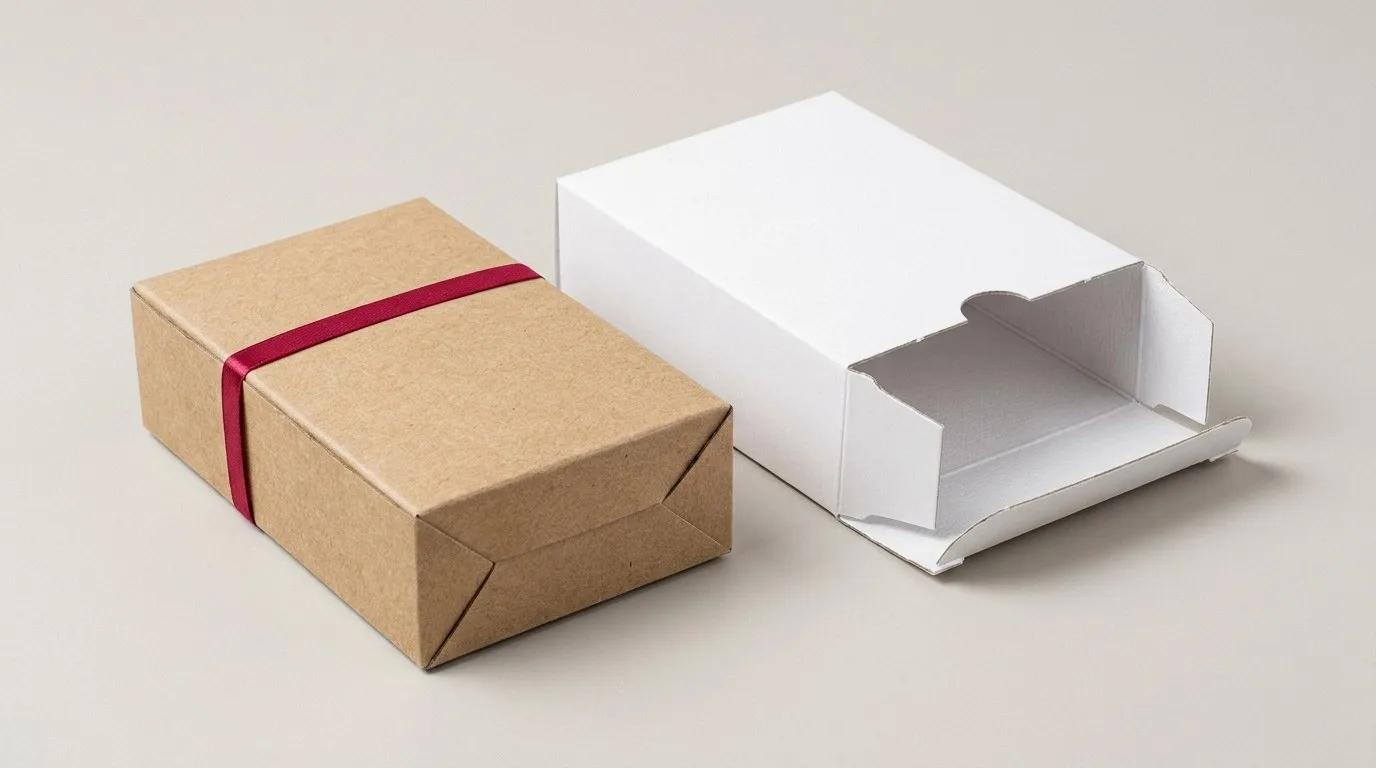

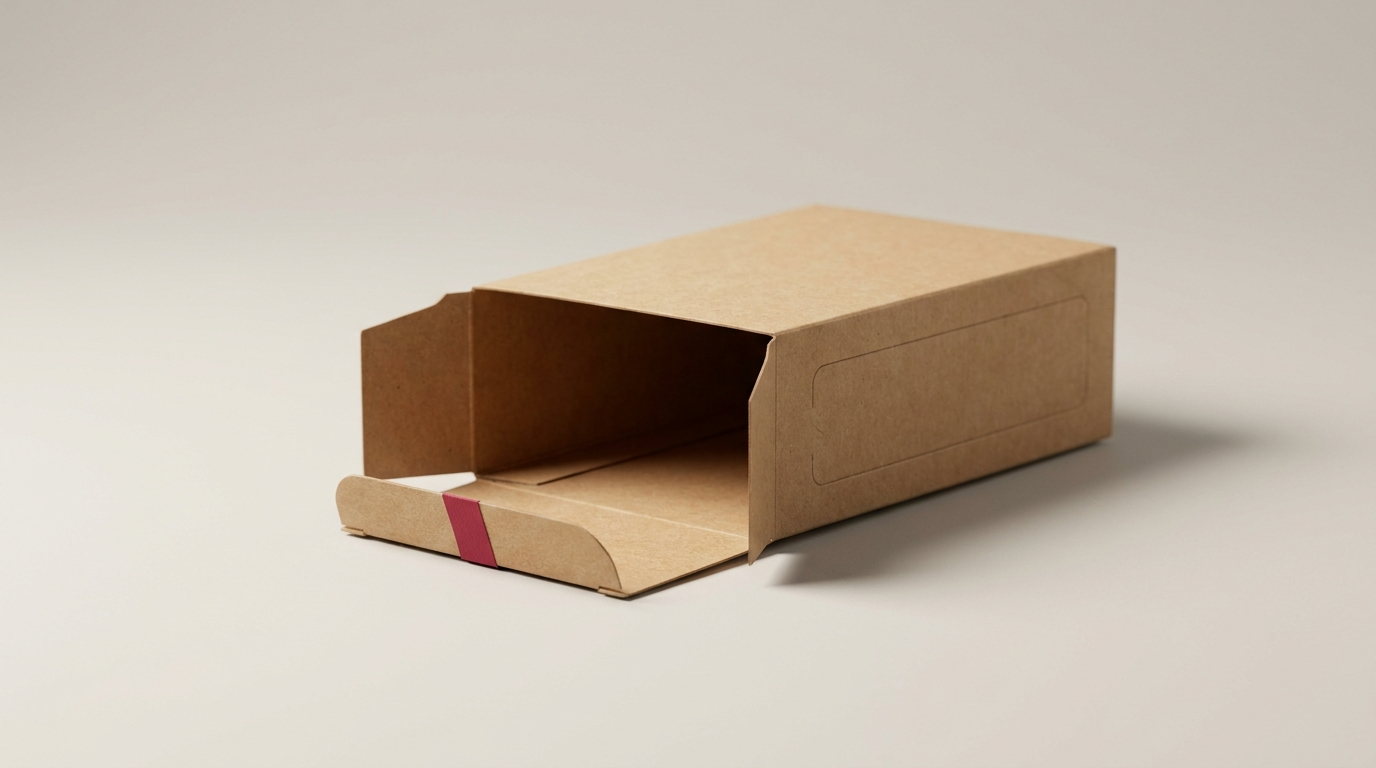


A straight tuck end box is a folding carton with a tuck flap at the top and another at the bottom, both opening on the same side of the box. The Best Price Boxes prints them custom to your product size with no minimum order, and we beat any written quote for the same specs.
How a straight tuck end closes
Both flaps fold in from the same panel edge, usually the back, so when the carton stands on a shelf the front face reads as one clean surface. That is the reason retailers and brands choose it for upright display. It also means the product slides in and out through the top or bottom opening, which suits tubes, bottles, small jars, vials and boxed devices that sit vertically. The other tuck style, the reverse tuck end, puts the flaps on opposite sides and tends to be cheaper to lay out on the press sheet. If the carton will be hand-packed in small runs, the difference rarely matters, but ask us if you are running volume.
Measuring for fit
Measure the product itself, not the packaging you imagine around it. Length, width and depth, then add roughly an eighth of an inch of clearance per side. Too tight and the tuck flap buckles when someone pushes the product in. Too loose and the product rattles and the tuck pops open. If your product has a pump head, a cap or a pouch that bulges, measure at the widest point. Tell us which end the product enters from, because that decides how the flaps and the dust flaps are laid out.
Board and print choices
Most straight tuck cartons are made from SBS paperboard in the 16 to 24 pt range. Lighter board is fine for a tube of lip balm. A heavier product, such as a glass bottle, needs the upper end of the range, or a fitted insert. Kraft board gives a natural look and prints best with fewer, darker colours. Printing is CMYK with optional Pantone matches, then a matte or gloss aqueous coating, soft-touch lamination, spot UV or foil stamping. Each finish is optional, and each one adds setup, so pick the one or two that carry your brand.
- SBS paperboard 16 to 24 pt, or kraft board
- CMYK plus Pantone, matte or gloss coating, soft-touch, spot UV, foil
- Optional window cut, hang hole or paperboard insert
- Ships flat, glued side seam, opens on one side
When another style fits better
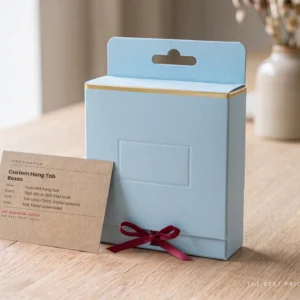
If the product is heavy or needs to hang on a peg, a hang tab box is the better choice, because a tuck carton with a punched hole will not carry real weight on a hook. If you want a single lid flap that closes over the front instead of two flaps at either end, look at our tuck top boxes. For anything shipped by parcel, a paperboard carton is not enough on its own and a corrugated format works better, because paperboard crushes at the corners when parcels are stacked. Browse the full custom retail boxes range to compare styles side by side.
Send the product dimensions and the quantity, even if it is one, and we draw the dieline and quote it. Because there is no minimum order, you can run a single proof carton, check the fit with the real product in your hand, adjust the size and then order the real quantity. That one sample saves more money than any amount of guessing at clearances.
Frequently asked questions
What is a straight tuck end box?
It is a folding carton with a flap at the top and one at the bottom, both tucking in from the same side. The product slides in through either end. Because the flaps share a side, the front panel stays uninterrupted, which suits shelf display of upright items like tubes, bottles and small devices.
Do you have a minimum order for straight tuck end boxes?
No. There is no minimum order, so you can order a single proof carton or tens of thousands. Send the product dimensions and quantity, even if it is one, and we draw the dieline and quote it. The price-beat guarantee applies when you hold a written quote for the same specs.
What is the difference between straight tuck and reverse tuck?
In a straight tuck the flaps open on the same side of the box. In a reverse tuck they open on opposite sides, which can lay out more efficiently on the press sheet. Straight tuck gives a tidier shelf face, while reverse tuck can be more economical at larger volumes.
What board weight should I choose?
For light products like lip balm or small tubes, 16 pt paperboard is usually enough. Heavier items such as glass bottles or jars call for 18 to 24 pt, or an insert to hold them. If you are unsure, send the product weight and dimensions and we recommend a board.
How much clearance does the product need inside?
Allow roughly an eighth of an inch per side on top of the product dimensions. Too tight and the tuck flap bends when the product goes in. Too loose and the product rattles. Measure at the widest point, including caps, pumps and any bulge.
Can a straight tuck end box have a window or hang hole?
Yes. A window cut lets shoppers see the product, and a hang hole lets the carton go on a peg. Hang holes suit light products only, because the board carries the weight. For heavier items, a dedicated hang tab style is the more reliable choice.
More Custom Retail Boxes
See the full Custom Retail Boxes range, or explore related options with no minimum order and our best-price guarantee: