
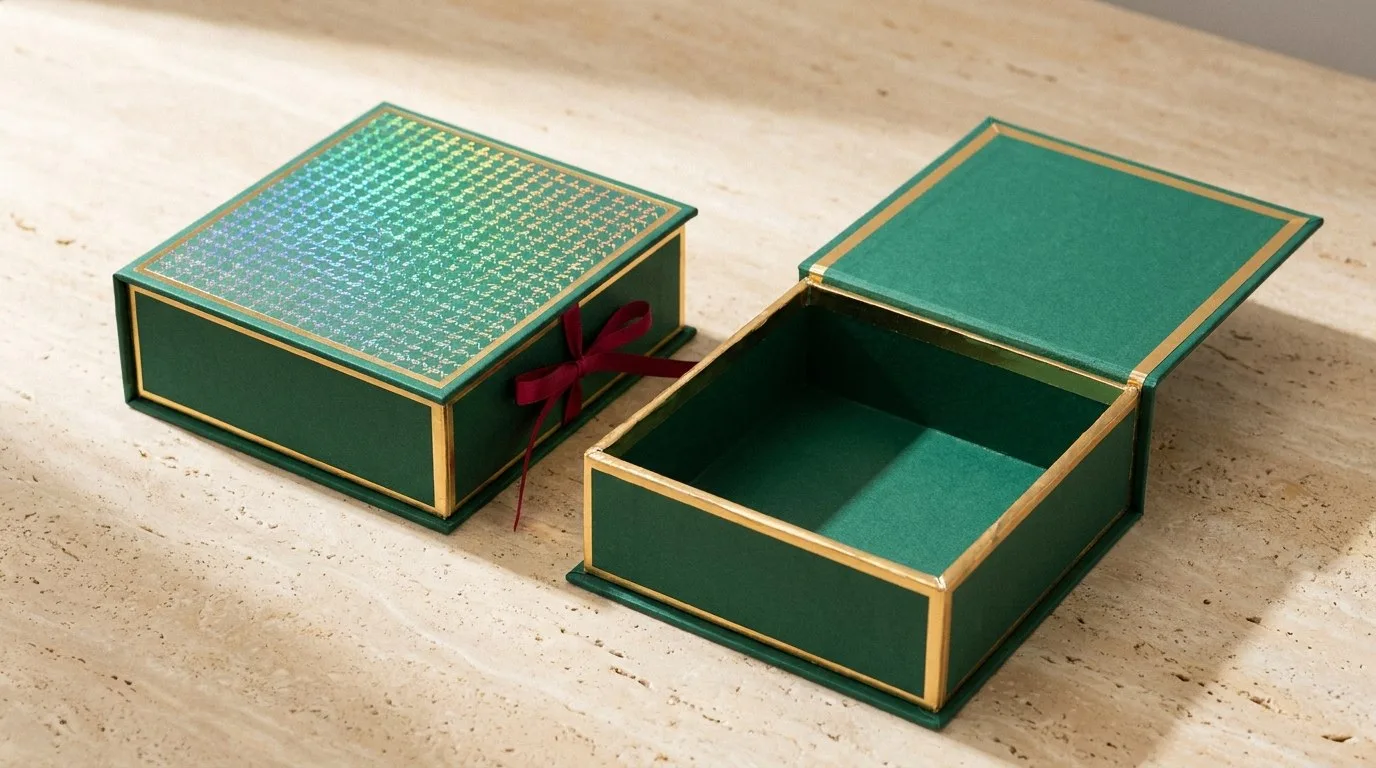
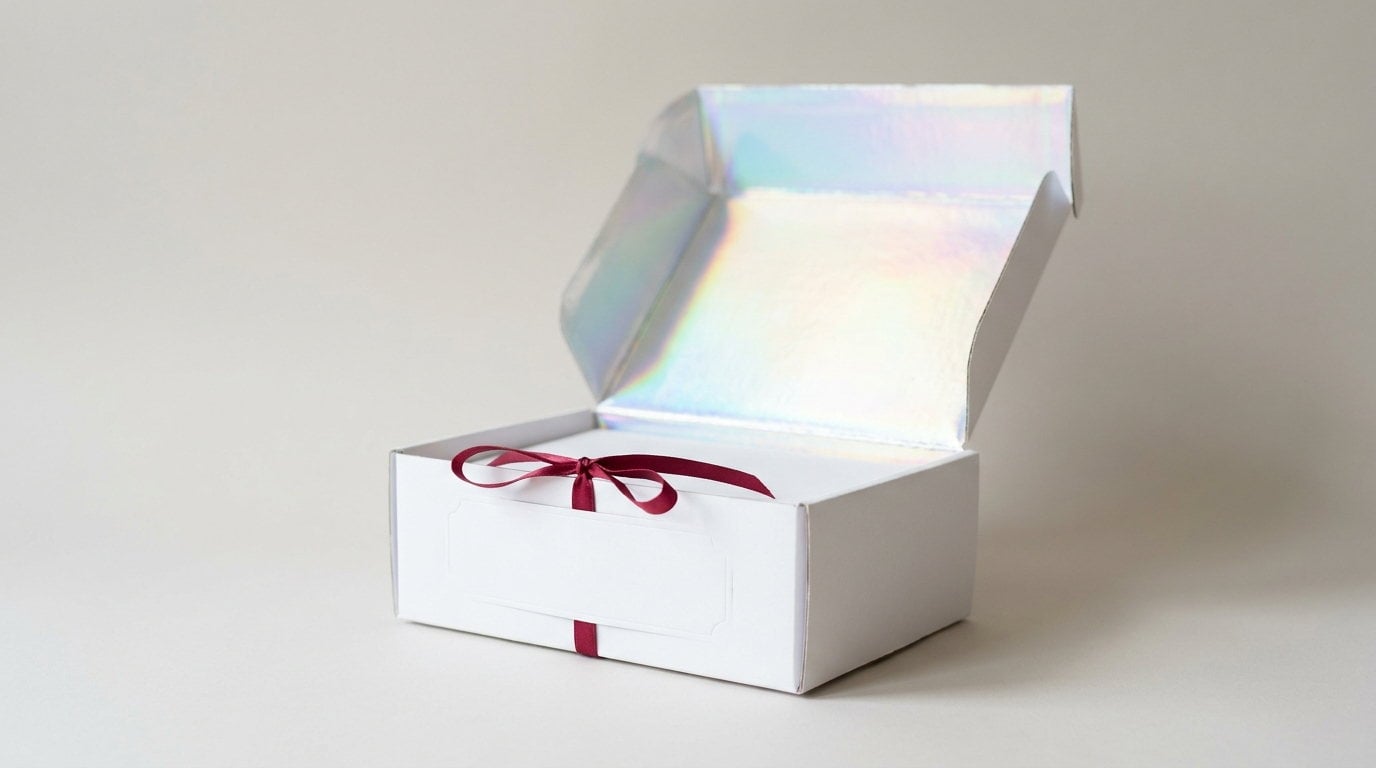


Holographic foiling boxes are folding cartons with holographic hot-foil stamping on a logo, pattern or selected panels. TBPB makes them with no minimum order, and the price-beat guarantee applies if you bring a written quote for the same specifications.
How holographic foil is applied
Hot foil stamping uses a heated metal die to press a thin film onto the board. Where the die touches, the foil bonds; elsewhere it lifts away. Holographic foil carries a diffraction pattern, so light splits into colours and the effect shifts with the angle. That is different from a printed metallic ink, which looks flat by comparison. Because the die is made for each design, the foil area is fixed and sharp, which is why logos and clean shapes work best.
Designing artwork for foil
Keep the foil artwork bold. Thin lines, tiny text and fine halftones do not transfer reliably, and small gaps between elements can fill in. Leave a little space around the foil from the fold lines, since the die can crack the foil if it crosses a score. Put holographic foil on a dark or saturated background where it can glow; on white it can look pale and grey. Decide whether you want an overall pattern or an accent. A full-panel pattern is dramatic but expensive in tooling and a little harder to register.
Board and structure
Smooth coated folding carton paperboard in the 16 to 24 pt range gives the best foil transfer. Kraft board is rough and tends to give patchy results, so test it before committing. Holographic foil works on tuck-end cartons, tuck-top boxes, sleeves and hang-tab cartons. Soft-touch lamination can be combined with foil, but the foil must be stamped in a way that suits the laminate, so tell us your plan. Emboss and foil together can add depth around the logo.
When foil is the wrong call
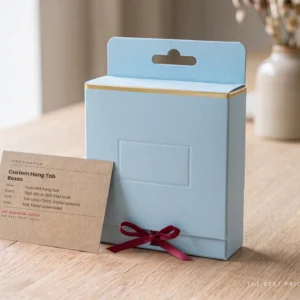
Foil is a visual accent, not a structural feature. If your problem is a fragile product, the fix is a stronger board or an insert, not shimmer. If the box must be recycled in a particular stream, check with your local rules because foil and film can affect recycling. For a more restrained look, spot UV or embossing gives texture without a metallic shimmer. Foil goes well on a tuck top box or a hang tab box if you want a structure that suits your product. The straight tuck end boxes are a simple carton to foil, and the wider custom retail boxes range shows every structure.
Proofing before the run
Ask for a dieline proof with the foil layer marked in a separate colour, and check three things: how close the foil sits to folds and glue flaps, whether any text inside the foil is large enough to read, and whether the background colour behind the foil is dark enough for the shimmer to show. A physical sample is worth the wait for a large foil area, since a screen cannot show how the colours shift as the box moves. Small changes at this stage cost nothing; changes after the die is cut do.
- Foil: holographic hot-foil stamping on logo, pattern or panels
- Board: smooth coated folding carton paperboard, 16 to 24 pt
- Structure: tuck end, tuck top, sleeve, hang tab
- Print: CMYK, Pantone match, matte or gloss coating, soft-touch
- Extra finishing: spot UV, embossing, debossing
- Quantity: no minimum order
Send the product dimensions, your artwork and a quantity, even one, and we will draw the dieline, mark the foil layer and quote it. Packaging labelling and regulatory copy for your product category are your responsibility, and TBPB prints the artwork you supply.
Frequently asked questions
What are holographic foiling boxes?
Holographic foiling boxes are folding cartons with holographic hot-foil stamping on a logo, pattern or selected panels. The foil carries a diffraction pattern that shifts colour with the viewing angle, giving a metallic shimmer that printed ink cannot reproduce.
Is there a minimum order for holographic foil boxes?
No. TBPB has no minimum order, so you can order a single sample or a full production run. Send the product dimensions, your artwork and the quantity you want, and we will mark the foil layer and quote it.
What artwork works best for holographic foil?
Bold shapes work best: logos, borders and simple patterns. Fine lines, tiny text and detailed halftones may not transfer reliably. Place foil over a dark or saturated background so the colour shift stands out, and keep it away from fold lines so it does not crack.
Which board is best for foil stamping?
A smooth coated folding carton paperboard in the 16 to 24 pt range gives the most even foil transfer. Rough or uncoated kraft board tends to give patchy results, so test a sample before committing to a full order of foil on kraft.
Can I combine foil with embossing or soft-touch?
Yes. Embossing under the foil adds depth around the logo, and soft-touch lamination gives a contrast between smooth shimmer and velvet surface. The order of finishing steps matters, so tell us the combination you want and we will plan the sequence.
Is holographic foil recyclable?
It depends on local recycling rules. A thin foil stamp on paperboard is often accepted in paper recycling, but programmes differ and heavy film or laminate can cause problems. Check your local guidelines and tell us if recyclability matters, so we can suggest a lighter finish.
More Custom Retail Boxes
See the full Custom Retail Boxes range, or explore related options with no minimum order and our best-price guarantee: