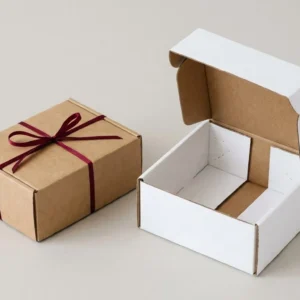

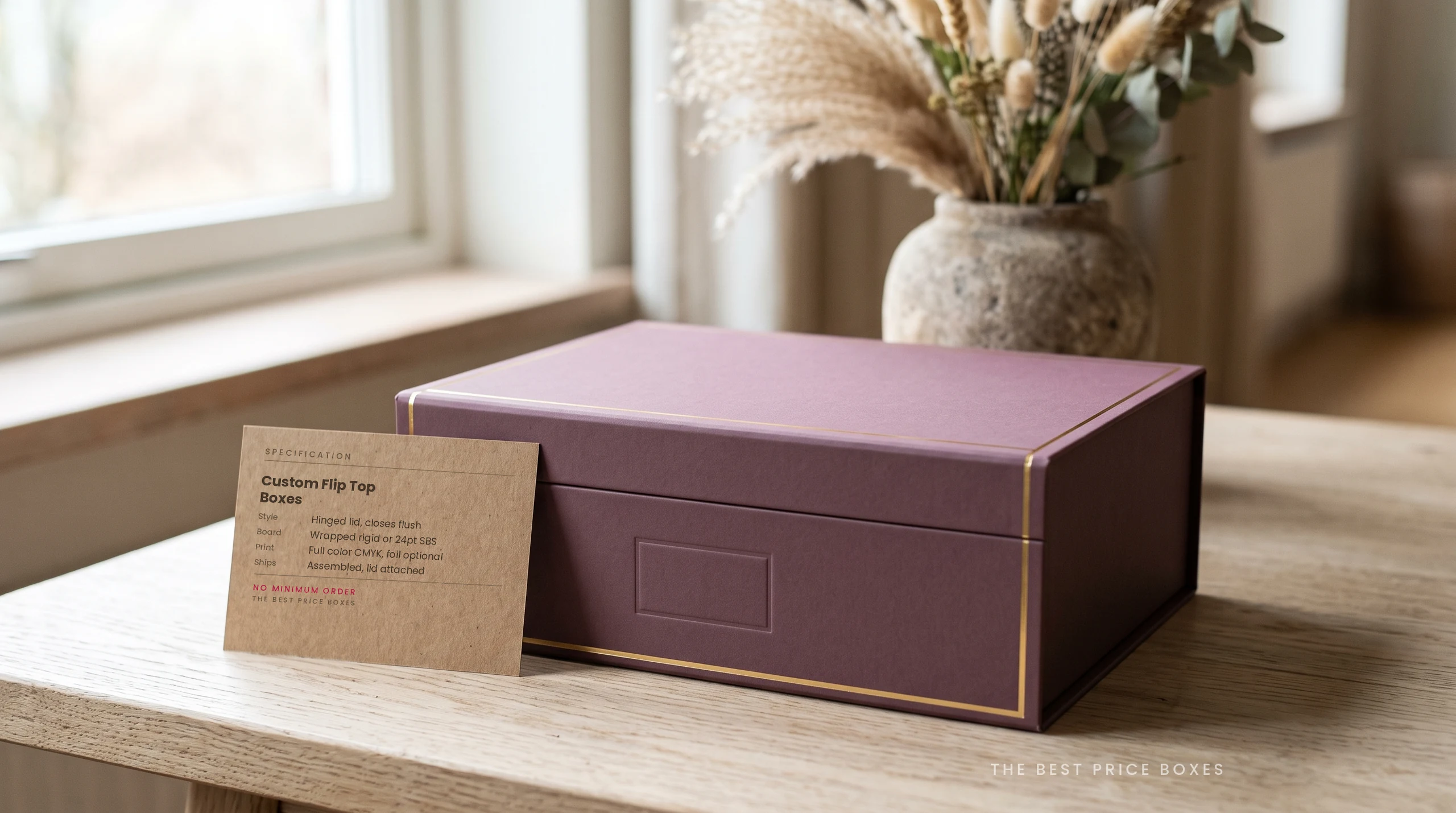
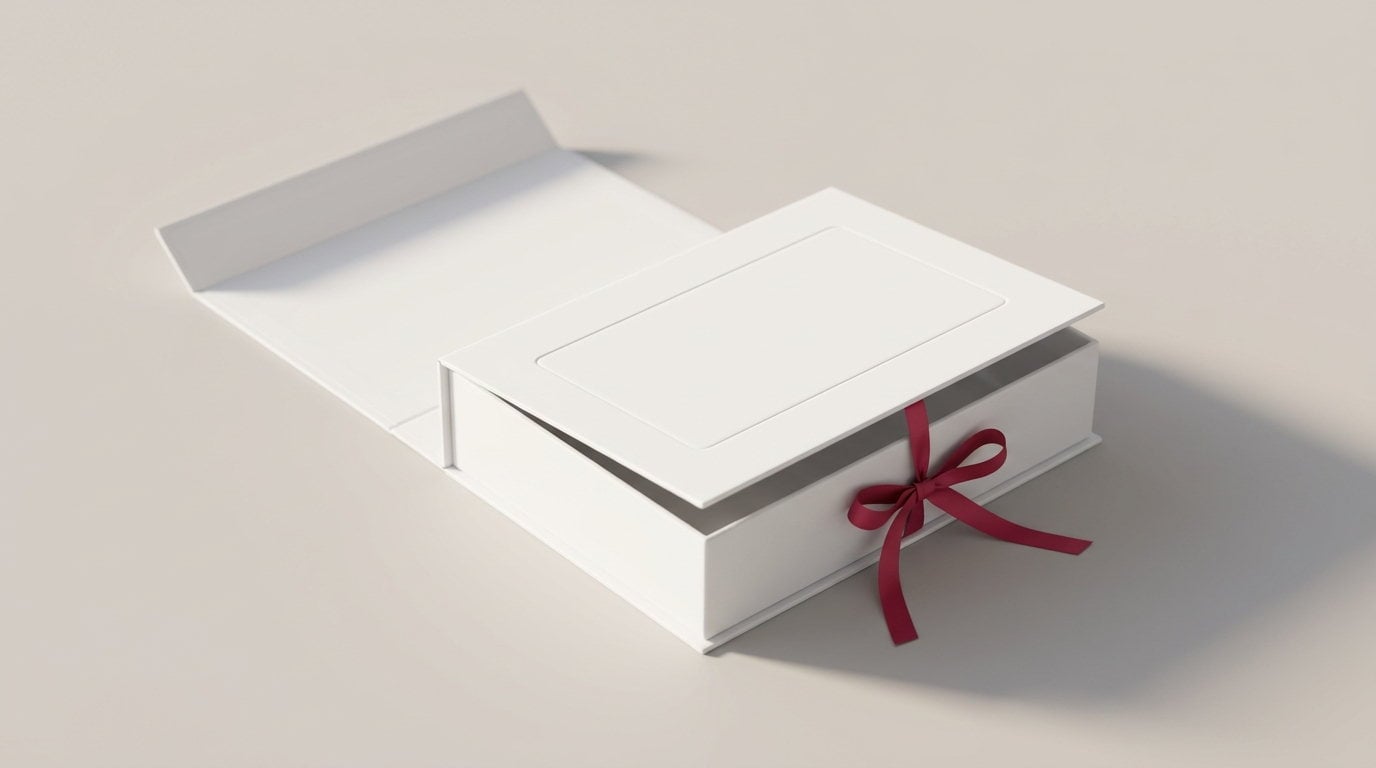


A flip top box is a box whose lid is hinged to the back panel and swings open like a book cover, usually closing with a tab, a magnet or a snug fit. TBPB makes custom flip top boxes with no minimum order, and the price-beat guarantee means we will beat a written quote for the same specs.
What makes a flip top different
With a tuck top, the lid lifts off or tucks in. With a flip top, the lid stays attached. That small difference changes the experience: the customer opens it with one hand, the lid stays out of the way, and the product is presented at an angle, ready to be picked up. It is the style people associate with cigarette packs, lip balm and cosmetics, gum and small electronics accessories, and it works just as well for jewelry, vape accessories, supplements, tea sachets and small gift items.
Folding carton or rigid, and how to decide
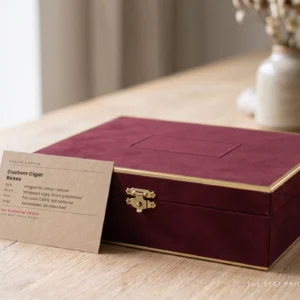
A flip top can be made from paperboard as a folding carton, or from thick chipboard wrapped in paper as a rigid box. The paperboard version is lighter, flat-packs for storage and suits retail at scale. The rigid version feels heavy and expensive in the hand and survives repeated opening, which suits gift sets and premium jewelry. If the box will be opened once and thrown away, paperboard is usually the sensible choice. If it will be kept on a dresser, the rigid build earns its extra cost.
Sizing and the hinge
Measure your product in length, width and depth, then add a small clearance on each side so the product slides in without binding. The hinge needs some room, and the depth you choose should leave enough height for the lid to close over the contents without pressing on them. If you add an insert to hold the product still, include its thickness in the measurements. A custom foam insert is a common way to keep small fragile items from rattling.
- Hinged lid on the back panel, with tab, magnet or friction closure
- Paperboard folding carton or wrapped rigid construction
- CMYK or Pantone printing, matte or gloss coating, spot UV, foil or embossing
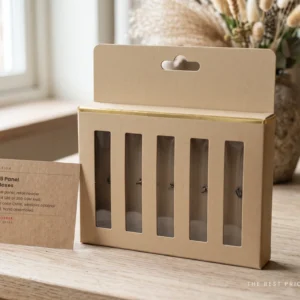
- Optional inserts and window cut-outs
Print and finish choices that suit a hinged lid
A flip top has a large flat lid, and that is prime space for branding. Put the logo on the lid, keep it away from the hinge line, and use the inside of the lid for a short message or pattern, since the customer sees it first when the box opens. Matte aqueous coating is the practical default, and soft-touch lamination feels excellent but marks on dark colors. Spot UV or foil on the logo only, rather than all over, gives a restrained premium look and keeps the artwork readable. Embossing the lid adds texture without extra color. Whatever you choose, ask for a proof, and fit-test a sample with the real product before you approve a full run, because small tolerances on the hinge matter more than most buyers expect.
When another style works better
A flip top is not always the right call. If you need the lowest-cost carton for straightforward retail, a tuck top box is simpler to produce. If you pack items on a high-volume line, the straight tuck end box loads faster. And if the box needs to carry heavy products, a flip lid hinge becomes the weak point, so consider a stronger style. The full range sits in boxes by style.
If you pack food, cosmetics, supplements or CBD, you are responsible for labeling and regulatory copy, and for confirming contact-material needs with your own regulatory adviser.
Next step
Send the product dimensions and the quantity you want, even if it is a single box. TBPB draws the dieline and quotes it.
Frequently asked questions
Is there a minimum order for flip top boxes?
No. TBPB has no minimum order for flip top boxes. You can order a single box to check the hinge and fit, then scale up for a full run.
What is a flip top box?
It is a box with a lid hinged to the back panel that swings open and stays attached. Closures include a tab, a magnet or a snug friction fit. It is common for cosmetics, accessories and small gift items.
Should I choose a paperboard or rigid flip top?
Paperboard is lighter, flat-packs and suits retail volume. Rigid chipboard feels heavier and survives repeated opening, so it suits gifts and jewelry. Pick by how long the customer will keep the box.
How do I size a flip top box?
Measure the product’s length, width and depth, then add a small clearance on each side. Make sure the depth lets the lid close without pressing on the contents. Include any insert thickness in the measurement.
Can a flip top box hold heavy products?
It handles light and mid-weight items well, but the hinge is the weak point under heavy loads. For heavier products, a stronger style such as a mailer or tuck end box is usually the better choice.
Can I add an insert or a window?
Yes. Foam, paperboard or pulp inserts hold the product still, and a window cut-out shows part of it. Tell us what goes inside and we will suggest the right combination.
More Box By Style
See the full Box By Style range, or explore related options with no minimum order and our best-price guarantee: