







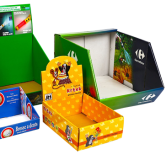

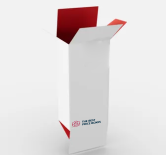
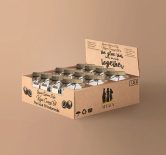
Corrugated cardboard is a paper-based board made of a wavy fluted layer glued between one or two flat liners, which gives it far more stiffness and crush resistance than plain paperboard at a similar weight. It is the material behind most shipping boxes. The Best Price Boxes makes custom corrugated boxes with no minimum order and beats any written quote for the same specs.
How corrugated board is built
The fluted layer is called the medium. Its waves act as tiny arches, trapping air and spreading load. The flat paper on the outside and inside is the liner. Single face has one liner, single wall has a liner on each side of one medium, and double wall stacks two mediums with three liners. Liners are made of kraft paper, either brown or bleached white for a cleaner print surface.
Flutes in plain terms
The flute letter tells you how tall and how tightly packed the waves are. They are standard across the industry.
| Flute | Approx. thickness | Best for |
|---|---|---|
| E | About 1/16 inch | Retail mailers, clean printing |
| B | About 1/8 inch | Heavier items, cushioning |
| C | About 5/32 inch | Standard shipping cartons |
| BC (double wall) | About 1/4 inch | Heavy or stacked loads |
| Minimum order | None at TBPB | |
Thinner flutes print better and fold tighter, which is why mailers use E-flute. Thicker flutes cushion and stack better, so shipping cartons use C-flute or double wall. There is no best flute, only the right one for the weight and the print.
Single wall or double wall
Single wall handles most e-commerce orders under roughly 20 to 30 pounds. Double wall is for heavy, sharp or fragile items, and for boxes stacked high in a warehouse. Double wall also costs more and is harder to fold, so choose it for the load, not for reassurance. If you are unsure of the weight, send us the packed product weight and the shipping method.
Uses and recycling
Corrugated suits shipping cartons, mailers, product shippers, display shippers and any pack that has to survive handling. It is one of the most widely recycled materials in the US, and clean corrugated is accepted in curbside programs, though coatings and wet or greasy board can complicate that. Print and basic coatings are normally fine. Ask us to confirm any special finish for your spec.
Where to order
Browse custom corrugated boxes, kraft corrugated boxes and the corrugated category. For a shallow, printed shipper see mailer boxes, and for thin retail cartons read our folding carton guide. Send dimensions, weight and quantity, even one box, through the quote form. Design help, samples and shipping are free on qualifying orders.
Questions buyers ask
What is corrugated cardboard made of?
Paper. A fluted, wavy medium is glued between one or two flat paper liners, usually kraft. The arches in the flute give the board its stiffness and crush resistance.
Is there a minimum order for custom corrugated boxes?
No. Order a single box to test a fit or a full run. There is no minimum quantity, and we will beat a written quote for the same specs.
What is the difference between single wall and double wall corrugated?
Single wall has one fluted layer between two liners. Double wall has two fluted layers and three liners, which is thicker and stronger. Use double wall for heavy, sharp or stacked loads.
Which flute is best for shipping boxes?
C-flute is the standard shipping flute. B-flute works for heavier or fragile items needing cushion, and E-flute for thin printed mailers. Send the packed weight and we will pick the board.
Is corrugated cardboard recyclable?
Yes, clean corrugated is widely accepted in recycling programs. Heavy coatings, grease or wet board can make recycling harder, so ask us before choosing special finishes.