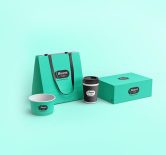
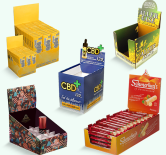

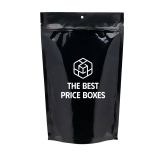
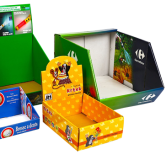
A custom food box is a printed, food-safe container built to hold, protect, and present food during transport, delivery, or retail display. That covers everything from grease-resistant bakery boxes and window-front pastry boxes to sturdy corrugated delivery boxes and clamshells for prepared meals.
This guide covers what makes packaging food-safe, the materials and box styles that actually hold up with food, standard sizes, and how to order custom printed food boxes without a case-quantity minimum standing in your way.
What Makes a Box “Food-Safe”?
Not every printed box is safe for direct food contact. Food-safe packaging uses materials and coatings that won’t leach chemicals, absorb grease into the print, or let moisture wick through and go soggy. Three things matter most: the substrate itself, any coating on the food-contact side, and the inks used for printing.
For direct food contact (think a sandwich sitting right against the inside of the box, not in a wrapper), you want an FDA-compliant food-grade board or a food-safe coating like a PE (polyethylene) or PLA lining. For food that’s wrapped, bagged, or boxed separately before it touches your packaging, like a cookie box holding individually wrapped cookies, standard kraft or SBS board is usually fine without a special liner.
Common Food Box Materials
Kraft board (SBS or CCNB with a kraft liner) is the workhorse of food packaging, it is forgiving, prints well, and has a natural, eco-friendly look that works for bakeries and cafes. It’s not inherently grease-resistant on its own, so bakery and pizza boxes usually add a grease-resistant coating or an internal liner.
SBS (solid bleached sulfate) paperboard gives you a smoother, brighter white surface for sharper full-color printing, the standard choice for retail-facing food boxes like cookie boxes, cupcake boxes, and takeout containers where branding matters as much as function.
Corrugated board shows up in food packaging wherever things need to survive a delivery trip: pizza boxes, larger takeout and catering boxes, and shipping cartons for food products sold online. E-flute and F-flute (thinner, tighter flutes) are the usual picks here since they print cleanly while still adding stacking strength.
Common Food Box Styles
Bakery boxes: tuck-top or lock-corner boxes with a die-cut window, typically SBS board with a grease-resistant coating. Standard sizes range 8x8x4 in up to 10x10x5 in for cakes and larger pastries.
Clamshell containers: one-piece hinged boxes for prepared meals, salads, and takeout. Common in both paperboard and corrugated depending on how heavy or hot the contents are.
Pizza boxes: corrugated E-flute with a grease-resistant liner on the food-contact side, almost always full-color printed since the box doubles as the last piece of branding a customer sees before eating.
Window boxes: die-cut PET or cellulose window lets the product sell itself on a shelf, common for donuts, pastries, and packaged snacks.
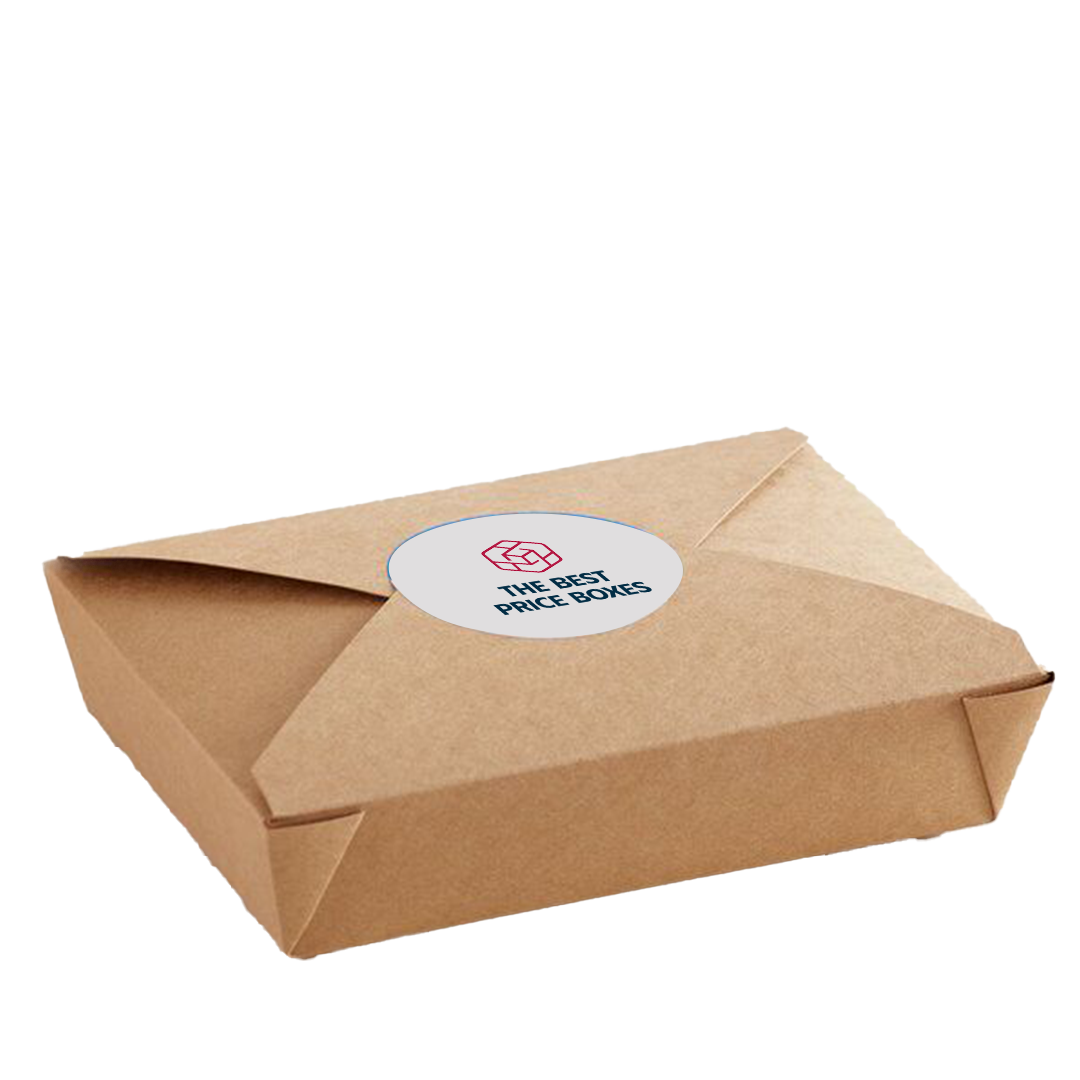
Gable boxes: the fold-up carry-handle style you see with Chinese takeout, kraft or SBS board, good for portable single-serve orders. Drinks are the exception: cans and bottles need wet-strength carriers, fridge packs and corrugated trays rather than a food carton, covered in the beverage folding cartons guide.
Standard Food Box Sizes
These cover most bakery, takeout, and retail food packaging needs. Custom sizes are available for anything outside this range.
| Box Style | Common Size (L x W x H) | Typical Use |
| Bakery box | 8 x 8 x 4 in | Cakes, pastries, donuts |
| Clamshell | 9 x 6 x 3 in | Prepared meals, salads |
| Pizza box | 12 x 12 x 2 in | Standard pizza delivery |
| Window box | 6 x 4 x 3 in | Snacks, small pastries |
| Gable box | 6 x 4 x 6 in | Single-serve takeout orders |
Custom Printed Food Boxes With No Minimum Order
Most food packaging suppliers set a case-quantity minimum, often 250 to 500+ units, because their print equipment isn’t set up for short runs without eating the setup cost. That’s a real problem if you’re testing a new menu item, running a seasonal promotion, or just don’t want a garage full of boxes for a product that might change next quarter.
The Best Price Boxes runs custom printed food boxes with no minimum order quantity. Order 20 boxes for a sample run or 20,000 for a full production cycle, same pricing logic, no case-quantity wall in the way. You get food-safe materials and coatings matched to what you’re packaging, full-color or spot-color printing, and sizing cut to your product instead of picking from a stock list.
Food Boxes vs. Corrugated Shipping Boxes
If you’re shipping food products online rather than serving them fresh, standard corrugated shipping boxes with food-safe inner packaging (bags, pouches, or liners) often make more sense than a dedicated food box, you get the strength for transit without paying for food-safe coating on a surface the food never actually touches. Food-specific boxes earn their keep when the box itself is in direct or near-direct contact with the product, like a bakery box or a pizza box.
Custom Food Boxes FAQ
Related guides and comparisons
For keeping food fresh, mylar bag vs box covers when a pouch beats a box and when to use both. For the look, compare kraft vs white and gloss vs matte. For structure, see corrugated vs cardboard vs rigid. For what it costs, see custom box pricing, or get a quote.
Packaging pet treats or pet food? Our pet treat packaging guide covers the mylar pouch formats, barrier specs, and shelf features that keep treats fresh.
Shop food packaging by type: takeout food boxes, Chinese takeout boxes, pizza boxes, donut boxes, and cupcake boxes, all food grade with no minimum order.
Is there a minimum order for custom printed food boxes?
Not at The Best Price Boxes. We print custom food boxes with no minimum order quantity, so you can order a small sample run or a full production batch using the same pricing logic, without hitting a case-quantity wall.
What packaging material is safe for direct food contact?
For food that touches the packaging directly, like a sandwich or pastry with no wrapper, you need an FDA-compliant food-grade board or a food-safe coating such as PE or PLA lining. For food that’s individually wrapped or bagged before it goes in the box, standard kraft or SBS board without a special coating is fine.
Do grease-resistant boxes need a special liner?
Usually yes for anything greasy, pizza, fried food, baked goods with butter or oil. The grease-resistant treatment is either a coating baked into the board itself or a separate wax or PE liner inside the box. Without it, oil wicks through the paperboard within minutes and the box goes translucent and weak.
What’s the most common food box material for retail branding?
SBS (solid bleached sulfate) paperboard. Its smooth, bright white surface holds full-color print sharper than kraft, which is why it’s the default for cookie boxes, cupcake boxes, and any food packaging where the branding is doing as much work as the box itself.
Can I get custom food box samples before ordering in bulk?
Yes, since there’s no minimum order quantity, a small sample run of 20 to 50 boxes in your actual size, material, and print is a normal first order, not a special favor. Most customers test a sample batch before committing to a full production run.
Planning your order
Working out what your food packaging will cost? See our full breakdown of how much custom boxes cost, and how to order with no minimum order, so you can start with a small batch and scale as you sell. When you’ve got your specs, request a quote and we’ll price your exact box.
Related guides and where to order
- custom food packaging (order with no minimum, free design and samples)
- How Much Does Custom Food Packaging Cost?
- Custom beverage folding cartons: board, styles and pack counts
- Eco-friendly juice box packaging
- Ready to order? Get a free quote or estimate your cost.