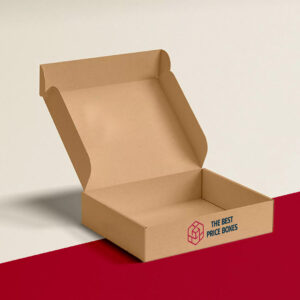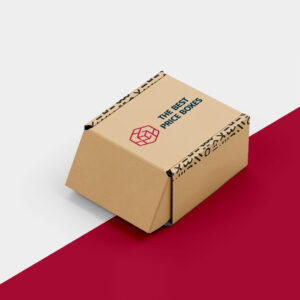







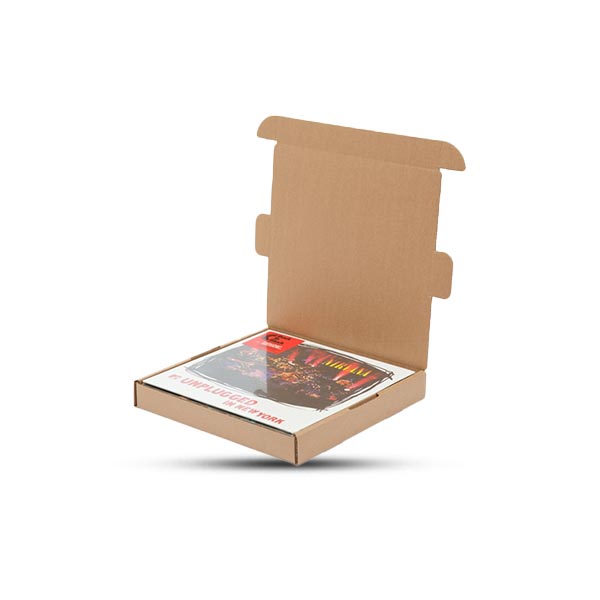


A vinyl record mailer is a rigid corrugated mailer sized to a 12 inch LP, with a locking flap and stiffened side walls that stop the disc shifting in transit. We make them printed to your artwork with no minimum order.
Ready to order vinyl record mailers? Get your free quote in minutes
Free design and dielines, free samples, no minimum order, and we beat any competitor’s written quote. Your logo in full color, fast turnaround.
Shipping vinyl is unforgiving. A record that arrives with a split seam, a dinged corner, or a warped disc turns a happy customer into a refund and a one-star review, and an ordinary box was never built for the job.
The three ways a record gets damaged in the mail
Almost every claim comes down to one of three things, and only two of them are the mailer’s fault.
Seam splits. The record slides inside a box that is a little too big, builds momentum, and punches the corner of the jacket through the seam. This is the classic “record-shaped hole” and it is entirely a fit problem. A mailer sized to the record, with flaps that clamp it, does not do this.
Corner crush. The parcel lands on a corner, and a flat mailer with no stiffening folds. The jacket corner goes with it. Collectors grade sleeve corners as carefully as they grade the vinyl, so a crushed corner is a real loss even when the disc plays perfectly.
Warping. This one is not the mailer. Warping is heat and sustained pressure, usually a parcel left in a hot vehicle or stacked flat under weight for days. No amount of board prevents it. Shipping records upright where you can, and avoiding the hottest months for long transit, does more than packaging ever will.
Sizes and how many records go in
Seven-inch singles and 10-inch records get their own sizes rather than being padded out inside a 12-inch box, which is how singles end up rattling and damaged. The sizing detail that catches most people out is further down this page: you measure the jacket, not the disc.
Capacity changes the build, not just the depth. A one-to-two record mailer can rely on the flaps alone to hold the contents still. Once you are past about five records the stack has real weight and needs a deeper wall and a stronger board to keep its shape. Twenty-five and fifty count mailers are a different product again, closer to a shipping carton with a record-sized footprint.
Tell us the record size and the maximum count you will ship, and the mailer is built to that rather than to a catalog size that nearly fits.
Why a record mailer is not just a flat box
The defining feature is the folding stiffener. The side walls fold in and lock over the face of the record, so the disc is held between two layers of board across its whole width rather than sitting loose in a cavity. That is what stops the sliding that causes seam splits, and it is what a plain mailer box cannot do however snug you cut it.
The second feature is the self-locking flap. A record mailer closes without tape holding the structure together, so the mailer keeps its strength even if the tape lifts in the sorting machinery.
Board and wall
Single wall corrugated handles one to a few records comfortably and keeps the parcel light, which matters when you are shipping a lot of them. Double wall earns its place on multi-record orders, on box sets, and on anything going a long distance or internationally, where the parcel is handled more times.
If you ship a mix, it is usually simpler to run two sizes than to force everything into one. A single record rattling around in a five-count mailer is the same fit problem as a bare box.
Media Mail, and what it means for your packaging
In the United States, sound recordings including vinyl records qualify for USPS Media Mail. It is meaningfully slower than other classes, it can be inspected, and it may only contain qualifying media, so a record with a t-shirt tucked in no longer qualifies.
That matters for packaging in two ways. Media Mail parcels spend longer in the network and are handled more, so the case for a locking, stiffened mailer is stronger than it would be on a two-day service. And because the class is inspectable, printed mailers that clearly read as a record shipment tend to move through with less friction than an unmarked box.
The outside of the mailer is doing work
A record mailer is one of the few pieces of packaging a customer photographs before they open it. Labels, bands, and Discogs sellers who print the mailer get a second impression out of a parcel that was going to ship anyway.
We print full color across the outside, and inside the flap if you want a message that lands when the record comes out. Kraft with a one-color logo works as well as full-bleed artwork, and it suits a lot of independent labels better.
Bulk, reorders, and small runs
There is no minimum order, so a first pressing of three hundred can have its own printed mailer rather than a plain brown one. Once the dieline is approved, reorders run from the same file, so a repress or a second release in the same format is quick.
Free design and dielines, free samples, free shipping, and we will beat any written quote you already have.
Specification
| Record sizes | 7 inch, 10 inch, and 12 inch LP |
|---|---|
| Capacity | Built to your maximum record count, from single-record to multi-record and box set depths |
| Construction | Die cut corrugated with folding stiffener wings and a self-locking flap |
| Board | Single wall or double wall, chosen by record count and shipping distance |
| Printing | Full color outside, and inside the flap if you want it |
| Finishes | Kraft, white, or printed; matte or gloss |
| Sizes | Built around your record and count rather than a fixed catalog size |
| Minimum order | None |
| Turnaround | 7 to 14 business days after artwork approval |
Questions people ask before they order
What size mailer do I need for a single LP?
A 12-inch mailer, sized to take a jacket that is a fraction over 12 inches square. What matters more than the nominal size is the fit: the mailer should hold the record without room to slide, because sliding is what splits seams.
Can one mailer handle both singles and LPs?
It can, but it should not. A 7-inch single in a 12-inch mailer has room to move, and movement is the main cause of damage. If you ship both formats regularly, two sizes is the right answer.
How many records fit in one mailer?
Anything from one to fifty, but the build changes as the count rises. Past about five records the stack has enough weight to need a deeper wall and stronger board. Tell us your maximum count and the mailer is designed around it.
Will a mailer stop records warping?
No, and anyone who tells you otherwise is selling something. Warping is caused by heat and sustained pressure, not by impact. A good mailer prevents seam splits and corner crush, which are the two damage types packaging can actually control.
Can I ship these Media Mail?
Yes. Vinyl records qualify as sound recordings under USPS Media Mail in the United States. It is slower and the contents can be inspected, and the parcel must contain only qualifying media, so adding a shirt or a poster takes it out of the class.
Do you print on the inside?
Yes. The inside of the flap is the panel the customer sees first when the mailer opens, and it is a natural place for a thank you, a download code prompt, or the release name.
Can I order a small quantity?
Yes. There is no minimum, so a run sized to a single pressing is a normal order here.
Need cushioned shipping? See our bulk bubble mailers.
More Custom Mailer Boxes
See the full Custom Mailer Boxes range, or explore related options with no minimum order and our best-price guarantee: