




Need custom wrapping paper or branded tissue? Get a free quote in minutes
Free design help, free samples, no minimum order, and we beat any competitor’s written quote on a like for like specification.
Custom wrapping paper for a business is a different product from the personalized gift wrap you order one roll of at a photo site. You are printing a repeat pattern in your brand colors, on a weight that survives folding and tape, in a quantity that matches how many orders you actually ship. We print it with no minimum order, on tissue or wrap, in one color or full color. Here is how to spec it so it comes back looking like a brand rather than a craft project.
Tissue or wrap: they do different jobs
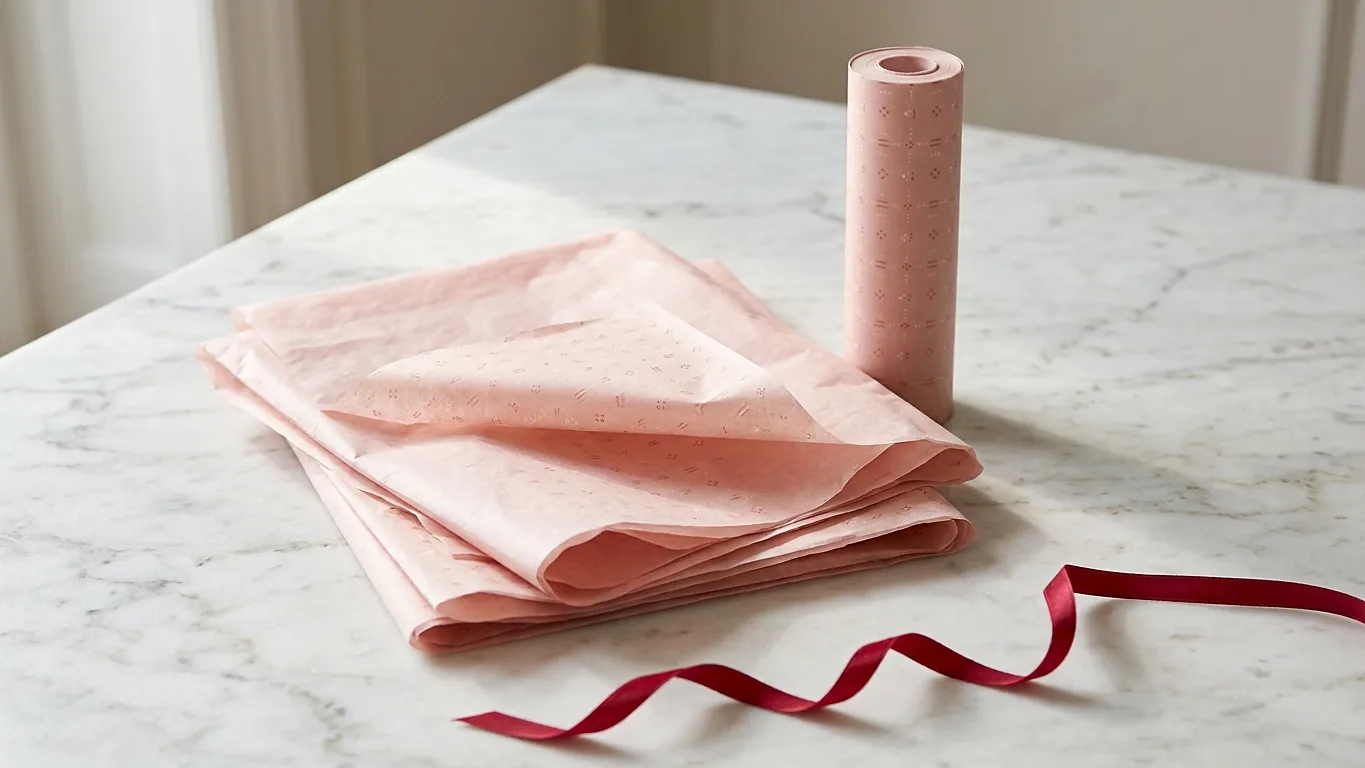
Tissue is the light sheet you fold over a product inside a box or bag. It is what a customer pushes aside when they open a mailer, so it gets seen at the exact moment attention is highest. It is also cheap enough to use on every order, which is why it has quietly become the default branding layer for ecommerce.
Wrapping paper is heavier and goes around the product. It holds a crease, takes tape without tearing and does the job people picture when they hear gift wrap. It costs more per unit and it takes longer to use at a packing bench, so it tends to make sense for retail counters, gifting seasons and higher value items rather than for every order all year.
Plenty of brands run both. Tissue on every shipment, wrap for the holiday window.
Weights, and what each one feels like
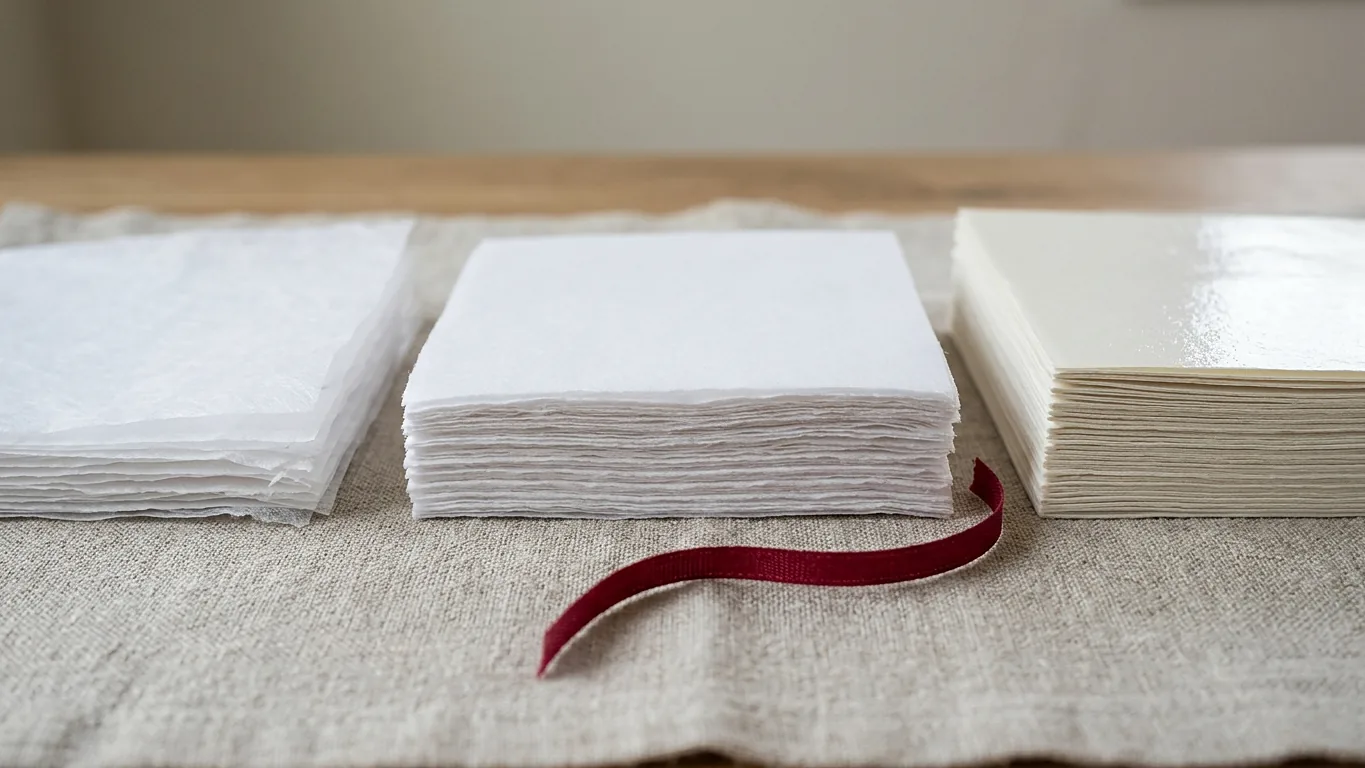
- 17 gsm tissue. The standard. Translucent, light, drapes well. Ink shows through to the back, which is normal and usually fine because both sides read as the same pattern.
- 21 gsm tissue. Noticeably more substantial in the hand without costing much more. If your product is heavier than a t shirt, start here.
- 30 gsm MG tissue. Machine glazed, so one side is smooth and slightly shiny. Holds fine detail better and feels closer to a premium retail bag insert.
- 50 to 60 gsm wrap. Entry level wrapping paper. Fine for straightforward shapes, thin enough that sharp corners can show through.
- 70 to 90 gsm wrap. The weight most people mean by proper gift wrap. Creases crisply, hides corners, takes tape cleanly.
- Kraft wrap. Uncoated brown, tough, and the ink shifts warm because the board color shows through. Good with one or two bold spot colors, poor with pale tints.
Standard tissue sheets run 20 in by 30 in, which folds down neatly into most mailers. Wrap comes on rolls, commonly 24 in, 30 in or 36 in wide. Tell us the largest thing you need to cover and we will tell you which roll width wastes the least.
One color goes further than you think
The instinct on a first order is full color photography. It is almost always the wrong call on tissue. Light paper plus heavy ink coverage gives you a damp looking sheet that wrinkles, and the cost per sheet climbs fast.
A single brand color, printed as a repeating mark on white or kraft, reads as more confident and costs less. Two colors gives you a mark plus an accent and still stays clean. Save full color for wrap, where the heavier sheet can carry it, or for a product where the pattern genuinely is the design.
If your logo has to match exactly, give us the Pantone number. Spot color on tissue holds a brand shade far more reliably than a four color build.
Designing a repeat that does not look wrong
Wrapping paper and tissue are printed as a continuous repeating tile, which is a different discipline from designing a box panel. Three things decide whether it looks professional.
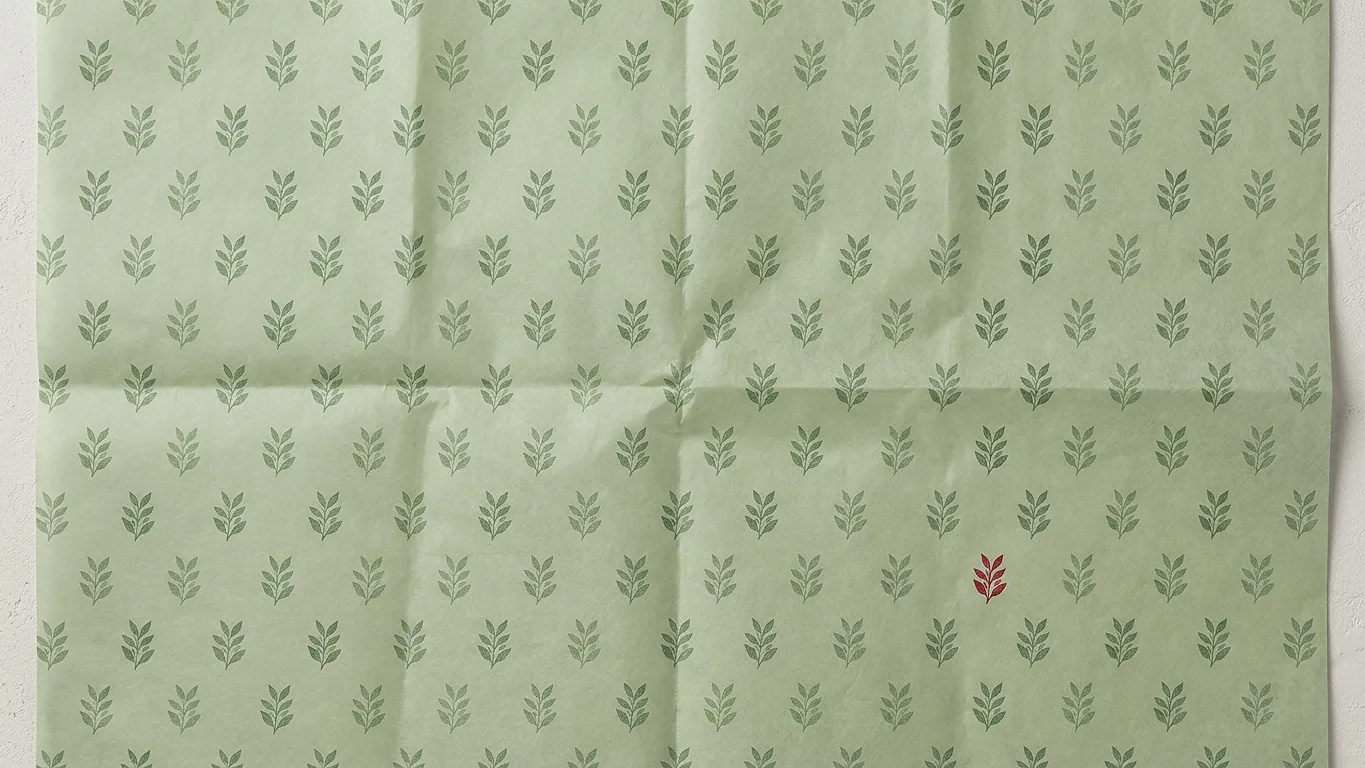
- The tile has to close on itself. Anything crossing the right edge must continue exactly onto the left edge, and the same top to bottom. A tile that almost lines up produces a visible grid across the sheet, and once you have seen it you cannot unsee it.
- Vary the rotation and spacing. A mark repeated on a perfect grid at one angle looks like wallpaper samples. Offset alternate rows, rotate some instances, and leave uneven negative space.
- Scale it down further than feels right. Most first designs are too big. A mark around 1 in to 2 in across, repeated generously, reads as a pattern. A logo 6 in across repeated four times per sheet reads as a leaflet.
There is no trim on a repeat the way there is on a box, so bleed is handled by the tile itself. Build the artwork in CMYK, keep any placed images at 300 dpi at final size, and send the repeat unit as vector where you can. We supply the tile dimensions with the quote, and free design help covers building the repeat if you only have a logo.
How it gets printed, and why that limits your design
Spot color work on tissue is normally run flexographic, which uses a raised plate per color. That is why one and two color jobs are so much cheaper: fewer plates, one pass each. Flexo is excellent at flat solid color and less good at soft gradients and very fine hairlines, so a design built from clean shapes will always outperform one built from delicate shading.
Full color work goes digital or litho instead, which handles photography and gradients properly but puts far more ink on a light sheet. On 17 gsm that can cause cockling, the gentle rippling you sometimes see on saturated tissue. Going up to 21 gsm or 30 gsm largely solves it. This is the single most common reason a first tissue order looks worse than the proof suggested.
One more thing worth knowing: tissue prints on one side. Ink shows through to the reverse, softer and lighter. That is normal, it is not a defect, and for a repeating pattern it usually looks intentional. If you need genuinely different artwork front and back, that is a two sided job and it changes the quote.
Food, and the one spec you cannot skip
If the paper touches food directly, it has to be food grade, printed with suitable inks. That covers bakery counters, sandwich wraps, deli paper and anything greasy. Say so at quote stage, because the material and the ink both change, and it is not something to work out after a run has printed. For a product that sits inside sealed packaging and never touches the food, standard stock is fine.
Ordering the quantity you actually need
Most printers sell tissue and wrap in fixed packs, so a run of 300 sheets means paying for 1,000 and storing the rest. That is a real problem with seasonal designs, because a holiday pattern you over ordered is dead stock in January.
We have no minimum order. Print what this season needs, reprint when the design changes, and stop storing paper you will not use. Cost per sheet does fall as the run grows and we will tell you where that curve bends so you can decide, but nothing forces the decision.
Ready to spec it? Look at custom wrapping paper and custom tissue paper, or add a printed belly band if you want branding without wrapping the whole product. If the tissue is going inside a shipper, the ecommerce box and mailer box pages cover the outside of the same order.
Custom wrapping paper FAQ
What weight should custom wrapping paper be?
For wrapping paper, 70 to 90 gsm is the weight most people mean by proper gift wrap. It creases crisply, hides sharp corners and takes tape without tearing. 50 to 60 gsm is a cheaper entry point that works on simple shapes but can show corners through. For tissue, 17 gsm is the standard, 21 gsm feels noticeably more substantial for very little extra, and 30 gsm machine glazed tissue holds fine detail best.
What is the difference between custom tissue paper and wrapping paper?
Tissue is a light sheet folded over the product inside a box or bag, seen the moment a customer opens the package, and cheap enough to use on every order. Wrapping paper is heavier, goes around the product, holds a crease and does the job people picture as gift wrap. Tissue suits everyday ecommerce branding. Wrap suits retail counters, gifting seasons and higher value items. Many brands run tissue year round and wrap seasonally.
Is one color or full color better for printed tissue?
One color is usually the better call on tissue, and it is not only a cost decision. Light paper with heavy ink coverage can wrinkle and look damp, while a single brand color repeated on white or kraft reads as more confident. Two colors gives you a mark plus an accent and stays clean. Keep full color for heavier wrapping paper that can carry the ink, or for designs where the pattern itself is the product.
How do I design a repeat pattern for wrapping paper?
Anything crossing the right edge of the tile has to continue exactly onto the left edge, and the same top to bottom, or you get a visible grid across the sheet. Vary rotation and spacing so it does not read as wallpaper, and scale the mark smaller than feels right, roughly 1 in to 2 in across repeated generously. Build in CMYK, keep placed images at 300 dpi at final size, and supply the repeat unit as vector where possible.
Is there a minimum order for custom wrapping paper?
No. Most printers sell tissue and wrap in fixed packs, so a run of 300 sheets means buying 1,000 and storing the rest, which is a real problem with seasonal artwork. We print the quantity you need, including short runs for one season or one product launch. Cost per sheet does drop as the run grows and we will tell you where that happens, but no minimum is imposed on you.
Can custom printed paper touch food?
Only if it is specified as food grade and printed with suitable inks. That applies to bakery counters, sandwich wraps, deli paper and anything greasy. Raise it at quote stage, because both the material and the ink change, and it is not something to resolve after a run has printed. If the paper sits outside sealed packaging and never contacts the food itself, standard stock is fine.