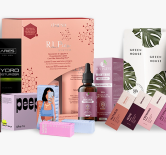
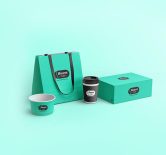
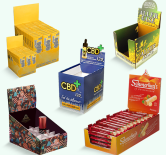

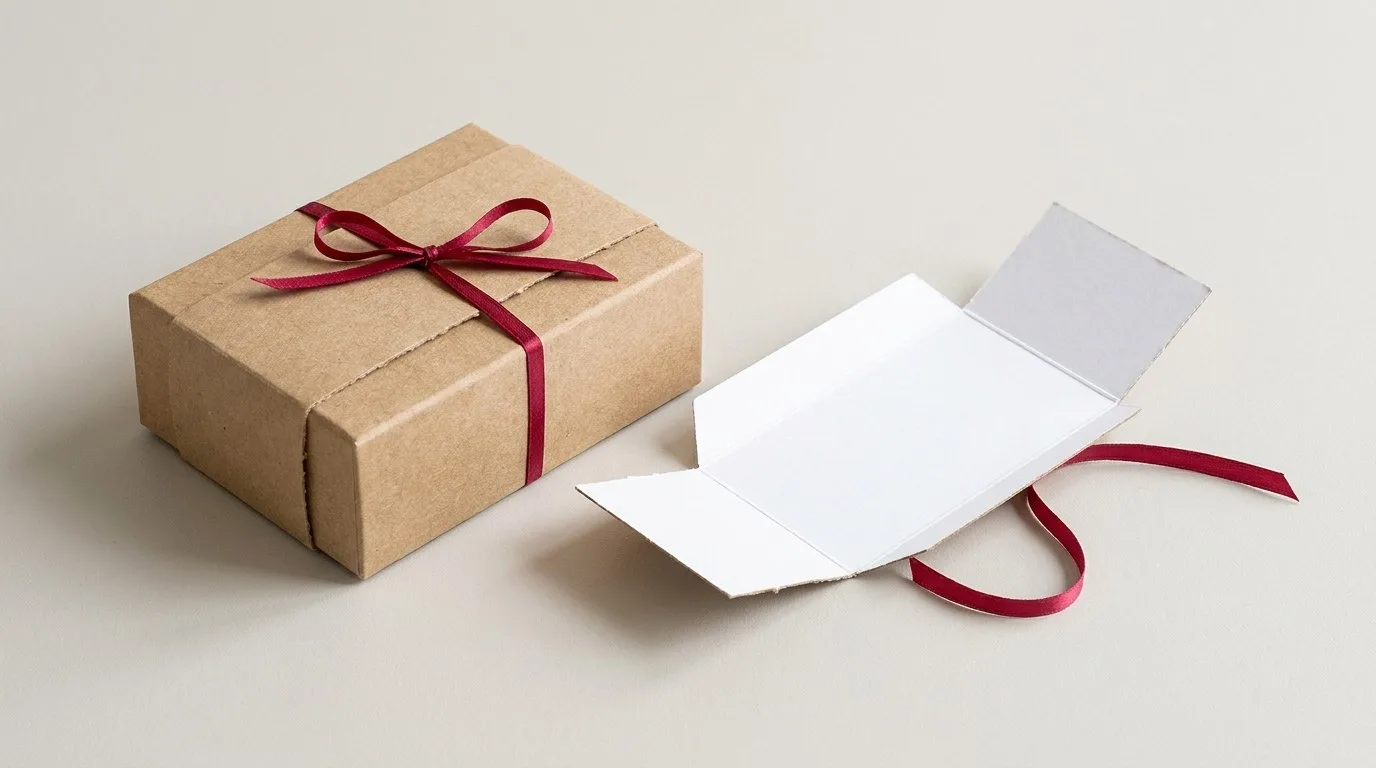
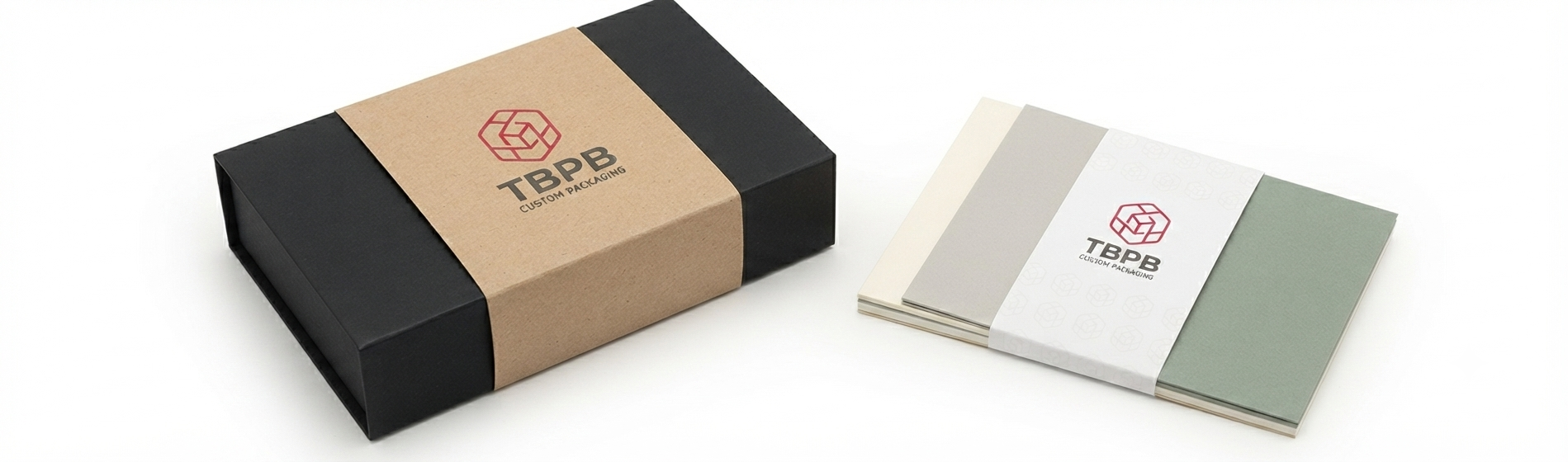
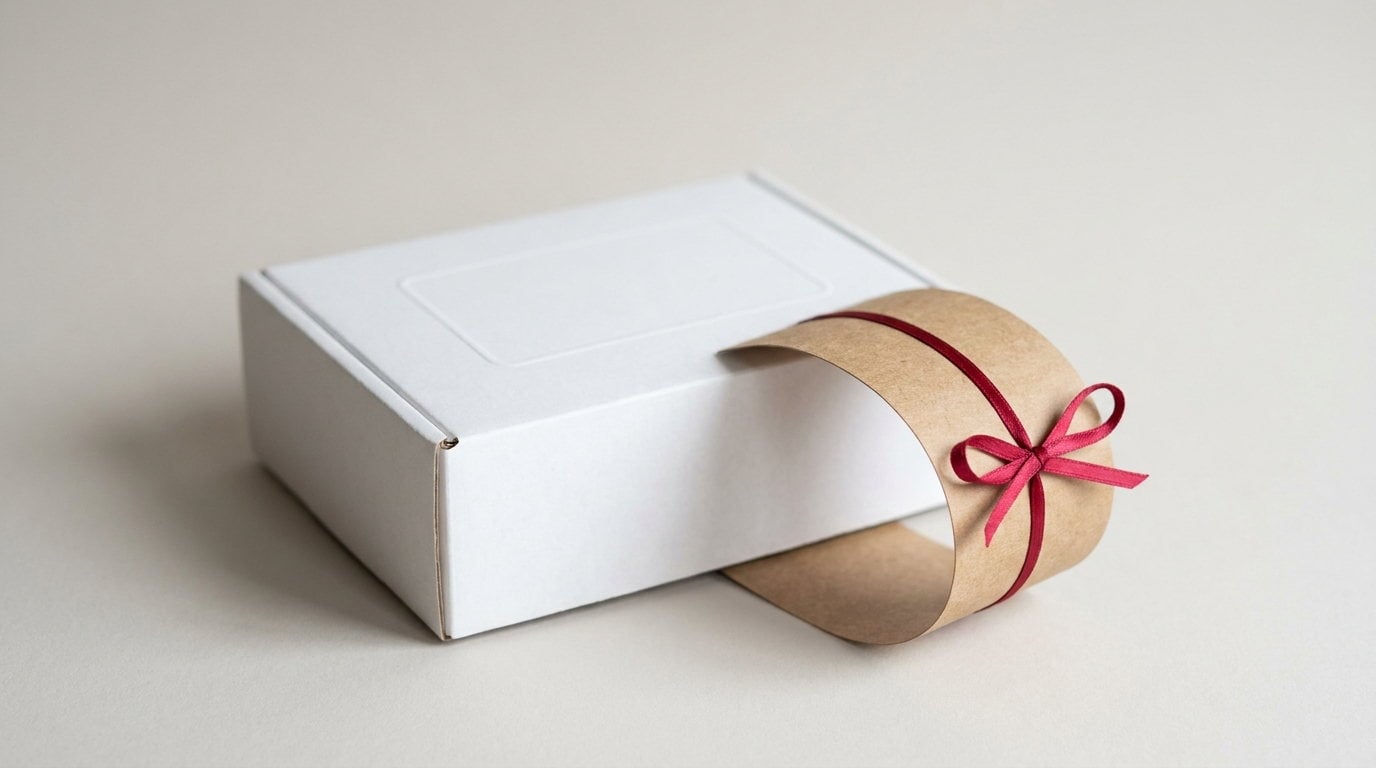


A custom belly band is a printed strip of paper or thin paperboard that wraps around the middle of a product or bundle to carry your logo, barcode and details without a full box. TBPB prints belly bands to your measurements with no minimum order, and if you bring a written quote for the same specs we will beat it.
What a belly band does that a box cannot
A band is the lightest branding you can put on a product. It leaves the item visible, so a soap bar, a folded towel or a rolled scarf sells itself, while the band supplies the name, scent or size, a barcode and a few lines of copy. It also holds a bundle together: a set of napkins, three candles, a stack of cards or a pair of socks stay as a unit. Compared with a box, it uses far less material and packs away flat, which matters when you handle thousands of units.
The limit is protection. A band does not shield the product from crushing or dust. If the item needs that, pair the band with a sleeve or box, or use a full carton instead.
How to measure a belly band
Wrap a strip of paper around the product at the point where you want the band, snug but not tight. Mark where the ends meet, flatten it, and measure. That length is the circumference. Add about 1/2 inch for the overlap where the band is glued or sealed, and a little slack if the product is soft and compresses. The width is a design choice: a thin band of about an inch is discreet, while a wider one gives room for a barcode and several lines of text. Send us the circumference, the width and the quantity and we draw the dieline.
Paper, print and closure
Bands run on lightweight text stock, heavier cover stock or thin folding carton paperboard. Lighter paper wraps tighter around soft items, and board holds a firmer shape around rigid ones. Kraft paper gives a natural, handmade look for soap and candles. Print can be full colour CMYK or Pantone matched, with matte or gloss coating, foil stamping or embossing on the logo. The band closes with a glue seam, a sticker or a piece of tape across the overlap, and you can discuss a tear-away perforation if you want the customer to see it was opened.
Design-wise, remember that a band is read from the side while the product sits on a shelf or in a basket. Keep the brand name on the face that points outward, put the barcode where a scanner can reach it without unwrapping, and leave the overlap zone free of text because the seam will cover it. Printing on the inside of the band is a nice surprise for soap and candles, where a short care note or a thank you line shows only after the customer slides it off.
- Material: text paper, cover stock, kraft paper or thin paperboard
- Print: full colour CMYK or Pantone matched, one or both sides
- Finishes: matte or gloss coating, foil stamping, embossing
- Closure: glued seam, sticker, tape or tuck slot
- Use cases: soap, candles, linens, napkins, books, folded apparel, bundled sets
Where bands end and other formats begin
If a product needs to hang on a peg, a band will not do the job, and header card packaging is the better format. For wrapping and cushioning, pair a band with custom tissue paper, and use custom packaging tape to carry the brand on the outer shipper. The wider custom retail packaging range covers the full-box options.
To get started, send the circumference and width of the band, plus the quantity, even if it is a single band for a sample. We draw the dieline and quote it.
Frequently asked questions
What is a belly band in packaging?
A belly band is a printed strip of paper or thin paperboard that wraps around the middle of a product or bundle. It carries a logo, barcode and short copy, holds items together, and leaves most of the product visible. It is lighter and cheaper to store than a full box.
How do I measure a belly band?
Wrap a strip of paper snugly around the product, mark where the ends meet, and measure the length. Add about 1/2 inch for the overlap where the band is glued or taped. Choose a width that fits your barcode and copy. Send those numbers and we draw the dieline.
Is there a minimum order for belly bands?
No. TBPB sets no minimum order, so you can order a single band to test the fit around your product or thousands for a production run. Sampling first is wise because paper stretch and soft products can shift the final measurement slightly.
What can I use belly bands for?
Common uses include soap bars, candles, linens, napkins, books, folded apparel, socks, and bundled sets of small items. Anything that looks good visible and needs a name, barcode or light seal suits a band. Items that need crush protection need a box or sleeve as well.
What paper should I choose for a belly band?
Lighter text stock wraps tightly around soft items like linens, while cover stock or thin paperboard keeps a firmer shape around rigid items. Kraft paper gives a natural, handmade look. Tell us the product and how it will be handled and we will suggest a stock.
Can a belly band replace a box?
Only if the product does not need protection from crushing, dust or moisture. A band works for bars of soap, folded fabric and bundles that sit on a shelf. For fragile or shipped items it works best alongside a box, sleeve or mailer rather than instead of one.
More Custom Retail Packaging
See the full Custom Retail Packaging range, or explore related options with no minimum order and our best-price guarantee: