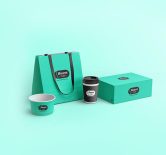
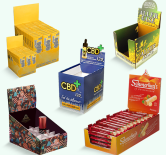

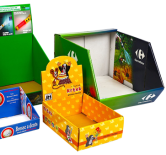
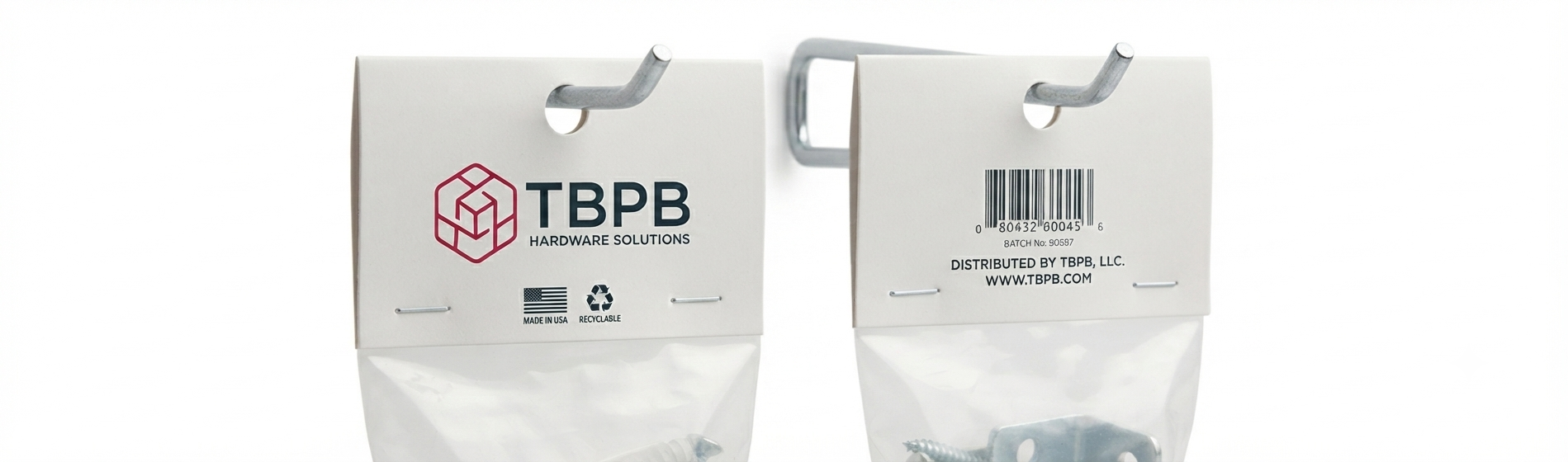
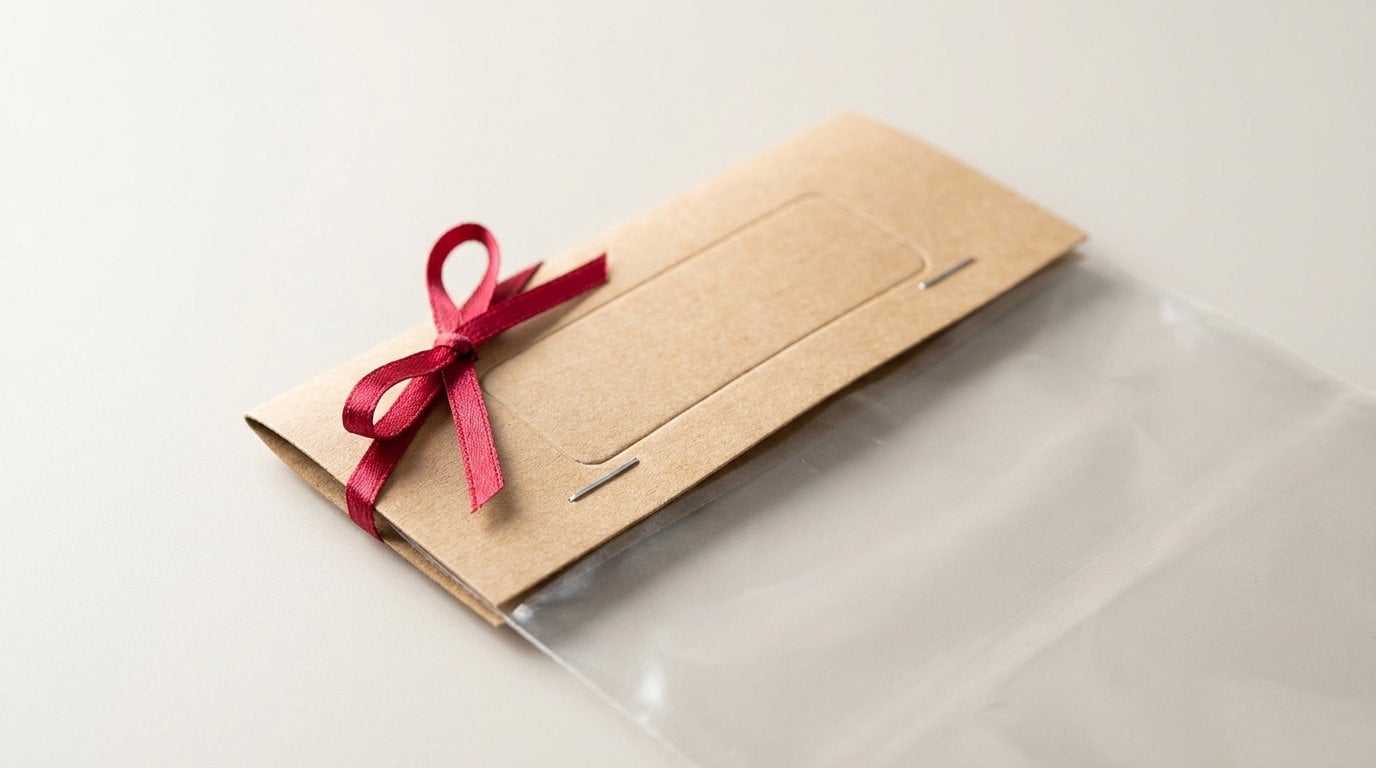


A header card is a printed cardstock topper that folds over the opening of a bag and turns it into a shelf-ready, hangable retail package. TBPB prints custom header cards with no minimum order, and the price-beat guarantee means we will beat a written quote for the same specs.
How header card packaging works
The setup is simple. You fill a clear poly bag, fold the card over the open end and secure it with staples, a heat seal or adhesive, depending on the product. A punched hang hole at the top lets the bag go on a peg hook in a store or on a display rack. The card carries the branding, the product name and the details a shopper needs, such as quantity, size or instructions, while the bag shows the product itself.
That makes header cards a good fit for small accessories, craft supplies, hardware, hair accessories, stickers, pet treats in sealed bags, jewelry and similar low-ticket items. They solve a specific problem: how do you display something that is too small or too loose to stand on a shelf by itself.
Sizing the card to the bag
Start with the bag. Measure its width and the height of the opening, then match the card width to the bag width, or make it a touch narrower so the card does not overhang. The folded card needs enough height for a fold line, your artwork and the hang hole, with space around the hole so the card does not tear when the product has weight. A heavier item needs a larger margin around the hole.
Hole style matters too. A round hole suits standard peg hooks, and an euro slot suits slatwall and some retail fixtures. Check which one your retailer or display uses before you order, because swapping later means reprinting.
Board, print and finish
Header cards are usually printed on mid-weight cardstock, thick enough to stand upright on a hook but still easy to fold. A fold score keeps the crease straight. Full-color CMYK covers most branding, a Pantone match handles an exact brand color, and aqueous coating protects the print from fingerprints on a busy rack. Matte looks calmer, gloss makes color pop. Uncoated stock gives a natural feel but marks more easily.
- Custom width and height to fit your bag opening
- Round hang hole or euro slot
- Single or folded card, scored for a clean crease
- CMYK or Pantone print with matte or gloss coating
When a header card is not enough
If your product needs a rigid shell, or the item is fragile, a card on a bag will not protect it. Consider a hang tab box, which hangs on a hook and also holds shape, or step up to a straight tuck end box. Bags themselves can be sourced as custom poly bags, which pair naturally with a topper. You can also add a belly band for a branded wrap without a full card. More options live in the custom retail packaging range.
Design details that save a reprint
Most header card mistakes are layout mistakes, so it is worth slowing down on the artwork. Keep the hang hole area clear of text and logos, because the punch removes that material. Leave a margin along the fold, since a crease through a headline looks careless. Put the product name on the front panel that faces the shopper, and leave the back for the details that are required, such as a barcode, usage notes or a company address. If the bag is clear, remember that the lower edge of the front panel sits right against the product, so strong contrast between the card and the contents helps the pack read at a glance.
Always request a proof and fit-check one card on a real filled bag before approving a full run. It takes minutes and catches problems that a screen mock-up never shows.
Get a quote
Send the bag dimensions, the hang hole style and the quantity you need, even if it is a single sample. TBPB will draw the card layout, confirm the fold and quote it.
Frequently asked questions
Is there a minimum order for custom header cards?
No. TBPB has no minimum order for custom header cards. You can order a single sample card to test the fit on your bag, then reorder in volume.
What is a header card used for?
It folds over the top of a bag to give a small product a branded, hangable retail presentation. It carries your logo and product details, and the hang hole lets the bag hang on a peg hook or rack.
How do I size a header card?
Match the card width to your bag width, then allow height for the fold, your artwork and the hang hole. Give the hole a generous margin if the product is heavy, so the card does not tear on the hook.
Round hole or euro slot, which should I choose?
A round hole suits standard peg hooks. A euro slot suits slatwall and some retail fixtures. Ask your retailer which fixture they use before ordering, since changing it later means a reprint.
How is the header card attached to the bag?
Most are stapled or heat-sealed over the bag opening, and some use adhesive. The method depends on the bag material and the product weight. Tell us how you plan to attach it and we will build the fold accordingly.
Can I print both sides of the card?
Yes. The front carries branding and the back can carry instructions, barcodes or ingredients. You are responsible for any regulatory or labeling copy on the card, and TBPB prints the artwork you supply.
More Custom Retail Packaging
See the full Custom Retail Packaging range, or explore related options with no minimum order and our best-price guarantee: