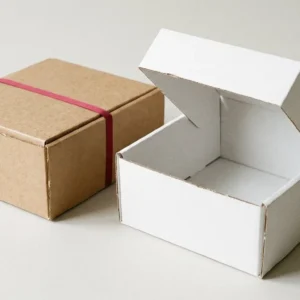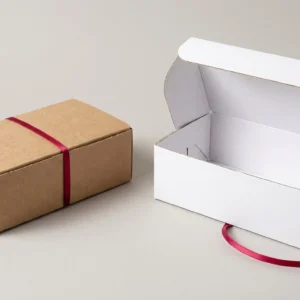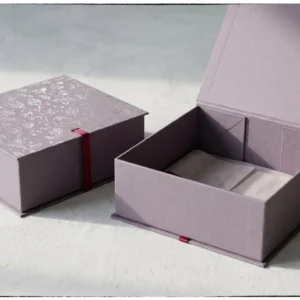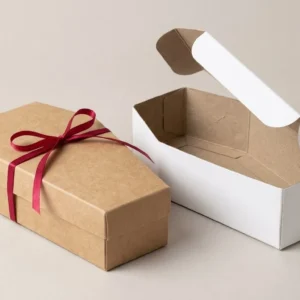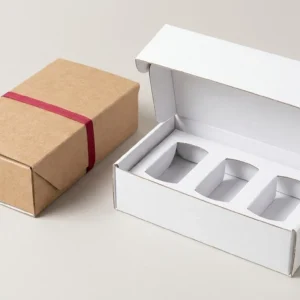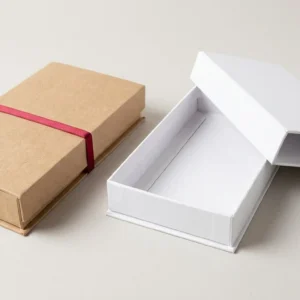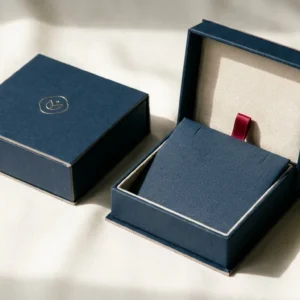


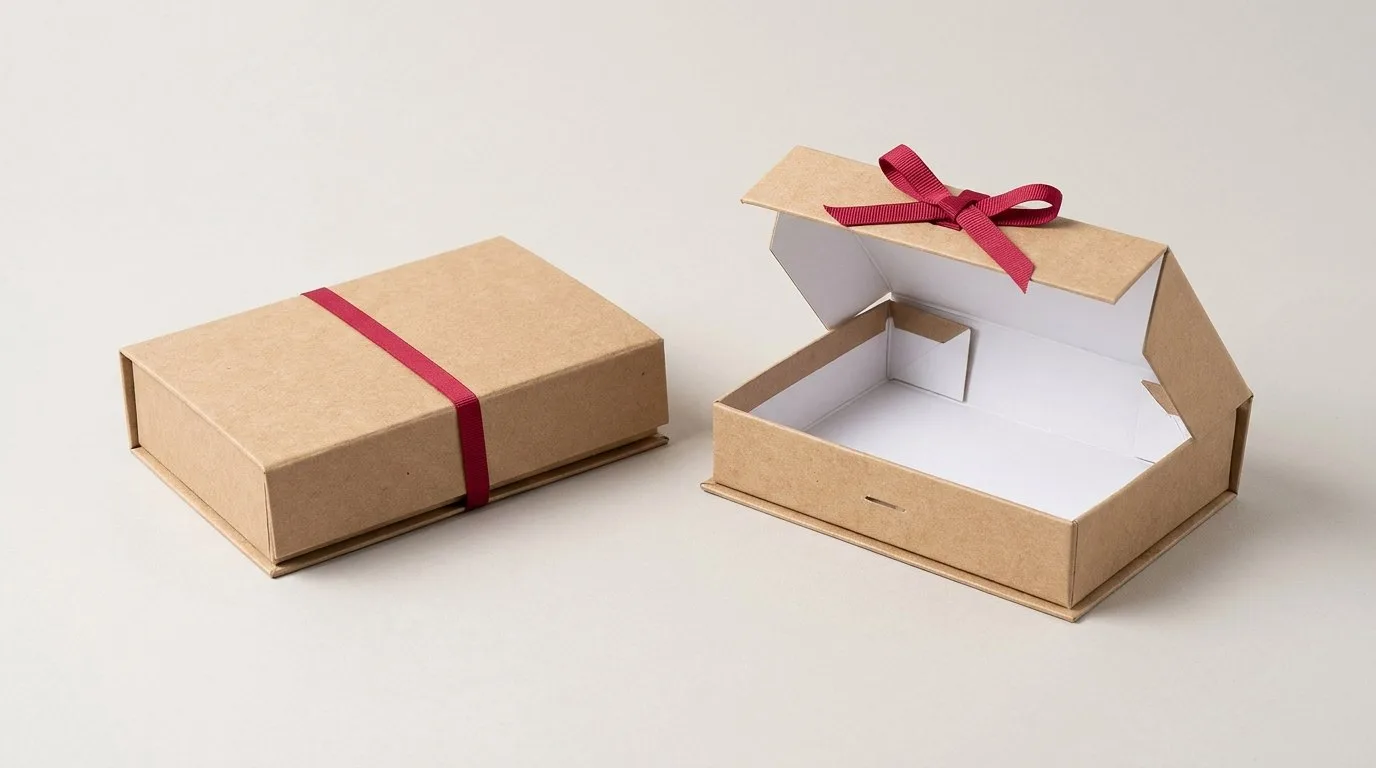


Custom belt boxes are long, shallow cartons made to hold a belt flat or coiled, with enough protection that the buckle does not scratch the leather or the print. TBPB makes them to your belt size with no minimum order, and we beat any written quote for the same specs.
Flat or coiled: decide this first
A belt can go in a box two ways, and the choice shapes everything else. A flat box holds the belt stretched out, which keeps the leather free of creases and suits gift sets and higher-priced belts. It makes for a long, narrow carton that can be awkward to display and ship. A coiled belt sits in a squarer box, usually a tuck-top or a square-bottom style, which is easier to stack and cheaper to ship, but a tight coil can leave a permanent curl in stiff leather. If your belts are heavy full-grain, flat is the safer call.
Protecting the buckle and the finish
The buckle is the part that damages things. A heavy metal buckle can dent a thin carton wall and scratch the belt body. Ask for a die-cut paperboard insert with a pocket for the buckle, or a small cradle that keeps it away from the leather. Tissue wrap, such as custom printed tissue paper, protects the surface from rubbing and adds a branded reveal at the same time.
For shipping direct to a customer, put the belt carton inside a corrugated outer. Folding cartons are display packages and a belt box with a hard buckle will tear through a thin carton at the corner.
Leather goods bring their own habits. Shoppers press the box between finger and thumb to judge quality, so a flimsy wall tells them the belt inside is cheap too. If your belts sit at the higher end of the market, step up the board weight and add a soft-touch finish; if volume matters more than feel, a lighter board is fine.
Board, size and print
Folding carton paperboard in the 16 to 24 pt range, or a 350 gsm class SBS, is a standard choice for belt boxes. Kraft board suits a casual brand. White board gives a cleaner canvas for gradients and fine type. To size the box, lay out the belt as it will be packed, measure the full length and the buckle width, and add about 1/8 inch of clearance per side. If you sell a range of lengths, a single carton width with different lengths keeps your ordering simple, though you will need a dieline per length.
- Flat, coiled, or tuck-top styles to suit your belt
- Folding carton or kraft paperboard, with optional die-cut buckle insert
- CMYK or Pantone print, matte or gloss coating, soft-touch lamination
- Foil stamping, embossing and spot UV for logos
- Window, belly band or sleeve options for product visibility
Think about how the box is opened. Belt boxes are often handed over at a counter or opened as a present, so a lid that lifts cleanly feels better than a tuck flap that has to be pried. If the box sits on a shelf, put the brand on the long front panel, since that is the face people see. A narrow end panel is the right place for a size label, which saves staff from opening boxes to check lengths.
A good pairing for accessories
Belt boxes often go out as part of a gift set with a wallet or a watch, so keep the artwork consistent across them. Our watch boxes are a natural companion, and a custom belly band can tie a set together without a full box. For the wider range of formats in the same family, see the custom retail packaging category.
Send the belt length, the buckle width and a quantity, even one, and we draw the dieline and quote it.
Frequently asked questions
Do custom belt boxes have a minimum order?
No. TBPB has no minimum order, so you can order a single belt box for a sample or a full production run. Send the belt length, buckle width and quantity and we draw the dieline and quote it. We beat any written quote for the same specs.
Should a belt be packed flat or coiled?
Flat keeps the leather free of creases and suits gift-quality belts, but needs a long, narrow box. Coiled fits a squarer carton and ships more easily, though a tight coil can leave a curl in stiff leather.
How do I protect the buckle inside the box?
Use a die-cut paperboard insert with a pocket for the buckle so it cannot press against the belt body. Wrapping the belt in tissue also reduces rubbing. For heavy buckles, add a corrugated outer when shipping.
What board should I use for belt boxes?
Folding carton paperboard in the 16 to 24 pt range is a common choice. Kraft board suits a casual brand, while white board prints gradients and fine detail more cleanly. Tell us the buckle weight so we can advise.
How do I size a belt box?
Lay the belt out exactly as it will be packed, measure the full length and the widest part of the buckle, and add about 1/8 inch per side. Send those numbers and we build the dieline around them.
Can I add a window to a belt box?
Yes. A window shows the leather grain or buckle without opening the box. Keep it small enough that the carton keeps its stiffness, and put it on the panel that faces the customer on the shelf.
More Custom Retail Packaging
See the full Custom Retail Packaging range, or explore related options with no minimum order and our best-price guarantee: