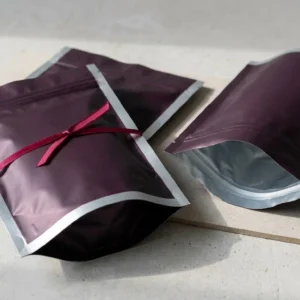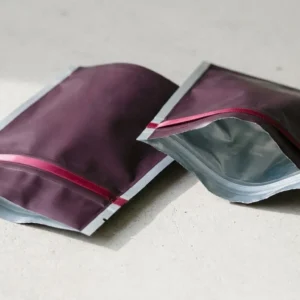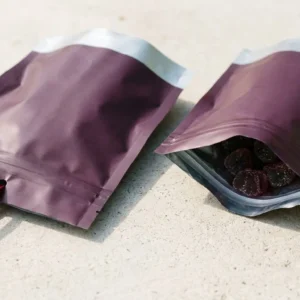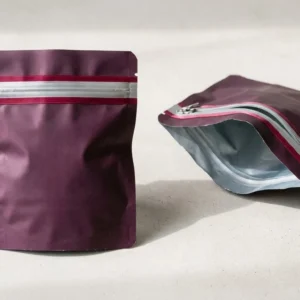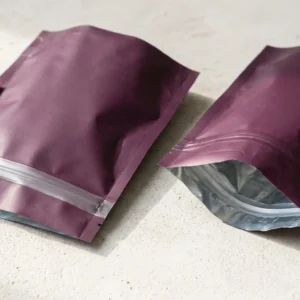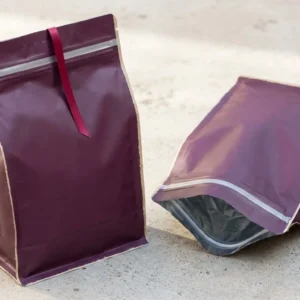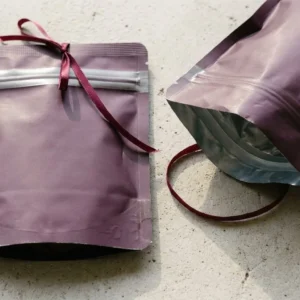


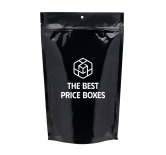
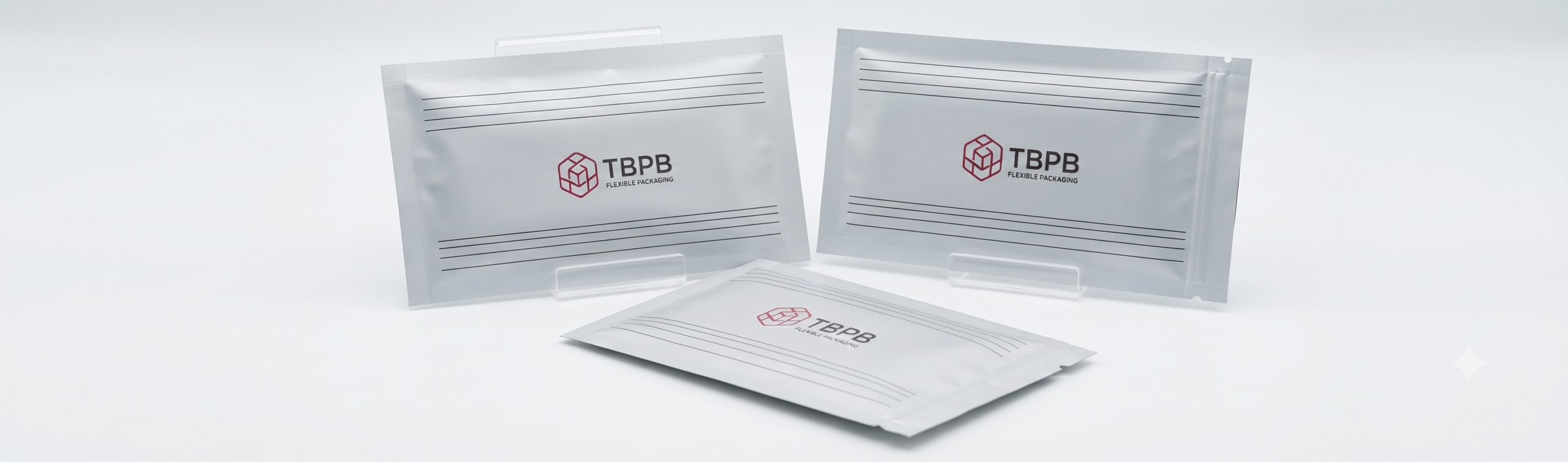


A custom flat pouch is a film bag sealed on three sides with an open top for filling, and no bottom gusset, so it lies flat rather than standing up. It is the pouch for single servings, samples, sachets, powders, tea, seasoning, small accessories and trial sizes. TBPB prints them to your size and design with no minimum order, and we will beat a written quote on matching specs.
Flat pouch versus stand-up pouch
The choice comes down to how the product is sold. A stand-up pouch has a gusset at the base that opens to form a flat bottom, so it sits on a shelf and holds more. A flat pouch has no base, so it hangs from a peg, lies in a box, ships in a mailer or is handed over at a counter. It also uses less film for the same width, which matters when you are filling thousands of small portions. If the product needs to stand on a shelf by itself, take a look at our stand-up pouches. If it travels flat or in a larger carton, a flat pouch is the more efficient choice.
Film, seals and what they do
Mylar-style pouches are laminates: a printable outer layer, a metallised or foil barrier layer, and an inner heat-sealable layer. The barrier slows oxygen, moisture and light, which helps protect powders, tea, spices and other dry goods from going stale. Clear films let you show the product but give up barrier performance, so many brands use an opaque body with a window, or a fully opaque pouch.
The three heat seals hold the pouch together. A wide, even seal along the sides and bottom is what keeps contents in. Keep product away from the seal area during filling, because dust, oil or powder in the seal is the usual cause of leaks. Tell us how you will fill and seal the pouch, by hand or machine, so the dimensions leave enough seal width.
Options for flat pouches
- Full-colour print on the outer layer, matte or gloss finish
- Tear notch on the side for easy opening without scissors
- Resealable zipper near the top for portions the customer reuses
- Hang hole for peg display
- Clear window or fully opaque body
- Custom width and height to suit your fill
Zippers add stiffness and take up space at the top. If the pouch is single-use, a tear notch alone is simpler and lighter.
Sizing for the fill
Size by volume, not weight. Fill a sample with your real product, then add space above the fill line for the seal and a zipper if you use one. Flat pouches look fuller and smarter when the fill is generous without pressing against the seals, so allow a little headspace. Our heat seal mylar bags page and the wider mylar bags category give more on the range. Regulated products need compliant labelling, which is the brand’s responsibility, so check with your own adviser.
Where flat pouches go wrong
Two mistakes come up again and again. The first is sizing the pouch to the product weight and finding it too snug once the seal area is accounted for. The second is putting small type close to the seal, where heat and pressure can distort the print. Keep critical text and the logo in the central panel, and leave a clear margin around the edges. If the pouch will be machine-filled, check the machine’s format and the pouch width before you finalize the design, since a pouch that is a few millimetres off can jam a filling line. When in doubt, order a printed sample and run it through your real process.
Next step
Send what goes in the pouch, the fill amount and the quantity, even if it is a single pouch. We recommend a size, set up the template and quote it.
Frequently asked questions
Is there a minimum order for flat pouches?
No. TBPB has no minimum order on flat pouches. You can order a single printed pouch to test the size and seal, then place a larger order once you are happy. Send the size, finish and quantity and we quote exactly that.
What is the difference between a flat pouch and a stand-up pouch?
A flat pouch is sealed on three sides and lies flat, while a stand-up pouch has a bottom gusset that lets it stand on a shelf. Flat pouches suit single servings, samples and mailed items. Stand-up pouches suit retail shelf display and larger fills.
What can I put in a flat pouch?
Dry, low-weight products: powders, tea, spices, seasoning, trial-size cosmetics, small accessories and single-serve portions. The right film depends on the contents, so tell us what the product is and we will suggest a suitable structure.
Can flat pouches be resealed?
Yes. A zipper can be added near the top for products the customer opens more than once. For single-use portions, a tear notch alone is simpler and keeps the pouch thin. Choose based on whether the customer will use the contents in one go.
How do I choose the size of a flat pouch?
Fill a sample pouch with your real product and measure the volume. Then add space above the fill line for the heat seal and any zipper. Size by volume rather than weight, because products of the same weight can fill very differently.
Can I print a full design on the pouch?
Yes. We print full-colour artwork on the outer layer from your supplied file, in matte or gloss. Leave the seal areas and zipper zone free of critical text. You are responsible for label content and regulatory compliance for your product.
More Custom Bags
See the full Custom Bags range, or explore related options with no minimum order and our best-price guarantee: