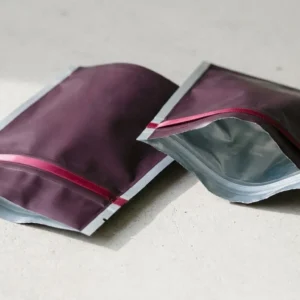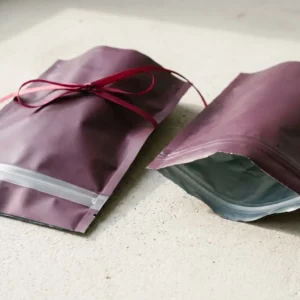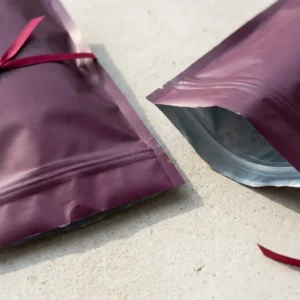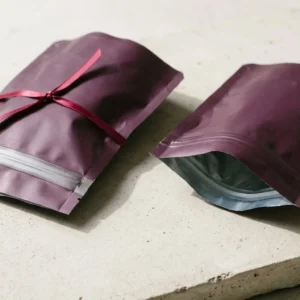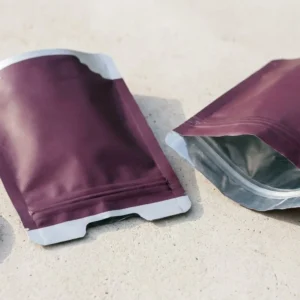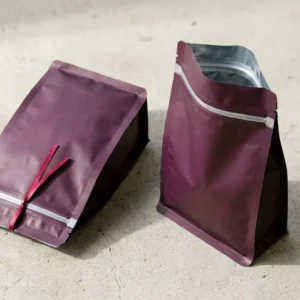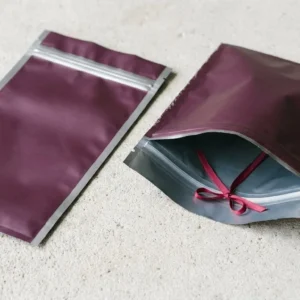

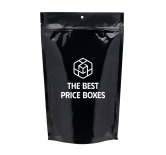
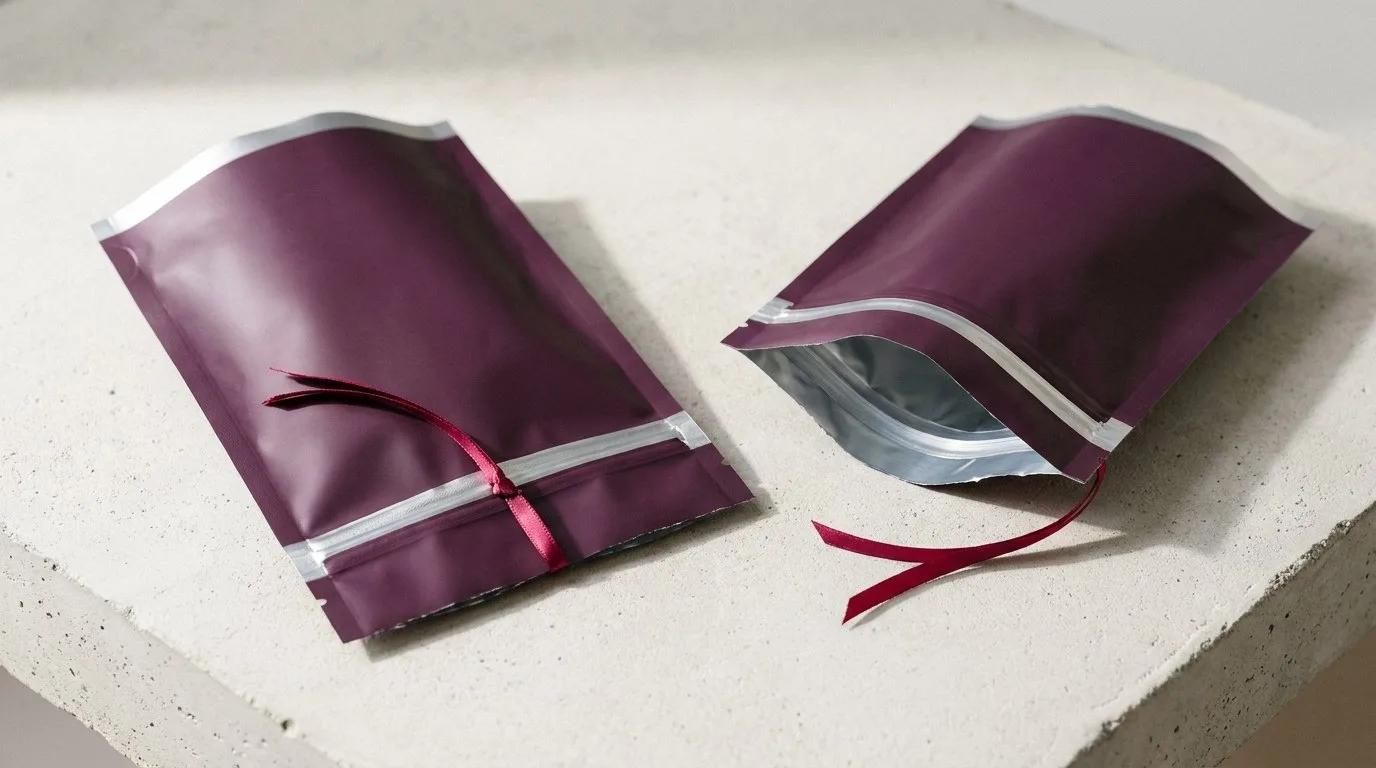


Custom mylar vacuum seal bags are laminated barrier bags designed to have the air drawn out before the final heat seal. TBPB prints them to your artwork with no minimum order, and the price-beat guarantee applies if you bring a written quote for the same specifications.
What makes a bag vacuum-ready
A standard barrier pouch is built to hold product. A vacuum bag is built to withstand being squeezed. The laminate has to stay intact when the air is pulled out and the film tightens around the contents, particularly at corners, folds and any sharp edges of the product. Many vacuum sealers also need a textured or channelled surface on at least one side so air can escape evenly. Check what your sealer expects before you finalize the film, because a smooth bag on a channel-type machine can seal poorly or not at all.
Sizing for the product after the air is gone
Size from the product volume once it has settled, not from the loose fill. Add room above the product for the sealing bar, usually an inch or more depending on your machine. A bag that is too tight leaves no margin for a clean seal, and a bag that is too large wastes film and leaves wrinkles that can trap air. For anything with sharp edges, such as crushed dry goods or brittle pieces, consider a thicker film or an inner layer.
Barrier, print and finish
The barrier layer is typically metalized film or foil within the laminate, which cuts light and slows moisture and oxygen. Print is full colour in matte or gloss with Pantone matching for brand colours. A clear window can be added, but it lets in light and may flex under vacuum, so most vacuum bags stay fully printed. Flat bags work well for powders and small fills; gusseted bags suit bulkier products. No bag is a permanent oxygen barrier, so test your product if shelf life matters.
When a different bag makes more sense
If customers will open and close the bag many times, a mylar ziplock bag is more practical, because a vacuumed bag is awkward to reseal once opened. For flat, thin items, a mylar envelope is simpler. If the goal is a heat-sealed bag with no vacuum step, the heat seal mylar bags are the straightforward option. The full mylar bag range is in one place.
Common trouble spots at the sealer
Most failed vacuum seals come from three things: product dust or oil on the sealing area, a bag filled too close to the top, or a bag that does not match the machine. Wipe the sealing zone before each pass and leave enough clear film above the fill. Fine powders can be drawn into the sealing channel, so fill carefully and sometimes add an inner liner. If you are packing a product that releases moisture, test a few bags over a week before approving a full order.
- Use: vacuum or evacuate-and-seal packing of dry goods and powders
- Film: barrier laminate, smooth or textured depending on your sealer
- Print: full colour, Pantone match, matte or gloss
- Shape: flat or gusseted
- Quantity: no minimum order, from one test run to production
Food, supplement and cosmetic labelling, and contact-material suitability, are yours to confirm with your own regulatory adviser; TBPB prints the artwork you supply. Send the product volume, your sealer model if you know it, and a quantity, even one, and we will quote the bag.
Frequently asked questions
What are mylar vacuum seal bags?
Mylar vacuum seal bags are laminated barrier bags built to have air removed before they are heat sealed. Removing air reduces the pack size and limits oxygen contact. They are used for dried herbs, powders, coffee and other dry goods that are sensitive to light and moisture.
Is there a minimum order for custom vacuum seal bags?
No. TBPB has no minimum order, so you can order a small test run or full production. Send the product volume, your vacuum sealer type if you know it, and the quantity, and we will confirm the structure and quote it.
Do I need a textured bag for my vacuum sealer?
It depends on the machine. Channel-type household sealers usually need a textured or embossed surface on at least one side so air can escape. Chamber sealers work with smooth bags. Tell us which sealer you use and we will match the film.
How big should the bag be?
Size from the product volume after the air is removed, then add room above the product for the sealing bar, often an inch or more. A bag that is too tight gives no margin for a clean seal, and one that is too large wrinkles and traps air.
Can I reseal a vacuum seal bag after opening it?
A vacuum bag is designed for a one-time seal, and it is awkward to reseal cleanly. You can cut it open and heat seal it again with some loss of length. If customers will open the bag repeatedly, a ziplock bag is the more practical choice.
Are mylar vacuum seal bags food safe?
That depends on the film structure and on your own regulatory requirements, and TBPB does not make that claim for you. If you are packing food, confirm contact-material and labelling requirements with your own regulatory adviser before you order.
More Mylar Bags
See the full Mylar Bags range, or explore related options with no minimum order and our best-price guarantee: