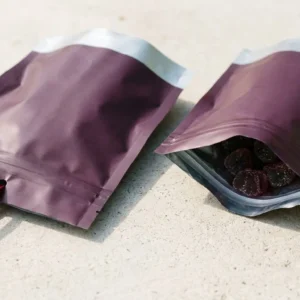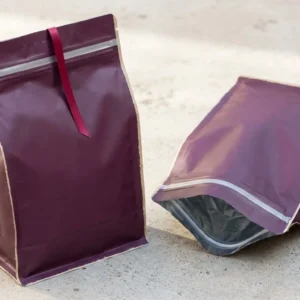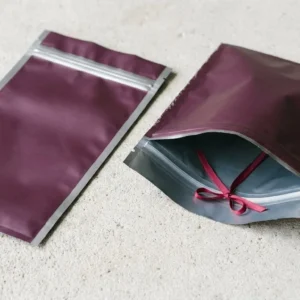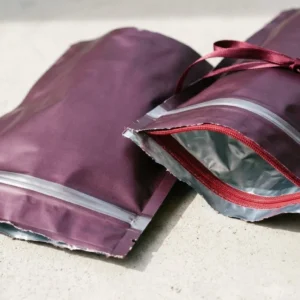

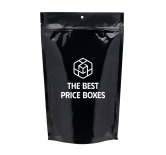
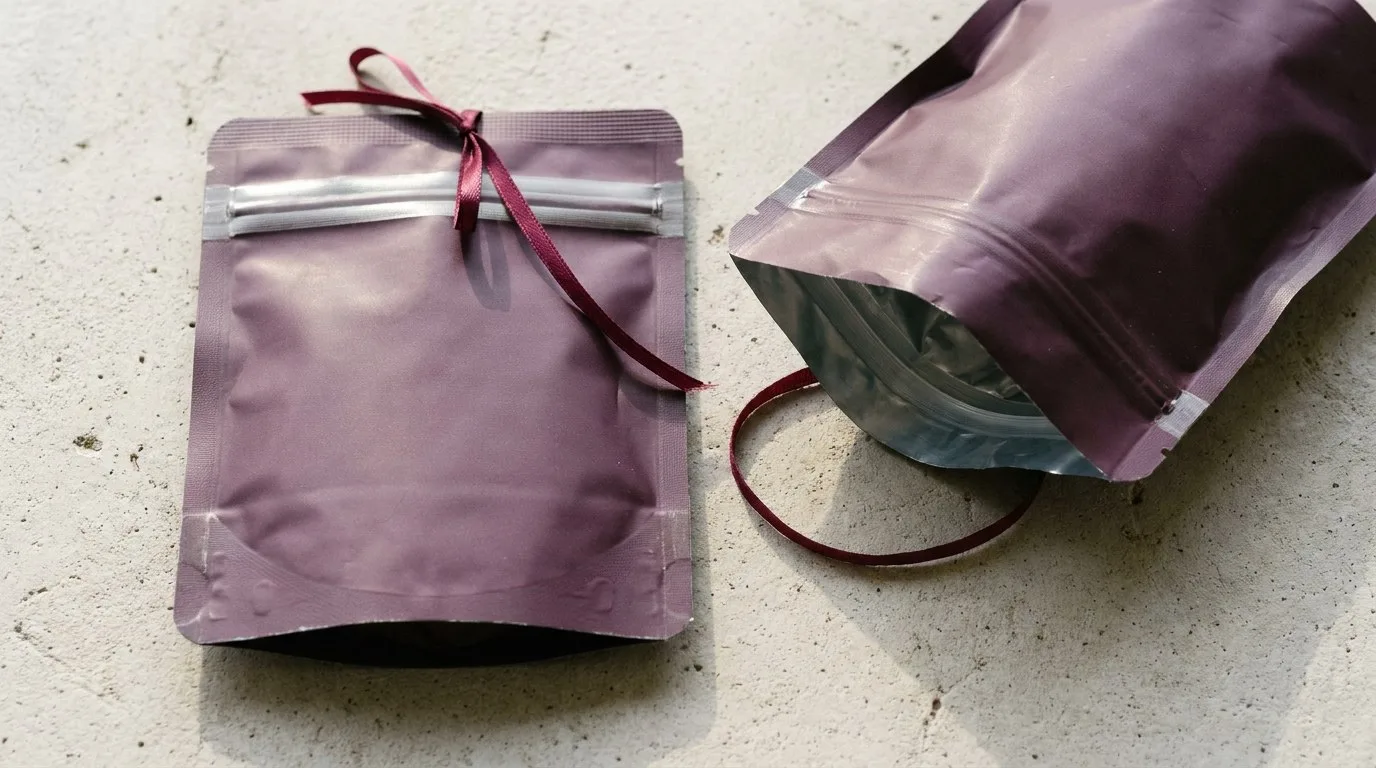


Mylar food bags are printed pouches made from layered barrier film, used to sell and store dry foods such as snacks, granola, spices, baking mixes and coffee. TBPB prints them custom with no minimum order, and a written quote for the same specs gets beaten under our price-beat guarantee.
What belongs in a mylar food bag
Dry and low-moisture products are the sweet spot. Crackers, popcorn kernels, trail mix, jerky-style snacks, powdered drink mixes, tea, coffee, dried fruit, pasta and spice blends all travel well in a foil-layer pouch, because light, oxygen and humidity are what ruin them. Wet, oily or acidic fills are a different job. Sauces, fresh produce and anything that needs refrigeration need packaging designed for that, and a standard dry-goods pouch is not it.
Be honest with yourself about shelf life. A good barrier slows staleness, but it does not stop it, and it cannot rescue a product sealed with too much moisture in it.
Pouch style and closure
Stand-up pouches give you a billboard front panel and sit upright on a shelf, so they are the default for retail. Flat pouches, sealed on three or four sides, suit single-serve portions, samples and sachets and they cost less shelf space. A press-to-close zipper makes sense when the customer will open the bag more than once. A tear notch gives a clean first opening. Our stand-up mylar bags and flat pouches pages cover both styles in detail, and if your goal is long-term pantry storage rather than retail, mylar food storage bags are the closer fit.
- Stand-up, flat three-side seal or four-side seal
- Press-to-close zipper, tear notch and hang hole
- Clear window to show the product, where the format allows
- Matte or gloss finish with full-colour print and Pantone matching
- Degassing valve for coffee
- Sizes drawn around your fill weight and bulk density
Sizing from the food, not the label
Bulk density decides the bag size. Two ounces of popcorn kernels and two ounces of puffed snacks need very different pouches. The reliable method is to fill a plain test pouch or a jar with your real product, measure the volume, then add space at the top for the seal and the zipper. Send us that measurement or the fill weight and a description of the food, and we will recommend width, height and gusset depth.
Seals deserve a word too. A three-side or four-side flat pouch is sealed by you after filling, usually with an impulse or heat sealer, and an uneven seal is the usual reason a good barrier bag still lets air in. Run a few test seals on sample bags, squeeze them gently, and check for channels along the seam before you fill a full batch. If you also plan to add an oxygen absorber, that is a decision for your food adviser, not something to guess at.
Food labelling is your side of the table
Food labelling in the US covers ingredients, allergens, net weight and a nutrition panel in most cases, and the rules depend on the product. We print the artwork you supply and do not write or check label content. We also do not make blanket claims about food-contact approvals on a product page. If your retailer or regulator asks about the film structure, raise it with your own regulatory adviser and ask us for the specification of your quoted bag.
Send the fill weight or bag dimensions, the quantity, even if it is one, and your artwork. We draw the template and quote it. The rest of the mylar bag range shows other sizes and finishes.
Frequently asked questions
Is there a minimum order for custom mylar food bags?
No. TBPB has no minimum order, so you can order a single bag to test fill and closure or ten thousand for distribution. Each run is printed to your artwork and quoted separately, and our price-beat guarantee covers a written quote for the same specification.
What foods can go in a mylar bag?
Dry, low-moisture foods are the best fit: snacks, granola, trail mix, tea, coffee, spices, baking mixes, dried fruit and pasta. Avoid wet, oily or refrigerated products unless you have tested them. A barrier film slows staleness but does not stop it, so shelf life still depends on your product.
Are mylar food bags food safe?
We do not make blanket food-contact claims on this page. Food-contact suitability depends on the film structure and your product, so raise it with your own regulatory adviser. Ask us for the specification of the bag in your quote, and test your product in a sample before you commit to a full run.
Which is better for food, a stand-up or a flat pouch?
Stand-up pouches suit retail shelves because they hold the front panel upright and carry a zipper well. Flat pouches suit single servings, samples and low-profile packs. If customers will reopen the bag, choose the stand-up with a zipper. If it is a one-time open, a flat pouch with a tear notch is enough.
Can I add a window to a mylar food bag?
Yes, where the format allows. A clear window shows the product, which helps with colourful or textured foods, but it lets in light and slightly reduces protection. For light-sensitive foods like coffee or tea, many brands skip the window and print a photo of the product instead.
What do you need from me to quote food pouches?
Send the fill weight or finished bag size, the food type, the quantity and your artwork. If you do not know the bag size, send a sample of the food or its volume and we will recommend dimensions. We then draw the template so you can see seals and closures before anything is printed.
More Mylar Bags
See the full Mylar Bags range, or explore related options with no minimum order and our best-price guarantee: