



Custom jewelry boxes are small printed boxes sized to hold a ring, earrings, a bracelet or a necklace, with your logo and colors on the outside. TBPB makes them with no minimum order, and our price-beat guarantee applies when you bring a written quote for the same specs from another supplier.
Size the box to the piece, then to the setting
Jewelry is the category where a few millimetres decide whether a box looks considered or careless. Measure the piece in the position it will rest, not laid flat on a desk. A ring in a slot stands taller than the same ring on its side. A necklace coiled in a loop takes more depth than you expect, and a bracelet that lies flat needs length and width, not much height. Add about 1/8 inch of clearance per side for a folding carton, then add the thickness of whatever sits inside, whether that is a foam insert, a card or a fabric pad. Send us the piece dimensions and the insert idea and we work out the interior.
What the insert does for you
The box is only half the protection. Loose jewelry slides, tangles and scratches, and a chain that rattles when the box is shaken tells the buyer the packaging was an afterthought. A cut insert holds the piece in place and makes the product look intentional when the lid opens. For ring and earring sets, a slotted foam insert is the usual answer. Our custom foam inserts are cut to your piece, so a ring does not tilt and earrings stay paired. Fit the insert to the box rather than the other way round.
Board, closure and finish
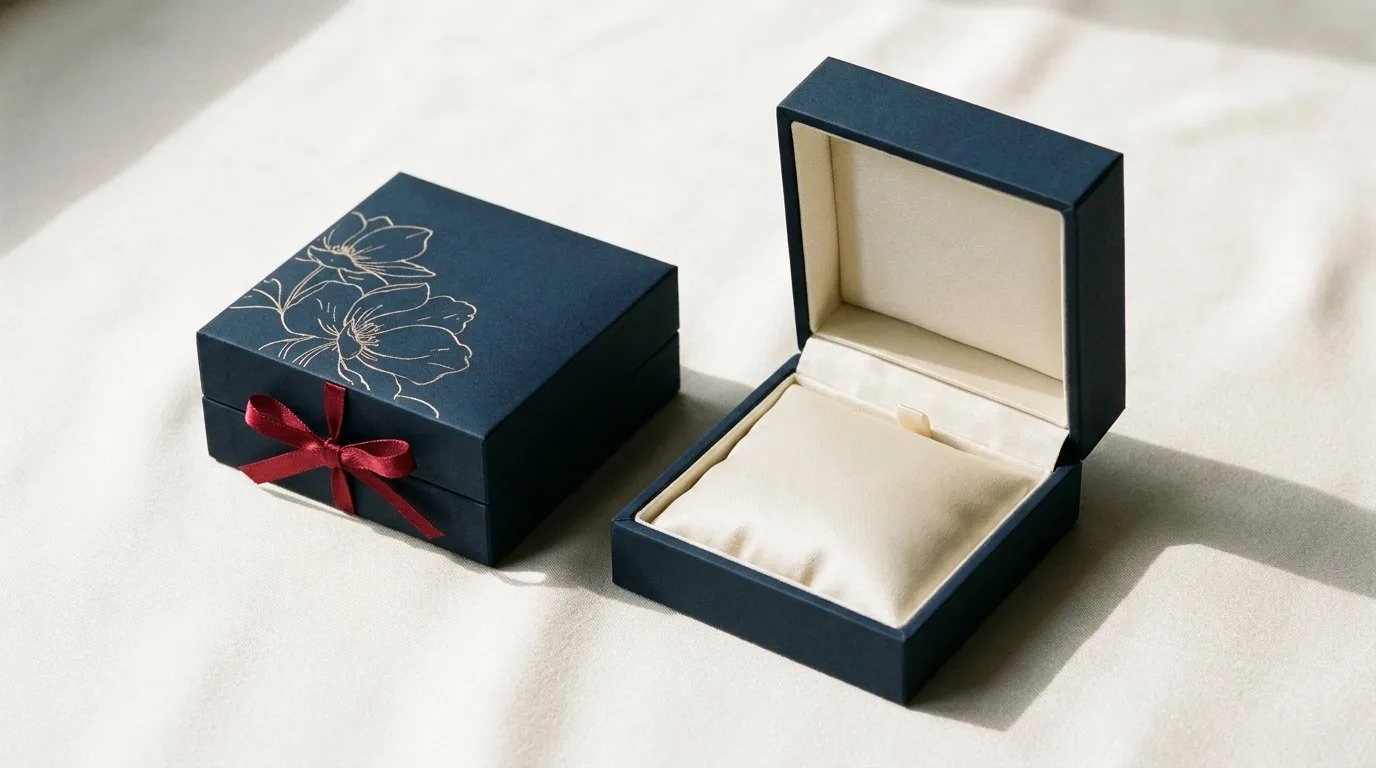
For a folding jewelry carton, we typically work with paperboard in the 16 to 24 pt class, or a thicker board when the box needs more structure. Common closures are tuck, lid-and-base and drawer-style sleeves, depending on how much ceremony the unboxing needs. Print is where jewelry packaging earns its keep: a matte aqueous or soft-touch finish feels like skin, spot UV highlights a monogram, and foil stamping in gold or silver on dark stock reads as jewelry immediately. These finishes work best when the design is simple. A single mark on a clean field usually beats a busy pattern.
- Pieces: rings, earrings, pendants, bracelets, watches and necklaces
- Board: folding carton paperboard, with kraft or white options
- Print: CMYK, Pantone match, foil stamping, embossing, spot UV where suitable
- Inserts: foam or card inserts cut to the piece, sized with the box
- Sizes: fully custom, drawn to your inside dimensions
It also helps to test the box with the real piece before you print a run. Close the lid, shake it gently, turn it upside down and open it slowly. If the piece shifts, the insert is too loose. If the lid fights you, the clearance is too tight. One sample answers both questions in a minute, and with no minimum order it costs you very little to check.
Shipping jewelry safely
A paperboard jewelry box is a presentation box, not a shipping box. If the order goes out by post, protect it in a mailer rather than sending the retail box bare. Our mailer boxes are made for that, and a little void fill stops the retail box from moving inside. For higher-value pieces, tell us how the parcel will travel and we will talk through closures and outer packaging that suit the shipment.
Other styles worth a look
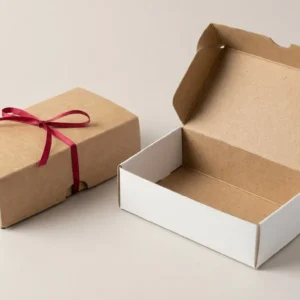
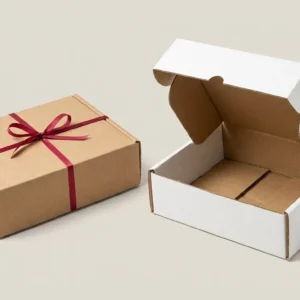
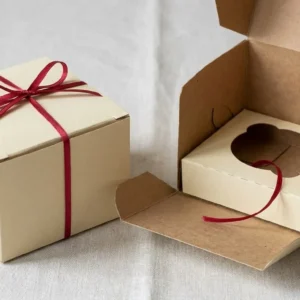
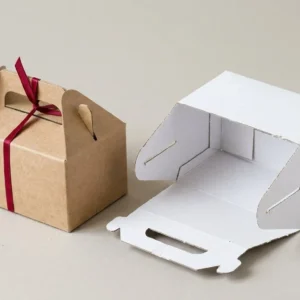
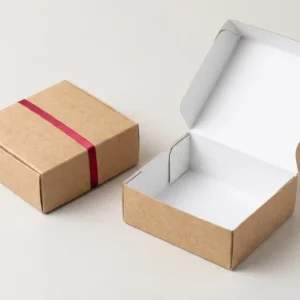
A natural, earthy brand may prefer a plain small kraft box with a stamped logo. For a gift presentation, kraft gift boxes offer more room for a ribbon or card. The full range sits in the kraft boxes category.
Next step: send the piece dimensions and a quantity, even one, and TBPB draws the dieline and quotes it.
Frequently asked questions
Is there a minimum order for custom jewelry boxes?
No. TBPB has no minimum order, so a maker can order one jewelry box to check fit and print, or order thousands for a retail launch. A single sample is the best way to test the insert and the finish.
How do I choose the right jewelry box size?
Measure the piece in the position it will rest in the box, then add about 1/8 inch clearance per side plus the thickness of any insert. Rings, chains and bracelets all need different depth. Send us the measurements and we draw the dieline.
Do I need an insert in a jewelry box?
Usually yes. An insert holds the piece still, prevents scratching and tangling, and makes the opening moment look deliberate. Foam works well for rings and earrings, while a card or pad suits flat bracelets and necklaces.
Can I add gold or silver foil to my logo?
Yes, foil stamping and embossing are common finishes for jewelry packaging, especially on dark or matte board. They work best on simple artwork, such as a single logo mark. Ask for them when you request a quote.
Is a paperboard jewelry box strong enough to mail?
Not by itself. The retail box is for presentation, so pack it inside a mailer or shipper with a little void fill. This protects corners and keeps the box looking new when your customer opens the parcel.
What board and finishes suit jewelry boxes?
Folding carton paperboard in the 16 to 24 pt range works for most small boxes, with matte, soft-touch or gloss finishes. Choose the finish by brand feel: matte for understated, gloss for bright, soft-touch for a tactile premium look.
More Kraft Boxes
See the full Kraft Boxes range, or explore related options with no minimum order and our best-price guarantee: