








Ready to order custom advent calendar boxes? Get your free quote in minutes
Free design and dielines, free samples, no minimum order, and we beat any competitor’s written quote. Your logo in full color, fast turnaround.
An advent calendar box is a countdown built into packaging. The whole appeal is the daily ritual of opening one door, drawer, or compartment at a time, and that makes it a harder build than a normal box. It needs individual cells that each hold a small item and open cleanly, a structure sturdy enough to survive a month of handling, and a front panel good enough to earn a spot on a mantel.
Three ways to build a countdown
Every advent calendar is one of three structures underneath, and the choice sets the tooling, the shipping weight, and how the thing feels in the hand on December 1.
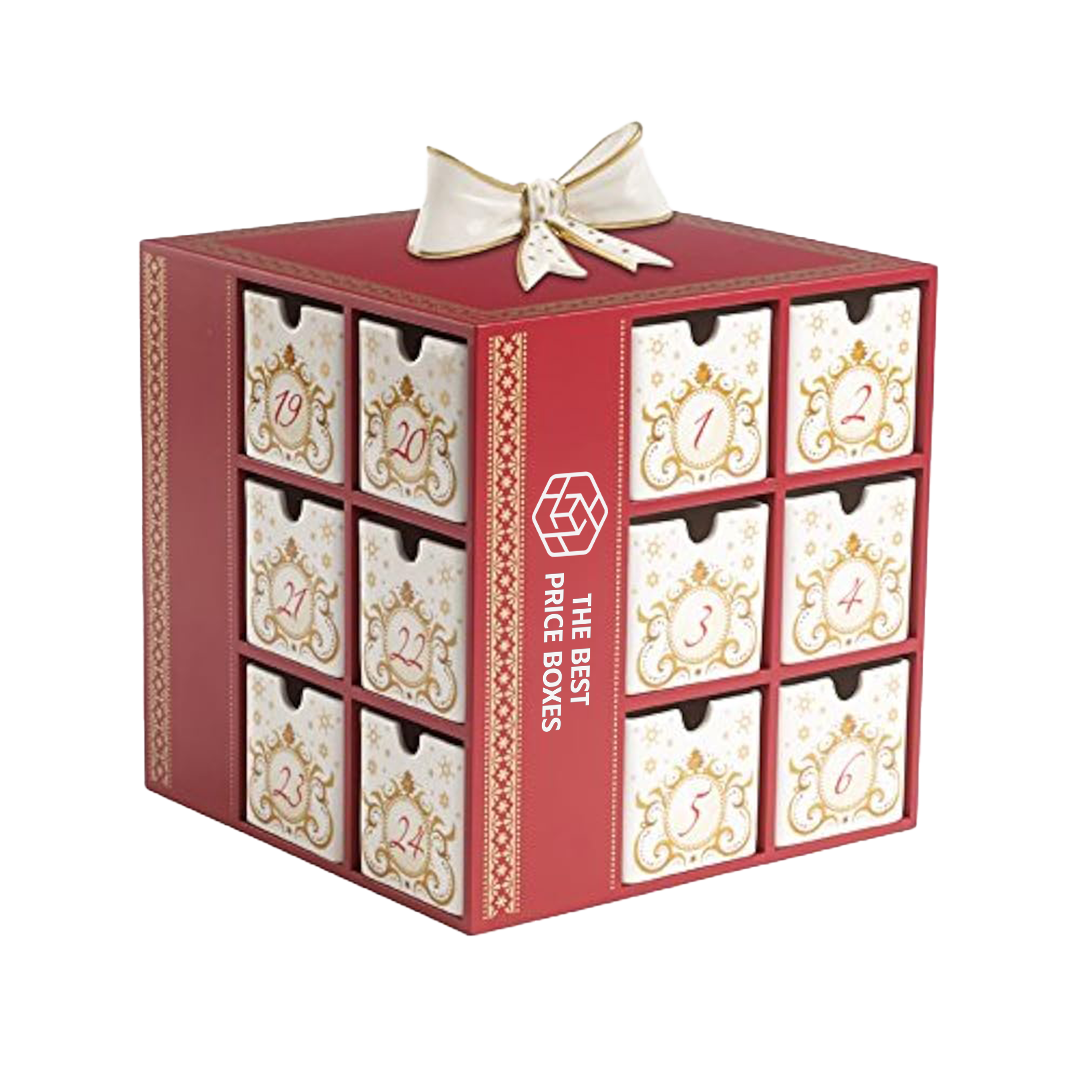
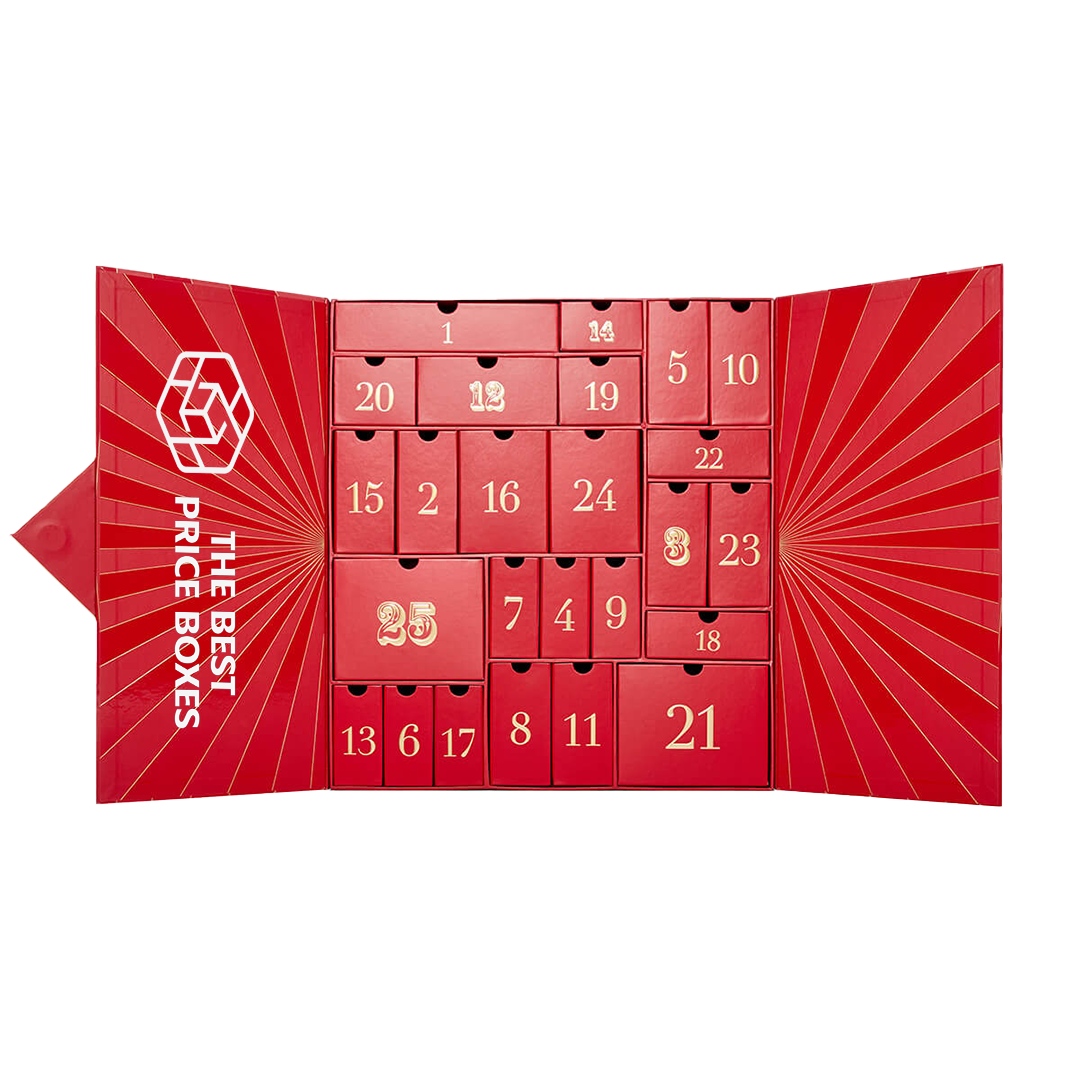
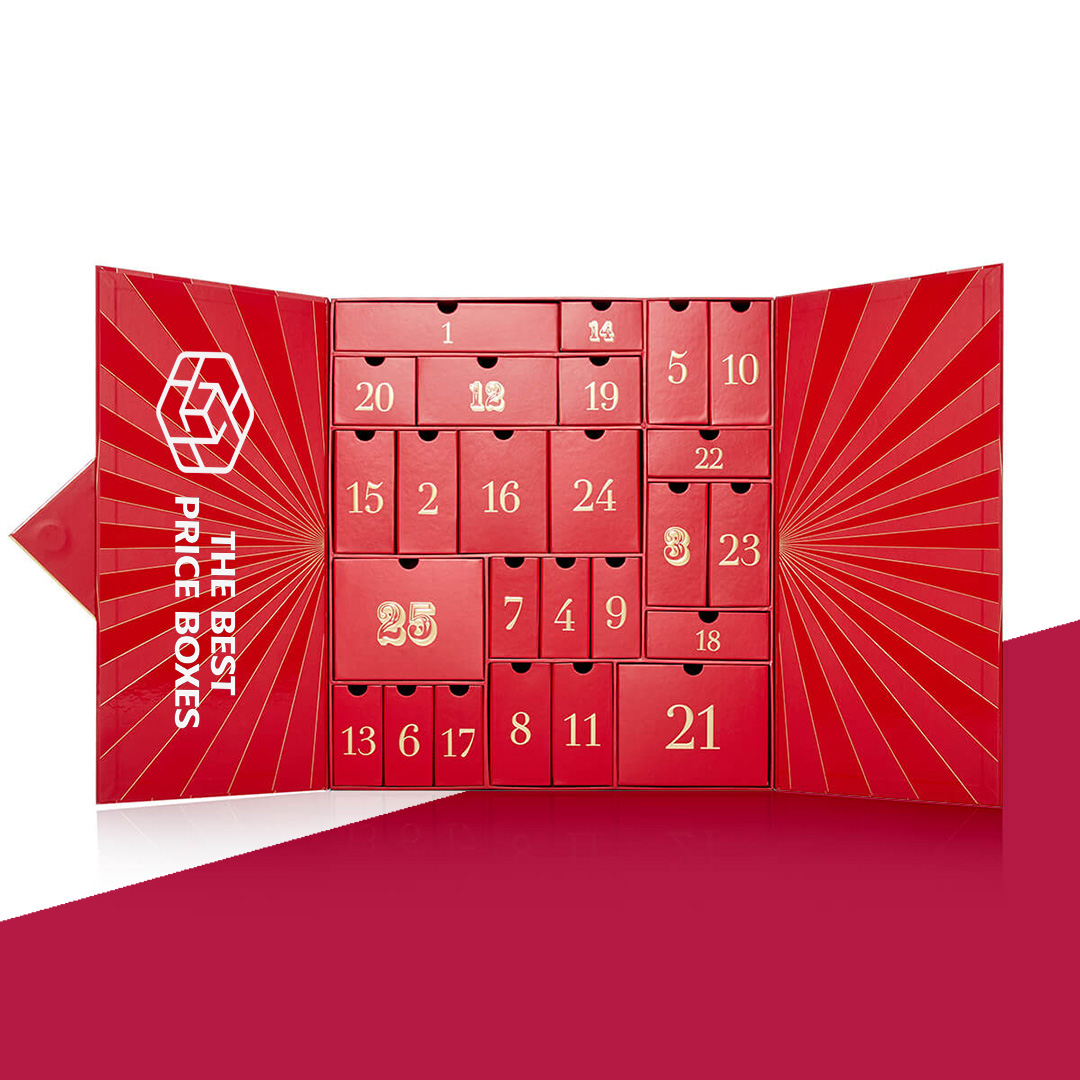
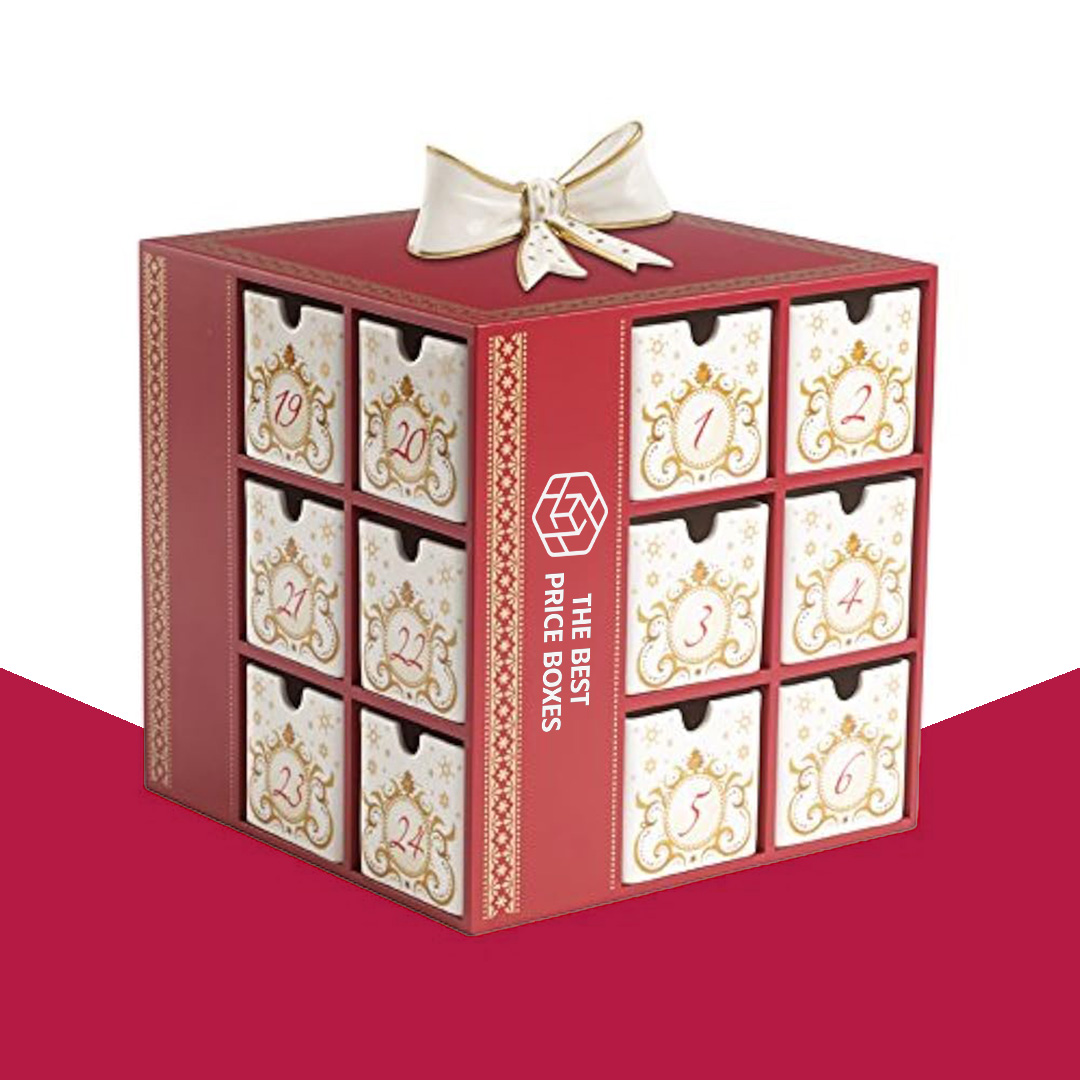
Drawer grid. Small matchbox drawers sit in a rigid frame and pull out one at a time. It is the format beauty brands reach for, because a drawer holds a deep item like a mini bottle upright and the pull feels deliberate. It is also the most involved to make, since every drawer is its own little box.
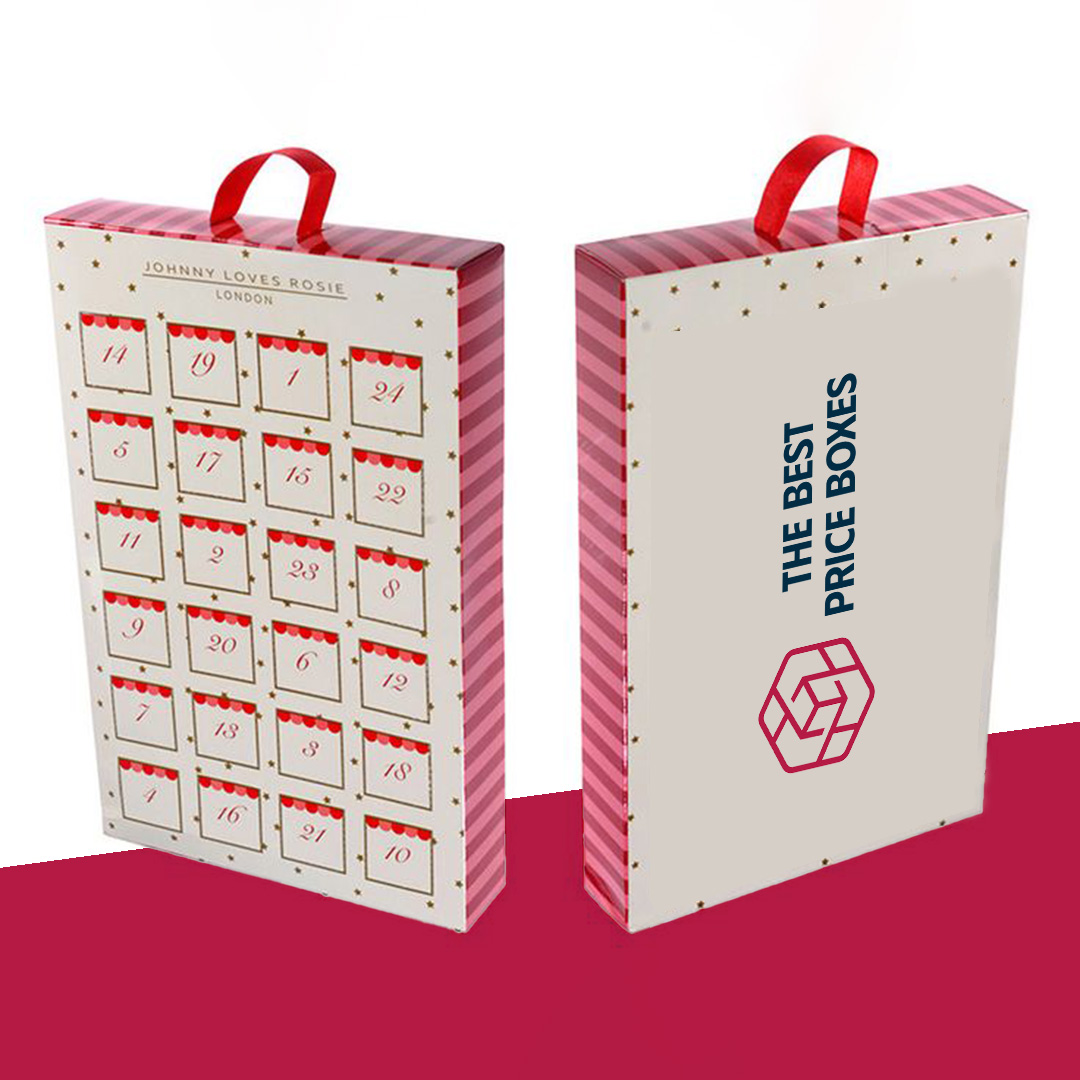
Punch-through doors. The traditional look. A printed front panel with perforated doors sits over a tray of cavities, and each door tears open on its numbered day. It ships the flattest of the three and prints edge to edge beautifully, which is why most confectionery calendars use it.
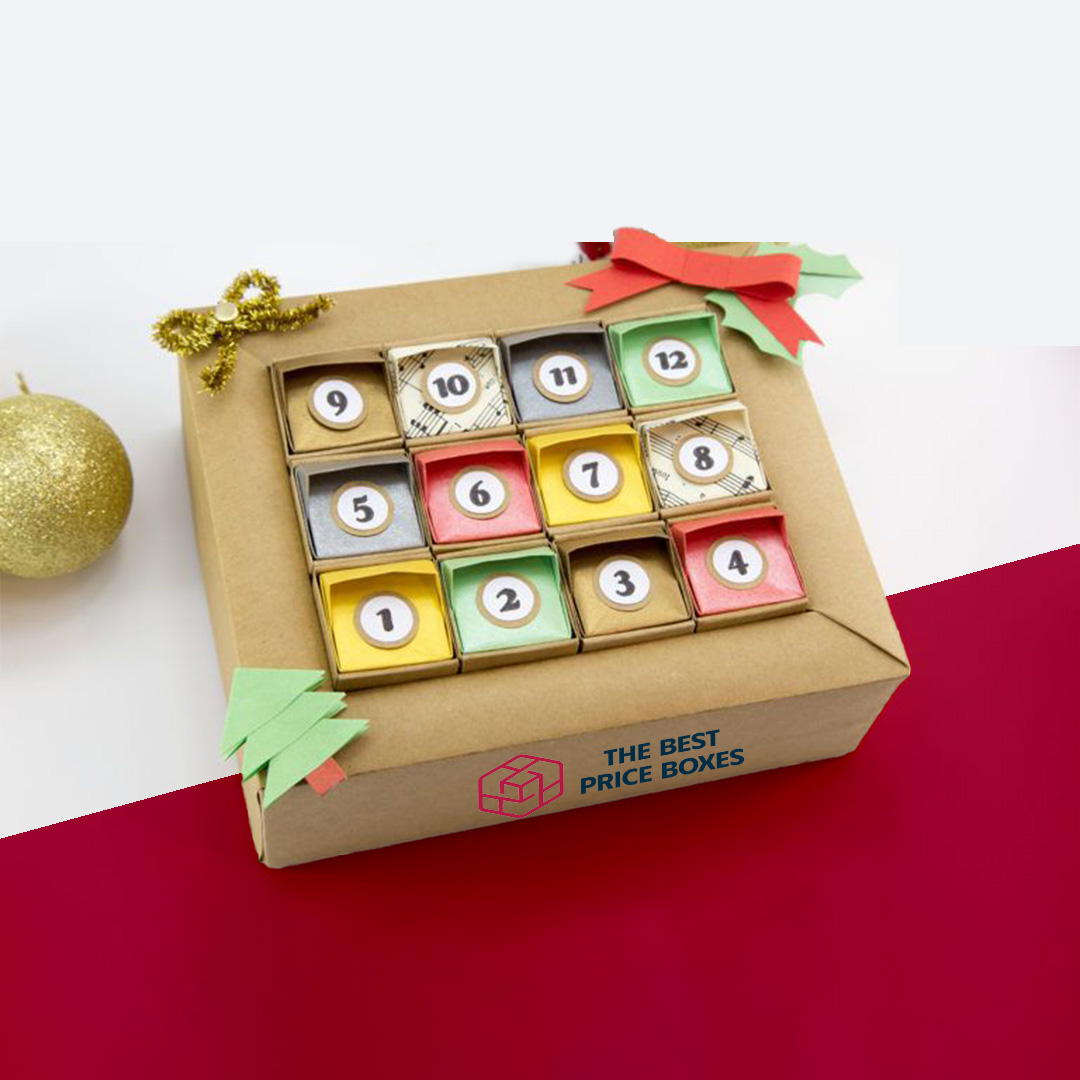
Numbered tray with a lift-off lid. The simplest build. One tray, one insert, numbers printed into the cavities, and a lid that comes away in one piece. There is no daily door, so it suits gifts people unpack in one sitting, and it is the easiest of the three to reuse.
Twelve days, twenty-four, or twenty-five
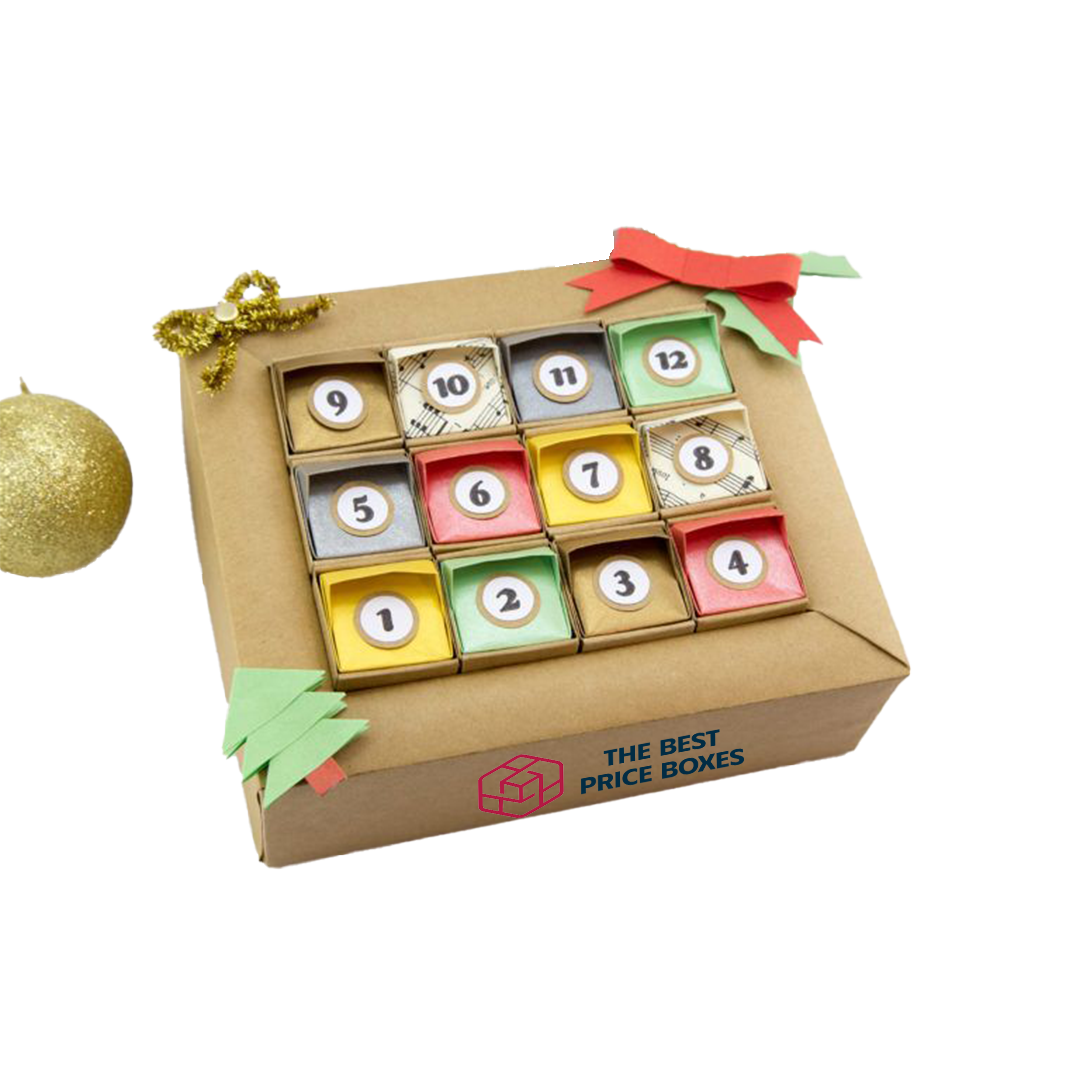
Twenty-four is the standard, running December 1 through Christmas Eve. Twenty-five carries it through Christmas Day and is more common in the United States than in Europe. Twelve is the short format, and it deserves more attention than it gets: it halves the cell count, keeps the calendar small enough to ship without a freight conversation, and lets a brand test the idea before committing a year of inventory to twenty-four minis.
If this is your first advent run, twelve days is usually the smarter opening move. You find out what customers actually open, and what they leave sitting in the box.
The insert is the whole job
The outer box is straightforward. The insert is where advent calendars go wrong.
Each cavity has to fit the real item with enough clearance that it seats without a fight, and enough grip that it does not shake loose in transit. Those two demands pull against each other and the gap between them is narrow. Send us the actual product, or measurements taken from the product rather than from the artwork. A mini bottle is rarely as narrow at the cap as it is at the base, and that difference is what decides whether day 14 seats properly.
Mixed contents are normal. Twenty-four different items means twenty-four different cavities, which changes the die but not the process. Tell us the full item list early, because it is far less work to draw the insert once around everything than to redraw it when day 17 turns out to be a different shape.
Board, print, and finish
Rigid board makes a keepsake. It is heavier, holds a crisp edge, and it is what people keep on a shelf after the chocolate is gone. Folding carton is lighter and prints just as well, and it suits a calendar meant for the recycling in January. Corrugated comes in when the calendar has to double as its own shipper.
The front panel carries the whole design, so that is where finishing earns its place: foil on the numbers, spot UV over a gloss detail, soft touch across a matte background. Windows can be die cut into the front panel or into individual doors if you want the product visible behind them.
When to order for this Christmas
Retail advent calendars reach the shelf in October and sell hardest between November 1 and the first week of December. Everything works backward from that date.
A custom advent build needs artwork approved and a dieline signed before production starts, and it runs longer than a plain box because of the insert. Standard turnaround here is 7 to 14 business days once the file is approved, and there is a proofing round before that.
In practice, September is the comfortable window. October is tight but workable when the artwork is ready and the item list is final. By November a first-time custom calendar is not going to make the season, and we will say so rather than take the order and miss it. If you are reading this in November, ask about a twelve-day format or a numbered tray, both of which are quicker builds.
Shipping a filled calendar
A loaded twenty-four-cell calendar is heavier than people expect, and the weight sits high. Sent on its own in a thin mailer it arrives with dented corners and a split lid edge.
There are two ways around it. Either the calendar is designed as its own shipper, in corrugated with the display print on the outside, or it travels inside a plain corrugated shipper cut to its footprint. The second keeps the display box pristine, and it is what most brands settle on after they see the first batch come back from a carrier.
Small runs, wholesale, and reorders
There is no minimum order, so a first advent run can be fifty units while you find out whether the format suits your customers. Wholesale runs use the same dieline and the same insert, which is why a second year is faster than the first: the file is approved, the die exists, and only the artwork changes.
Free design and dielines, free samples, free shipping, and we will beat any written quote you already have.
Specification
| Structure | Drawer grid, punch-through doors, or numbered tray with lift-off lid |
|---|---|
| Day count | 12, 24, or 25 numbered cells |
| Board | Rigid, folding carton, or corrugated |
| Insert | Die-cut paperboard, drawn cavity by cavity around your item list |
| Printing | Full color, outside and inside the doors |
| Finishes | Foil, spot UV, matte or gloss lamination, soft touch |
| Windows | Die cut into the front panel or into individual doors |
| Sizes | Built around your item list rather than a fixed catalog size |
| Minimum order | None |
| Turnaround | 7 to 14 business days after artwork approval |
Questions people ask before they order
How many days should my calendar have?
Twenty-four is the standard and twenty-five is common in the US. Twelve is the sensible first run: fewer cells to fill, a smaller box to ship, and a real read on whether your customers want the format before you commit to a full year of minis.
Do you make the insert as well as the box?
Yes. The insert is drawn around your item list, cavity by cavity, and it is included in the design work rather than treated as an extra.
What do you need from me to start?
The item list with real measurements, or samples of the items themselves, and either finished artwork or a brief we can design from. The item list matters more than the artwork at the start, because it decides the insert and the insert decides the box.
When is it too late to order for this Christmas?
September is comfortable. October is tight but workable with final artwork and a settled item list. November is too late for a first-time custom build, and we would rather tell you that than miss your season.
Can you print inside the doors?
Yes, and it is worth doing. A message, a product name, or a number behind each door is the detail people notice on day one, and it prints in the same pass as the front panel.
Will it survive being opened every day?
Drawer grids and lift-off trays hold up indefinitely because nothing tears. Perforated doors are designed to open once, which is the point of them, so if you want a calendar that gets refilled and reused, choose drawers or a tray.
Can I order a small quantity?
Yes. There is no minimum, so a fifty-unit first run is a normal order here rather than an exception.
Related gift packaging: christmas gift boxes, corporate gift boxes, and wedding gift boxes.
More Custom Retail Packaging
See the full Custom Retail Packaging range, or explore related options with no minimum order and our best-price guarantee: