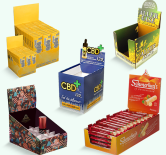

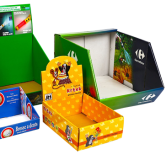

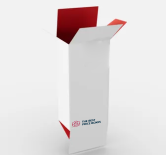
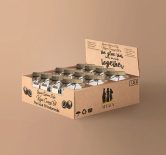
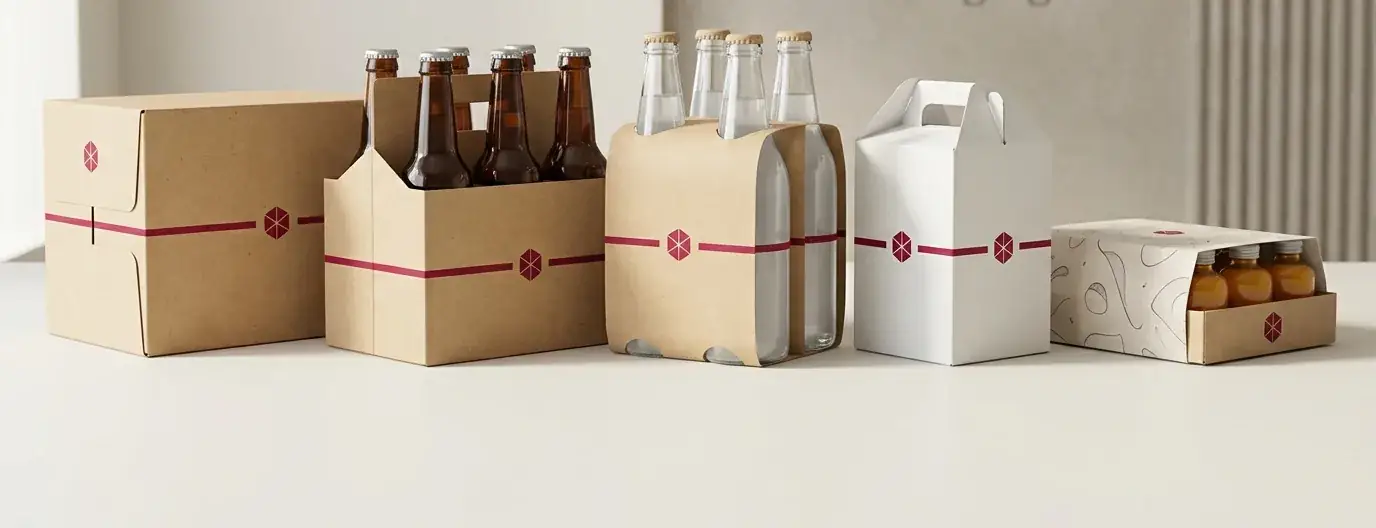
A beverage folding carton is a paperboard carrier, sleeve or wrap that is die cut, glued flat at the factory and then folded around a set count of cans or bottles. It is secondary packaging: the can or bottle holds the drink, the carton holds the cans. The board is almost always 18 to 24 pt coated unbleached kraft or solid bleached board with a wet-strength treatment, because a carton that goes into a cooler full of ice has to survive being wet for hours without the handle letting go.
This guide covers the parts that decide whether a carton works: the board, the five carton styles that actually get used for drinks, how pack count and can format change the dieline, which print and coating choices survive condensation, and exactly what to send so a quote comes back right the first time. If you already know what you need, the custom beverage boxes page takes any size and any quantity with no minimum order.
What a beverage folding carton is, and what it is not
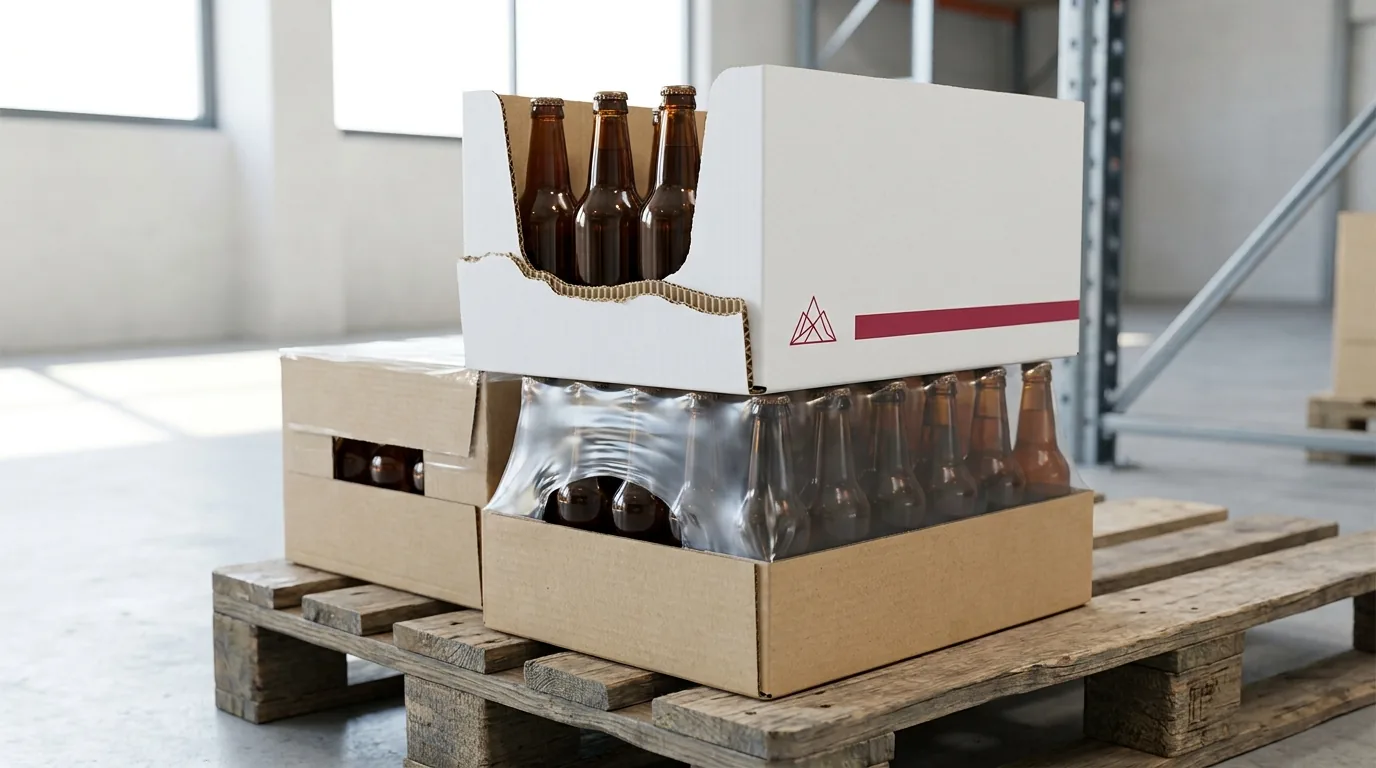
The word carton gets used loosely in the drinks trade, so it is worth being precise. A folding carton is made from a single sheet of paperboard, not corrugated board. It is scored, cut and glued so it ships flat and pops open on the line or on a table. The corrugated case that twelve of those cartons ship in is a different product with a different supplier spec; that one is covered in the corrugated drink trays guide.
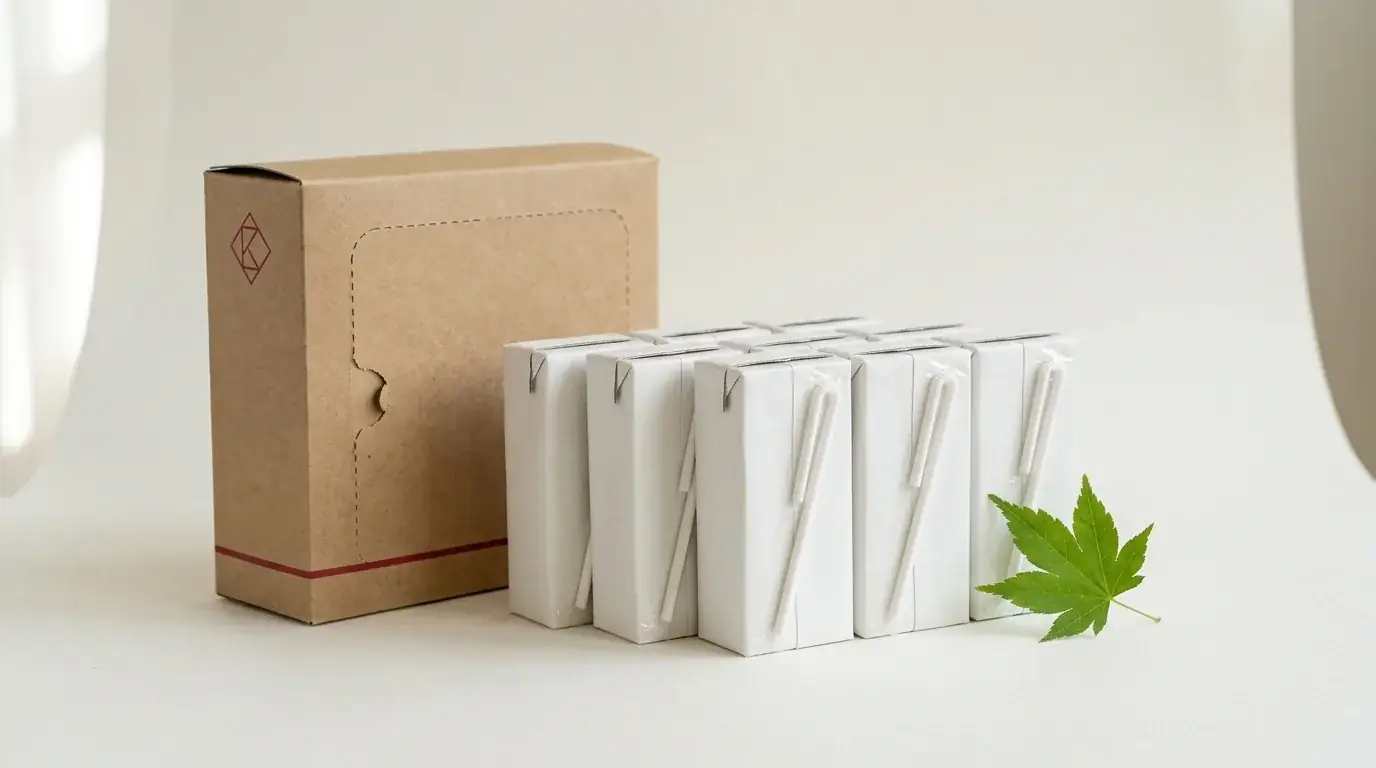
A folding carton is also not the aseptic brick that juice comes in. That brick is a laminate of paperboard, polyethylene and aluminum, filled on a dedicated machine by a handful of large converters. A custom box company makes the sleeve, carrier or multipack around the primary container, not the container itself.
The board: why beverage cartons use a different paperboard than a cereal box
Most retail folding cartons are made from clay coated recycled board, which is fine for a box of crackers and wrong for a six pack. Recycled board loses roughly half its stiffness when it gets wet, and a beverage carton spends its life next to cold aluminum that sweats. Three boards do the job properly.
| Board | What it is | Where it fits |
|---|---|---|
| CUK (coated unbleached kraft) | Virgin kraft fiber with a white clay coating on the print side. Strong, tear resistant, takes a wet-strength additive well. | Multipacks, fridge packs, anything carried by a handle. The default for beer and soda. |
| SBS (solid bleached sulfate) | Bleached virgin fiber, white all the way through, smoothest print surface. | Premium spirits sleeves, wine gift cartons, anything where the inside of the carton is seen. |
| Wet-strength kraft | CUK or natural kraft treated with a resin so the fibers keep bonding when saturated. | Craft beer carriers, cooler packs, tap room four packs. |
| E flute corrugated | A thin corrugated board, about 1.5 mm, that still folds like a carton. | Heavy glass bottle carriers and anything over about 8 lb. |
| CRB (clay coated recycled board) | Recycled fiber, clay coated on one side. | Dry shelf products only. Avoid for anything that will be iced or refrigerated in the carton. |
Board thickness is given in points, where one point is a thousandth of an inch. A four pack of 12 oz cans is comfortable on 18 pt. A twelve pack of 12 oz cans weighs close to 10 lb full and wants 22 to 24 pt with a doubled handle. If you are choosing between two calipers, the heavier one costs a little more per carton and almost never gets returned for failing; the lighter one is where the complaints come from.
The five carton styles that hold drinks
Dozens of dieline variations exist, but every beverage carton in a grocery aisle is one of five structures.
| Style | How it holds the product | Best for |
|---|---|---|
| Fully enclosed wrap | Six printed panels close around the cans. Often includes a perforated dispenser end. | 12, 15 and 18 packs of cans; fridge packs; anything that ships without a case. |
| Open top basket carrier | A glued center partition with a handle rising above the bottles. Cans or bottles sit in cells. | 4 and 6 packs of glass bottles; craft beer; kombucha in glass. |
| Can wrap or sleeve | A band of board around the middle of the cans with die cut rim locks holding the top edge. | 4 and 6 packs of cans where you want the can visible. |
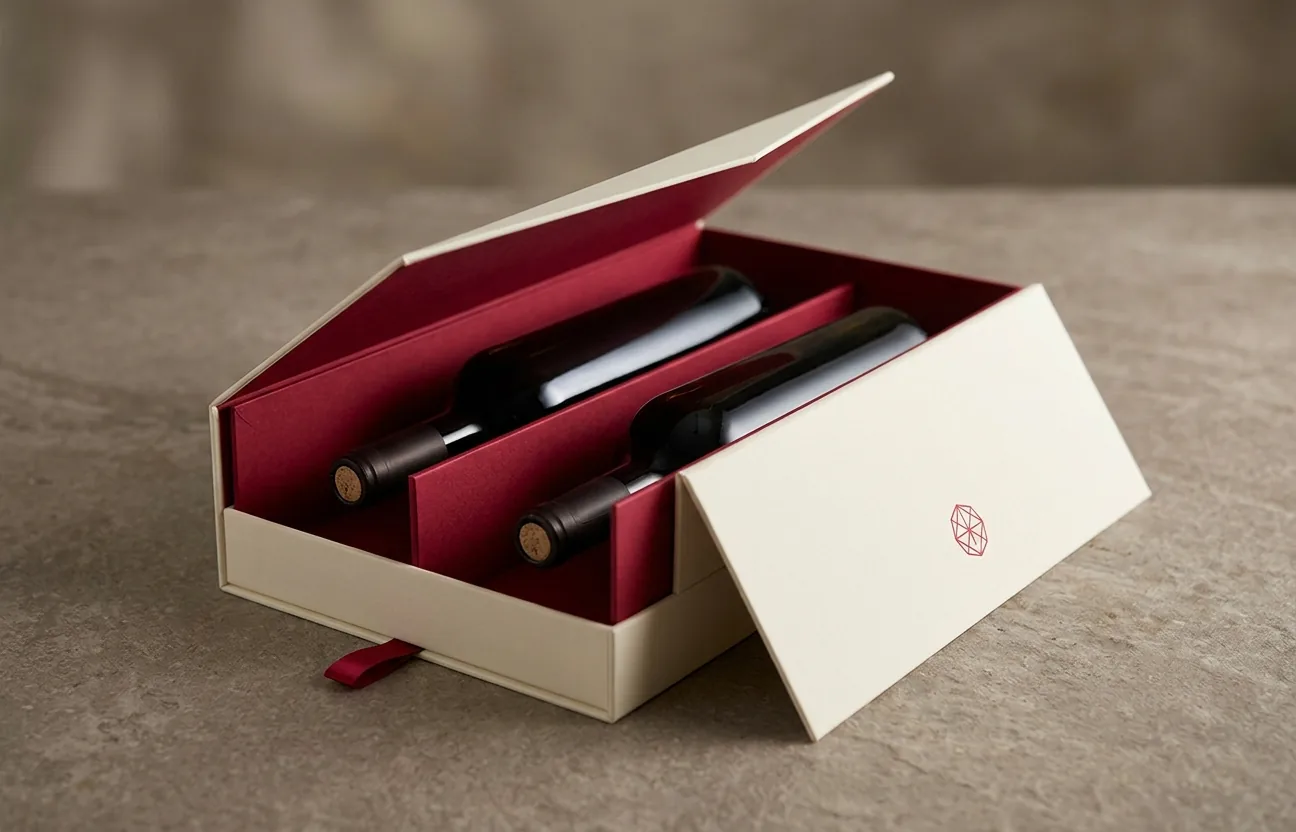
| Tuck end carton with handle | A closed box with a fold-down handle in the top panel. | Wine and spirits gift packs; two and three bottle sets. |
| Tray and sleeve | A shallow tray holds the containers and a printed sleeve slides over. | Variety packs, mixed flavor sets, seasonal gifting. |
If you want a closer look at the basket and wrap styles for four and six packs, including which can sizes fit which locks, the 4 pack and 6 pack can carrier guide goes into that in detail, and the can dispenser box guide covers the perforated twelve pack.
Pack count and can format change the dieline, not just the size
The most common mistake on a first order is to design a carton to the can height and forget the rest of the can. A 12 oz standard can, a 12 oz sleek can and a 16 oz can are three different diameters and three different rim profiles, and a wrap that locks a standard can will slide straight off a sleek one. Every dieline is drawn to a specific can or bottle, and the dimensions worth having ready are:
- Container height, body diameter and rim (or neck) diameter, in millimeters
- Pack count and arrangement, for example 2 by 2, 2 by 3 or 2 by 6
- Whether the pack will be hand loaded or run through a cartoner
- Where the pack will live: dry shelf, cooler, ice bucket, delivery van
When we draw your dieline we ask for one empty can or bottle, or its exact spec sheet from the can maker, before the first proof. The box size calculator helps with the outside dimensions of a case; a carrier dieline is drawn from the container, not the other way around.
Print and coating that survive the cooler
Beverage cartons are printed either flexo on a wide web press, which suits very long runs of one design, or offset litho on sheets, which is what makes short runs and many flavors affordable. On kraft board colors print muted and warm, which many craft brands like. If you want a bright white or a true brand red on kraft, ask for a white underprint on those areas so the ink has a white base.
The coating matters more than people expect. An aqueous coating is the standard choice: it resists scuffing and light moisture and it does not stop the carton being recycled. A UV coating gives a harder, glossier surface. A film lamination is the toughest finish but it can interfere with recycling claims, so use it only where the carton really needs it. Whatever the finish, the glue flap must stay uncoated so the seam bonds; that detail is on every dieline we send.
For a plain comparison of printing methods, the guide to six ways to put a logo on a box covers offset, flexo, digital, foil, embossing and screen printing with the trade-offs of each.
Panels you must not forget
Beverage packaging carries more required text than most packaging. Leave room in the artwork for the pack UPC (different from the single can UPC), container deposit marks for the states that require them, alcohol content and government warnings for alcoholic products, and the recycling mark you are entitled to use. Regulations vary by state and product type, so confirm the required statements with your label compliance advisor before the proof is approved. A carton reprint because a warning was missing is the most avoidable cost in the business.
Hand pack or machine pack
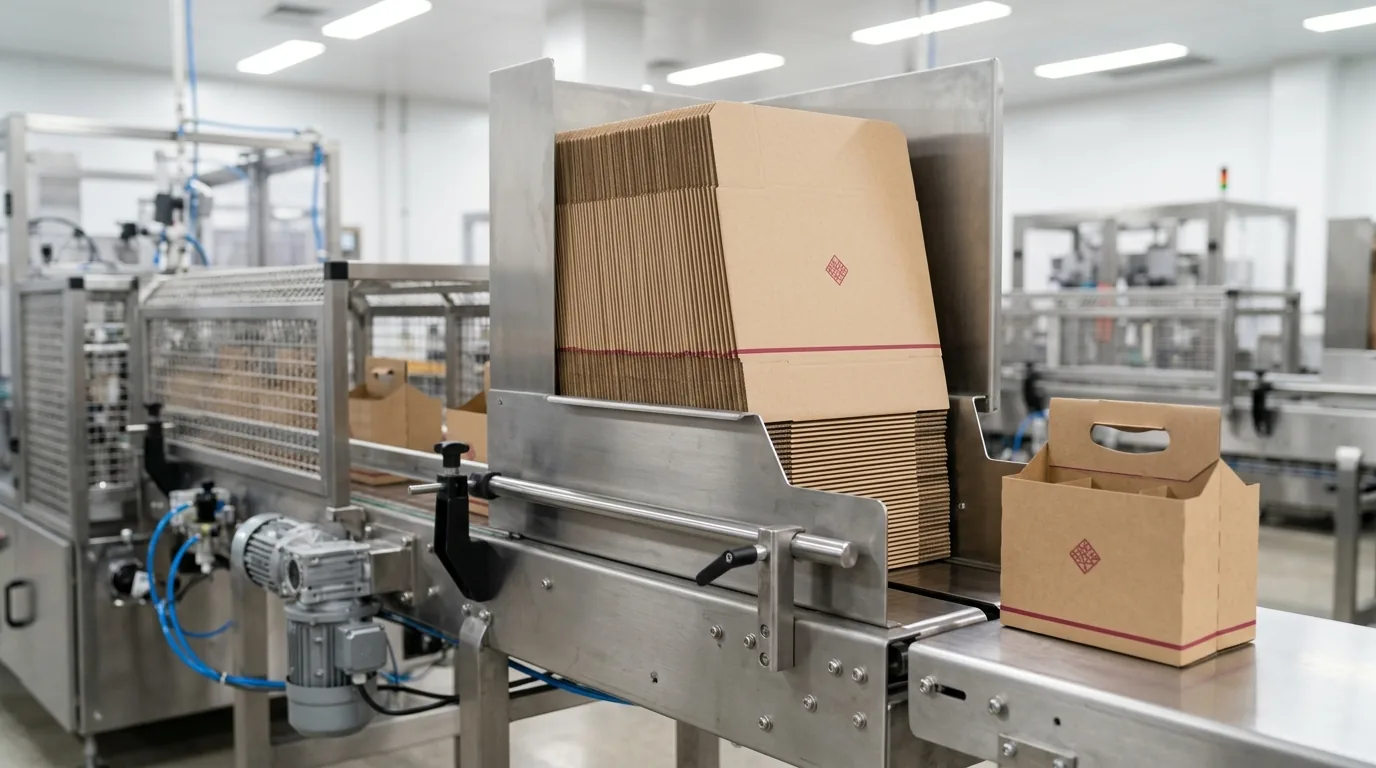
If your team folds and loads cartons by hand, ask for pre-glued cartons that pop open, with auto-lock bottoms where the style allows. If a co-packer will run them, the carton must match the machine: magazine feed dimensions, glue flap position, board caliper tolerance and crease depth all have to agree with the cartoner. Send us the machine make and model and we will draw to it. There is more on this in the guide to secondary packaging for beverage co-packers.
What to send for a quote
- Container: type, size in oz or ml, and a spec sheet or a sample
- Pack count and arrangement
- Carton style from the table above, or a photo of one you like
- Board preference if you have one, otherwise we recommend
- Quantity, and whether it is a one-off or a repeat run
- Artwork or a logo file, or a note that you need design help
- Where the carton will be used, and whether it will be hand or machine packed
- The date you need cartons in hand
Every order includes a free structural dieline and a digital proof, and there is no minimum order, so a tap room can order a few hundred four packs and a distributor can order a truckload from the same page. Free samples of board and finish are available before you commit; see packaging samples for how that works, then request a quote when you are ready.
Beverage folding carton FAQs
What is the difference between a beverage carton and a beverage case?
A carton is a paperboard carrier or wrap that holds a retail pack, usually 4 to 18 containers, and is printed for the shelf. A case is a corrugated box or tray that holds several cartons or loose containers for shipping. They are different materials, different specs and usually different suppliers.
What board thickness do I need for a 6 pack of 12 oz cans?
For a six pack of 12 oz cans, 18 to 20 pt coated unbleached kraft with wet-strength treatment is the usual choice. Move up to 22 or 24 pt for eight packs, twelve packs and anything with glass.
Can I use the same carton for different can sizes?
Not reliably. Standard, sleek and slim cans have different diameters and rim profiles, and a wrap with rim locks drawn for one will not hold another. A basket carrier for bottles has a little more tolerance, but each container still needs its own dieline check.
Are beverage folding cartons recyclable?
Paperboard cartons with an aqueous coating and water-based inks are accepted in curbside paper recycling in most US programs. A film lamination or a heavy plastic window can change that, so ask before adding either if the recycling claim matters to you.
Is there a minimum order for custom beverage cartons?
No. The Best Price Boxes prints beverage cartons with no minimum order, with a free dieline and digital proof on every job and free shipping.