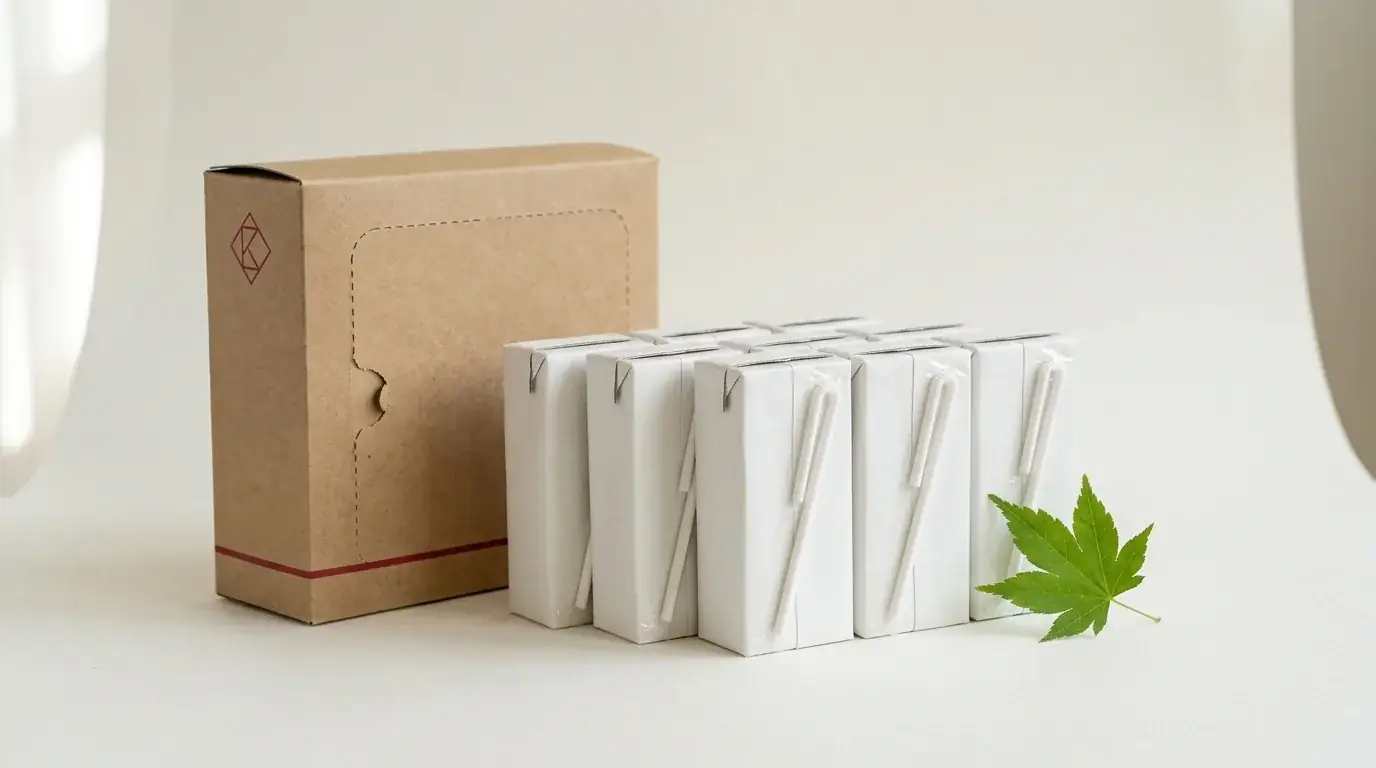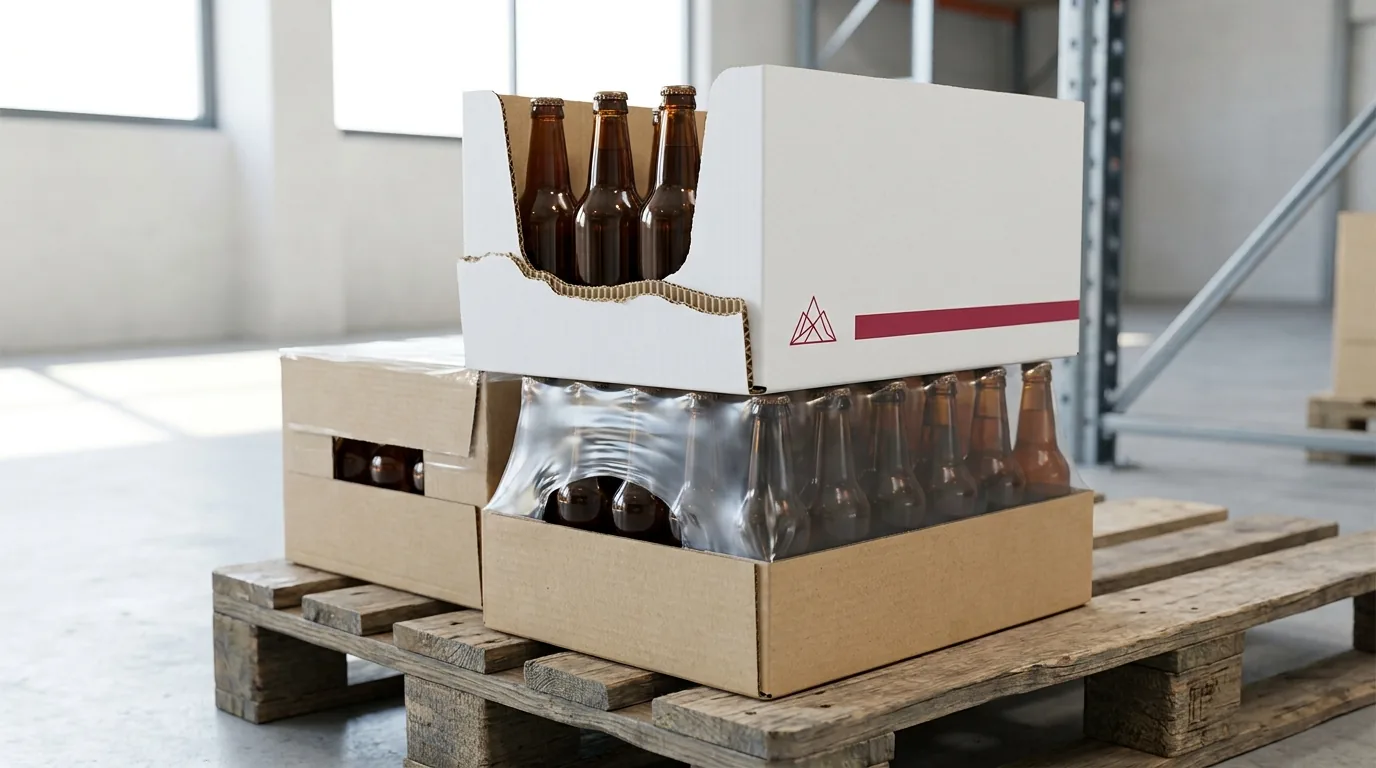


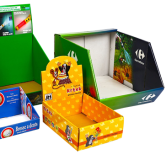


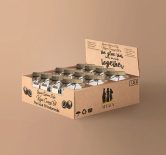
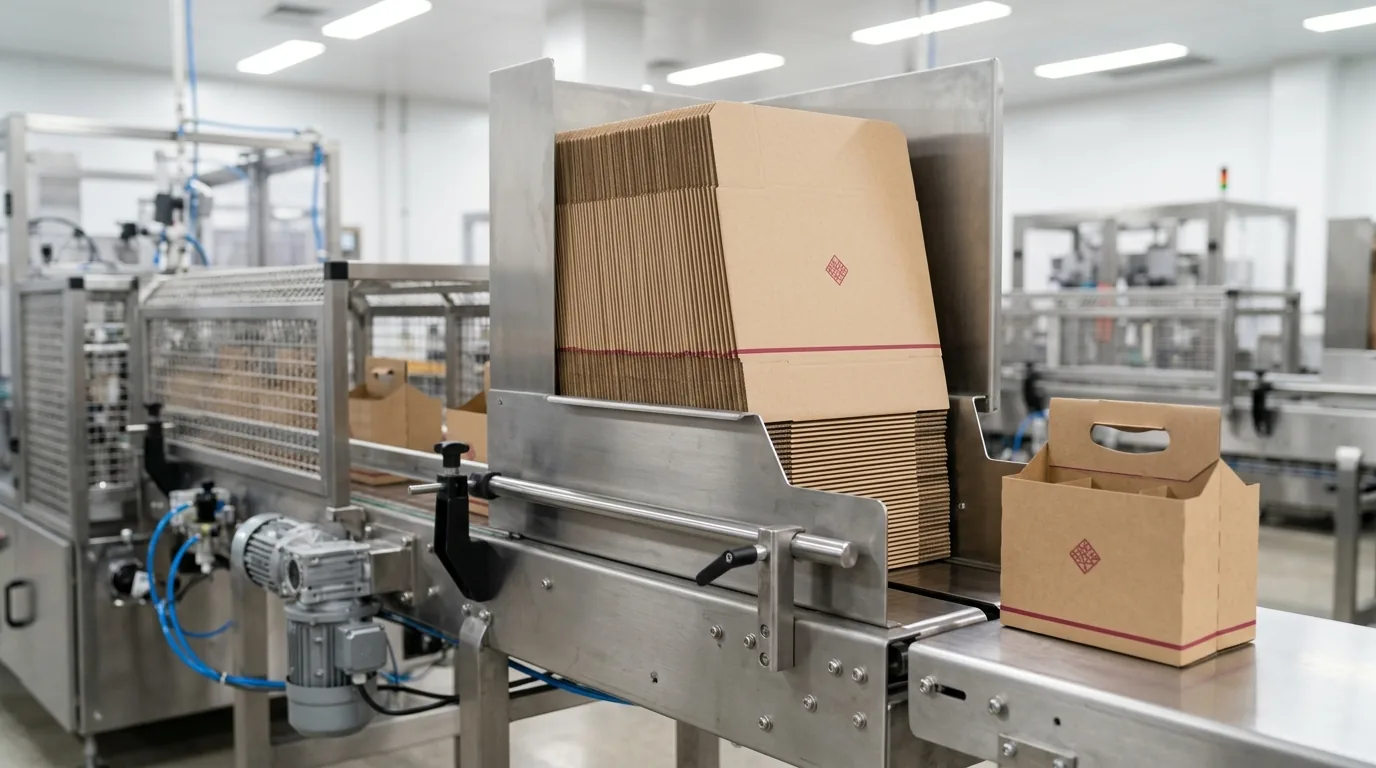
Secondary packaging is everything that groups filled cans or bottles into a sellable or shippable unit: the 4 pack wrap, the 6 pack basket, the 12 pack fridge carton, the shrink tray and the corrugated case. The can or bottle is primary packaging. The pallet, stretch wrap and slip sheets are tertiary. For a beverage co-packer, secondary packaging is where most line stoppages and most brand-side surprises happen, because the carton has to be right for two customers at once: the shopper who carries it home and the machine that has to pick it up, open it and glue it at speed. This guide covers what the line needs, who is responsible for what, and a checklist for the first run.
Primary, secondary and tertiary packaging in drinks
| Level | Beverage examples | Who usually specifies it | Main job |
|---|---|---|---|
| Primary | Aluminum can, glass bottle, PET bottle, aseptic carton, pouch | Brand with the filler | Contain and preserve the drink; carry the label |
| Secondary | 4 and 6 pack carriers, 12 pack fridge cartons, shrink trays, display trays, corrugated cases | Brand, run by the co-packer | Group units for retail and shipping; carry the brand on the shelf |
| Tertiary | Pallet, corner boards, stretch wrap, slip sheets, layer pads | Co-packer or 3PL | Move and store cases safely |
What a co-packer needs from the carton supplier
A carton that folds beautifully by hand can still jam a cartoner every thirty seconds. Machines are unforgiving about a few measurable things, and a good supplier asks for all of them before drawing a dieline.
- Machine make and model. Wrap-around cartoners, basket loaders and tray erectors each want the blank fed in a specific orientation with the glue flap in a specific place.
- Magazine dimensions. The flat blank has to fit the hopper and be picked one at a time, which sets limits on blank size and on how flat it must lie.
- Board caliper and tolerance. A cartoner set for 22 pt will misfeed on 24 pt. State the caliper and the acceptable variation.
- Crease and score quality. Machines fold on the score; a soft or uneven score folds late and crashes.
- Glue area. The flap must be free of coating and the hot melt or cold glue pattern must sit where the machine’s glue guns are.
- Pre-glued or flat. Some lines want a pre-glued tube that opens; others want a fully flat blank they wrap themselves.
- Bundle count and pallet pattern for the flats. The line loads from bundles, so count per bundle, strapping and pallet height matter to the operator.
These details belong on a one page spec sheet with the dieline, and that spec sheet should travel with every reorder so a second run is identical to the first.
Who buys the packaging, who holds it
The two common arrangements are that the brand buys its own secondary packaging and ships it to the co-packer, or the co-packer buys it on the brand’s behalf and bills it through. Neither is wrong, but the responsibilities need writing down. Who approves the proof. Who holds the stock, and how much floor space the co-packer will give it. Who pays for a reprint if the carton fails a line trial. Who owns the dieline and the printing plates. Most disputes we have seen come from a brand that ordered a carton without telling the co-packer, and a co-packer that did not tell the brand what its machine needed.
The minimum run problem
National multipack converters quote in the hundreds of thousands because they run wide web flexo. A regional seltzer or a canned cocktail brand in its first year cannot commit to that, so it ends up hand-loading generic cartons or paying for plates it will never amortize. Sheet fed offset printing removes the problem: a few thousand cartons to the same structure and board, with a free dieline and no minimum order, from the custom beverage boxes page. For repeat runs, a blanket order with scheduled releases keeps the line supplied without the brand holding a year of cartons; that is described on the wholesale and bulk packaging page.
Fewer dies, more flavors
Every new carton structure is a new die and a new machine setup. A brand with six flavors should aim for one carrier dieline and six print versions, not six carriers. Where flavors have different can sizes, that is usually two dielines at most. Variety packs share the carrier and let the cans tell the story. This is the single decision that most reduces changeover time on the line and the most common piece of advice a co-packer wishes the brand had heard earlier.
Documents the co-packer and the retailer will ask for
- A dieline with the spec sheet described above
- A board specification: grade, caliper, coating, wet-strength if applicable
- A statement on food contact for any board that touches the primary container
- A chain of custody or recycled content certificate if the brand is making a sustainability claim on the pack
- A pallet specification for finished cases: count per layer, layers per pallet, stretch wrap and corner boards
Line trial checklist
Before a full run, ask for a few hundred cartons or trays from the production board and run them on the machine for an hour. Check these before signing off.
- Blanks pick singly from the magazine without doubles
- Score lines fold without cracking on the print side
- Glue bonds within the machine’s compression time and holds after a cold soak
- Rim locks or basket cells hold the specified can without scuffing the label
- Perforations survive the case packer and the pallet stack
- Printed panels register to the die within the tolerance the retailer accepts
- Case count and pallet pattern match the spec sheet
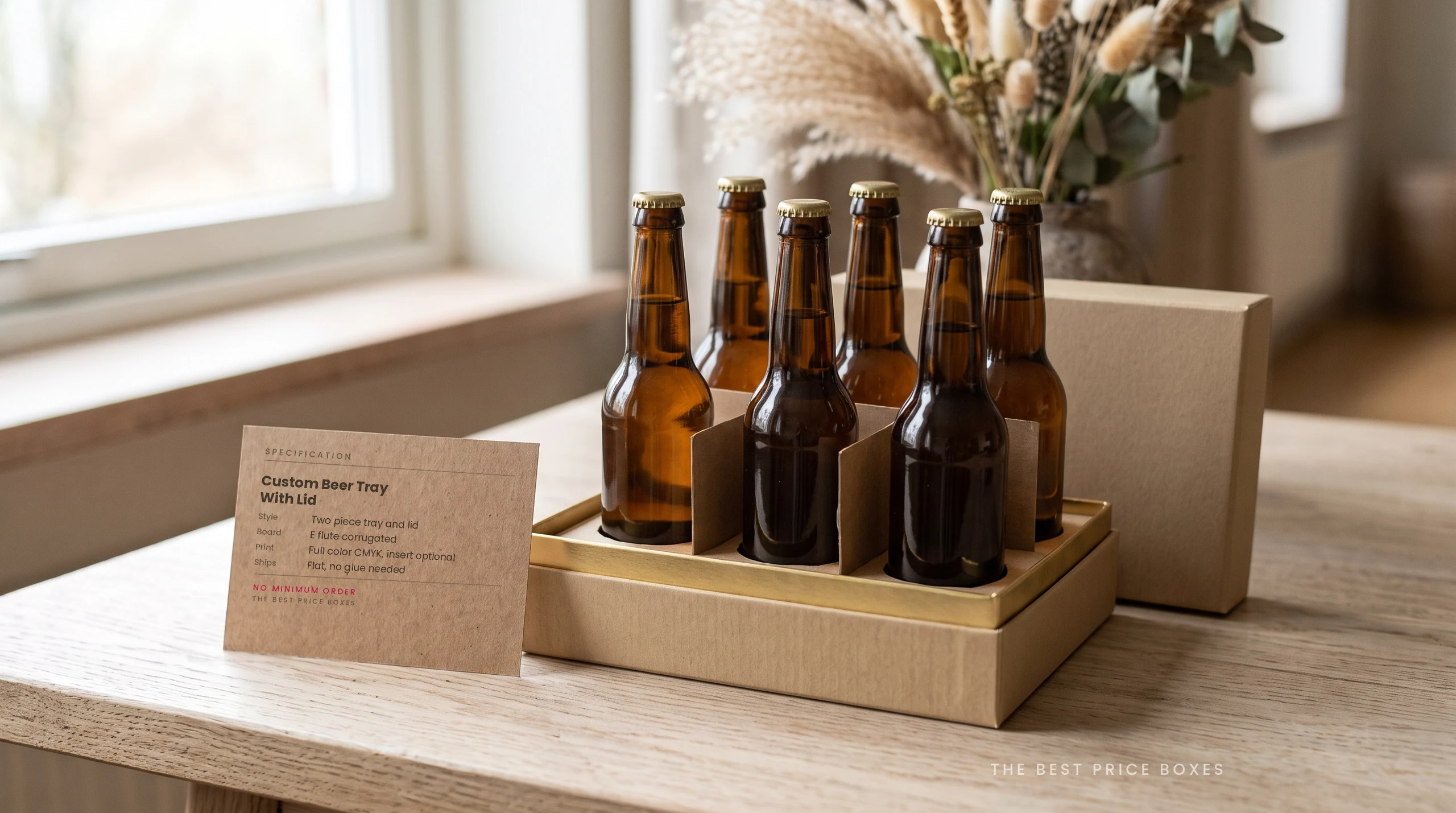
We supply trial quantities from production stock for exactly this purpose, and a failed detail is corrected on the dieline before the main run, not after. The corrugated drink trays guide and the can dispenser box guide cover the structures that most often need a trial.
What to send for a quote
- Container and count
- Carton or tray style
- Machine make and model, or a note that it is hand packed
- The spec sheet from a previous supplier if one exists
- Quantity per release and releases per year
- Artwork and the number of print versions
- Delivery address and whether flats go to the brand or the co-packer
Request a quote and a specialist replies within one business day with a firm quote, a dieline and a digital proof. Board samples are free; see packaging samples.
Co-packer secondary packaging FAQs
What is secondary packaging in the beverage industry?
Secondary packaging groups filled cans or bottles into a unit: 4 and 6 pack carriers, 12 pack cartons, shrink trays, display trays and corrugated cases. The can or bottle is primary packaging and the pallet is tertiary.
Does the brand or the co-packer buy the cartons?
Either, and both arrangements are common. What matters is writing down who approves proofs, who stores the flats, who pays for a reprint after a failed trial, and who owns the dieline and plates.
Why does a carton that folds by hand jam a cartoner?
Machines need the blank to match the magazine, the caliper to be within tolerance, the scores to fold cleanly and the glue flap to sit where the glue guns are. A hand-folded carton tolerates variation that a machine does not.
Can a small beverage brand get cartons without a huge minimum run?
Yes. Sheet fed printing makes short runs practical. The Best Price Boxes has no minimum order and includes a free dieline and digital proof, so a first production run of a few thousand cartons is normal.
What should a line trial check?
Single picking from the magazine, clean folding on the scores, glue bond after a cold soak, can retention in locks or cells, perforation strength through the case packer, print registration and the pallet pattern.