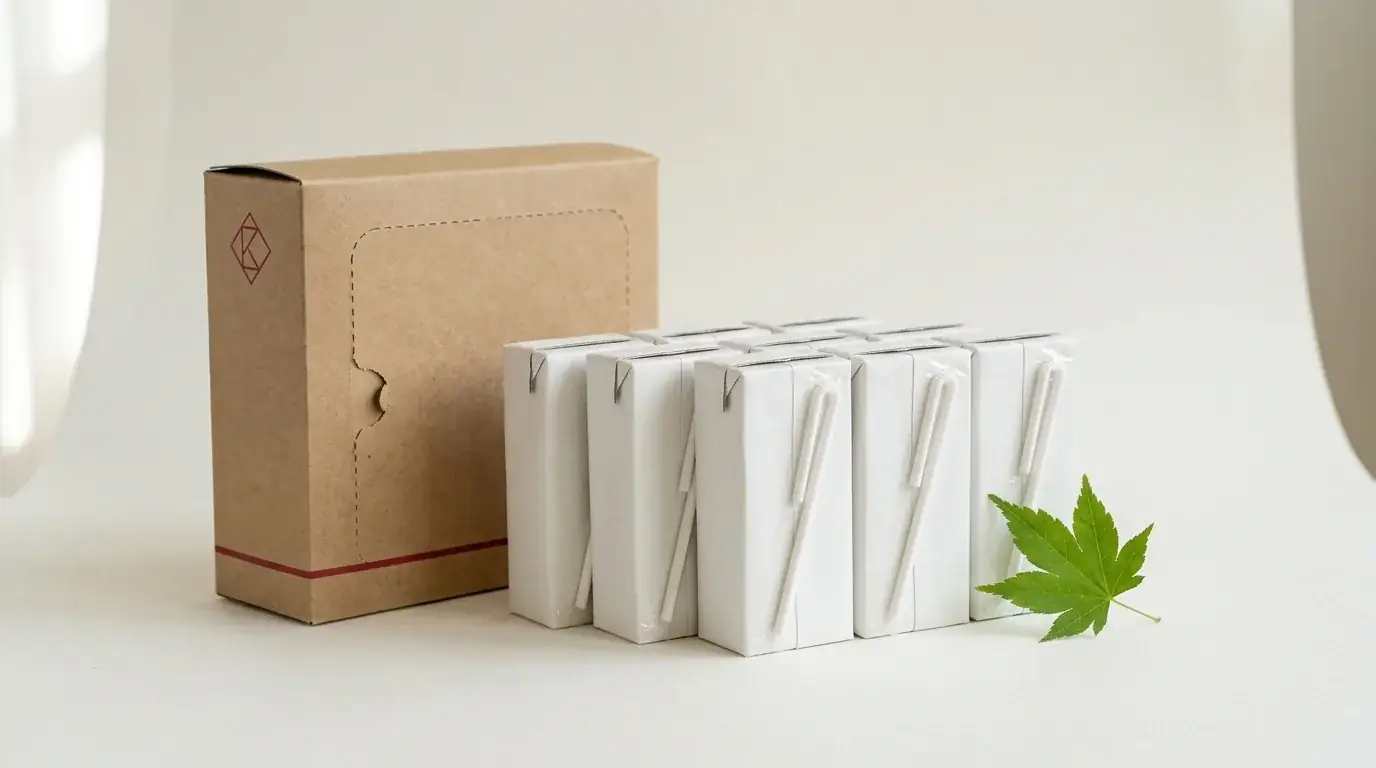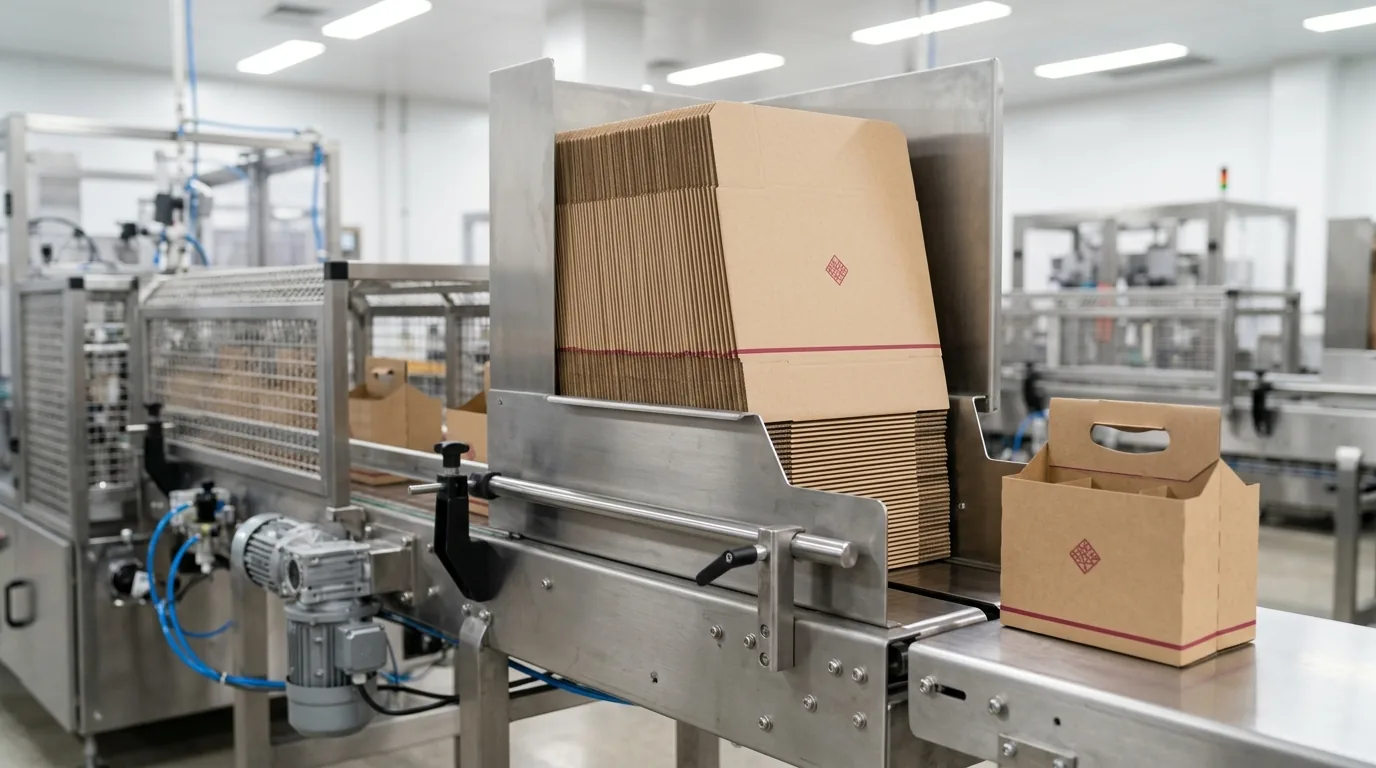







A corrugated drink tray is a shallow open-top corrugated box, usually with walls between a third and a half of the container height, that holds 12 to 30 cans or bottles for shipping, palletizing or shelf display. It does three different jobs and each job needs a different board. A shrink tray takes a plastic film over the top and carries the load in transit. A display tray, also called shelf ready packaging, goes straight onto the store shelf with a tear-away front. A layer tray separates layers of cans on a pallet. This guide explains how each is specified and printed.
Trays are corrugated, not paperboard, which puts them in a different family from the printed carriers and fridge packs covered in the beverage folding cartons guide. The board grades, flutes and edge crush figures referred to below are explained in full in the guide to corrugated board specifications.
The three kinds of drink tray
| Tray | What it does | Typical board | |
|---|---|---|---|
| Shrink tray | Holds 12 to 24 cans or bottles under a shrink film. The film provides the top restraint, the tray provides the base and the walls. | B flute, 32 to 44 ECT, kraft or white top | One or two color flexo direct on the liner; the film covers most of it. |
| Display tray (shelf ready) | Ships inside a case or with a hood, then sits on the shelf with a perforated front panel torn away. | B or E flute, white top or litho laminated | Full color. This tray is the shelf face, so print quality is the point. |
| Layer or pallet tray | Separates layers of loose cans on a pallet and takes the compression load of the layers above. | C flute or double wall, 44 ECT and up | Usually unprinted or one color for identification. |
| Wrap-around case | A full case that closes over the product; included because it is often quoted alongside trays. | B or C flute, 32 to 44 ECT | One to four color flexo. |
The wall height rule
For a shrink tray the walls should be at least a third of the container height, and a half is safer for glass. The film does the holding at the top, but if the walls are too low the containers lean under acceleration in the truck, the film stretches and the load walks off the tray. For a display tray the walls are set by what the shopper needs to see: a low front panel that tears away and higher sides that keep the pack square. Common references for a 12 oz can are a 40 to 60 mm wall on a shrink tray and a full height tray with a torn front for display. Treat those as starting points and confirm with a physical sample, which we supply free before a print run.
Flute and edge crush: which board for which tray
B flute is the workhorse for trays. It is thin enough to die cut cleanly and stiff enough to hold a corner. E flute prints beautifully and is the right choice for a display tray that will be litho laminated, but it crushes under a pallet load, so it belongs on the shelf, not at the bottom of a stack. C flute has more cushioning and more stacking strength and is what a layer tray or a full shipping case uses.
Edge crush test, or ECT, is the number that says how much stacking load the board carries. A 32 ECT tray is fine for a single layer of 12 oz cans on a pallet. Once trays are stacked five or six high, or the product is glass, 44 ECT is the safer specification. Cold storage is the extra factor: corrugated loses strength in a damp cooler, so a tray that will spend days in a cold chain should be specified a grade heavier than the dry calculation suggests.
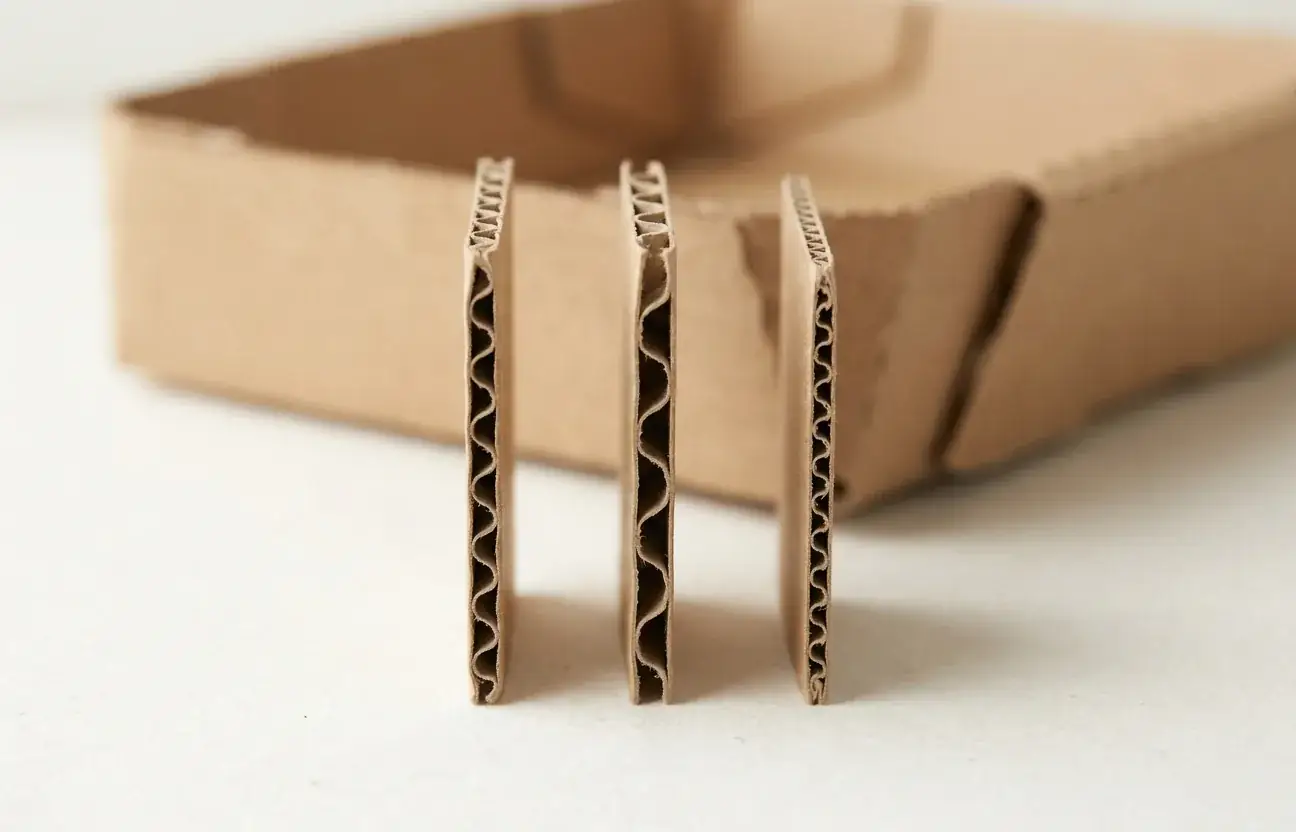
Die cut or folded
A die cut tray is cut and scored from one sheet and folded up by hand or by a tray erector, with the corners glued or locked. It gives clean corners and a printed outside face and is the standard for shrink and display trays. A regular slotted tray, essentially a shallow shipping box without a lid, is cheaper to tool and fine for layer trays and plain shipping. If you already run a tray erector, tell us the model; the blank must match the machine.
Print that survives the cold chain
Direct flexo printing on the kraft or white liner is the normal method for trays: one to four colors, durable, and cheap enough for a case that is thrown away. It looks like packaging, not like a poster, which is fine for a shrink tray that the shopper never sees. For a display tray the shopper does see it, and the choice is either high graphics flexo on a white top liner, which has improved a great deal, or a litho laminated sheet glued to the corrugated, which gives the same finish as a folding carton. Litho lamination costs more and it is the right answer when the tray is the brand’s only presence on the shelf.
Whatever the method, print on the outside faces only, keep the artwork clear of the tear-away perforation and the corner glue areas, and specify a water resistant coating if the tray will be in a cooler. The guide to printing a logo on a box compares flexo, litho and digital in plain terms.
Pack counts and pallet patterns
The tray footprint should divide evenly into a 48 by 40 in pallet with as little overhang as possible, because overhang is where corners crush and cans dent. The common counts, 12, 15, 18, 24 and 30, exist because they tile a pallet well with standard cans. If you are choosing a count, start from the pallet pattern and work back to the tray; the box size calculator gives outside dimensions for a given count and can size, and we check the pallet layout before we cut a sample.
What to send for a quote
- Container size and count per tray, and one sample container if possible
- Tray type: shrink, display, layer or wrap-around case
- Whether the tray will be cold stored and for how long
- Stack height on the pallet
- Colors of print, and artwork if you have it
- Any machine that will erect or load the tray
- Quantity and the date you need them
There is no minimum order, dielines and digital proofs are free, and shipping is free. Request a quote and a specialist replies within one business day. For full shipping cases rather than trays, see custom shipping boxes.
Corrugated drink tray FAQs
What is a shrink tray?
A shrink tray is a shallow corrugated tray that holds cans or bottles and is wrapped with a heat shrunk plastic film. The tray carries the base and the sides and the film restrains the top, so a 12 or 24 pack ships without a full box.
How high should the walls of a drink tray be?
For a shrink tray, at least a third of the container height and closer to half for glass. Lower walls let containers lean in transit and the load can walk off the tray. Display trays use a low tear-away front with higher sides.
What flute is best for a beverage tray?
B flute for most shrink and display trays, because it die cuts cleanly and holds corners. C flute or double wall for layer trays and stacked shipping cases. E flute only for display trays that will be litho laminated and will not carry a stack.
Can corrugated trays be printed in full color?
Yes. High graphics flexo on a white top liner or a litho laminated sheet both give full color on a display tray. Plain shrink trays are usually one or two color flexo because the film hides most of the print.
Is there a minimum order for printed drink trays?
No. The Best Price Boxes has no minimum order, includes a free dieline and digital proof, and ships free, so a test batch and a full pallet order are both normal.