


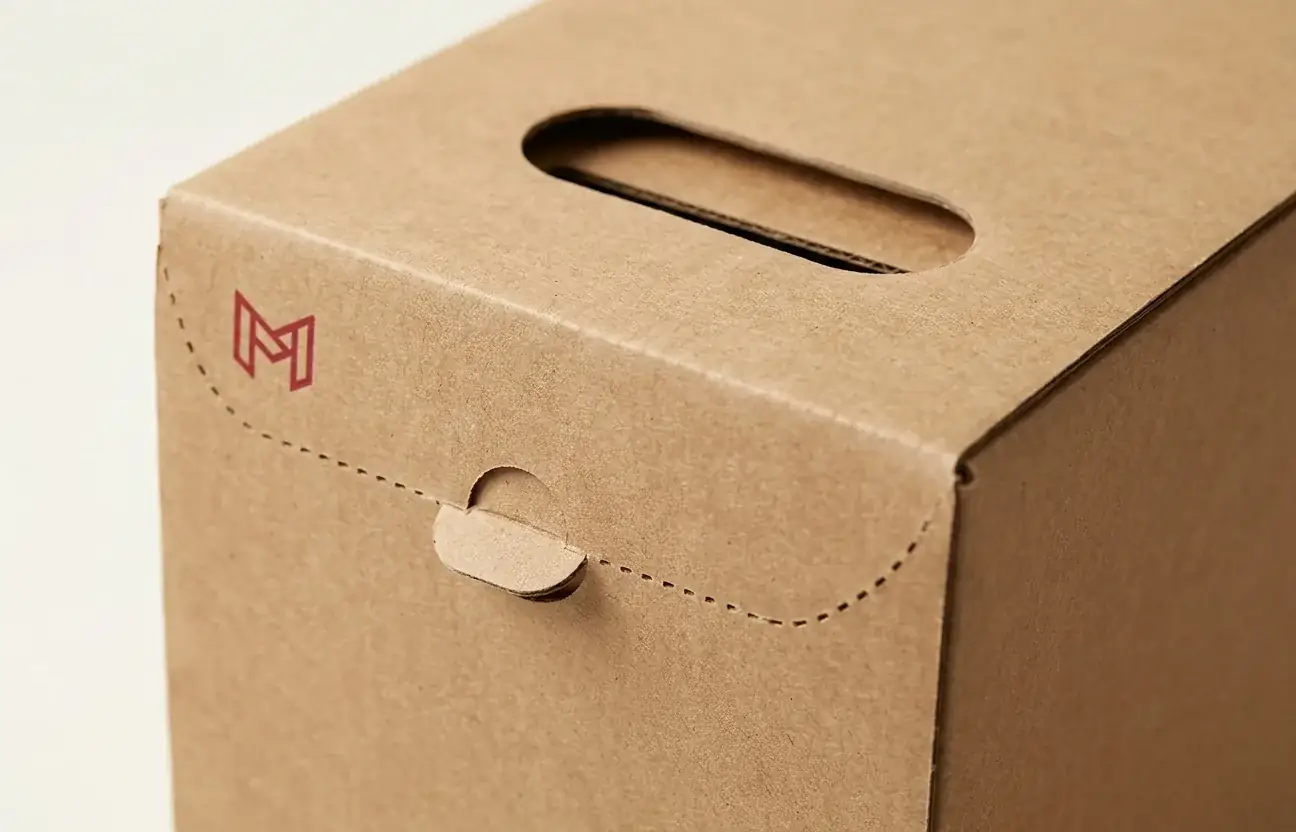
A can dispenser box, usually called a fridge pack, is a long paperboard carton that holds cans in two rows of six, one can high, with a perforated panel at one end that tears out so the cans roll forward one at a time from the refrigerator shelf. It replaced the old three by four twelve pack in soft drinks two decades ago and is now the standard for soda, sparkling water, seltzer and canned cocktails in grocery. This guide explains how the dispenser is built, why some of them fail, how the 12, 15 and 18 count versions differ, and what a wholesale order looks like when you do not want to meet a big converter’s minimum run.
How the dispenser works
The carton is a fully enclosed wrap with a glued seam along the bottom or the side. At one short end there is a die cut, perforated panel. The consumer pushes a thumb tab, tears the panel out along the perforation and folds down a small lip. Because the cans lie on their sides in two rows, gravity does the rest: take a can from the opening and the row rolls forward to fill the gap. The carton stays on the shelf until the last can leaves it.
Three details make or break the mechanism. The perforation has to be weak enough to tear cleanly by hand and strong enough not to open in a shipping case. The retaining lip has to be tall enough that the front can does not roll out on its own. And the board has to be stiff enough that a loaded carton lifted by its handle does not bow in the middle and pop the seam.
Board and handle
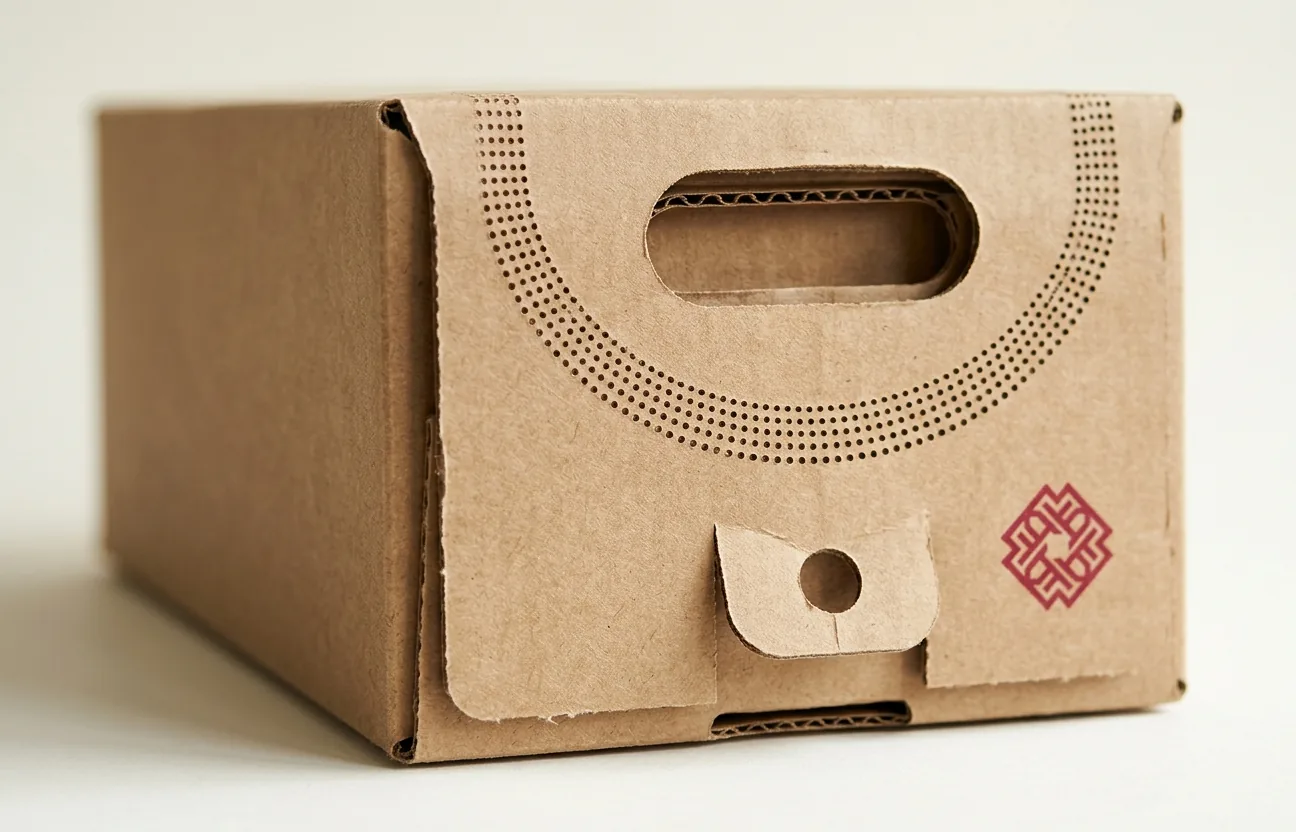
Twelve full 12 oz cans weigh close to 10 lb. That is the whole reason fridge packs are made from coated unbleached kraft rather than recycled board: the virgin kraft fiber carries the weight and resists the tear that starts at a handle cut-out. Typical calipers are 20 to 24 pt, with 22 pt the common choice for 12 oz cans and 24 pt for 16 oz packs or anything that will be sold cold and wet. The handle itself is a die cut oval in the top panel, and on a good dieline that area is doubled with a second layer of board glued behind it so fingers pull on two thicknesses.
| Count | Layout | Full weight (12 oz cans) | Board |
|---|---|---|---|
| 12 pack | 2 rows of 6 | about 10 lb | 20 to 22 pt CUK |
| 15 pack | 3 rows of 5 | about 12.5 lb | 22 to 24 pt CUK |
| 18 pack | 3 rows of 6 | about 15 lb | 24 pt CUK, doubled handle |
| 12 pack of 16 oz | 2 rows of 6 | about 13 lb | 24 pt CUK |
Why fridge packs fail, and how the dieline prevents it
- Perforation opens in transit. The tear line was cut too deep or the carton was case packed with the dispenser end taking the load. Fix: a lighter cut pattern with longer ties, and a case pack orientation that puts the dispenser end sideways.
- Consumer cannot get it open. The perforation is too strong or the thumb tab is too small. Fix: a proper tab of at least a finger width and a tested tie pattern. This is why we send a physical white sample before a print run.
- Cans roll out on the floor. The retaining lip is too short for the can diameter. Fix: draw the lip to the specific can; a sleek 12 oz can needs a different lip height from a standard can.
- Handle tears. Single layer board at the handle, or recycled board that softened in a cold case. Fix: doubled handle area and a wet-strength CUK board.
- Seam pops when lifted. Glue flap coated by mistake or a board heavier than the glue spec. Fix: uncoated glue flap on the dieline, which is standard on ours, and a glue check on the first cartons off the line.
Print and the six panels
A fridge pack is one of the best billboards in the store because the long side panels face out on the shelf and the top panel faces up in a cart. Most are printed offset litho on the coated side of the kraft, which gives accurate brand color on a white clay surface, and finished with an aqueous coating so the carton scuffs less in the case and stays recyclable. Keep the artwork clear of the perforation, the handle and the glue flap; the box design guide shows how to set that up in the dieline file.
The required text is the same as any beverage multipack: pack UPC, deposit statements where applicable, and for alcoholic products the ABV and the government warning. Confirm the exact wording with your compliance advisor before the proof is approved.
Ordering can dispenser boxes wholesale without a huge minimum
Large multipack converters run fridge packs on wide web flexo presses and quote in the hundreds of thousands, which is fine for a national soda brand and useless for a regional seltzer, a canned cocktail startup or a coffee roaster with a cold brew line. Sheet fed printing changes that. A short run of a few thousand dispensers, or a few hundred for a test market, can be printed to the same structure on the same board, with free design and a free dieline included. There is no minimum order on the custom beverage boxes page, and volume pricing applies as quantities rise; the wholesale and bulk packaging page covers how repeat runs are scheduled.
Hand loading a fridge pack
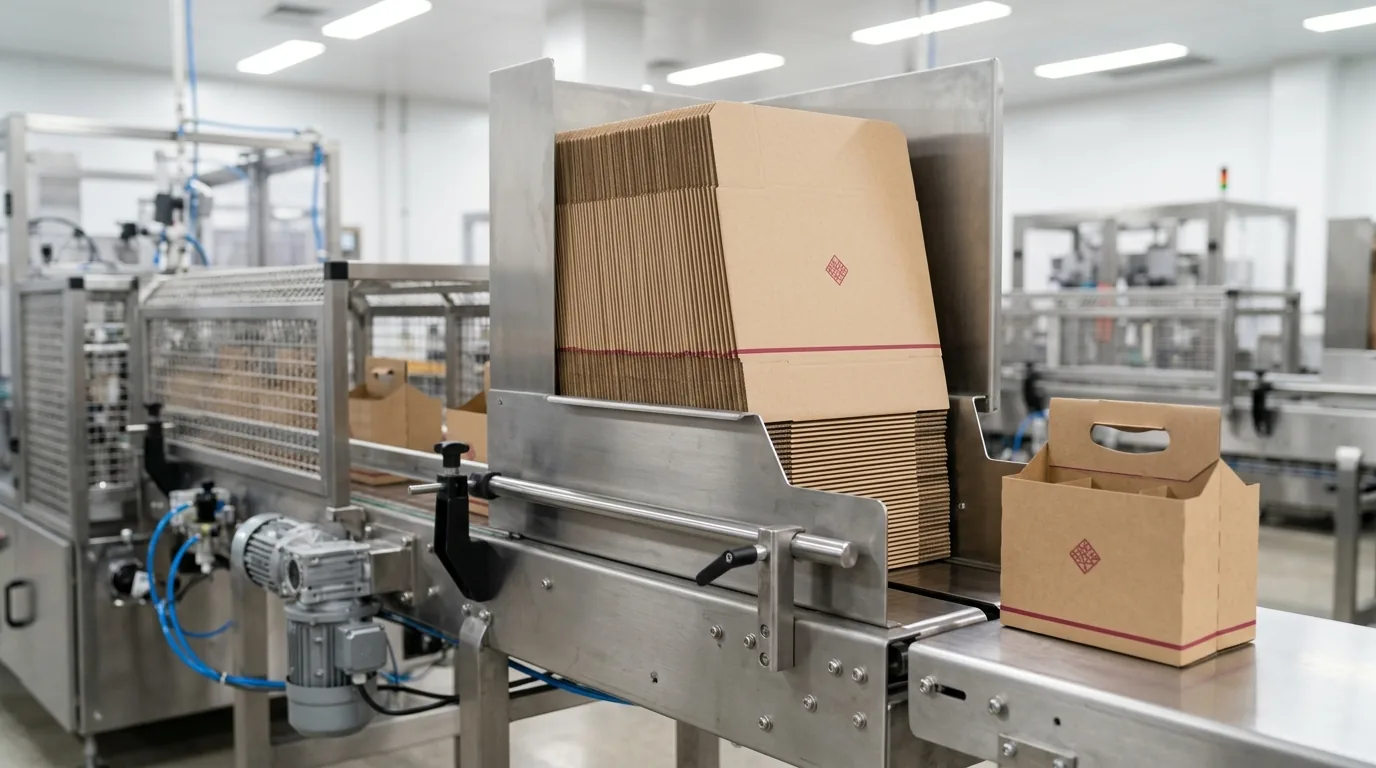
National brands load fridge packs on a machine that wraps the board around a moving block of cans. That is not the only way. For hand loading, we supply the carton pre-glued along the manufacturer seam so it opens into a tube; the loader stands twelve cans in two rows on a table, slides the tube over them, folds and locks the end flaps, and turns the pack upright. A practiced person does one in under a minute. If a co-packer will run them, send the machine model and we draw to its magazine and glue spec; the co-packer secondary packaging guide lists what else the line needs.
What to send for a quote
- Can size and a spec sheet, or one empty can
- Count: 12, 15 or 18, and the row layout
- Whether the pack will be sold cold and wet
- Quantity and delivery date
- Hand loaded or machine loaded, and the machine if known
- Artwork, or a request for free design help
Request a quote and a specialist replies within one business day with a firm quote, a dieline and a digital proof. Free samples of board and finish are available first; see packaging samples.
Can dispenser box FAQs
What is a fridge pack?
A fridge pack is a 12 pack carton for cans laid on their sides in two rows of six, one can high, with a perforated end that tears out so the cans dispense one at a time from a refrigerator shelf. The same structure is used for 15 and 18 counts with three rows.
What board is a can dispenser box made from?
Coated unbleached kraft (CUK) paperboard, usually 20 to 24 pt, because virgin kraft fiber carries the 10 to 15 lb load of full cans and resists tearing at the handle. Recycled board is not suitable for a loaded fridge pack.
Can I order fridge packs in small quantities?
Yes. Sheet fed printing makes short runs practical, and The Best Price Boxes has no minimum order, so a few hundred dispensers for a test market is a normal order. A free dieline and digital proof are included.
Does a fridge pack work for 16 oz cans?
Yes, with a dieline drawn to the 16 oz can and a heavier 24 pt board, because twelve full 16 oz cans weigh about 13 lb. The retaining lip and perforation are also adjusted to the larger can.
Are can dispenser boxes recyclable?
A paperboard fridge pack with water-based inks and an aqueous coating is accepted in curbside paper recycling in most US programs. Avoid film lamination if the recycling claim matters.