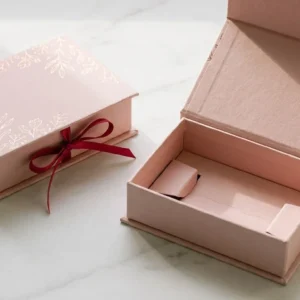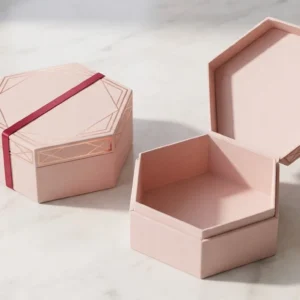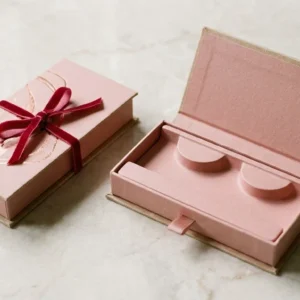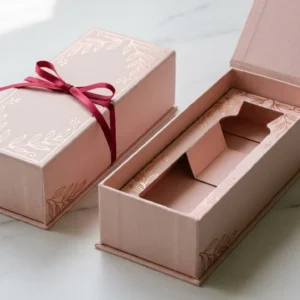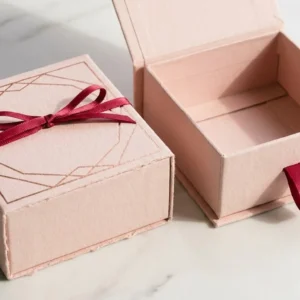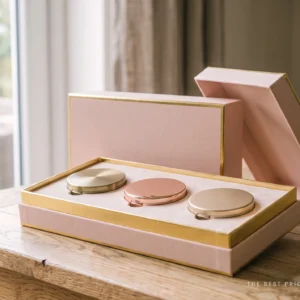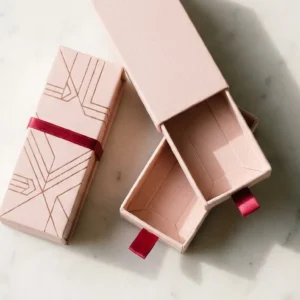





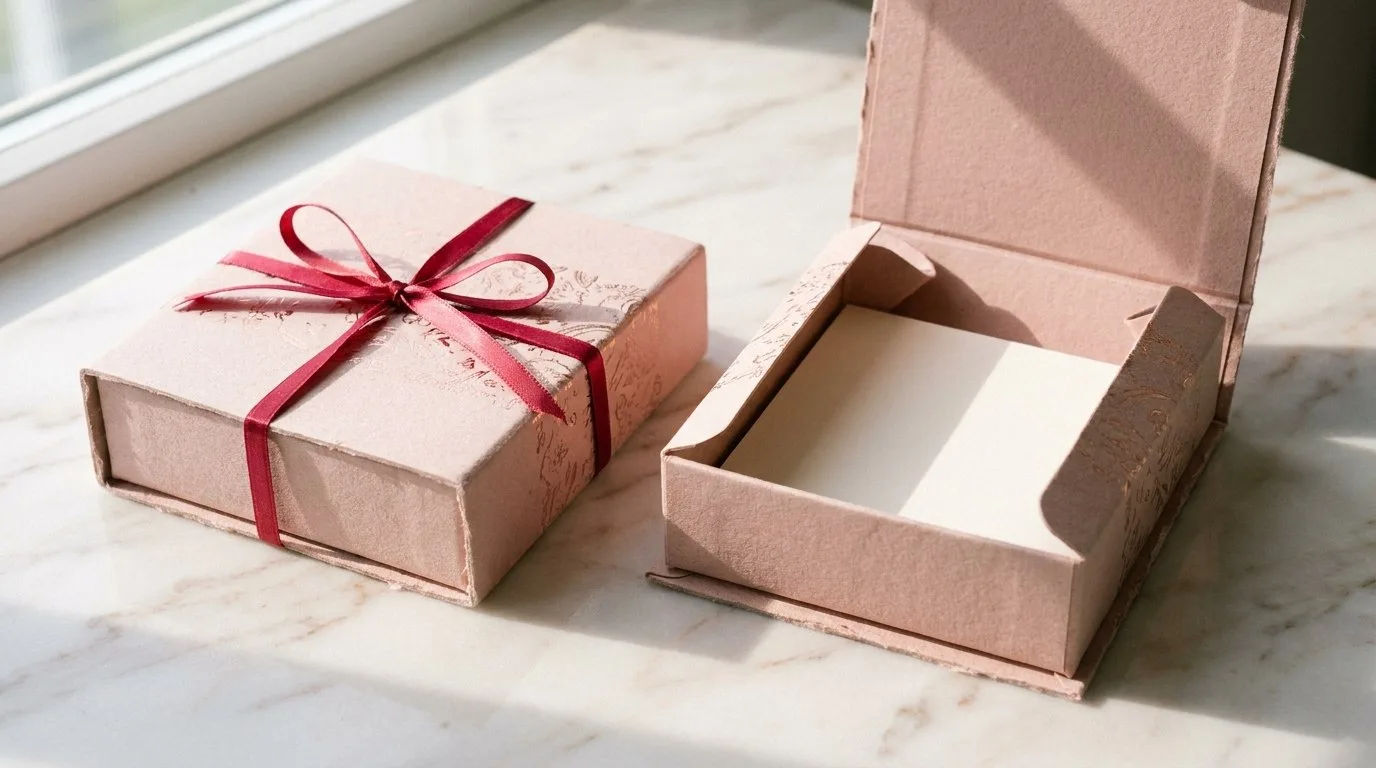

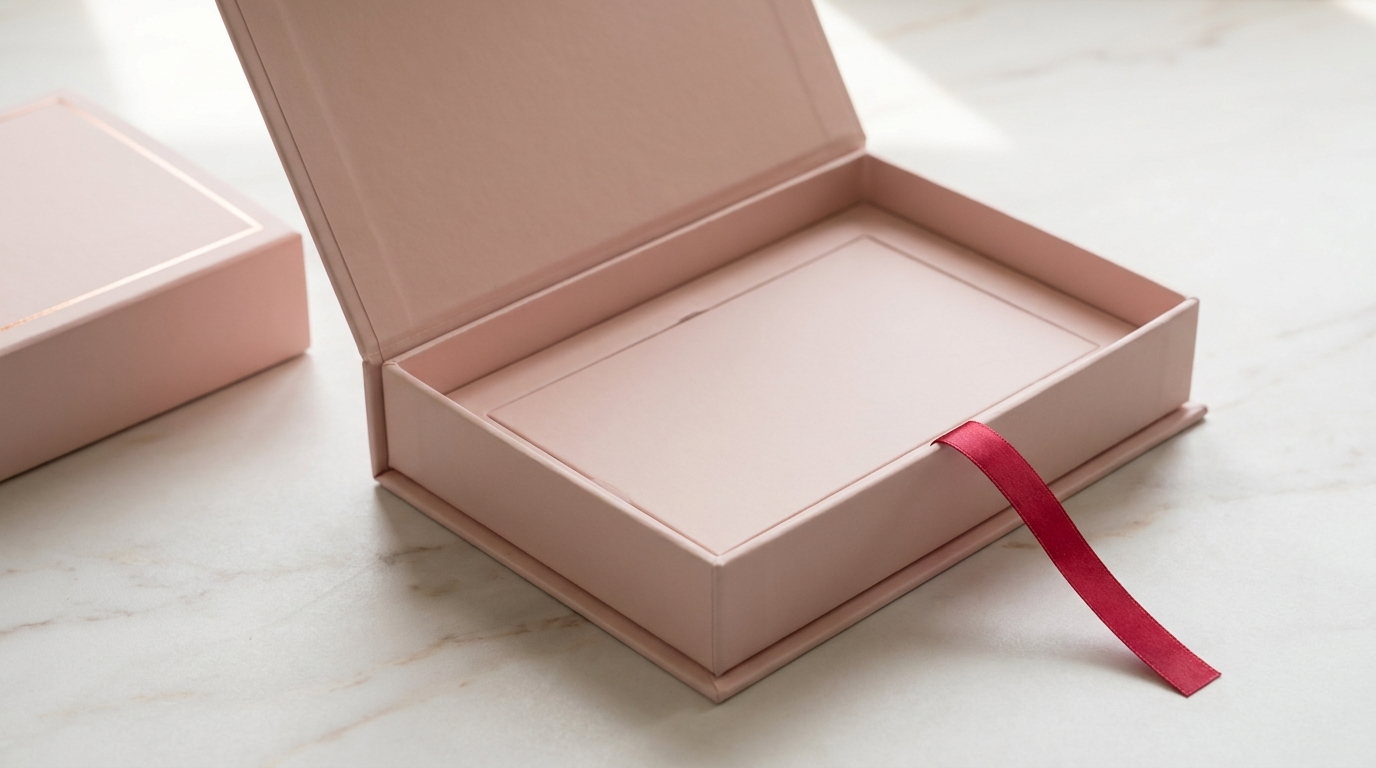


An invitation box is a flat rigid or folding box that holds an invitation suite: the card, the envelope, and any extra pieces like a map, menu or small favor. TBPB makes custom invitation boxes with no minimum order, and we will beat a written quote for the same specs.
What goes in an invitation box
The base of the box is cut to the size of the suite, and the suite is usually a stack: the main invitation, a response card, a details card, and an envelope. Some hosts add a vellum wrap, a pressed flower, a ribbon or a wax seal. The depth you need is the height of the stack at its thickest, and it is almost always more than people guess, because paper with a textured finish or a foil edge adds thickness that a single sheet does not suggest.
Sizing from the card
Measure the largest piece in the suite, usually the envelope if the cards go inside it. For reference, a common 5 by 7 inch invitation card goes in an A7 envelope of about 5.25 by 7.25 inches, but check your own, since many couples order custom sizes. Add about 1/8 inch of clearance per side and the depth of the stack. A box that is too snug scratches paper edges when the lid goes on. Too loose lets the suite slide and corners curl. Send us your card and envelope sizes and the pieces you plan to add.
Rigid or folding
A rigid box, built from 1.5 to 3 mm chipboard and wrapped in printed or textured paper, feels like a keepsake. It suits weddings, galas, anniversaries and launches where the box is part of the message. A folding carton in 16 to 24 pt paperboard is lighter and kinder to mailing budgets, which matters when you are sending hundreds. A magnetic closure gift box sits between the two when you want a firmer feel without a loose lid. For a sliding reveal, look at drawer boxes.
Finishes that read as an event, not a product
- Printed wrap in CMYK or Pantone-matched event colors.
- Foil stamping for monograms and dates, in gold, silver, rose gold or color foils.
- Blind or foil embossing for a monogram that feels cut into the lid.
- Soft-touch lamination, or textured uncoated paper for a quieter look.
- Ribbon closure, magnetic closure or a simple lift-off lid.
- Insert trays or paperboard dividers for cards, favors and small keepsakes.
Keep foil to the monogram or the date. A box covered in foil competes with the invitation inside it.
Timing and proofs
Invitations have a hard date at the end of the process, and the box is usually the last thing to be approved. Settle the card size first, because a late change to the suite means redrawing the box. Ask for a dieline and a printed proof before the full run. Check the name spellings, the date and any foil placement on that proof, because a foil error cannot be corrected after stamping. A single sample also lets you test how the pieces sit before everything goes to print.
Mailing considerations
A rigid invitation box is meant to be opened, not thrown through the postal system loose. Plan an outer mailer or a padded envelope, and weigh a finished box with the invitation inside to avoid surprises with postage. If guests are local and the invitations will be hand delivered, you can skip the mailer entirely and spend that effort on the box. Our cosmetic packaging pages show other small-format rigid and folding styles if you want to compare.
To start, send us the card dimensions and the quantity, even if it is only one invitation, and TBPB will draw the dieline and quote it.
Frequently asked questions
What is an invitation box?
An invitation box is a flat box that holds a printed invitation suite, which may include the card, envelope, extra cards and a small favor. Boxed invitations are used for weddings, galas, product launches and milestone events.
Is there a minimum order for invitation boxes?
No. TBPB has no minimum order, so you can order a box for a small guest list or hundreds for a larger event. Dieline, build and print standards stay the same.
How do I size an invitation box?
Measure the largest piece in your suite, add about 1/8 inch of clearance per side, then add the full thickness of the stacked cards, any vellum or ribbon, and favors. Send those measurements and we draw the dieline.
Should I choose a rigid box or a folding carton?
Rigid boxes feel like a keepsake and protect the paper well. Folding cartons are lighter and easier to mail in volume. For a small, high-impact guest list choose rigid; for large mailing choose folding, and consider an outer mailer.
Can I add a monogram or a date in foil?
Yes. Foil stamping and embossing are common for monograms and dates. Keep the foil area modest and away from edges and fold lines so it stays crisp. We can show foil placement on the proof before print.
Can I include a favor or small gift in the box?
Yes. A tray or divider can hold a favor, a candle or a card alongside the invitation. Tell us the favor dimensions with the card size so the depth and layout are planned correctly.
More Cosmetic Packaging
See the full Cosmetic Packaging range, or explore related options with no minimum order and our best-price guarantee: