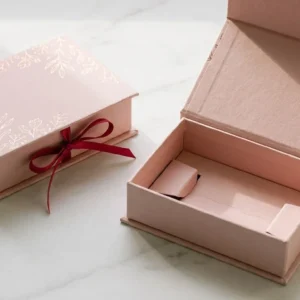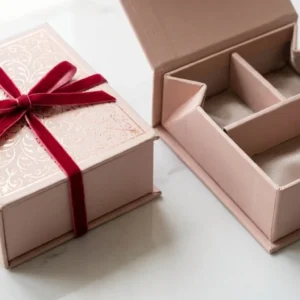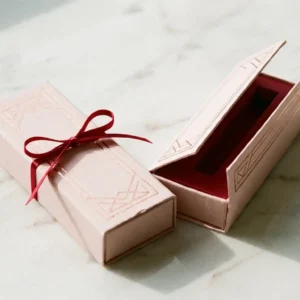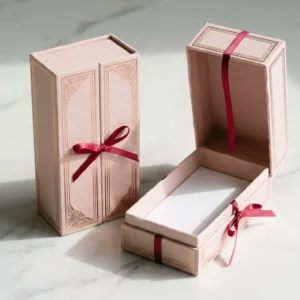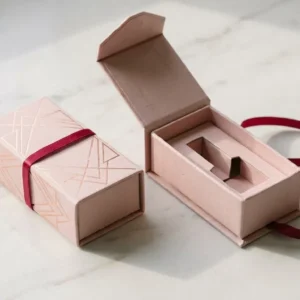

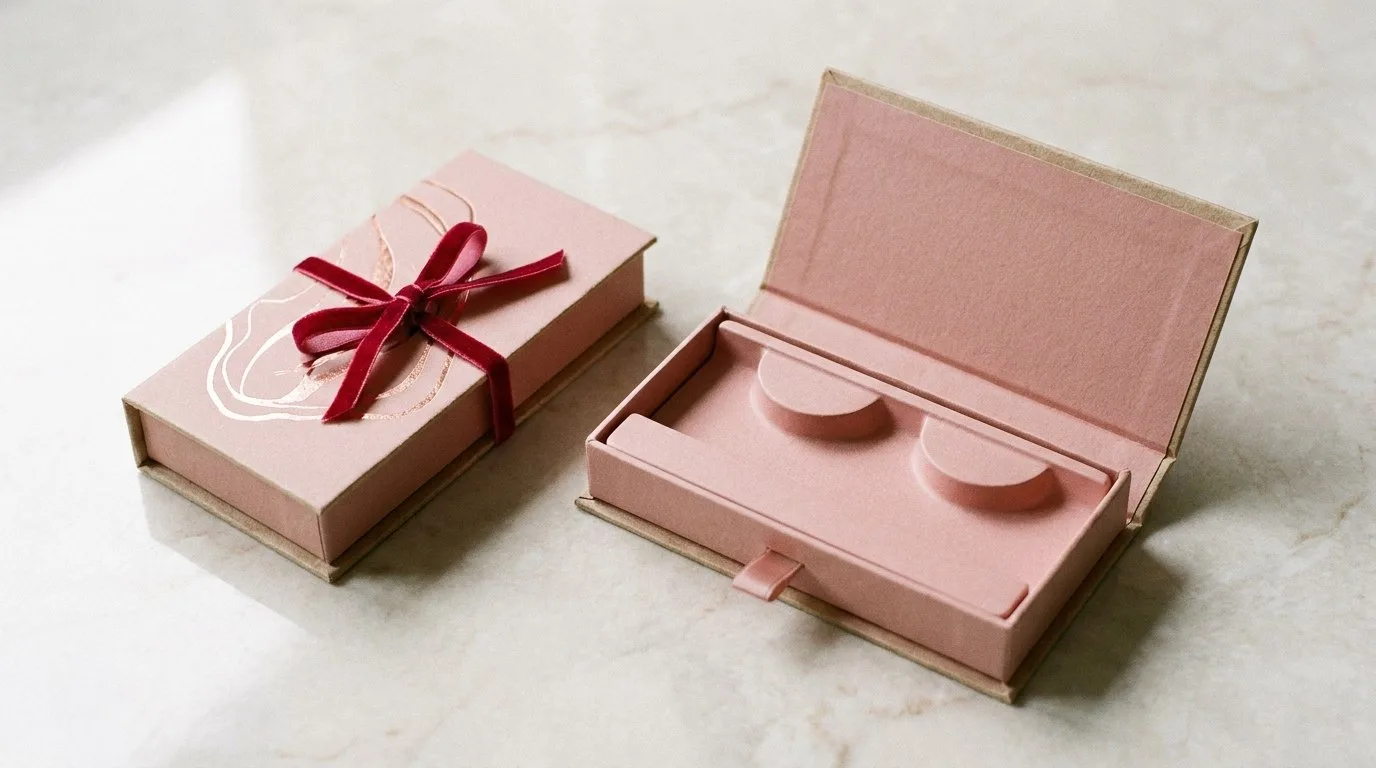


Custom eyelash packaging is a printed carton, usually a tuck-end or sleeve box with a fitted insert, sized to hold a lash tray or case without bending the lashes. TBPB makes it to your lash dimensions with no minimum order, and a written quote for the same specs gets beaten.
Why lash boxes are harder than they look
Eyelashes are small, light and fragile. A strip lash bends if the box is a few millimeters too short, and a tray that slides about inside the carton leaves crushed lash tips by the time the customer opens it. The box needs to be tight on length but loose enough that the tray goes in and out without scraping. That is a sizing problem before it is a design problem.
It is also a shelf and a social media problem. Lash customers look at packaging on a phone screen first. A box that photographs cleanly, with a bold flat color, a crisp logo and a texture you can see from a camera, does more for your sales than a complicated print that disappears at thumbnail size.
Measuring for the tray, not the lashes
Do not measure the lashes alone. Measure the whole tray or case with the lashes in it: length, width and height. Then add about 1/8 inch of clearance per side for a paperboard carton. If you sell more than one lash length, say 10 mm and 18 mm styles, design to the longest tray and use an insert to center the shorter ones, so you can keep one box size across the line and simplify reordering.
Multi-pair sets need a deeper box or a stepped insert. If you sell lash glue, tweezers or a remover alongside, tell us. We can add a compartment so the kit arrives as one neat package.
Board, closure and print
Folding carton paperboard in the 16 to 24 pt range is the standard for lash boxes. Heavier board gives more structure; lighter board keeps the box slim. For the closure, a tuck top is the common and economical choice, and our tuck top boxes are a good base for the dieline. A paperboard insert or a die-cut slot holds the tray in place.
Black matte with a spot UV logo, soft-touch pastel and gold foil are all common looks in this category, and all work on paperboard. Choose a finish that survives handling, as lash boxes are opened often and rubbed in shipping.
Branding choices here are about repeat purchases. Lash customers reorder, and they notice when a box changes. Settle on one box size and one color system early, then vary only a label or a colored band for each lash style. That keeps your reorders simple, lets you buy in small batches without redesigning every time, and gives your product line a recognizable look on a shelf or in a feed. We can set up a master dieline so every new style slots into the same template.
- Tuck-end or sleeve-and-tray construction
- Paperboard insert or die-cut slot for the tray
- Matte, gloss or soft-touch coating; foil and spot UV
- Single-pair, multi-pair or kit sizes
- Full-color CMYK or Pantone-matched print inside and out
Regulatory and related packaging
Ingredient, adhesive and safety wording on cosmetic products is the brand’s responsibility. We print the copy you supply, and you should confirm what has to appear with your own regulatory adviser. For other beauty lines, see mascara boxes and make-up boxes, or browse the cosmetic packaging range.
Send your tray size and quantity, even for one box, and we will draw the dieline and quote it.
Frequently asked questions
What size should an eyelash box be?
Measure the tray or case with the lashes inside, not the lashes alone, then add about 1/8 inch of clearance per side. If you sell several lash lengths, design for the longest tray and use an insert to center shorter ones. Send us the tray and we will set the size.
Can I put several pairs of lashes in one box?
Yes. A deeper box or a stepped insert holds several trays, and a dieline can add a compartment for glue or tweezers. Tell us how many pairs you sell as a set, and we will plan the layout so each tray sits flat and does not rub the others.
What material is best for lash packaging?
Folding carton paperboard around 16 to 24 pt is the standard choice. It prints well and stays slim. A soft-touch or matte coating resists fingerprints, which matter on black boxes. For a heavier feel, ask us about thicker board. We will recommend one based on your product.
Can eyelash boxes have a window?
A die-cut window with a clear film lets customers see the lash style, which helps on shelf. Many lash brands skip it to keep the box clean for online photos. If you want one, tell us the size and position, and we will show it on the proof.
Do I need to put ingredient or safety text on the box?
Cosmetic labeling rules depend on your market and your product, including adhesive. You are responsible for the required text, and you should confirm it with your own regulatory adviser. We print the copy you supply and can leave a blank area for a label.
What is the minimum order for custom eyelash packaging?
There is no minimum order. Order one box to test the fit with your lashes, or thousands for a launch. Send the tray size and quantity and we will quote it, and if you bring a written quote for the same specs, we will beat it.
More Cosmetic Packaging
See the full Cosmetic Packaging range, or explore related options with no minimum order and our best-price guarantee: