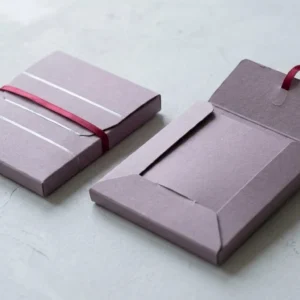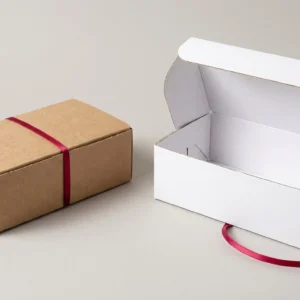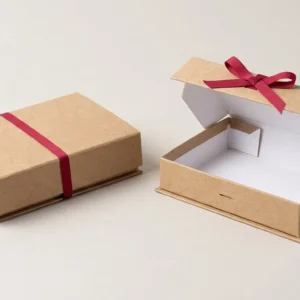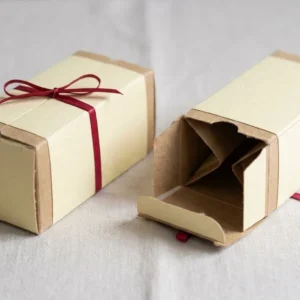
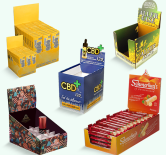

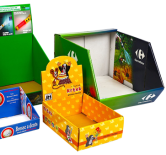
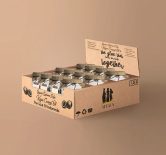
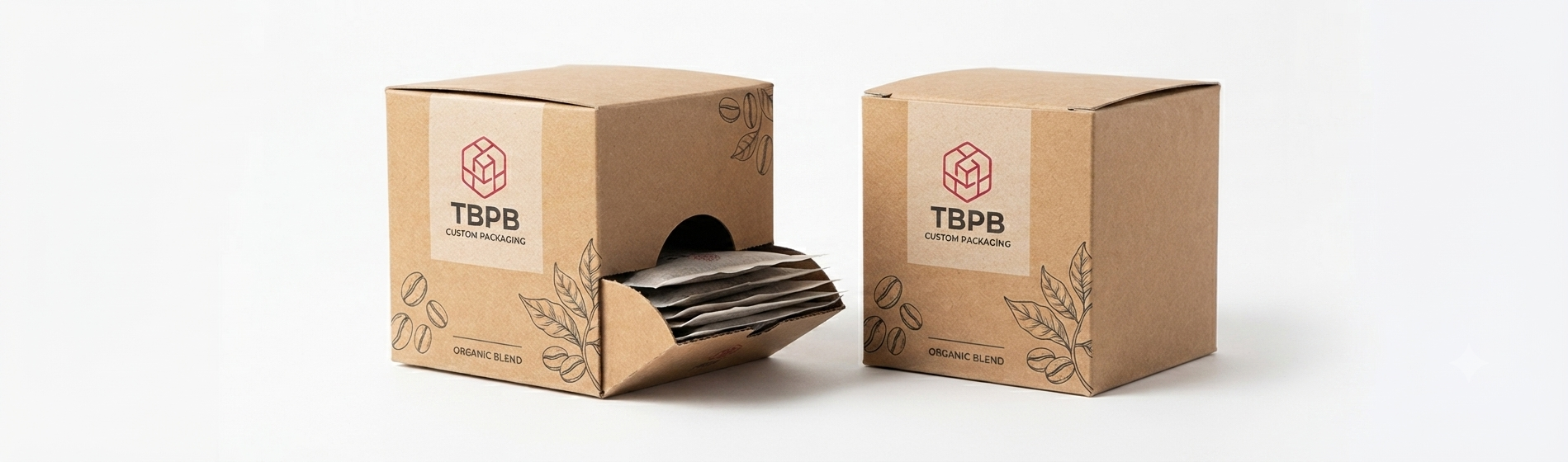
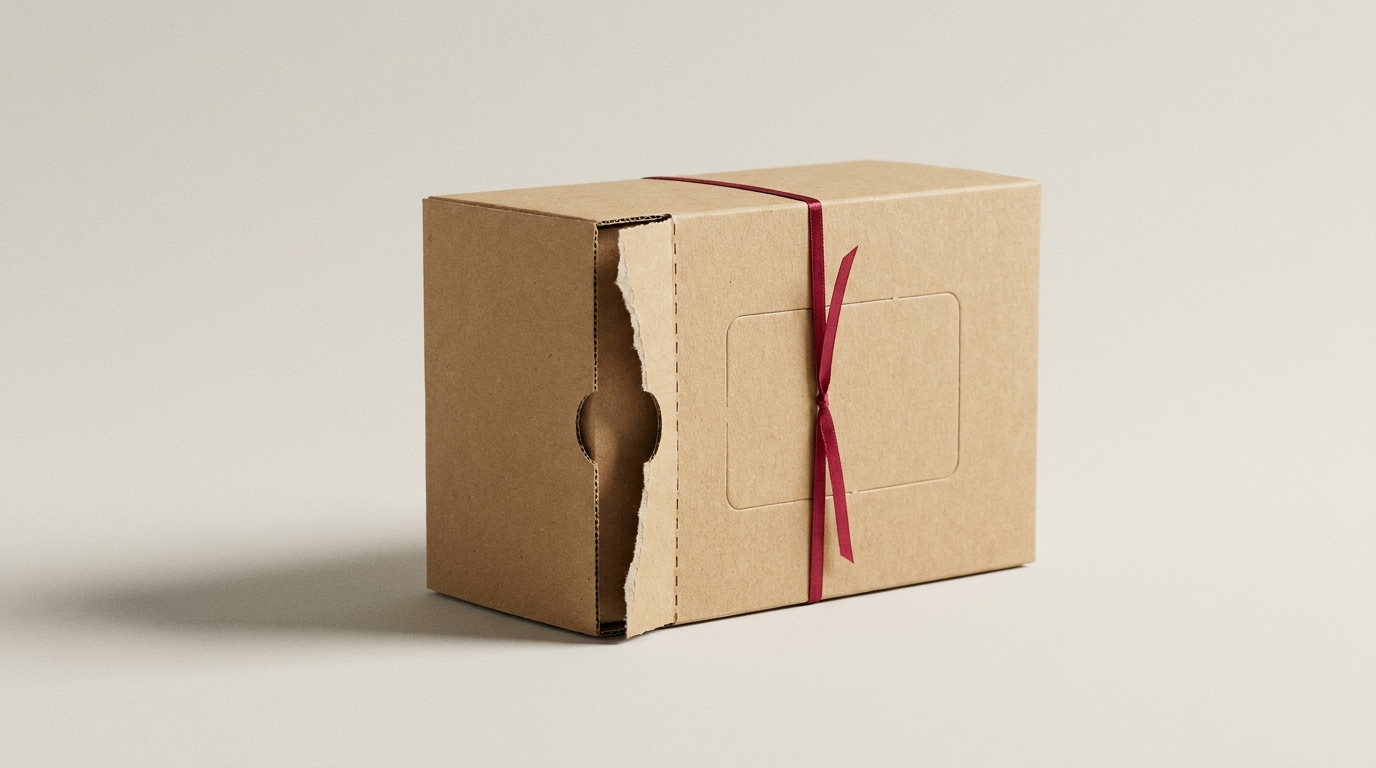


A dispenser box is a countertop carton with a perforated front panel that tears away, leaving the product open and within reach on the shelf or register. TBPB makes them custom, with no minimum order and a price-beat guarantee if you bring a written quote for the same specs.
How a dispenser box works, and why stores like it
The retailer receives a sealed shipper, pulls the tear strip or pops the perforated front, and the box becomes the display. Nobody has to unpack units and arrange them. That matters for a cashier with a line, and it matters to a buyer deciding whether to give you counter space at all. A brand that arrives ready to sell gets a yes more often than one that asks the store to build a display.
Most dispensers use an auto-lock or crash-lock bottom, so the box ships flat and snaps open in a second. A tuck bottom is cheaper to tool but slower to set up. For anything that needs to hold a stack of units upright, an angled or stepped front keeps the top item visible as the pile drops.
What fits, and what does not
Dispensers work best for small, light, uniform items: lip balm, single-serve sachets, gum and candy, bars, pouches, vape accessories, sample sets. Think of things a customer grabs without comparing. They are a poor fit for fragile glass, loose powders without an inner pack, or anything that rolls. If the item is heavy, the front panel will sag once half the stock is gone, so choose corrugated or add an inner tray.
Sizing the dispenser
Measure one unit in its final retail packaging, not the bare product. Then decide how many sit in a row and how many rows deep. Width and depth equal the unit size multiplied by the count, plus about 1/8 inch of clearance per side so units slide out without catching. Height of the tear opening should let a finger reach the item but still keep the stack from tipping forward. Send us your unit dimensions and the count per box and we will draw the dieline.
Board and print choices
- Folding carton paperboard, roughly 16 to 24 pt, for light items and short runs.
- Corrugated E-flute when the filled box is heavy or will be shipped loose in a master carton.
- CMYK or Pantone-matched printing, outside and inside.
- Matte or gloss aqueous coating, soft-touch lamination, spot UV, foil stamping.
- Custom perforation and thumb notch placement, plus an optional header or riser panel for branding.
Print the inside too if the box stays open on the counter. A plain brown interior next to a polished exterior is the first thing shoppers notice.
Packing and shipping the filled displays
Decide early whether the dispensers ship empty and flat, or filled and sealed. Flat is lighter and easier to store, but someone has to erect and load each box. Filled and sealed is what a retail buyer expects, and it means the perforation has to survive handling without splitting in transit. Tell us how the boxes will travel and we will adjust the tear strip depth and the board so the front stays closed until a person pulls it.
When another style is smarter
If your product hangs from a peg, a header card costs less and takes no counter space. If you only need a nicer way to sell one piece, a plain tuck top box does the job. Dispensers earn their place when many identical units sell side by side. You can see more shelf-ready formats in our custom retail packaging range.
To get started, send the product dimensions and the quantity you want, even a single box, and TBPB will draw the dieline and quote it.
Frequently asked questions
What is a dispenser box?
A dispenser box is a countertop carton with a perforated front that tears away so the product is displayed and grabbed straight from the box. It ships sealed, opens in seconds, and doubles as the retail display for small impulse items.
Is there a minimum order for custom dispenser boxes?
No. TBPB has no minimum order, so you can order one dispenser box to test the fit and the tear, or ten thousand for a full retail launch. The dieline and construction are the same either way.
How do I size a dispenser box?
Measure one unit in its finished retail packaging, then multiply by the number of units per row and rows deep. Add about 1/8 inch of clearance per side so units slide out freely. Send the numbers and TBPB draws the dieline.
Should I choose paperboard or corrugated?
Paperboard around 16 to 24 pt works for light items like lip balm or sachets. Choose corrugated E-flute when the filled box is heavy, or when the display will sit open for weeks, because it keeps the front panel from sagging.
Can I print the inside of the box?
Yes. Interior printing is worth it for dispensers, since the inside is visible once the front tears away. You can use a solid brand color, a pattern, or a short message in CMYK or Pantone-matched ink.
Can the front panel carry my logo and still tear cleanly?
Yes. Artwork is placed so the perforation falls in a planned spot, usually along a graphic break. We check the dieline with you before print so the logo is not cut through in an awkward place.
More Custom Retail Packaging
See the full Custom Retail Packaging range, or explore related options with no minimum order and our best-price guarantee: