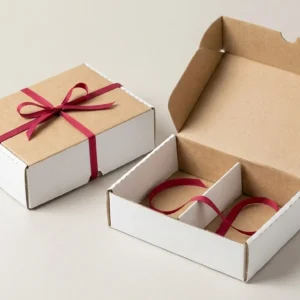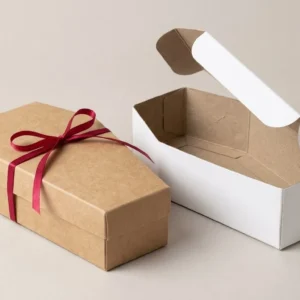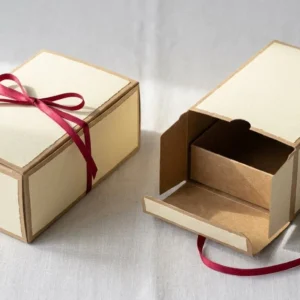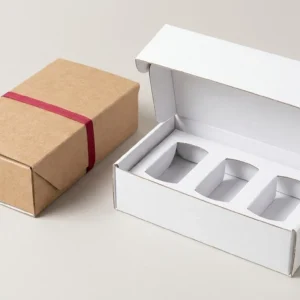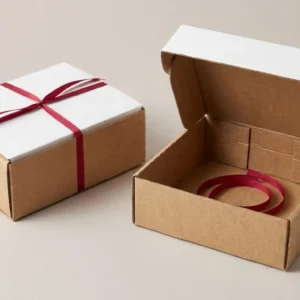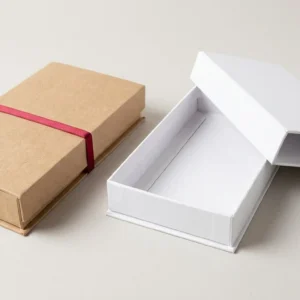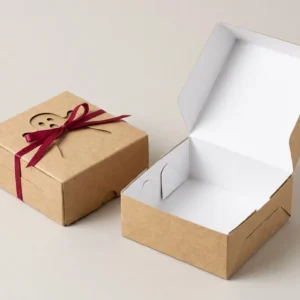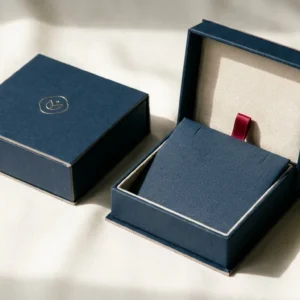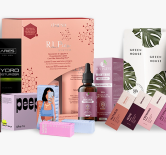
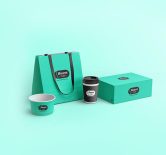
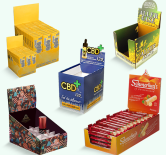

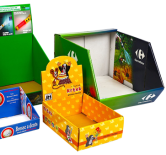
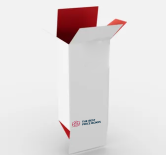
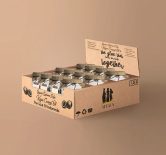
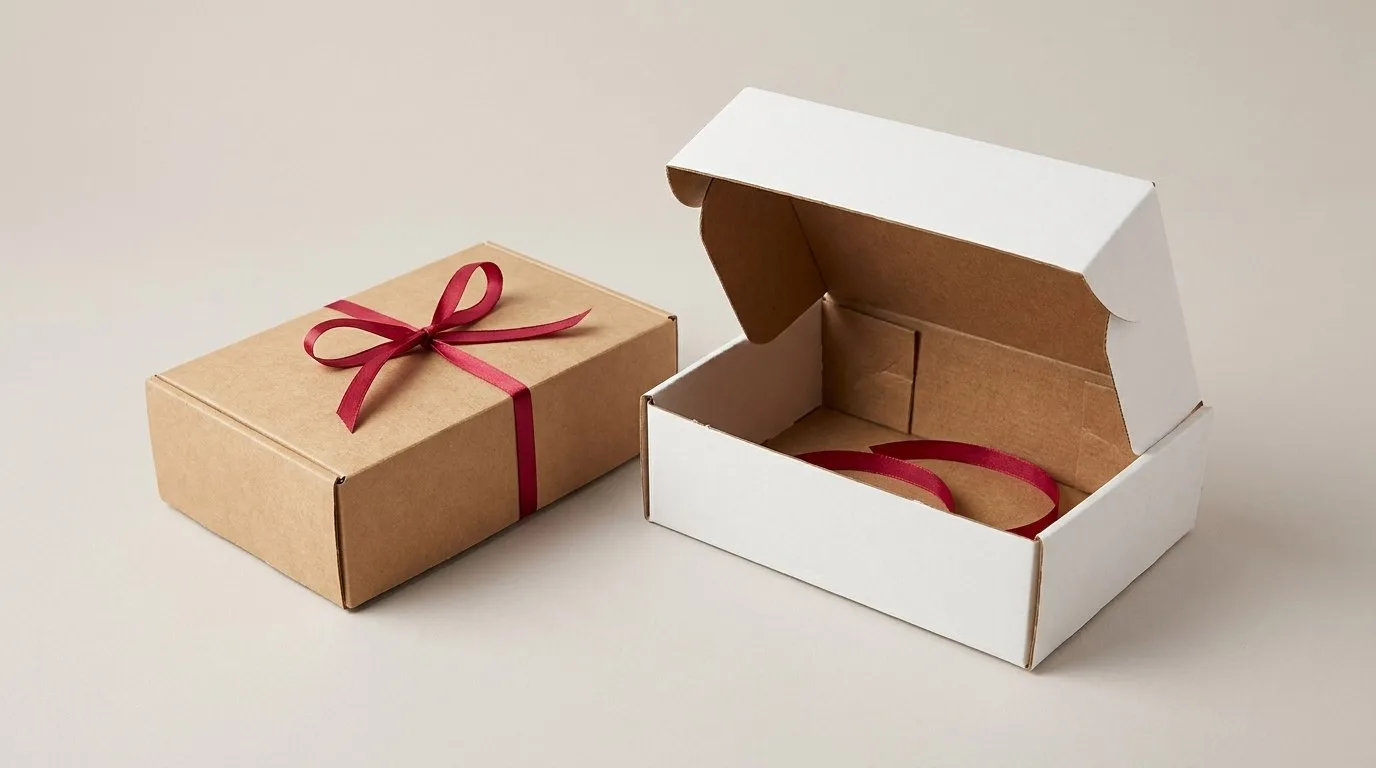

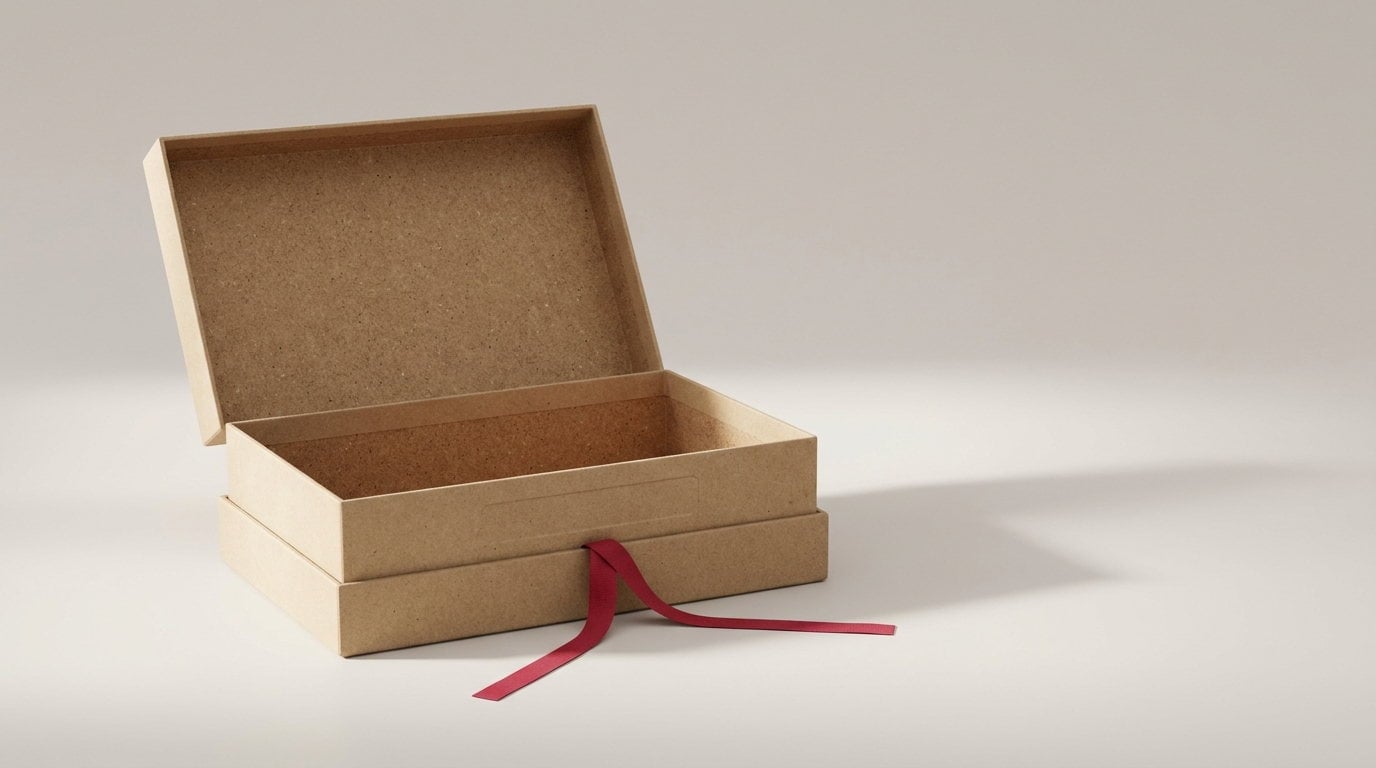


An eco-friendly box is a paper-based carton designed so the customer can recycle it without pulling anything apart. TBPB makes custom eco-friendly boxes with no minimum order, and we will beat a written quote for the same specs.
What eco-friendly means on a box, and what it does not
The phrase gets stretched. In practice a box is easier on the environment when it is made from one material, uses as little coating as the job needs, and has no plastic window or foam glued in. A plain paperboard or corrugated box with water-based inks and an uncoated or light aqueous finish is simple to recycle in most curbside paper streams. A box with a plastic film laminate, a PVC window and a foil stamp is harder. We do not label any carton as compostable or certified unless we have documents to back it, so ask before you put such a claim on your own packaging.
Board choices that keep it simple
For shelf and gift products, a folding carton in kraft or uncoated white board is the lightest-footprint option. For shipping, kraft corrugated gives you crush strength with a single recyclable material. Both can be printed in one or two colours, which also means less ink and a cleaner look.
- Board: kraft or uncoated white folding carton, and kraft corrugated for shipping
- Print: one-colour or CMYK, with water-based ink where available
- Finish: uncoated, or a light aqueous coating if you need scuff resistance
- Closures: tuck, sleeve or mailer styles that need no tape or glue to hold
- Avoid: plastic windows, heavy laminates, foam inserts, glitter
Sizing is part of the sustainability story
The greenest box is often the right-sized one. An oversized carton wastes board, needs void fill and ships more air. Measure the product, add about 1/8 inch per side for a folding carton, and consider a paperboard insert rather than loose plastic fill. For shipping, check the size against your carrier’s dimensional limits before you lock the artwork.
Practical ways to cut the footprint further
Print inside only where it matters, since every printed surface adds ink. Choose a closure that needs no tape, such as a tuck flap or a lock-bottom, so the customer has nothing to peel off before recycling. Standardise on two or three box sizes across your range instead of a unique size for every product, which keeps production simple and reduces leftover stock. If you add a leaflet, print it on paper rather than tucking in a plastic card. And tell customers how to recycle the box with one short line on the flap.
Where eco boxes get trade-offs
Uncoated board shows scuffs and fingerprints more readily than a coated sheet. Dark solids can show uneven coverage on kraft. If a luxury look matters more than recycling, a laminated finish may serve the brand better, and it is honest to say so. For a closer look at the kraft range, see eco-friendly kraft boxes and kraft boxes. For online brands, e-commerce boxes cover the shipping side, and the custom retail packaging category shows the wider choice.
Claims on your packaging, such as recycled content or recyclable, are your responsibility. Confirm what you can say with your own adviser, and with local recycling rules.
Next step: send the product dimensions and quantity, even if it is one box, and we will draw the dieline and quote it.
Frequently asked questions
What makes a box eco-friendly?
Mostly simplicity: paper-based board, a single material, light coatings, and no plastic window or foam attached. That lets the customer recycle it in one step. Right-sizing matters too, since an oversized box wastes board and void fill. We advise on the simplest build for your product.
Are your eco-friendly boxes recyclable?
Plain kraft or uncoated paperboard and corrugated are paper-based and commonly accepted in curbside paper recycling, though local rules vary. Plastic laminates, foil and attached windows can make recycling harder. Tell us if recyclability matters and we will keep the build simple.
Can I order a single eco-friendly box?
Yes. There is no minimum order, so you can order one carton as a trial or thousands for a launch. Starting with one is useful for checking the fit and how the uncoated board prints before committing to a bigger run.
Do you offer compostable or FSC-certified boxes?
We do not make compostable or certification claims without documents to support them, so please ask us for the details on a specific board before you publish such a claim. We can discuss paper options and what we can confirm for your order.
Can eco-friendly boxes still look premium?
Yes, with the right choices. One or two colours on kraft, a tidy foil-free logo, embossing and a well-fitted insert look deliberate. If you want soft-touch lamination or heavy foil, accept that recycling gets harder and say so honestly to customers.
What size should an eco-friendly box be?
As small as the product allows. Measure the item, add about 1/8 inch per side for a folding carton, and use a paper insert instead of loose fill. Smaller boxes use less board and are lighter and easier to ship. Send your product and we draw the dieline.
More Custom Retail Packaging
See the full Custom Retail Packaging range, or explore related options with no minimum order and our best-price guarantee: