
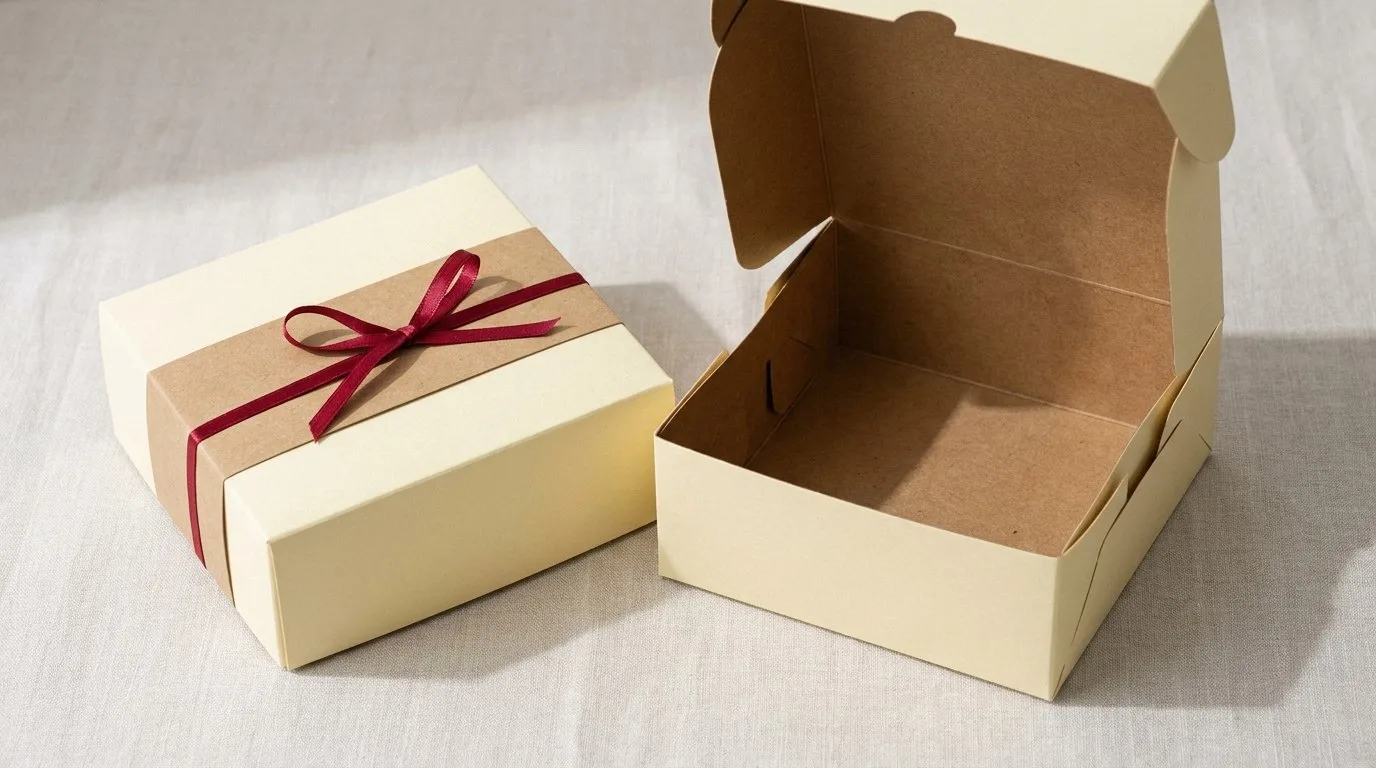


Custom frozen food boxes are printed paperboard cartons designed to hold food that lives in a freezer, and TBPB makes them with no minimum order. We also run a price-beat guarantee: bring a written quote for the same specs and we will beat it.
The freezer is hard on cardboard
Plain paperboard soaks up moisture. In a freezer, frost forms on the surface, and every time the door opens the temperature swings and that frost melts and refreezes. The result is a soft, warped carton with ink that rubs off. Frozen food packaging is therefore less about the print and more about the board and its barrier. Many frozen cartons use paperboard with a moisture-resistant coating or a poly-based layer, and some add an inner bag or tray for the food itself. The right choice depends on the product, how long it sits and how wet it gets when thawing.
Shipping frozen goods adds another layer. If you sell direct to customers, the printed carton sits inside insulated shipping packaging with a coolant, and the carton itself will see condensation as ice melts. That is another reason to specify a moisture-resistant board and to keep important print away from edges and folds, where wet board fails first.
Tell us the product and the storage conditions, and we will suggest the board before you spend time on artwork.
Sizing around the food and its inner pack
Frozen food usually arrives already wrapped, in a bag, tray or film pouch, so the carton is sized around that inner pack. Measure the wrapped item, not the food alone, and allow about 1/8 inch of clearance per side. If you sell several portions per box, add the divider or tray thickness. Frozen items also expand slightly as they freeze, especially liquids and sauces, so leave a little more room around soup, sauce or ice-based products than you would for a dry good.
Closures and structure
A tuck-end carton is the usual shape for meals and dumplings. A lock-bottom or auto-bottom carton is stronger when the contents are heavy, and a sleeve over a tray suits ready meals. For ice cream novelties and bars, a flat carton with a locked bottom stores neatly in a freezer drawer. For a pastry or dessert multipack, see our pastry boxes, and for meals that are sold ready to eat rather than frozen, our takeout food boxes may suit better. Printing can include nutrition panels, cooking instructions, a barcode and bold brand color that reads clearly under freezer-case lighting.
- Styles: tuck-end, lock-bottom, auto-bottom, sleeve and tray
- Board: paperboard with moisture-resistant coating or liner, as specified
- Options: window, inner tray, dividers, barcode and cooking panel
- Print: CMYK or Pantone, matte or gloss, high-contrast panels for freezer cases
- Quantity: no minimum order
What we cannot decide for you
Approval of a board, coating or ink for frozen direct-food contact is a regulatory question, and the answer depends on your product and your state or country. You are responsible for label copy, nutrition panels and contact-material compliance, so confirm them with your own regulatory adviser. We print the artwork you supply. For more bakery and meal formats, browse our custom food boxes category.
Send your product dimensions, the inner pack style and a quantity, even if that is one. We draw the dieline, discuss board options with you and quote it.
Frequently asked questions
What is a frozen food box made of?
Usually paperboard with a moisture-resistant coating or a poly-based layer, sometimes with an inner bag or tray around the food. The coating helps the carton resist frost and condensation so it does not soften or warp in the freezer.
Will ink rub off in the freezer?
Cold and moisture can scuff uncoated print. A protective coating helps, and so does keeping heavy ink coverage away from folds. Tell us your storage conditions and we will recommend a coating, then you can test a printed sample.
Do frozen boxes need an inner bag or tray?
Often yes. An inner bag, tray or pouch protects the food from direct contact with the carton and holds sauces or ice. The carton then handles the branding, instructions and stacking while the inner pack handles the product.
How do I size a frozen food box?
Measure the wrapped inner pack at its widest, then add about 1/8 inch of clearance per side. Leave a little more space for sauces and liquids, which expand slightly as they freeze. We draw the dieline from your numbers.
Is there a minimum order for custom frozen food boxes?
No. TBPB has no minimum order, so you can order one carton to test the fit and the freezer performance or thousands for a retail launch. Send product dimensions and quantity and we will draw the dieline.
Are your boxes approved for frozen food contact?
Approval depends on the board, coating, ink and your product, and on local rules. You are responsible for confirming food-contact suitability and label copy with your own regulatory adviser. We print the artwork you provide on the board you select.
More Custom Food Boxes
See the full Custom Food Boxes range, or explore related options with no minimum order and our best-price guarantee: