Ready to order custom booklet printing? Get your free quote in minutes
Free design and dielines, free samples, no minimum order, and we beat any competitor’s written quote. Your logo in full color, fast turnaround.
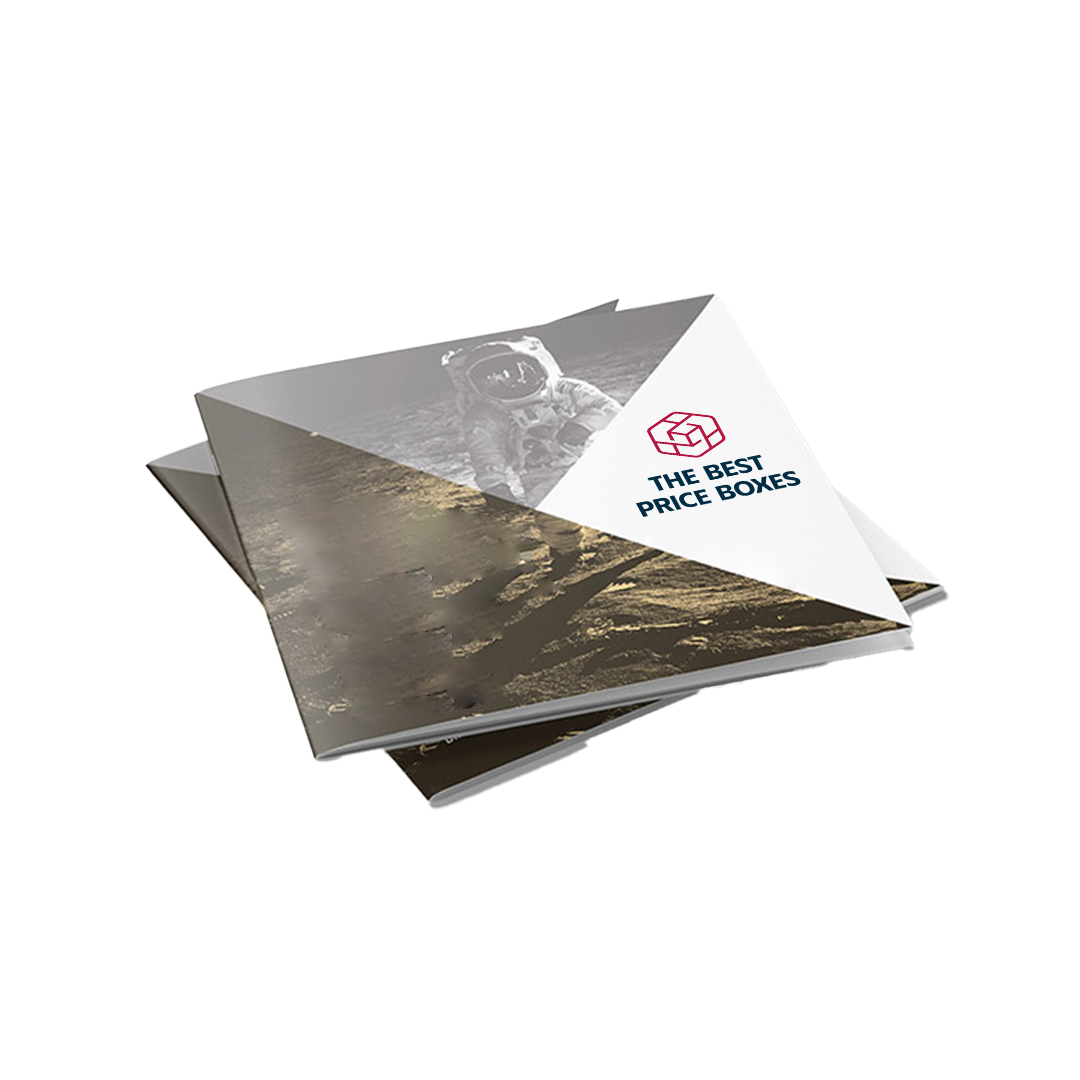
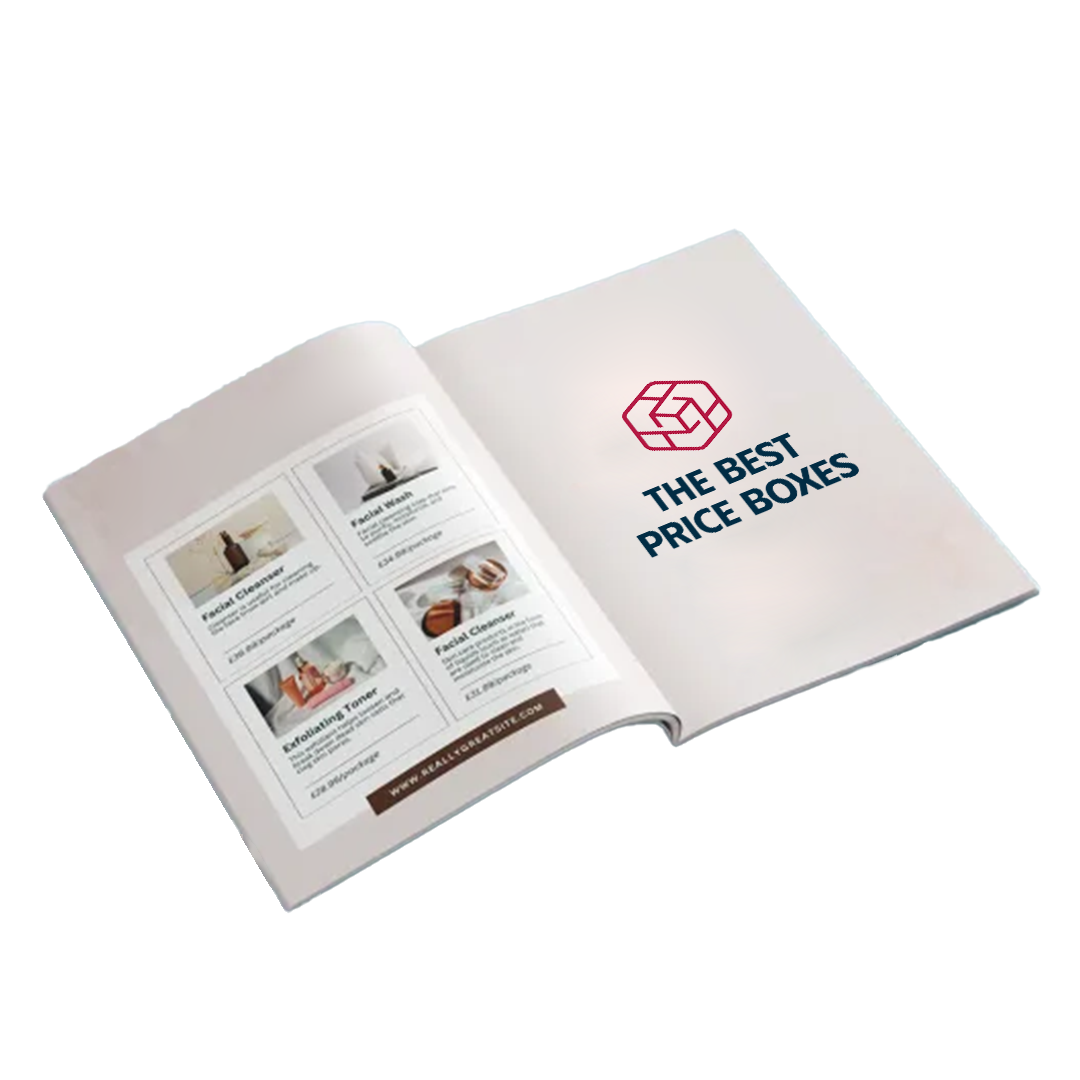
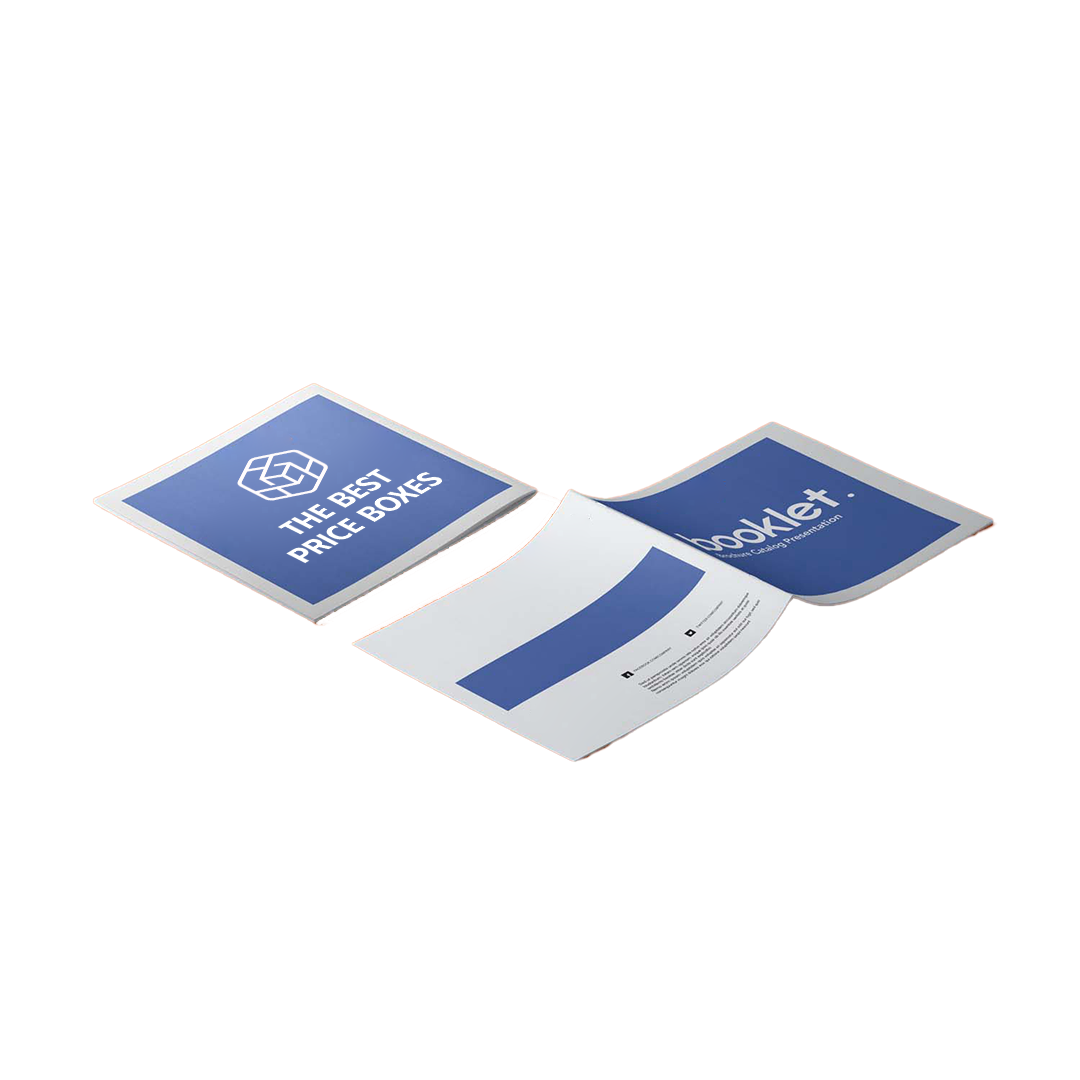
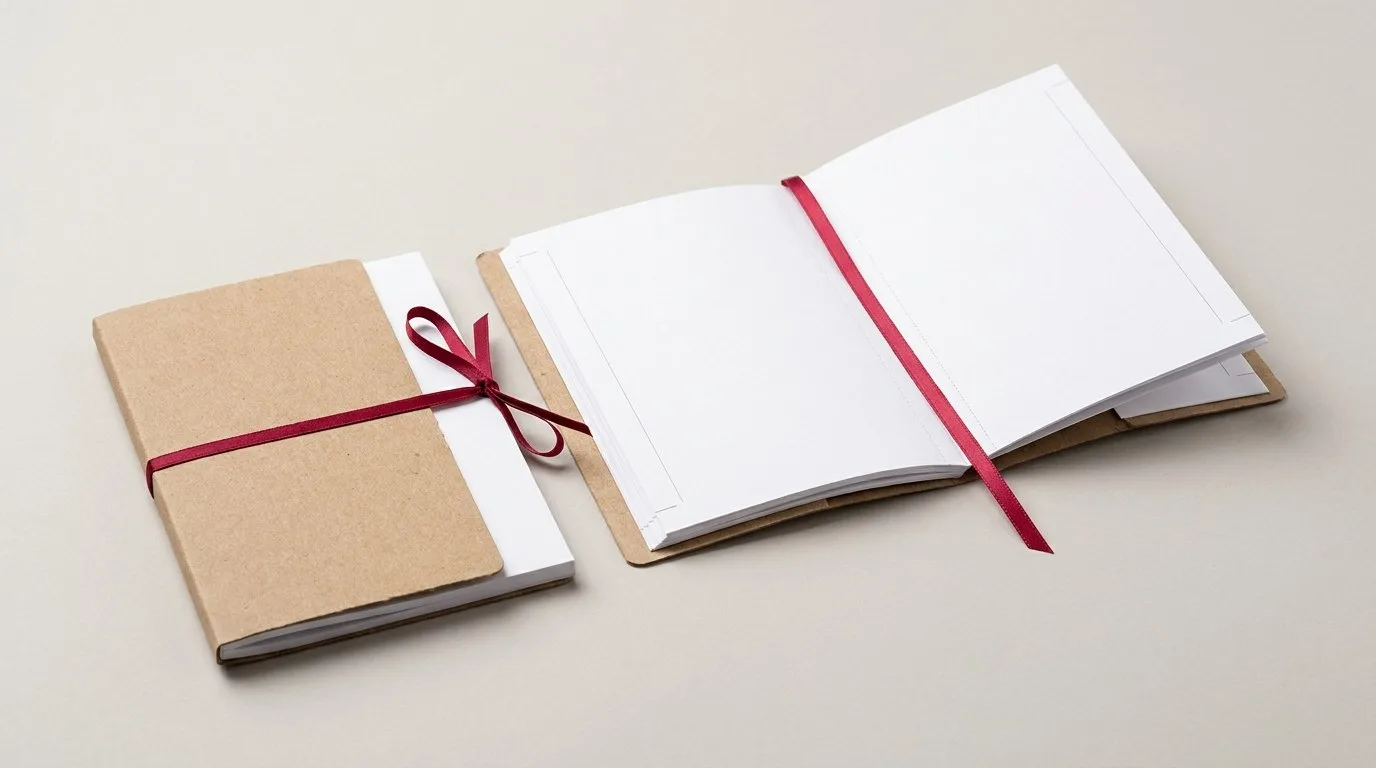
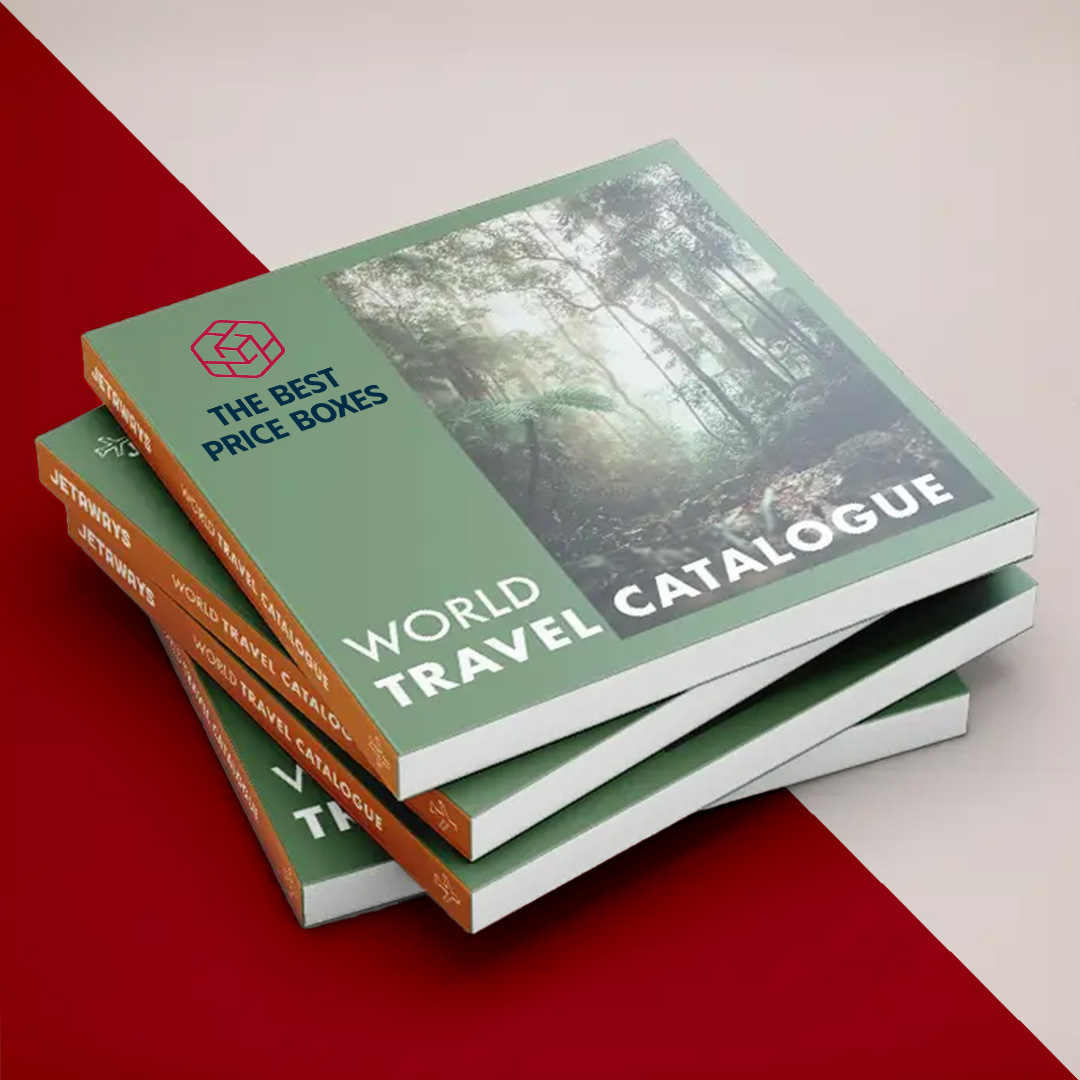
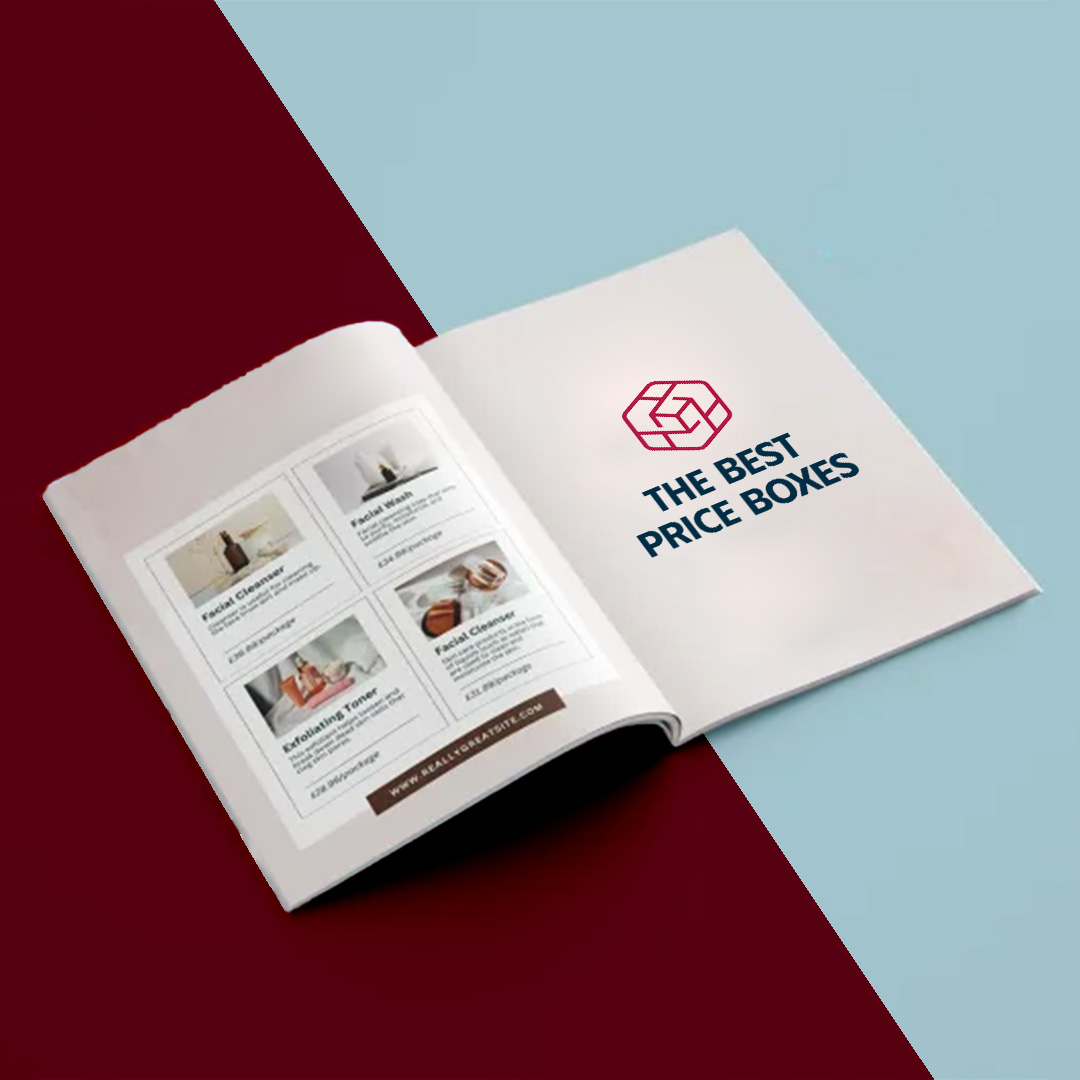
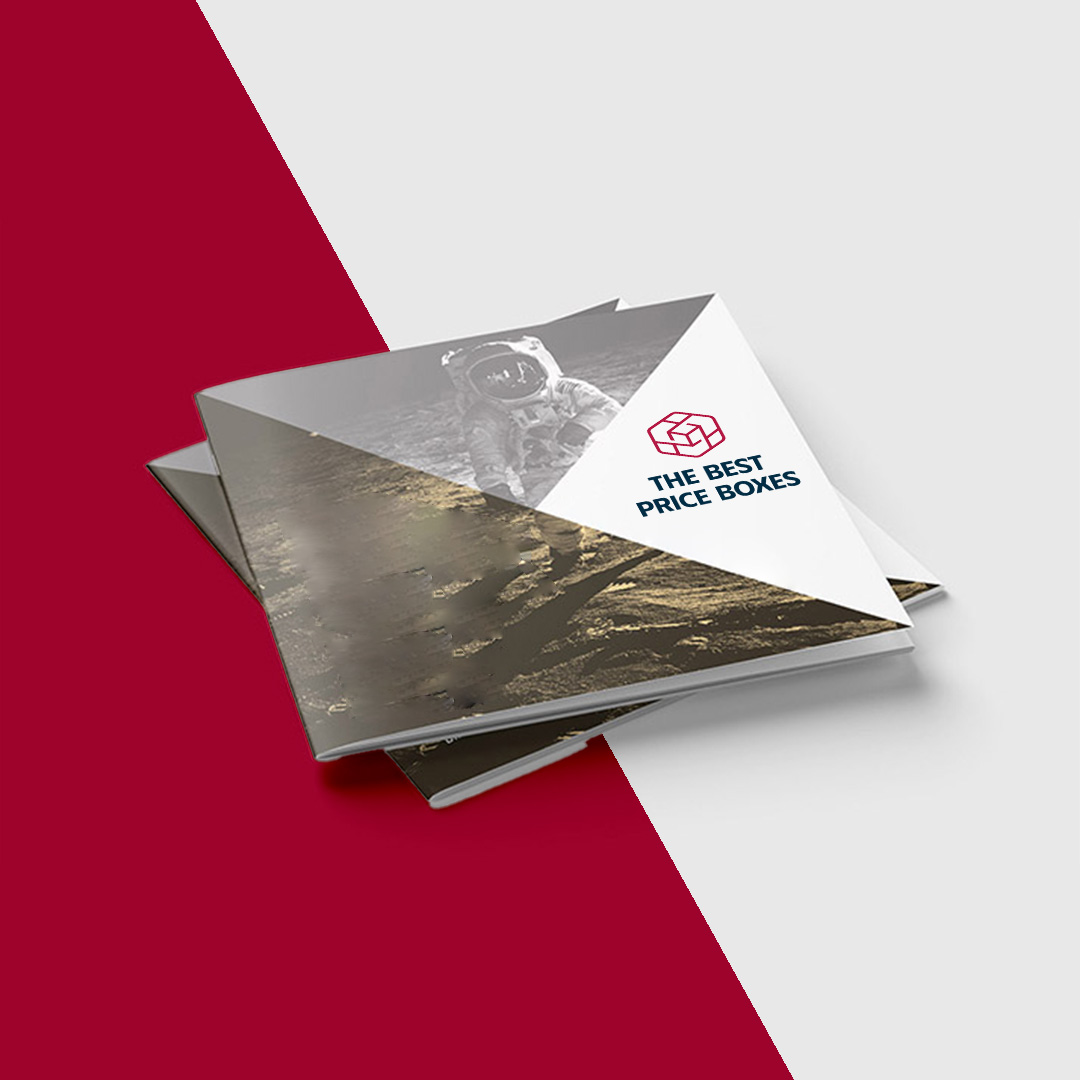
A booklet is a short bound book: a catalog, a program, a manual, a lookbook, a report. We print custom booklets in full color with no minimum order, saddle stitched or perfect bound, with a heavier cover over lighter text pages and a matte, gloss or soft touch finish. Because there is no minimum you order the quantity you actually need instead of buying into a fixed pack of 25, 100 or 500, and if you already hold a written quote we will beat it.
Booklet binding, and which one your job needs
There are three binding styles in commercial booklet work and they are not interchangeable. Saddle stitch folds the sheets and staples them through the spine. It is the fast, simple option, it opens nearly flat, and it holds up to roughly 64 pages of normal text stock. Perfect binding glues a square spine like a paperback, which gives you a printable spine and a booklet that stands in a rack, and it becomes practical from about 28 pages up. Wire-o and spiral punch the edge and thread a coil, which is the only way a booklet lies dead flat and folds fully back on itself, so it is the standard for workshop manuals and recipe books.
We print saddle stitched and perfect bound booklets. Between those two the rule of thumb is simple: under about 48 pages, and being handed to someone rather than shelved, saddle stitch it and spend the difference on better paper. Over 80 pages the staple stops being an option, because it cannot hold the fold and the inner pages splay.
Standard booklet sizes
- 8.5 x 11 in, the default. It imposes efficiently on a press sheet, so it is the cheapest size per page.
- 5.5 x 8.5 in, half letter. The usual pick for event programs, zines and pocket manuals.
- 6 x 9 in, the trade paperback proportion. Reads well for long copy.
- 8.5 x 5.5 in landscape, good for portfolios and anything built around wide images.
- 6 x 6 in and 8.5 x 8.5 in, square, which suits photography and lookbooks.
- 4.25 x 5.5 in, quarter letter, for inserts and instruction booklets that ship inside a box.
- A4 and A5, 210 x 297 mm and 148 x 210 mm, if the audience is outside the US.
Custom trims are available. Be aware that a size a fraction off standard wastes press sheet, so it can cost more than the standard size beside it while looking no different on a table.
Paper and cover stock
Text pages usually run 70 lb or 80 lb text, gloss or matte. Move to 100 lb text when heavy ink coverage would otherwise show through from the reverse, or when the booklet is a brand piece and needs to feel like one. Uncoated text takes pen ink, which matters for workbooks, order forms and training manuals people write in.
Covers are typically 80 lb or 100 lb cover, or 12 pt to 14 pt C2S when the booklet will live in a bag for a month. Gloss laminate sharpens photography, matte hides fingerprints and reads calmer, and soft touch is the finish people actually remark on. Spot gloss over a matte laminated cover is the cheapest way to make a booklet look like it cost more than it did.
Page count rules
- Saddle stitched booklets must have a page count that is a multiple of four, because each folded sheet carries four pages. Count the covers. Pad with a blank inside back cover rather than squeezing two pages of copy onto one.
- Perfect bound booklets work in multiples of two, with roughly 28 pages as the floor for a spine that will hold glue.
- On thicker saddle stitched booklets the inner pages creep outward when folded, so trimming takes more off their outer edge. Keep folios and live type at least a quarter inch inside the trim and creep never shows.
- Spine width on a perfect bound booklet is a function of page count and paper caliper. We give you the exact figure before you build the cover, so do not estimate it.
How to set up a booklet file
- Export single pages in reading order, not reader spreads. Imposition is our job and splitting spreads back apart is where mistakes get introduced.
- 0.125 in bleed on all outside edges, with the artwork genuinely extending into it rather than stopping at the trim.
- Live type 0.25 in inside the trim, and pulled further off the gutter on a perfect bound job because the glued spine eats the inner margin.
- Build in CMYK. RGB files get converted at output and saturated blues and oranges shift noticeably.
- 300 dpi at placed size, which is not the same as 300 dpi before you enlarged the image on the page.
- Embed or outline your fonts and export PDF/X-1a where your software offers it.
- Supply the cover as its own file, separate from the text pages.
If you are working from a PDF someone else built, send it over before you redo anything. Most files need a bleed added and nothing else, and that is a five minute fix on our end rather than a rebuild on yours. Every job gets a digital proof before it runs.
Any quantity, no minimum order
Most printers sell booklets in fixed quantity tiers, so a run of forty means paying for a hundred. We have no minimum order, so you print the number you need for one event, one trade show or one product launch, and you reprint when the content changes rather than storing three years of stock in a cupboard. Per copy cost still drops as the run grows, and we will tell you where that curve bends so you can decide, but the decision stays yours.
Send your page count, trim size, paper preference and quantity and we will recommend the binding and quote it. Request a free quote. For longer bound work see custom magazine printing, and for a single folded sheet see custom brochures.
Booklet printing FAQ
What binding styles do you offer?
Saddle stitch for thinner booklets and programs, and perfect binding with a flat spine for thicker catalogs and lookbooks. The page count decides which suits your booklet.
Can the cover be heavier than the pages?
Yes, a heavier cover stock over lighter text pages is standard, which makes the booklet feel finished and hold up through handling.
What can I use a booklet for?
Catalogs, programs, manuals, lookbooks, and reports. Tell us the page count and use and we will recommend the binding and stock.
Is there a minimum order?
No minimum, so you can print a booklet for one event or a small catalog run without a bulk order.
How much does booklet printing cost?
Page count, trim size, paper weight, binding style and quantity are what move the number. Page count matters most, because on a saddle stitched booklet every extra four pages is another sheet through the press. Perfect binding costs more than stapling because it is an extra operation. Short runs cost more per copy than long ones, but with no minimum order you are never forced to buy a quantity you cannot use. Send the page count, trim size and quantity for a real quote, and if you hold a written quote already we will beat it.
How do I print a booklet from a PDF?
On a desktop printer you would use the booklet or two sided saddle stitch setting in the print dialog, which prints two pages per sheet and reorders them so they read correctly once folded. That works for a proof copy. It will not fold, staple through the spine or trim the edge square, and a desktop printer drifts on color across a run. For anything a customer will handle, send the PDF as single pages with bleed and we impose, print, bind and trim it properly.
What size should a booklet be?
8.5 x 11 in is the default and the cheapest per page because it imposes efficiently. 5.5 x 8.5 in is the standard for programs and pocket sized guides. 6 x 9 in reads well for long copy. Square sizes such as 6 x 6 in and 8.5 x 8.5 in suit photography and lookbooks. Pick the standard size closest to what you want rather than a custom trim a fraction away from it, because the custom trim wastes press sheet and costs more for no visible gain.
How many pages can a booklet have?
A saddle stitched booklet runs up to roughly 64 pages on normal text stock and the total must be a multiple of four, covers included. Perfect binding takes over from about 28 pages and handles several hundred. If you land between the two, the deciding factor is usually whether the booklet needs a printable spine.
Related print and packaging products: custom magazine printing, custom brochures, movie posters, and packaging labels.
More Custom Retail Packaging
See the full Custom Retail Packaging range, or explore related options with no minimum order and our best-price guarantee: