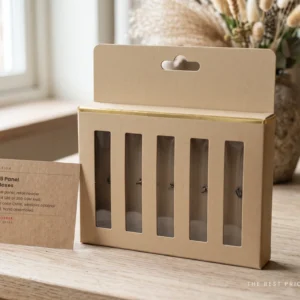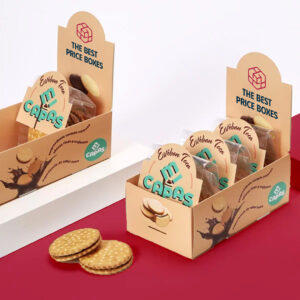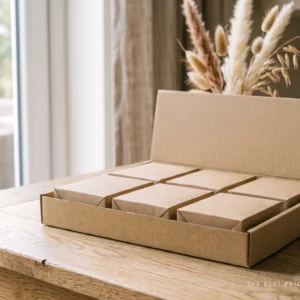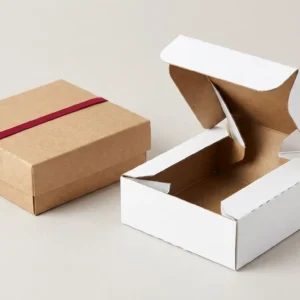


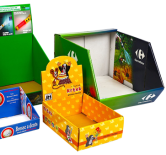
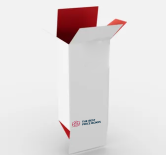
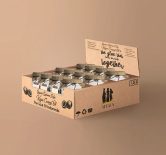
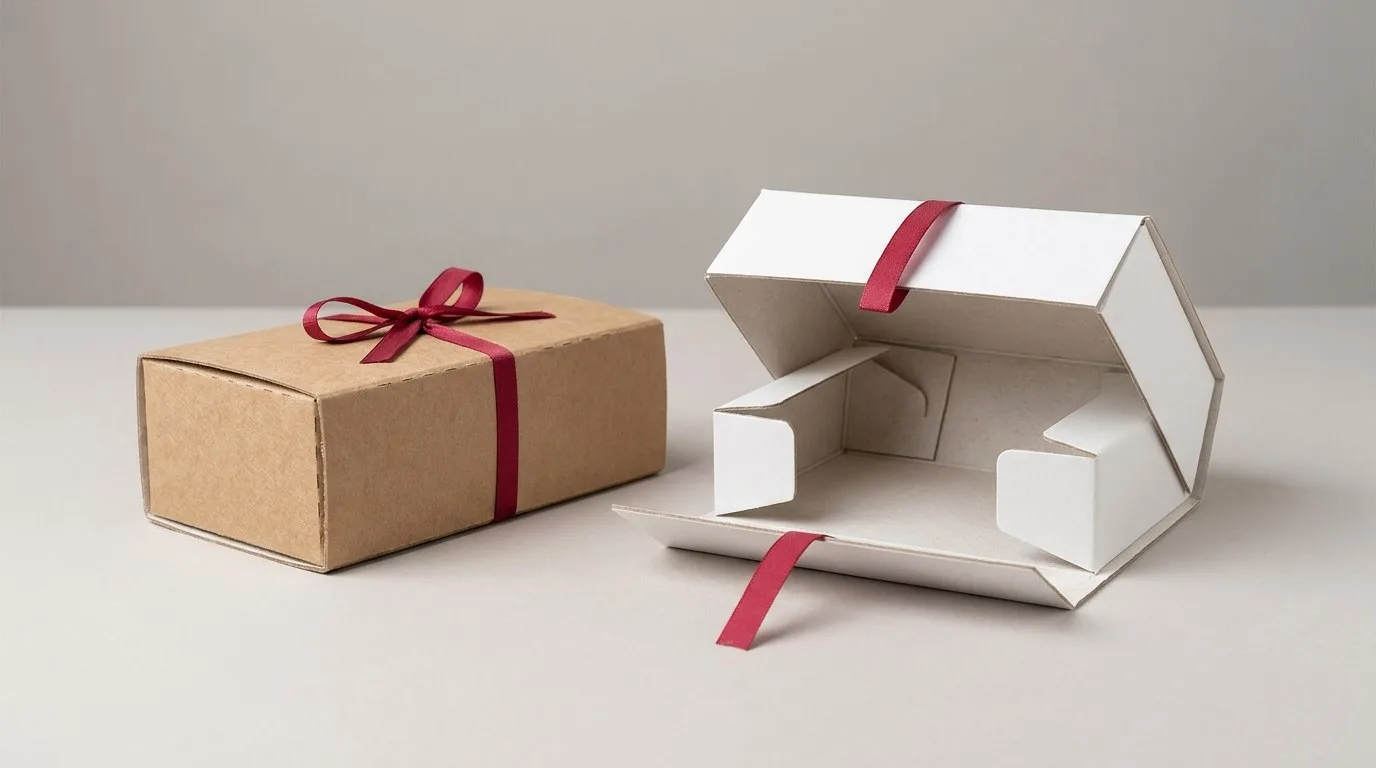


A retail display box is a carton that holds a group of products on a counter or shelf in a way that shows them off, usually with a printed front, header or tray. TBPB makes custom retail display boxes with no minimum order, and if you bring a written quote for the same specs, we will beat it.
Pick the display style before the artwork
People often start with the print and discover later that the structure is wrong. There are three families worth knowing. A tray-and-cover display ships closed, then the lid is cut or torn so the lower tray becomes a low shelf front. A countertop display with a raised back panel holds products at an angle and carries a header with your logo. A pop-up display ships flat and snaps into shape on site. Each one sells differently, and each suits a different shop, so picture the counter first and the product second.
Work out the product count and footprint
A display box earns its keep through its footprint. A small business owner at a till will only give you a few square inches, and a box that takes more than the space allows ends up in the back room. Start by counting the units you want to fit per display, then measure one unit and decide how they sit: laid flat, standing in rows, or leaning back. Add about 1/8 inch of clearance per side so units lift out easily without dragging the next one. Keep the tallest item in the back row where it does not hide the others.
Material, print and what it takes to survive a shop
Most counter displays are made from folding carton paperboard in the 16 to 24 pt range, with the heavier weights used for the back panel that carries the most load. If the display is full of heavier items, E-flute corrugated stands up better to constant handling. Print is usually full colour CMYK with Pantone matching for brand colours, and a matte or gloss aqueous coating guards against fingerprints. A soft-touch coating or spot UV on the logo helps the header catch the eye. Keep your key message on the front panel, since the sides are rarely visible once the display is placed.
Getting it past the shop owner
A display only works if the retailer agrees to put it out. Shops dislike boxes that look flimsy, take up too much room or need a ten-minute assembly. Keep setup to one or two folds, make sure the display stands without props, and print a clear unit count on the side so staff know when to reorder. A display that is easy to place is far more likely to be used than a clever one that ends up in the stockroom.
Choosing the right display for the job
For a straightforward countertop unit with a header, see our counter display boxes. If you need to move a lot of units in a flat-packed shipper, the pop-up display boxes are worth a look. For products that sit in an open front tray, the tray display boxes are a closer match. You can also browse the full display box range to compare structures before you decide.
- Tray-and-cover, countertop with header, or pop-up structures
- Folding carton paperboard or E-flute corrugated, by load
- Full colour print, Pantone match, matte, gloss or soft-touch coating
- Optional window, dividers or hang tab to suit the unit
- Sized to your product, from a single display upward
Send your product dimensions, the number of units per display and the quantity, even one display, and we will draw the dieline and quote it.
Frequently asked questions
What is a retail display box?
A retail display box is a carton designed to hold several products on a counter or shelf and present them to shoppers. It combines shipping packaging with point-of-sale marketing, often featuring a printed front or header and an open tray so products can be picked up easily.
What is the difference between a display box and a counter display box?
Display box is the broad term. A counter display box is one type, built for a till or checkout counter, typically with a raised back panel. Other types include shelf trays, hanging displays and pop-up units, each with a different footprint and way of showing products.
How do I choose the right size for a display box?
Count how many units you want per display, measure one unit, and decide whether they lie flat, stand or lean. Allow about 1/8 inch of clearance per side. Then check the space where it will sit, because a footprint that is too large will be rejected by shops.
What material is best for a retail display box?
Folding carton paperboard around 16 to 24 pt works for light to medium products. For heavy or tall stacks, or displays that get handled constantly, E-flute corrugated is more resilient. We recommend the board when you give us unit weight and display height.
What is the minimum order for custom display boxes?
There is no minimum order. You can order a single display box to test with a retailer, or a full production run. Send the dimensions and quantity, and we draw the dieline and quote it. We also beat a written quote for the same specs.
Can display boxes ship flat?
Some can. Pop-up and certain tray styles ship flat and are assembled by the retailer, which saves freight space. Others arrive formed. Tell us how you plan to ship them and who will assemble them, and we will suggest a structure.
More Custom Display Boxes
See the full Custom Display Boxes range, or explore related options with no minimum order and our best-price guarantee: