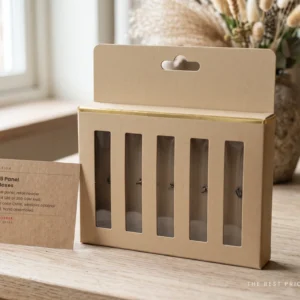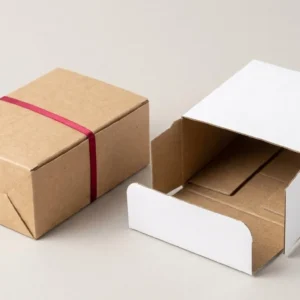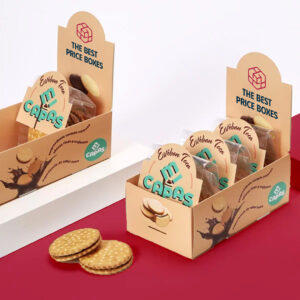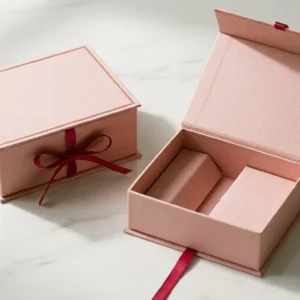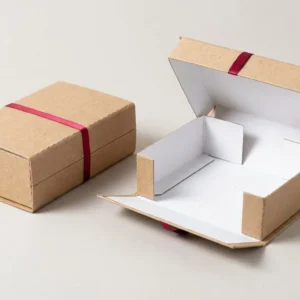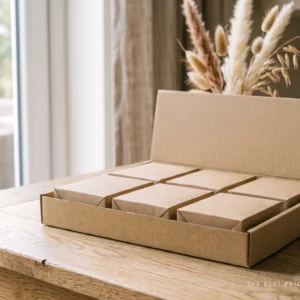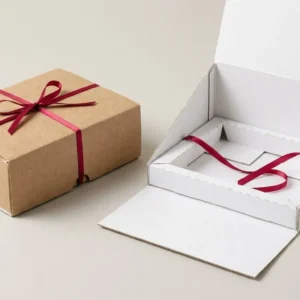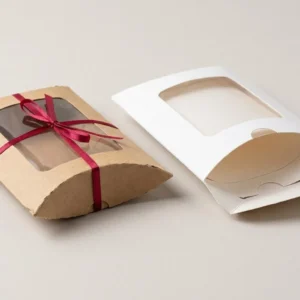
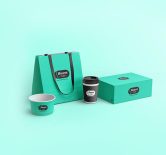
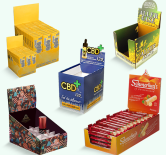

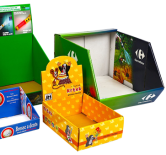


A food counter display box is a printed countertop tray that holds snacks, bars, cookies or candy upright and within reach beside the register. TBPB makes them custom with no minimum order, and our price-beat guarantee means a written quote for the same specs gets beaten.
Built for a few square inches of counter
The register counter is the most contested space in a shop, and a display that sprawls will be moved or binned. Start with the footprint. Ask the retailer how many inches of counter they can give you, then build to that, usually a depth that lets staff reach past it and a width that fits two or three units side by side. Within that footprint you are working out how many items fit in rows, how they lean, and how the last unit still looks neat. Product weight matters too. A tray of heavy bars needs stiffer board than a tray of light bagged chips or the front will bow after a week.
The shape that sells
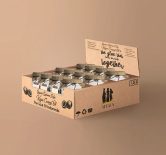
An impulse display has three jobs: let people grab without thinking, show the brand at a glance, and keep the product facing forward as it sells down. A low or scooped front makes reaching easy. A raised back header panel carries the logo, flavor name or offer, and it is the part a customer sees from across the shop. A slight tilt, built in with a sloped floor or a sloped insert, keeps the next unit sliding to the front. Dividers prevent rows from tumbling when one is removed. For shipping, many brands send the display flat or pre-folded in an outer carton and tear away a panel on arrival, so ask for the form that suits how you stock stores.
Board, print and the food question
Counter displays are usually made from folding paperboard in the 16 to 24 pt range for light items, with corrugated E-flute or B-flute for heavier loads. Kraft gives a natural, bakery feel, while coated white shows color sharply for candy and bar brands. Print in CMYK or Pantone, and add matte or gloss coating to match the product. Keep food in its own wrapper or bag, because paperboard displays are meant for sealed or wrapped products, not loose food. Whether any coating or liner suits direct food contact is for you and your regulatory adviser to confirm, since we print your artwork and build the structure.
One mistake we see often is designing the display for the photo and not for the shelf life. Counters get wiped, bumped and touched all day. A matte coating hides scuffs better than gloss, and a design with big flat color areas shows wear faster than one with texture or pattern. If a retailer will stock your display for months, treat it like a small piece of furniture: sturdy corners, a stable base and nothing that can tip when a customer pulls out a unit.
- Footprint sized to your product count and counter space
- Low scooped front, raised header panel and optional dividers
- Folding paperboard or corrugated E-flute and B-flute
- Kraft or coated white with CMYK or Pantone printing
- Matte, gloss or soft-touch finishes, foil on logos
Which display type fits your product
If your product is candy, see candy display boxes. For baked goods, cookie display boxes are shaped for flatter items. The more general counter display boxes cover non-food products too, and the custom display boxes category shows the wider range.
Next step: send the product dimensions, the unit count per display and your quantity, even if it is one, and TBPB draws the dieline and quotes it.
Frequently asked questions
What is the minimum order for food counter display boxes?
There is no minimum order. Order a single display to test with a retailer or many thousands for a rollout. The price-beat guarantee applies to every quantity: bring a written quote for the same specs and TBPB beats it.
How big should a counter display be?
Ask the retailer how much counter space they will give you, usually a few inches deep, then fit your units into rows within it. Send that footprint and the product size, and TBPB draws the display so the units sit at a slight tilt and stay easy to reach.
Can the display hold unwrapped food?
No, a printed paperboard display is meant for sealed or wrapped products. Keep food in its own wrapper or bag. If you need a liner or coating that touches food, confirm suitability with your own regulatory adviser before ordering. We print and build; we do not certify.
What board is best for heavier items?
Corrugated E-flute or B-flute is stiffer than folding paperboard and keeps the front from bowing under the weight of heavy bars or jars. Light snacks such as bagged chips can use paperboard. Tell us the product weight and TBPB recommends the right board.
How does the product slide forward as units sell?
A sloped floor or sloped insert, built into the display, uses gravity to push the next unit to the front. Dividers keep rows tidy. Tell us your product shape and TBPB will suggest a tilt that works without making units tip.
Can I print offers or flavor names on the header?
Yes. The raised header carries your logo, flavor name or promotion, and prints in full color. If the offer changes often, keep the header simple and use a sticker for the seasonal message so you do not reprint the whole display.
More Custom Display Boxes
See the full Custom Display Boxes range, or explore related options with no minimum order and our best-price guarantee: