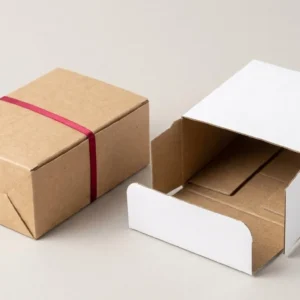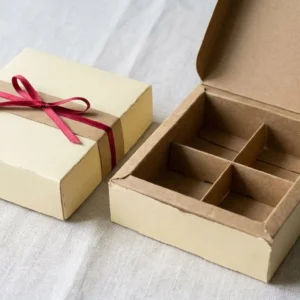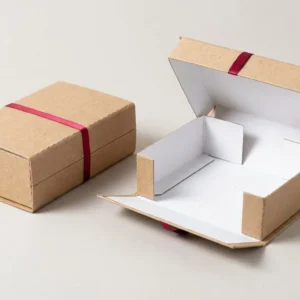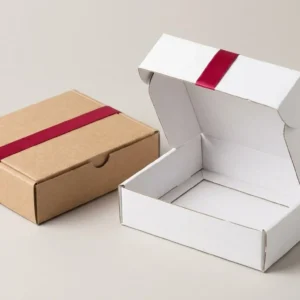

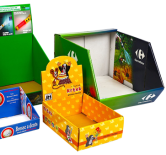
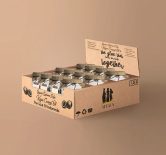
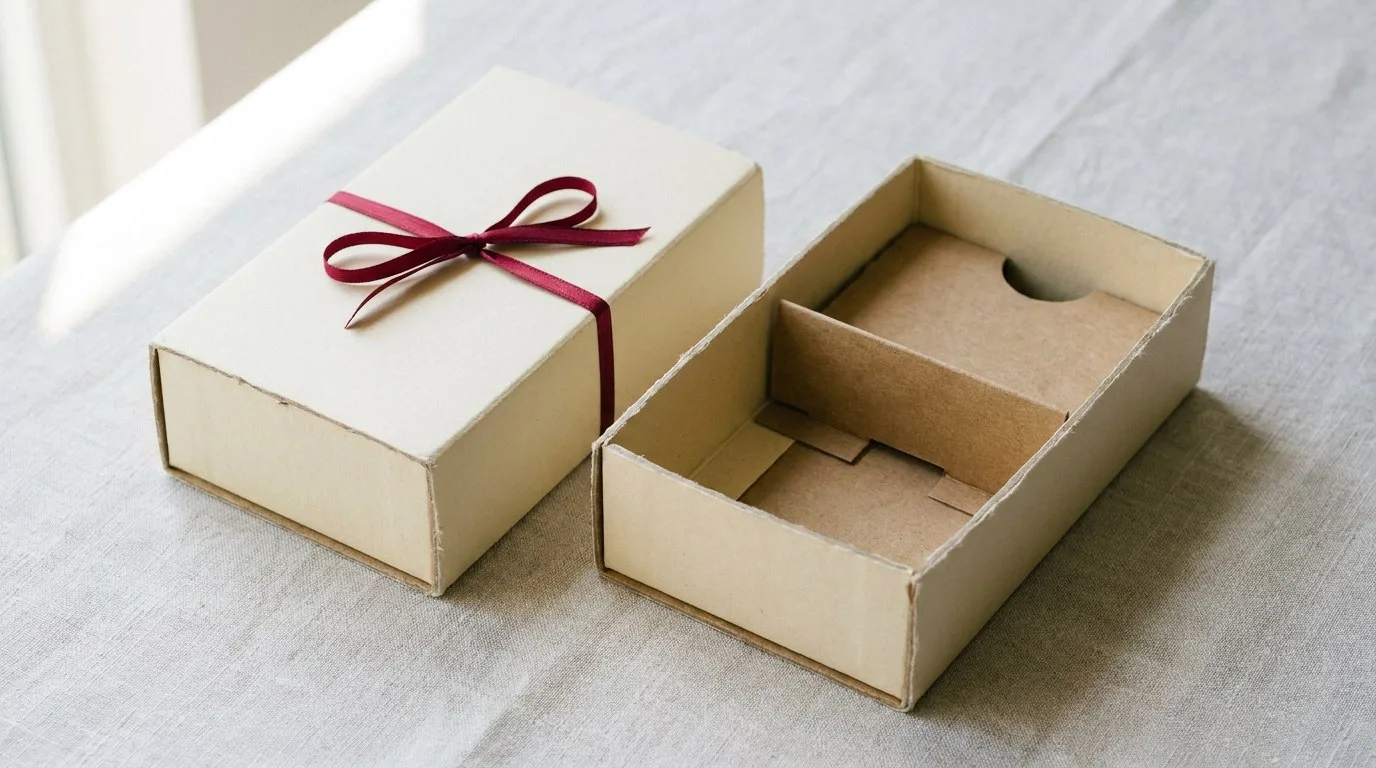


Candy display boxes are printed counter trays that hold wrapped candy upright and facing the customer, built for checkout lanes and shop counters. TBPB makes them to your unit size and count with no minimum order, and our price-beat guarantee applies when you bring a written quote for the same specs.
How a candy display is built
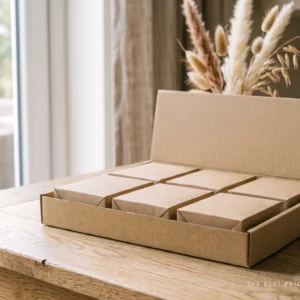
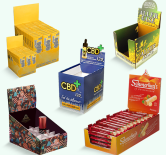
Most candy displays start as a folding carton that works as a shipper first and a display second. The retailer tears a perforation or lifts a lid, and the carton opens into a tray with a lowered front. Inside, dividers or a stepped insert keep the rows straight so the first bar sold does not leave a gap that makes the whole tray look picked over. A header panel at the back carries the brand. The structure is simple on purpose, because store staff open dozens of these a week and nobody reads instructions.
Counting units and sizing the tray
Pick the number of units per tray first. Then measure one wrapped unit on its length, width and thickness, and add about 1/8 inch of clearance on each side of each row so units slide out without catching. Flat bars sit best leaning back slightly, while pouches and gum packs can stand upright. Ask the retailer how much counter space they give you. A tray that is two inches too deep goes in the back room instead of at the register.
Front height: a trade-off worth thinking about
A low front lets the customer see and reach the product, but wrapped candy slides forward and sometimes tips out. A taller front keeps everything in place and hides some of the first row. Many brands split the difference with a curved or scooped die cut. We can mock either, and a sample tray shows the answer faster than any argument.
One more practical point: retailers judge a display by how fast it restocks. If your tray lets a clerk drop a full inner pack straight into the rows without rearranging anything, you are far more likely to keep the spot. We design the row width around your inner pack size where we can, so refilling takes seconds and the shelf stays full of your product rather than a half-empty tray.
Board, print and finish
- Folding carton paperboard, typically 16 to 24 pt, or corrugated E-flute when the display doubles as a shipper
- Full CMYK print with Pantone matching for brand colors
- Gloss aqueous coating for color punch, or matte for a quieter look
- Spot UV or foil on the logo to catch the eye at the register
- Die cut fronts, tear strips and a header or riser panel
Candy wrappers are already loud, so the display usually works better when the print supports the product instead of fighting it. A solid brand color with a clear logo often beats a busy full-bleed pattern.
When a different box is better
If the candy is sold as a gift or in a multi-piece set, a candy box that the customer carries away is the right format. For sturdier trays with a glued, self-locking base, look at auto bottom counter display boxes. If you need a bar-sized carton instead of a tray, see candy bar packaging. Display trays are for impulse buys; they are not a sensible way to ship product to a customer.
Next step: send the candy dimensions and the unit count per tray, even if you only want one, and we draw the dieline and quote it.
Frequently asked questions
What is a candy display box?
A candy display box is a printed paperboard tray or carton that holds wrapped candy in rows so customers can see and grab it at a counter or shelf. Many open from a shipping carton into a display, which lets store staff set it out in seconds.
How many pieces should one display hold?
It depends on the product size and the counter space the retailer gives you. Small packs often go in trays of a dozen or two dozen units; larger bars hold fewer. Tell us the unit dimensions and the count you want and we lay out the rows and dividers to fit.
Can I order a single display for a sales pitch?
Yes. There is no minimum order, so you can order one candy display to show a buyer, check how the units sit, then reorder in volume once the layout is approved. We also offer a price-beat guarantee on matching written quotes.
Is the candy touching the paperboard?
It should not. Candy display boxes are designed for individually wrapped candy, with the wrapper as the food-contact layer. If you plan to put unwrapped confectionery inside, confirm the requirements with your own regulatory adviser first. TBPB prints the artwork you supply.
What board is used for counter displays?
Folding carton paperboard, commonly 16 to 24 pt, covers most candy trays. Heavier loads or taller fronts may call for a thicker board or a corrugated shipper behind the printed display, and we say so when we see the unit weight and count.
Can the display include a header card?
Yes. A header or riser panel can rise above the tray with your logo and a message. It is part of the same die cut, so it folds up when the display is opened and lies flat while shipping.
More Candy Packaging
See the full Candy Packaging range, or explore related options with no minimum order and our best-price guarantee: