


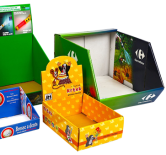
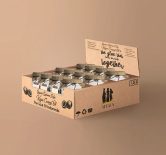
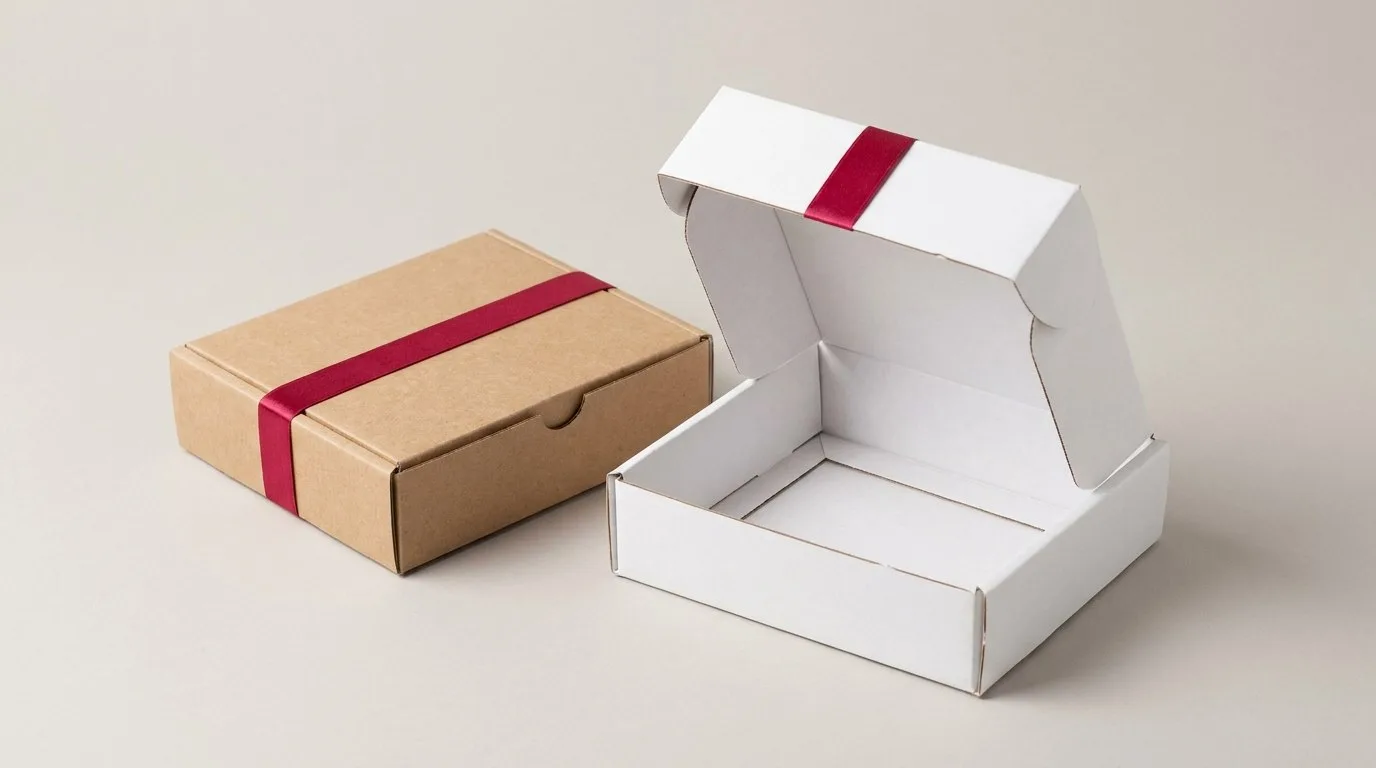


Custom tray display boxes are open-top, low-sided trays that hold product units in rows so shoppers can see and grab them at the point of sale. TBPB prints them to your unit size with no minimum order, and we beat any written quote for the same specs.
Why a tray and not a closed carton
A tray is the simplest display there is. It has a base, short walls and usually a taller back wall, and it holds units facing forward in one or more rows. There is no lid to remove, so a clerk can put it on the counter in seconds. That simplicity is why trays dominate for bars, sachets, small bottles, tubes, cosmetics, tea bags and anything bought on impulse. The trade-off is that nothing covers the product, so dust, handling and spills are your problem. Pair the tray with a shrink film or a lift-off lid if the store is dusty or the product is unwrapped.
Wall height and facing
The wall height decides what the shopper sees. A front wall that is too tall hides half the product, while one that is too short lets units slide forward and fall out. A good rule is to keep the front wall at roughly one third to one half the unit height, and let the back wall run taller as a printed header. A sloped or curved front cut makes grabbing easier, and it also shows more of the front pack. Tell us the unit height and we set the front wall and cut accordingly.
Board and construction
Light, flat items such as bars and sachets sit fine in 16 to 24 pt paperboard. Heavier or taller units, like bottles, jars or tins, need corrugated, usually E-flute for a clean print or B-flute where more strength is needed. Auto-bottom trays pop open when unfolded, which saves assembly time at the retailer. A tray with a reinforced base stays flat under weight over weeks.
- Open-top tray with a printed back wall or header
- Sloped, curved or step-cut front for easy access
- Paperboard or corrugated, E or B flute
- Dividers and inserts to hold tubes or bottles upright
- Shrink film, sleeve or lid for dust protection
Sizing and when another display fits better
Lay out the units in the footprint the retailer will give you, measure the group, and add about 1/8 inch of clearance per side for each unit so they pull out easily. Ask for the maximum counter depth first. For a tray with a full hinged lid and header, a custom display box is more complete, and the counter display box page covers other layouts. For a food counter, see cookie display boxes or candy display boxes. A pop-out version is shown on auto-bottom counter display boxes. Browse the full display box range to compare.
Printing the back wall
The back wall is the only large flat surface a shopper sees, so give it a job. Put the brand and one product claim there, keep type big enough to read from a few feet away, and leave the lower edge clear so the units do not cover it. If you refill the tray from a case, line up the graphics so they still make sense when the tray is half empty. Many brands print the same artwork on the tray base too, which looks tidy as units sell through.
Next step: send the unit dimensions, the number of units per tray and your quantity, even if it is one, and we will draw the dieline and quote it.
Frequently asked questions
What is a tray display box?
It is an open-top tray with short walls that holds units in rows so shoppers can see and grab them. A taller back wall usually carries the printed header. TBPB makes them to your unit size and layout.
Is there a minimum order for tray display boxes?
No. TBPB has no minimum order, so you can make a single tray for a buyer meeting or thousands for a store rollout. We beat any written quote for the same specs.
How tall should the front wall be?
Roughly one third to one half of the unit height is a good start. Too tall hides the product, and too short lets units slip. A sloped or curved front cut also helps. We set it from your unit height.
Should I use corrugated or paperboard?
Paperboard at 16 to 24 pt suits light flat items such as bars and sachets. Choose corrugated for bottles, jars and tins, which need more strength over weeks on a counter. We recommend one from the unit weight.
Can the tray come with a lid?
Yes. A lift-off lid or a hinged cover protects product from dust and handling and can ship the units in the same pack. Tell us if you want the tray to ship closed and convert on arrival.
How many units fit in one tray?
It depends on the footprint your retailer allows. Send the unit size and counter depth and we work out the rows and columns. Smaller footprints tend to get more placements.
More Custom Display Boxes
See the full Custom Display Boxes range, or explore related options with no minimum order and our best-price guarantee: