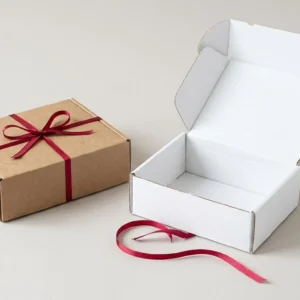


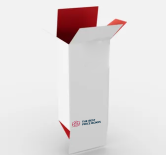
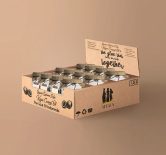
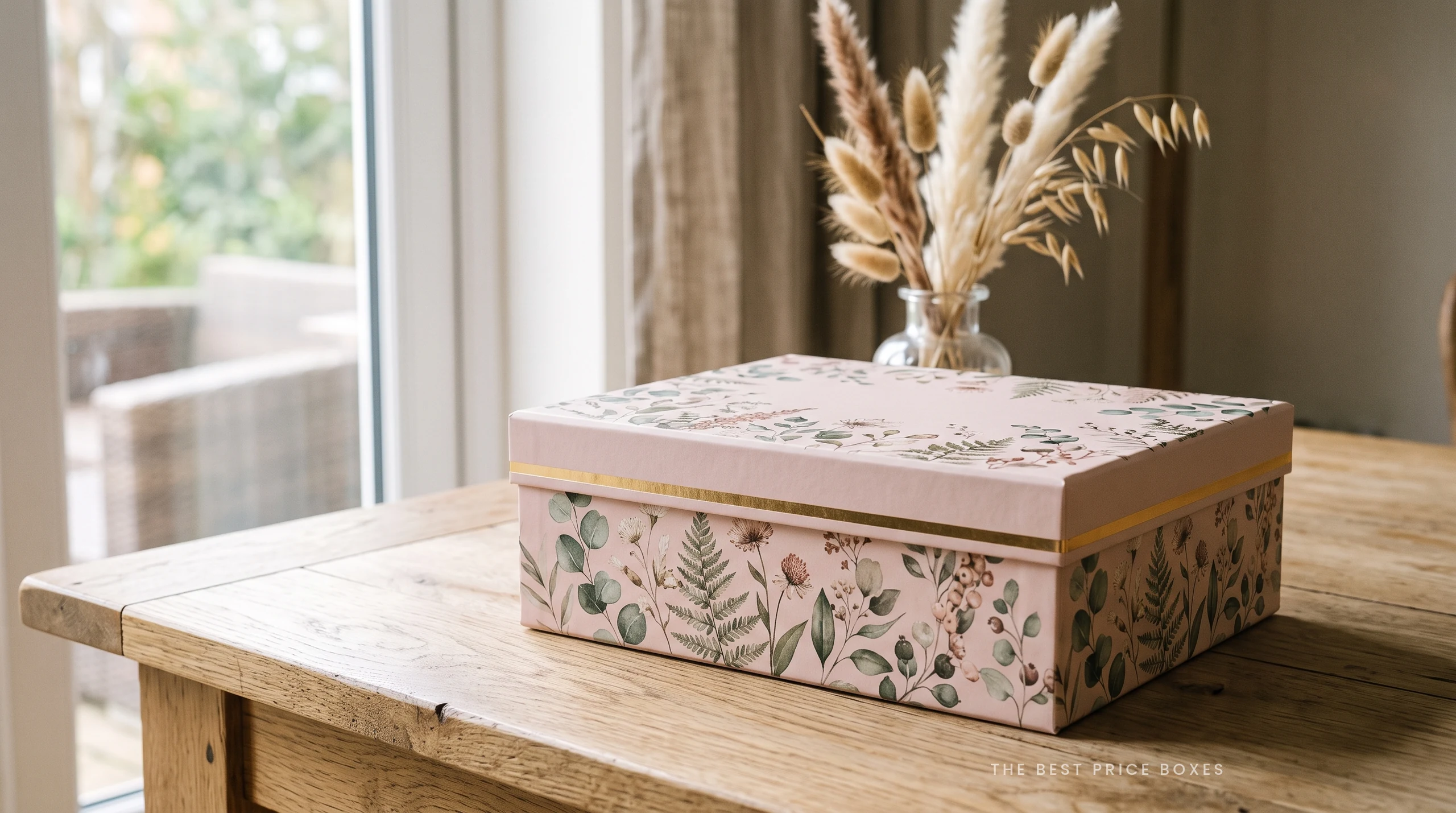


A wrap box is a single die-cut sheet that folds around the product instead of holding it in a tray, and it suits flat, firm items like books, framed prints, board games and folded apparel. TBPB makes custom wrap boxes with no minimum order, and our price-beat guarantee means a written quote for the same specs gets beaten.
How a wrap box goes together
The product sits in the middle of the sheet. Two long sides fold up and over it, the ends fold in, and the whole thing locks with tabs, tuck flaps or a glued strip. There is no separate lid, so there is no gap for the contents to slide around in. Because the box is cut to the product, you use less board than you would with an oversized mailer and nothing rattles. Most wrap boxes can be fully assembled in a few folds, which keeps packing time down on busy days.
Which board to use
For shipping, corrugated in E-flute or B-flute is the usual choice. E-flute is thin and prints sharply, which makes it good for a branded unboxing. B-flute is thicker and takes more crushing, so it suits heavier items like hardback books or games. For retail or gifting where the box will not be mailed, folding carton paperboard is lighter and cheaper to assemble. It looks cleaner, but it will not survive a parcel network the way corrugated does.
Getting the size right
Measure the product’s length, width and thickness, then add about 1/8 inch per side so it slides in without binding. Thickness matters most. A wrap box is cut for a specific depth, and a product that is a quarter inch thicker than planned will bulge the sides and refuse to lock. If you sell items in more than one thickness, quote two sizes and share the dieline rather than stretching one box to fit both.
Print and finish
Printing inside and out turns the opening into part of the brand. CMYK covers photographic artwork, Pantone matching holds a brand colour, and aqueous coating helps against scuffing on the way. Kraft corrugated with one-colour print looks good and keeps things plain. If you want a soft-touch or foil finish, that points to paperboard rather than corrugated.
When another style fits better
Fragile or loose items want a box with internal fixtures. If the product is tall or irregular, a standard mailer box or an ecommerce box is the better home. The closest cousin to a wrap box is the roll end tuck box, which uses a different fold-and-tuck construction. Browse the custom gift boxes range for lidded alternatives.
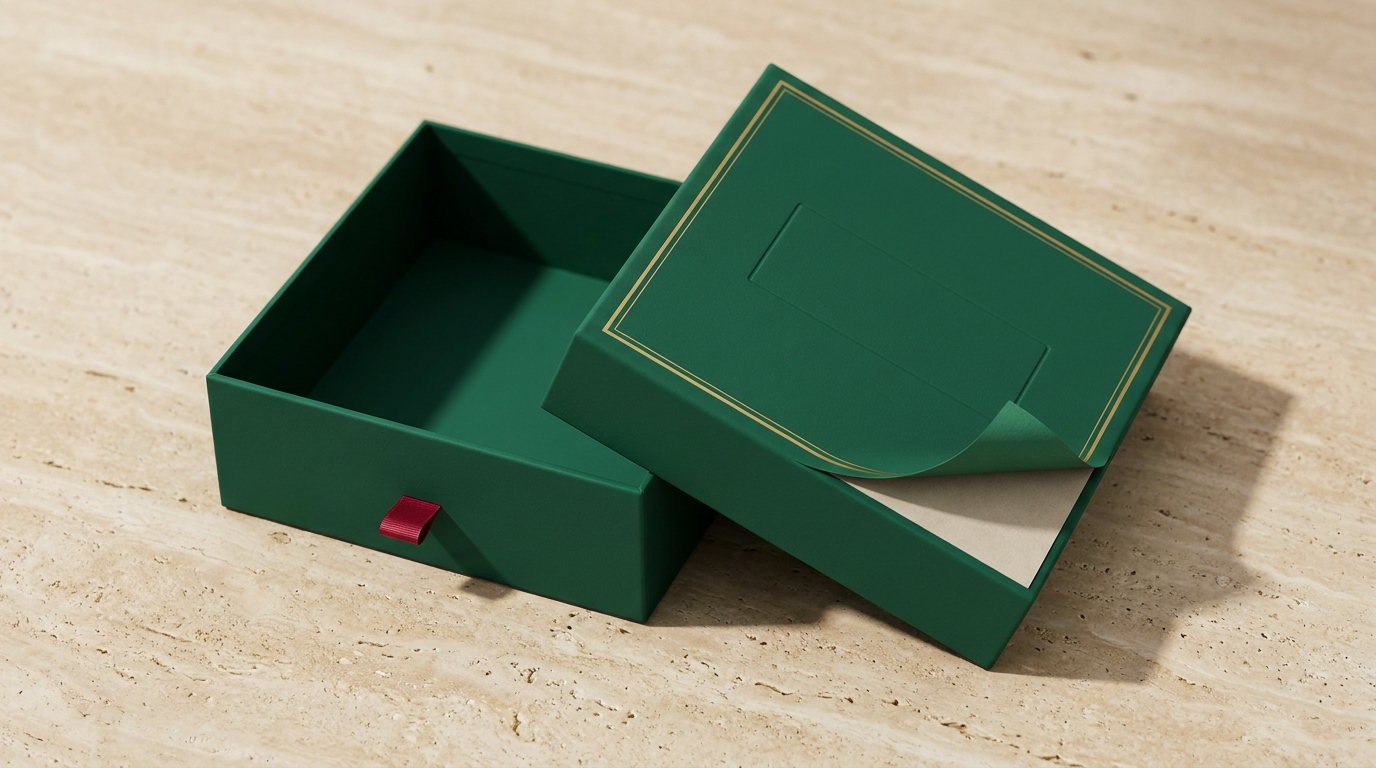
Peel-and-seal strips are worth asking about if returns matter. A strip gives you a clear tamper signal on arrival, but it makes reuse harder, so decide whether your customers will send the box back before you pick the closure.
- Construction: one-piece die-cut wrap with tab lock, tuck flap or glued strip
- Board: corrugated E-flute or B-flute for shipping, paperboard for retail
- Print: CMYK or Pantone, inside and out, aqueous coating
- Best for: flat, firm products such as books, prints and apparel
- Quantity: no minimum order
Next step: send your product’s length, width, thickness and the quantity you want, even a single box, and TBPB will draw the dieline and quote it.
Frequently asked questions
What is a wrap box?
A wrap box is a one-piece die-cut box that folds around a flat product. The sides fold up and over, the ends fold in, and tabs or a glued strip lock it. It has no separate lid and uses less board than an oversized mailer.
Is there a minimum order for custom wrap boxes?
No. TBPB has no minimum order. Order one wrap box to check fit and print, or order thousands for a launch. Quantity changes the quote and how the job is run, but it does not block the order.
What products fit a wrap box best?
Flat, firm items such as books, framed prints, board games, folded apparel and electronics accessories. Tall, loose or fragile items fit poorly, and they do better in a mailer or a box with inserts.
Should I choose E-flute or B-flute corrugated?
E-flute is thin and prints sharply, so it suits lighter products and a branded unboxing. B-flute is thicker and better for heavier items like hardback books. We can confirm the right flute when you send the weight and dimensions.
How do I measure for a wrap box?
Measure the product length, width and thickness, then add about 1/8 inch per side. Thickness is critical because the sides fold to a fixed depth. Send the three numbers and we will draw the dieline.
Can you beat a quote I already have?
Yes. Send a written quote for the same size, board and print specs and TBPB will beat it. That is our price-beat guarantee, and it applies to wrap boxes.
More Custom Gift Boxes
See the full Custom Gift Boxes range, or explore related options with no minimum order and our best-price guarantee: