







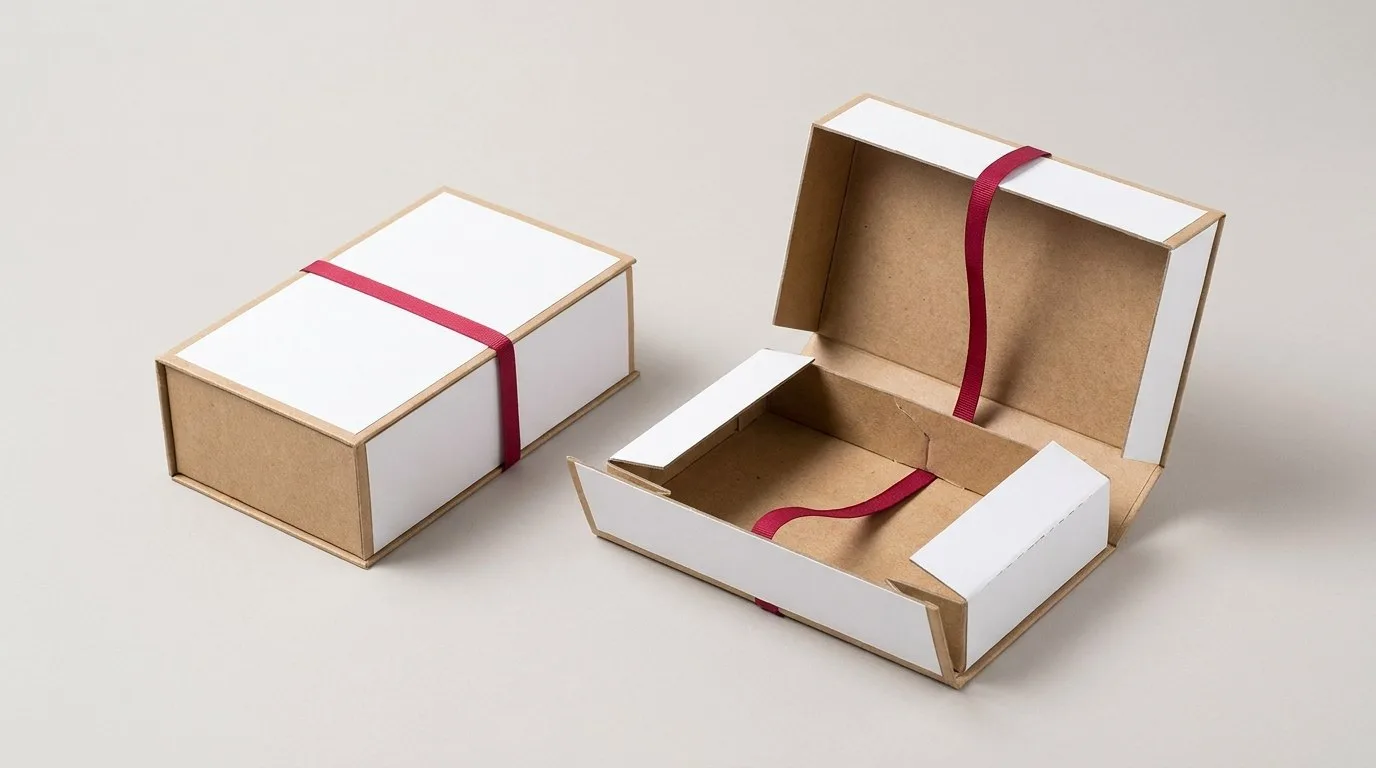
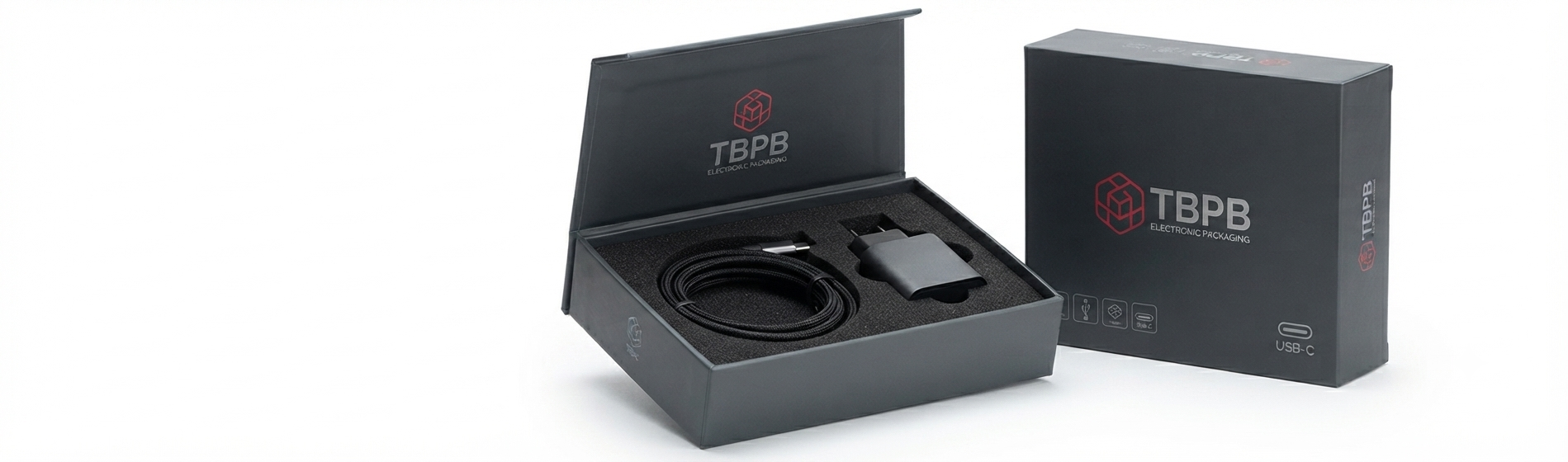



Custom electronics packaging is a printed box built around a fitted insert, so a phone accessory, charger, smart device, cable set or small gadget is held still, protected and presented properly. TBPB makes it to your product dimensions with no minimum order, and if you bring a written quote for the same specs we will beat it.
The insert is where the protection actually comes from
People judge electronics packaging by the printed box, but the insert does the protecting. A good one cradles the product so nothing touches the walls, keeps cables from tangling around it, and separates the device from its accessories so a plug cannot scratch a screen. Inserts can be cut from paperboard or corrugated for light items, or from foam for fragile ones, and they can be built with cut-outs for the device, a recess for the cable and a pocket for the manual. If the box feels loose when you shake it, the insert is wrong, not the box.
For heavier or higher-value devices, a printed carton is usually shipped inside a plain corrugated outer, so the retail box stays clean and the shipping carton takes the abuse. If you sell direct online, tell us, and we can suggest a structure that survives parcel handling.
Measuring an electronic product for a fitted box
Measure the device in its thickest, widest and longest dimensions, then measure everything that ships with it: cable, charger, adapter, paper insert. Lay them out the way you want the customer to see them when they lift the lid, and measure that layout. Leave about 1/8 inch clearance around the device in a folding carton insert. For foam, we cut the cavity to the product shape, so a precise outline or a sample unit helps us get it right.
Devices with ports, antennas or curved edges need extra care. A cavity that grips the body but leaves the cable port free makes unpacking easier and avoids pressure on the connector.
Structure, board and print choices
- Folding carton boxes in tuck-end, lid-and-base or sleeve styles
- Paperboard, corrugated or foam inserts cut to your product
- Full-colour CMYK print with Pantone matching for brand colours
- Matte or soft-touch lamination, which suits tech products well
- Spot UV or foil on the logo for contrast against a dark box
- Window cut-outs where the buyer should see the product before opening
Dark matte boxes with a single spot-gloss logo are popular for electronics, but they show fingerprints and scuffs, so protect them with a coating and keep the handling to a minimum on the packing line.
When to choose a different box
If you pack a laptop or a similarly large device, look at our custom laptop boxes, and for cables and adapters see custom HDMI cable packaging. Standalone fitted inserts are available separately as custom foam inserts. Our electronic packaging category shows the full range.
Planning the unboxing order
Decide what the customer should see first, second and last. Most tech brands put the device on top, the cable beneath it in a shallow channel, and the paperwork under a flap or in a slim pocket. Every layer you add means more insert height, so check that the finished box does not grow past what your shipping carton or retail shelf can take. A shallower box with a clean two-layer layout often looks better than a deep box with four compartments.
Printed information on the box matters too. Buyers look for the model name, what is included and the key specification on the front or back panel. Put the legal and compliance text where you must, and keep the front clean.
Next step
Send a sample unit or accurate dimensions of the device and everything that goes in the box, plus the quantity, even if it is one. We draw the dieline and insert, and quote the pair.
Frequently asked questions
Is there a minimum order for custom electronics packaging?
No. TBPB has no minimum order on electronics packaging. You can order a single prototype to test the fit with your real device, then increase the quantity once the insert and box are right. Send dimensions or a sample unit and we quote it.
Do electronics boxes need a foam insert?
Not always. Light, low-risk items such as cables and chargers often sit well in a paperboard or corrugated insert. Fragile or heavy devices benefit from foam cut to their shape. Tell us the weight and what the device is, and we will suggest the right insert.
What box style is best for a charger or cable set?
A tuck-end folding carton with a paperboard insert works well for chargers and cables, and a hang tab or window helps retail display. Lid-and-base boxes suit gift-style presentation. The right style depends on whether the product sells on a shelf or online.
How do I measure my device for a custom box?
Measure the device at its widest, thickest and longest points, then measure each accessory and your layout. Add about 1/8 inch of clearance for a paperboard insert. If you can send a sample unit, we can cut the insert directly to it.
Can the box be printed with product specs and a barcode?
Yes. We print from your supplied artwork, so specs, icons, regulatory marks, QR codes and barcodes can all be included. You are responsible for the content and any required marks, and we recommend checking requirements with your own adviser.
Will the box protect electronics in shipping?
A well-made insert protects against movement, but the printed carton is not designed to take a full parcel drop alone. For direct shipping, pack the finished carton inside a corrugated shipper, or ask us about a corrugated structure.
More Custom Electronic Packaging
See the full Custom Electronic Packaging range, or explore related options with no minimum order and our best-price guarantee: