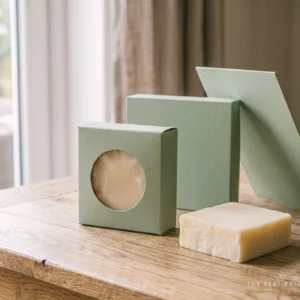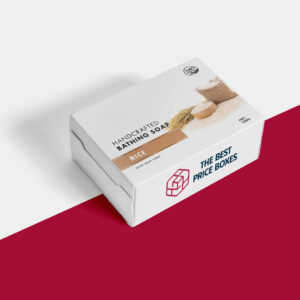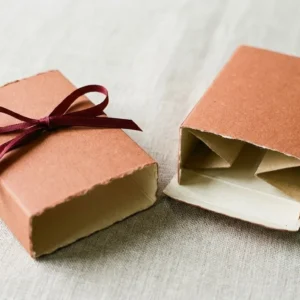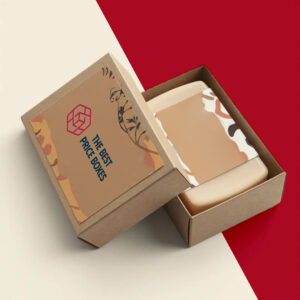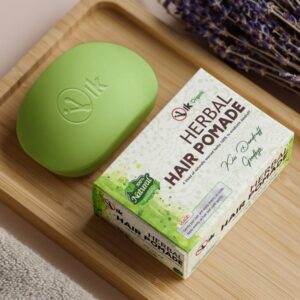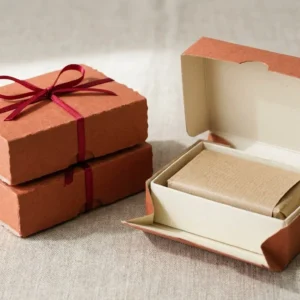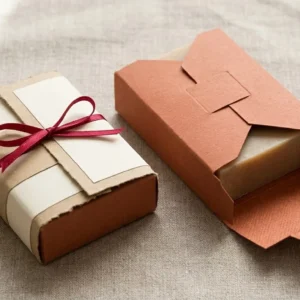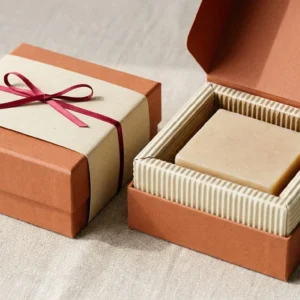

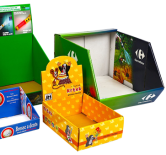
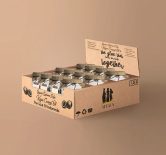
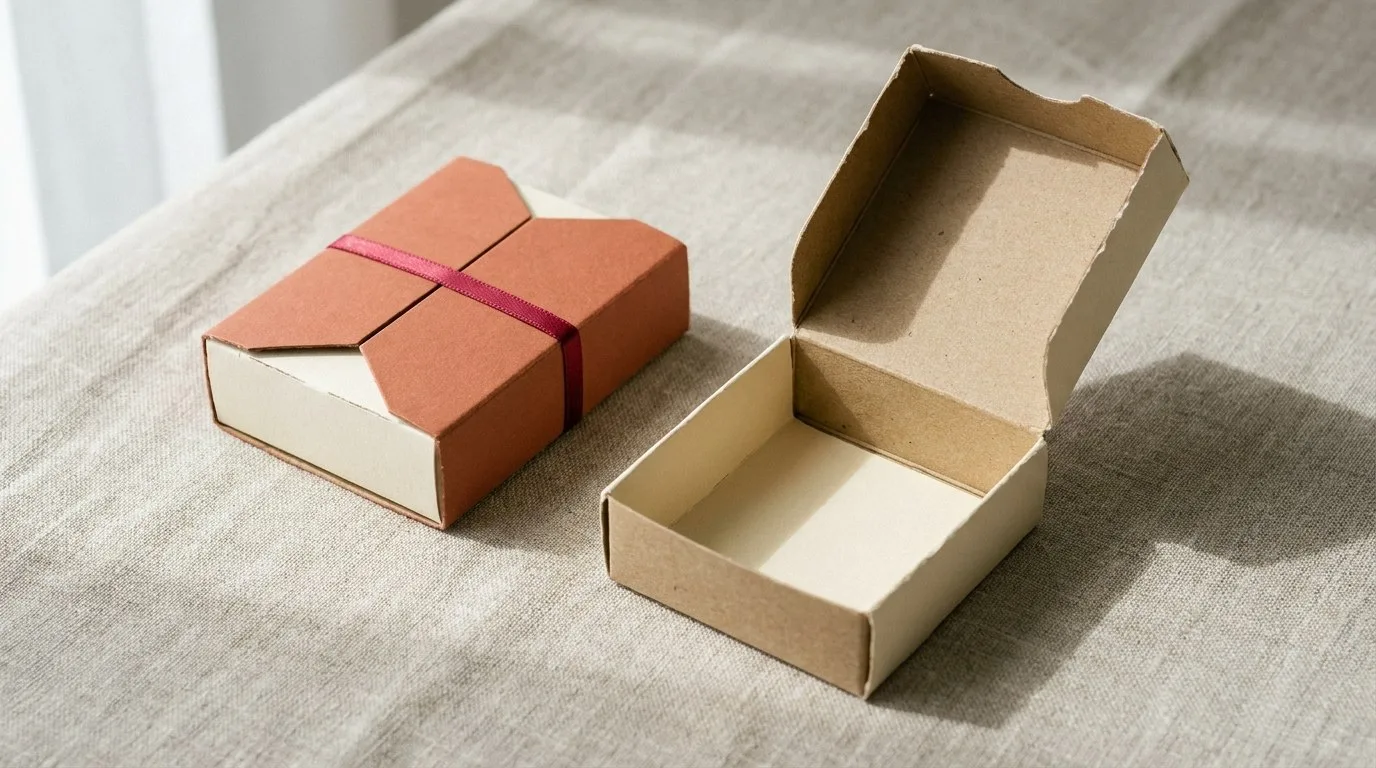


A die cut soap box is a printed carton with a shaped opening cut into the front, so shoppers can see and smell the bar through a leaf, a wave, a circle or your own outline. TBPB makes them to your bar size with no minimum order, and if you bring a written quote for the same specs, we beat it.
What a die cut does that a plain window does not
A standard window is a rectangle, and it looks like every other soap box on the shelf. A die cut turns the opening into part of the brand. A lavender sprig cut on the edge, a wave line across the front, a crescent moon on a night-time bar: the shape tells the story before the shopper reads a word. And because the opening can be left open, the scent comes through, which counts for a lot with soap.
Open cut-outs have a cost. People poke the bar, and handled soap gets marked. If the shop is hands-on, consider a thin clear film behind the opening. If it is mostly online or boutique-shelf, an open cut looks cleaner and recycles with the carton.
Designing a shape that survives the folding line
Not every shape works. A cut that is too close to a fold or an edge weakens the carton, and thin points such as the tip of a leaf can tear in the die or bend in handling. As a rule, keep a firm border of board around the opening, round sharp inside corners slightly, and avoid slivers narrower than the board thickness. Complex outlines are possible, but simpler shapes are more reliable and look cleaner.
Place the opening where the bar is worth seeing. The face of a swirled or layered bar sells itself. A plain bar may look better with a smaller cut-out and more printed label around it. Send us the artwork or a rough sketch and we will place it on the dieline so you can check how much bar shows.
Sizing, board and print
Measure the cured bar, not the mold. Add about 1/8 inch of clearance on each side for a folding carton, and size to the largest bar if your bars are cut by hand. A die-cut front needs a firm board, in the 16 to 24 pt range, so the opening does not sag.
- Tuck-end or auto-lock carton, sized to your cured bar
- Custom opening shape, with a clear film behind it or left open
- White or kraft board, with the opening framed by a printed border
- CMYK or Pantone print, matte or gloss coating, optional soft-touch lamination
- Foil or spot UV on the logo, used lightly so the cut-out stays the feature
One production point worth knowing before you fall in love with a shape. Every new cut-out outline needs its own cutting tool, so the first box in a new shape is where setup happens, and later reorders of the same shape run on the tool already made. Changing the shape later means a new tool. That is another reason to settle the outline on a dieline and a sample before you scale up. If you run several scents, keep one shape across the range and vary the printed color, which is easier to manage and reads as a clear family on the shelf.
Alternatives and neighbours in the soap range
If you only need to show the bar, a plain rectangular window is simpler, and our window soap boxes cover that. For a fully transparent look, clear soap boxes show the bar from every side. If you prefer a closed carton with a bold print, look at square soap boxes. The whole collection is under soap boxes.
Send us the bar dimensions, a sketch of the shape and your quantity, even one box, and we will draw the dieline and quote it.
Frequently asked questions
Is there a minimum order for die cut soap boxes?
No. TBPB has no minimum order, so you can order one box to test a shape or thousands for a full range. The dieline and cut-out are drawn to your bar size, and reorders at any quantity are fine.
What shapes can I use for the cut-out?
Leaves, waves, circles, hearts, stars, your logo outline and many custom shapes work. Simple shapes are more reliable because thin points and sharp inside corners can tear or weaken the carton. Send a sketch and we will tell you what holds up before it is cut.
Should the die cut be open or covered with film?
Open lets the scent through and looks clean, but shoppers can touch the bar. Film protects the soap and keeps fingers off it but blocks scent and complicates recycling. Boutique and online sellers often go open, while busy retail shelves often choose film.
Does a die cut weaken the box?
It can if the opening sits too close to a fold or leaves thin bridges of board. Keeping a firm border and using a board in the 16 to 24 pt range solves most problems. We check the placement on the dieline so you can see it first.
What size should a die cut soap box be?
Measure the cured bar in length, width and thickness, then add about 1/8 inch on each side. Hand-cut bars vary, so size to the largest one. We place the cut-out so the best face of the bar shows through it.
Can I print around the cut-out?
Yes. Many designs frame the opening with a printed border, a logo or pattern, and put ingredients and the soap name around it. We can use CMYK or Pantone colors with matte, gloss or soft-touch finishes.
More Soap Boxes
See the full Soap Boxes range, or explore related options with no minimum order and our best-price guarantee: