
If you’re shopping for custom mylar bags, here’s the short version: The Best Price Boxes stocks five standard sizes from 3″ x 5″ (about 3.5 grams) up to 10″ x 14″ (roughly a kilogram), builds them as flat pouches, stand-up pouches, zipper bags, gusseted bags, and vacuum-sealed bags, and comes with no minimum order quantity, so pricing is quoted per project based on size, material, and print. Materials are FDA-approved and BPA-free, production runs through the USA, and you can check a 2D proof, a 3D mockup, or a physical sample before committing to a full run. Here’s what actually goes into a mylar bag order.
Mylar Bag Types and When to Use Each
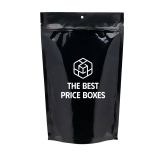
Flat mylar bags are plain, low-profile pouches that take up almost no shelf space, which makes them a good fit for samples, seeds, and other small-batch items where display isn’t the point. Stand-up pouches trade some of that compactness for a wider footprint and better shelf presence, plus a zip-and-seal barrier that keeps food fresher longer. Zipper bags reseal after opening, which matters for anything a customer dips into more than once. Gusseted bags expand at the sides or bottom to hold bulkier fills like grain, powder, or pet food. Vacuum-sealed bags pull the air out entirely, which is the format to reach for on long-term food storage where oxygen exposure is the enemy.
Standard Mylar Bag Sizes
TBPB runs five standard sizes, and all of them are available in custom dimensions on request if your product doesn’t fit the chart:
- 3″ x 5″, about 3.5 grams capacity, samples, seeds
- 5″ x 8″, about 100 grams capacity, snacks, herbs
- 6″ x 9″, about 250 grams capacity, spices, powders
- 8″ x 12″, about 500 grams capacity, coffee, nuts, tea
- 10″ x 14″, about 1 kilogram capacity, bulk storage, pet food
The 3″ x 5″ bag is the one most dispensaries fill with an eighth of flower. If that bag has to sell a premium strain from across the counter, our exotic mylar bags come in the same 3.5 gram size with holographic film and custom die-cut shapes.
Large custom sizes are available beyond this chart on request.
What Mylar Bags Are Made Of
TBPB’s mylar bags are FDA-approved and made with BPA-free compounds, which is what allows food to sit directly against the material. The core selling point of mylar as a substrate is barrier protection: it blocks oxygen, moisture, and light, all three of which are what actually degrade shelf-stable food, herbs, supplements, and cannabis products over time. That’s why you’ll see mylar used across such different categories: coffee, tea, spices, edibles, skincare, and dispensary products. The barrier properties matter more than the industry does.
Finishes, Coatings, and Printing Options
Bag style is only half the decision. Finish and print method change how the bag reads on a shelf just as much as size does. Matte finishes read as premium and understated; glossy finishes grab attention under retail lighting; transparent windows let the product sell itself when it’s photogenic (think gummies or dried herb); foil-lined bags add an extra barrier layer against light and air; tear-notch bags trade a little shelf polish for genuine ease of opening.
On the print side, digital printing suits smaller runs and detailed artwork, offset printing is what you want for large wholesale orders where color has to stay consistent batch to batch, and flexographic printing is the cost-efficient choice for simple logo-and-text jobs at volume. Color gets matched through CMYK for full-color photography-style prints, Pantone (PMS) when your logo color has to be exact every time, or flexography color for high-volume flexo runs. Coating options run from gloss and matte to a soft-touch velvet laminate for higher-end lines, plus UV and spot coating to make specific design elements pop.
Dispensary and Cannabis Mylar Bags
TBPB’s dispensary line is built specifically for cannabis and CBD products, available in 32mm, 50mm, and 65mm perforated z-barrier sizes, with a tamper-proof, mildew- and moisture-resistant build and two heat-seal strips for a leak-proof close. That covers the physical packaging side. Labeling requirements, child-resistant packaging rules, and what you’re allowed to claim on the bag are a different matter entirely and vary by state, so treat any general compliance advice online, including this post, as a starting point rather than a final answer, and confirm current requirements with your state’s regulator before you finalize artwork. We’ve covered the compliance side in more depth in our guide to CBD packaging.
How to Order Custom Mylar Bags from TBPB
There’s no minimum order quantity on the mylar lines. The process runs five steps: request a quote with your size, quantity, and layout; send your own design or work with TBPB’s designers to build one; sign off on a 2D flat proof, a 3D mockup, or a physical sample; production runs at TBPB’s facility with quality checks along the way; then delivery ships within the USA.
Frequently Asked Questions
What sizes do custom mylar bags come in?
TBPB’s standard sizes run from 3″ x 5″ (about 3.5 grams) up to 10″ x 14″ (about 1 kilogram), with custom sizes available on request for anything that doesn’t fit the standard chart.
Are TBPB’s mylar bags FDA-approved and BPA-free?
Yes. TBPB’s mylar bags are made with FDA-approved, BPA-free materials, which is what allows food products to sit directly against the bag.
Can I get a sample before ordering in bulk?
Yes. TBPB offers a 2D flat digital proof, a 3D mockup, or a physical sample so you can check size, material, and print quality before committing to a full production run.
Are mylar bags suitable for cannabis and CBD products?
Yes. Mylar’s light, moisture, and oxygen barrier is a big part of why it’s the standard for dispensary packaging, and TBPB’s dispensary line adds tamper-proof, mildew-resistant construction in 32mm, 50mm, and 65mm z-barrier sizes. Labeling and child-resistant requirements still vary by state, so confirm current rules before finalizing artwork.
Planning your order
Trying to budget a run of mylar bags? See our full breakdown of how much custom boxes cost, and how to order with no minimum order, so you can start with a small batch and scale as you sell. When you’ve got your specs, request a quote and we’ll price your exact box.
Related guides and comparisons
Mylar bag vs box walks through when a pouch beats a box, and when to use both together. For food specifically, see the food packaging guide. To compare a natural look, read kraft vs white boxes, check custom box pricing, or get a quote.
Packaging a supplement in mylar? The supplement packaging guide walks through pouches, cartons, and tubes for powders, gummies, and capsules, plus the labeling basics.
Related guides and where to order
- custom mylar bags (order with no minimum, free design and samples)
- How Much Do Custom Mylar Bags Cost?
- Mylar Bag Styles and Features Explained
- The Complete Guide to Custom Mylar Bags
- Ready to order? Get a free quote or estimate your cost.