



Subscription box packaging has one job that other packaging does not: it must feel the same on the tenth delivery as on the first, and it has to survive shipping every month. The usual answer is a printed mailer box with an insert, sized to the largest month’s contents. TBPB makes subscription packaging with no minimum order.
Reviewed by the TBPB packaging team, October 2026.
| Quick facts | Answer |
|---|---|
| Minimum order | None. Start with one box, then scale. |
| Usual structure | Printed mailer box, often with an insert or tissue |
| Size rule | Fit the largest month, then fill the gap with tissue or an insert |
| Brand outside, a surprise or message inside | |
| Samples and shipping | Free |
What should a subscription box be made of?
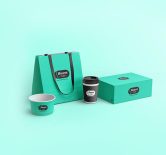
Corrugated board. A subscription box is a shipping box first, because it travels in a carrier’s network, gets stacked and drops off a truck. A folding carton in a poly mailer protects less. The mailer box range is built for this, and the cosmetic subscription boxes show the style in use. If your contents are fragile, add a paperboard or corrugated insert from our insert guide.
How big should the box be when contents change monthly?
Size the box to the largest month you expect, then control the empty space. A box that is too big for a light month shows a lot of tissue, and a box that is too small for a heavy month forces a redesign. Two fixes work. One is a single standard size with tissue or a paper pad to fill. The other is two sizes, small and large, for two tiers. Do not make a new size each month; it costs setup every time.
Worked example: your biggest month has a candle (3.5 x 3.5 x 3.5 inches), a card and a small bottle (2 x 2 x 5 inches). A mailer 9 x 6 x 4 inches inside fits them with room for tissue and a divider. A lighter month with just the bottle and a card fits the same box with more tissue. The customer sees one consistent box, and you reorder one size.
Where should the branding go?
Outside, put your logo and one clear line. Inside, put the reveal: a pattern, a message or the month’s theme. Your inside print is the first thing the customer sees when they open it, and it costs less to change than redesigning the outside. If you want a monthly theme, print a paper insert or a card instead of changing the box. The box stays constant and the card changes.
Do I need an insert?
If the contents slide or break, yes. For a mixed month with hard and soft items, a corrugated divider grid keeps the items separate. For soft products, tissue is enough. If you sell a fixed kit each month, a custom cutout makes the unboxing feel finished. See our custom packaging inserts.
How do I keep shipping cost under control?
Right-size the box. Carriers charge on the weight and size of the package, so a box with extra air costs more to ship every month. Measure the real contents, add only what you need and test one packed box before you order a run. Our mailer box size guide walks through the method.
How do I test the box before launching?
Order one. Pack the heaviest month, close it, shake it, and drop it from about waist height onto a hard floor. Send a few to friends in different parts of the country and ask them to photograph the box on arrival. A week of real shipping teaches you more than any spec sheet, and because we have no minimum order, the test costs only the sample.
How to order
Send the largest month’s contents with dimensions, a style preference and a quantity, even if it is one box. We return a dieline and a quote. Design help, samples and shipping are free. If you have a written quote from another supplier for the same specs, our price-beat guarantee means we beat it. Request a quote here.
Questions buyers ask
Is there a minimum order for subscription boxes?
No. You can order one box to test shipping, then scale up as subscribers grow. You are never required to hit a quantity.
What is the best box type for a subscription service?
A printed corrugated mailer box. It protects in the carrier network, opens cleanly and takes print inside and outside.
How do I size a box when the contents change?
Size it for the largest month, then fill the gap with tissue or an insert. Avoid a new box size each month, since each size has its own setup.
Do I need an insert in a subscription box?
If items slide or break, yes. A divider grid or a custom cutout keeps them in place. Soft contents often need only tissue.
How should I test subscription packaging?
Pack the heaviest month, shake it, drop it from waist height and mail a few to different regions. Photograph the boxes on arrival.
How do I get a quote?
Send the contents’ dimensions and a quantity through the quote form. We return a dieline and a price, and we beat any written quote for the same specs.