
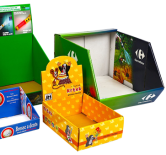
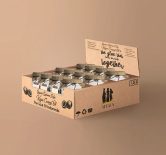
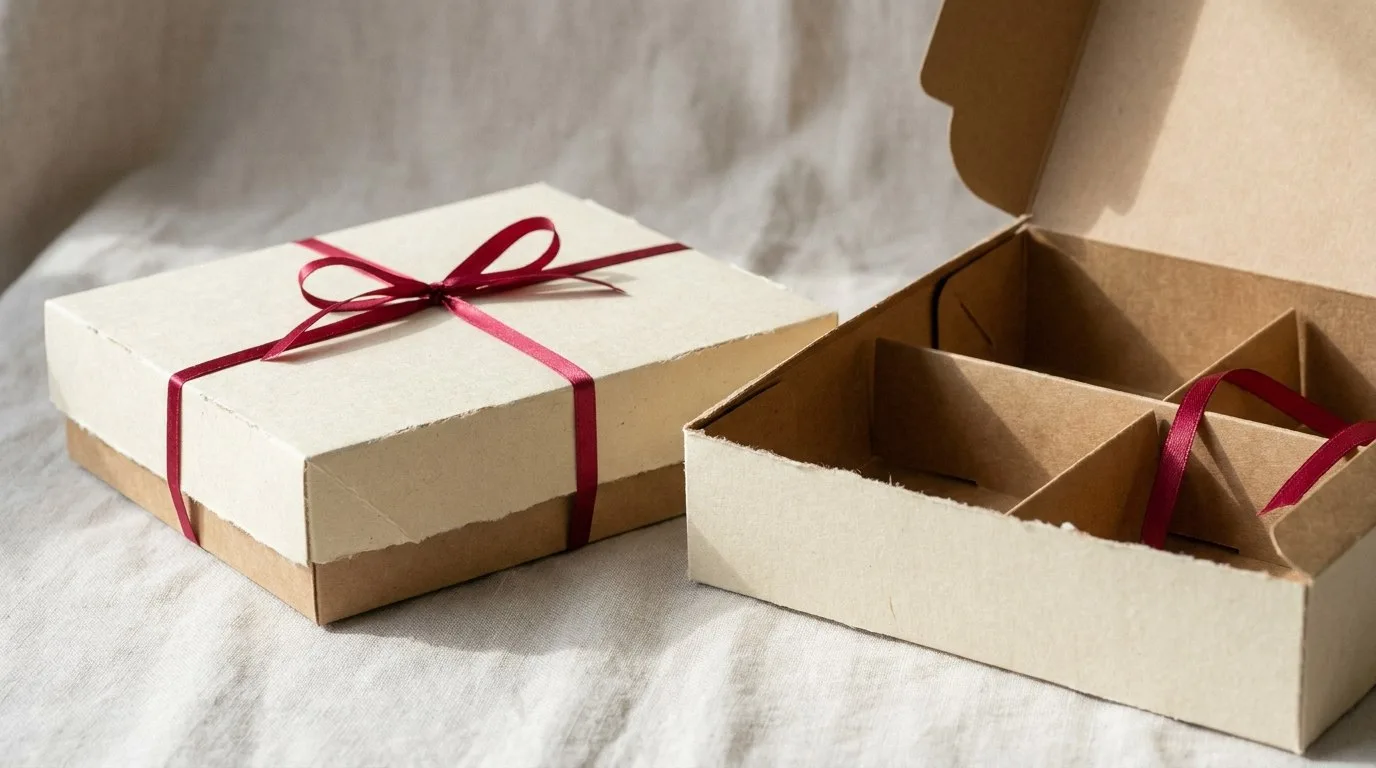


A food tray packaging box is a paperboard tray, open or fitted with a lid or sleeve, that holds food face up for serving, takeaway or catering. TBPB prints them to your tray dimensions with no minimum order, and a written quote for the same specs gets beaten.
Tray first, lid second
The tray is the part that works for a living. It has sloped or straight walls that fold up from a flat sheet, with corners that lock or glue, so food sits flat and does not slide when someone carries it. Straight walls hold more and stack better. Sloped walls make the tray easier to fill and easier to reach into, which is why they are common for pastries, sandwiches and deli items.
Whether you want a lid depends on how the food is used. Open trays work for counter service and quick takeaway where the customer eats within minutes. Lidded trays or a printed sleeve keep dust and hands off, and they carry more branding. For donuts and pastries specifically, compare donut tray boxes, which are built around that product.
Sizing a tray around real food
Measure the food as it will be packed, not the empty container. A burrito, a slice of cake and a salad bowl each need different clearance. Add roughly 1/4 inch of space around hot or steaming items so condensation has somewhere to go, and allow height for lids that may rise over a domed product. If you sell multiple portion sizes, pick a small set of tray sizes and print the same design on all of them, because most orders come from a few repeat dimensions.
For catering platters, think about how many people will carry the tray and whether it will be stacked in a car. Taller walls and a lid help with that.
Board, grease and food-contact responsibility
Most food trays are folding carton paperboard or kraft board in a medium weight. Greasy and wet foods can soak through plain board, so these items usually need a liner, a coated surface or a food-safe paper insert chosen by you. Food-contact suitability and any packaging claims are the buyer’s responsibility to confirm with a regulatory adviser or the packaging material supplier. We print the artwork and copy you supply. Be wary of choosing a finish just for looks, since heavy lamination can affect how a tray performs with hot food.
Delivery changes the design brief more than most owners expect. A tray that looks fine on a counter can slide open in a delivery bag, and steam trapped under a closed lid softens fried or crisp food within minutes. If you sell through delivery apps, ask for a lid or sleeve that locks, and think about where steam can escape. If most orders are eaten on site, an open tray with a printed liner paper is simpler and shows the food. Tell us the channel and we will keep the construction matched to it.
- Paperboard or kraft board trays, open or with lid or sleeve
- Straight or sloped walls; custom length, width and depth
- Full-color CMYK or Pantone-matched printing
- Matte, gloss or uncoated finish options
- Liners or paper inserts you source for grease control
Similar formats
If you want a simpler tray with straight sides, look at custom tray boxes. For small consumer items sold at retail, consumer tray boxes may fit better. Browse the full tray box range for other builds.
Send the food, the tray size and your quantity, even for one box, and we will draw the dieline and quote it. Order a sample first and pack your actual menu item before you place a bigger run.
Frequently asked questions
What are food tray packaging boxes?
They are paperboard trays that hold food face up for serving, takeaway or catering. They can be open, lidded or paired with a printed sleeve. Cafes, bakeries, delis and caterers use them to present meals and keep them steady while they are carried.
Can I print my logo and menu branding on a food tray?
Yes. We print your logo, colors and any pattern or message on the tray and the lid or sleeve. Send the artwork or a logo and size, and we will set up the dieline and send a proof before anything is printed.
Will a paperboard tray hold greasy or wet food?
Plain paperboard can soak through with grease or moisture. These foods usually need a liner, a coated surface or a food-safe paper insert, selected by you. Confirm suitability for food contact with your regulatory adviser or material supplier before ordering a production run.
How do I choose the right tray size?
Measure the food as packed, not the empty container, and add about 1/4 inch around hot items. Include height for any domed lid. If you have many portions, choose a few core tray sizes and share one design across them to simplify reordering.
Do I need a lid on a food tray?
It depends on use. Open trays suit counter service and fast takeaway. Lids or sleeves protect food from dust and handling and carry more branding, which helps for delivery and catering. Tell us how your customer receives the food and we will suggest a format.
What is the minimum order for custom food tray boxes?
There is no minimum order. Order a single tray to test the fit with your menu item, or thousands for catering. Send the tray size and quantity and we will quote it, and if you bring a written quote for the same specs, we will beat it.
More Tray Boxes
See the full Tray Boxes range, or explore related options with no minimum order and our best-price guarantee: