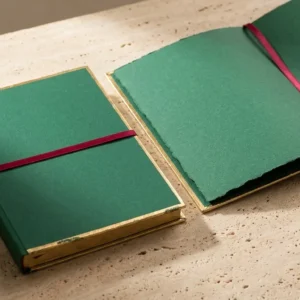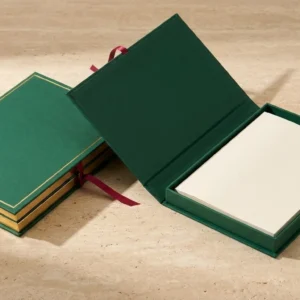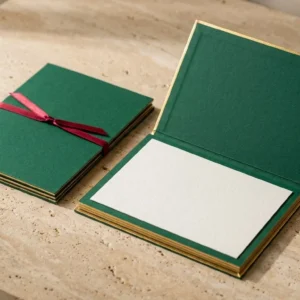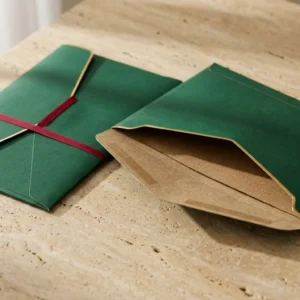

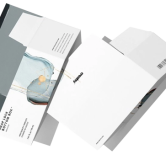
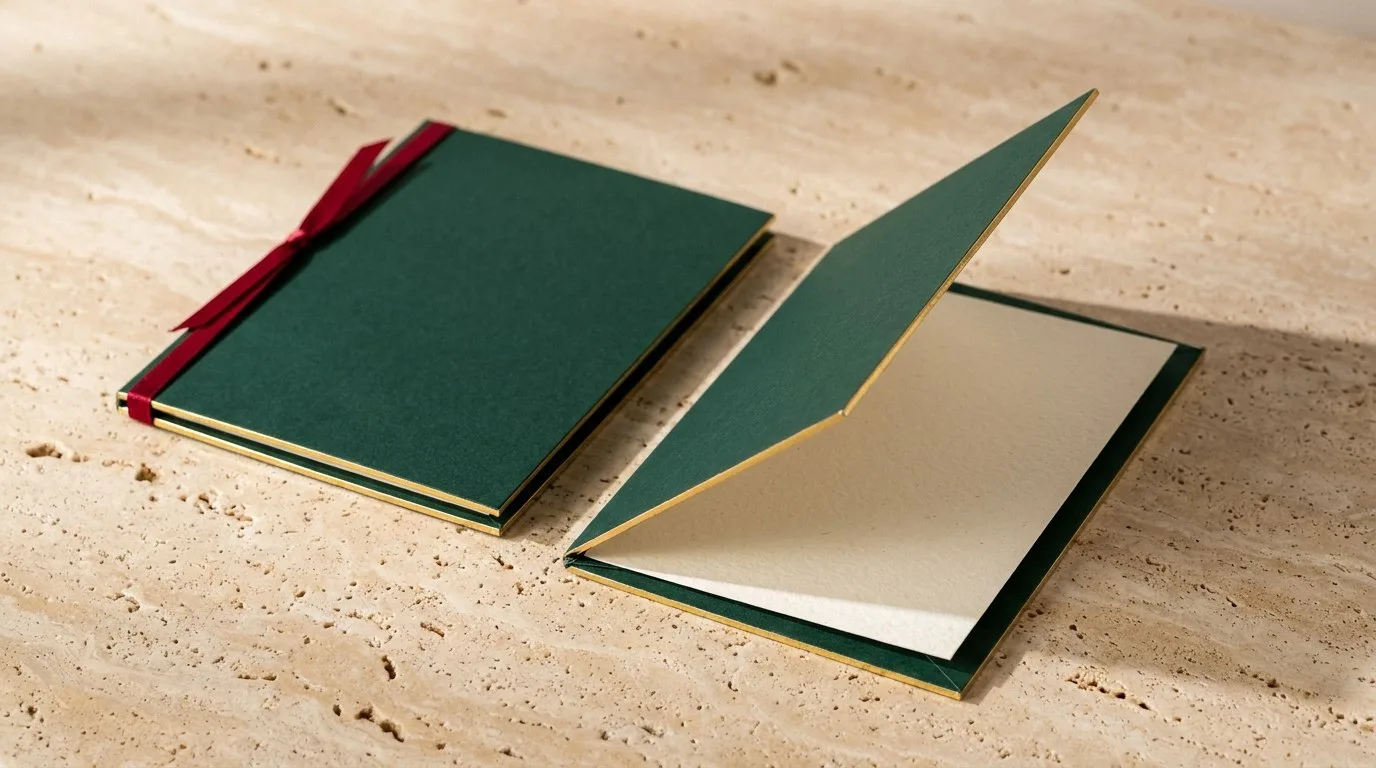


Custom printed greeting cards are folded cards on heavy cover stock, printed on the outside, the inside or both, and TBPB makes them to your artwork with no minimum order. Bring a written quote for the same specs and we will beat it.
Standard sizes and the envelopes that fit them
Two sizes cover almost every use. A2 folds to 4.25 by 5.5 inches and fits an A2 envelope, which is the standard for thank-you notes, invitations and short messages. A7 folds to 5 by 7 inches, fits an A7 envelope, and gives you room for a full illustration or a longer message. Custom sizes are possible, but they need custom envelopes, and that is where costs and lead times grow. Unless the design truly needs an odd format, a standard size saves headaches later. If you are mailing in volume, check how your envelope and card combination weighs before you commit.
Stock, print and finish
- Stock: heavy cover stock, typically 14 to 16 point, folded and scored so the spine stays crisp.
- Print: full color CMYK, or a matched Pantone color for a logo that must be exact.
- Coating: matte or gloss aqueous coating, or matte lamination for a smoother feel.
- Specialty: spot UV, foil stamping and embossing on a logo or illustration.
- Inside: printed message, printed border or left blank for handwriting.
Cards for orders, retail and mailings
A card tucked into a shipment is a simple way to make a parcel feel personal, and it is often what customers photograph. Retailers use A2 and A7 cards in sets with envelopes. Event teams print them for launches, openings and holiday mailings. If your card is a simple thank-you note, our custom thank-you cards may fit better. For something flat that goes straight in the post without an envelope, see custom postcards, and for the sleeves and folders that hold card sets, browse custom presentation folders.
Where cards go wrong
The most common problem is a heavy gloss coating on the inside, where people want to write. Ink beads on it, and the card ends up unusable for its main purpose. The second is artwork that runs too close to the fold or the trim edge, which looks off center once the card is cut. Keep text and logos inside a safe margin, leave the fold clear, and ask us to check your file. We will flag anything that risks being clipped before it prints. Our mailing envelopes are sized to match standard cards.
Proofing before you print a stack
Screens lie about color, and paper changes it again. A deep navy can turn muddy on uncoated stock and a bright orange can dull on matte lamination. Because there is no minimum order, the sensible move is to print one or two cards first, hold them next to your packaging or your website, and only then approve the run. Fold one, write on it, slide it into the envelope, and check how it feels coming out. Five minutes with a real card catches problems that no on-screen proof can, and it is far cheaper to adjust a single sample than a full mailing.
Send your card size, quantity and artwork, even for a single proof, and we will confirm the dieline and quote it.
Frequently asked questions
What size should custom greeting cards be?
A2 (4.25 by 5.5 inches folded) and A7 (5 by 7 inches folded) cover most uses, because standard envelopes exist for both. Pick A2 for short notes and thank-yous, and A7 when you want a bigger image or a longer message.
Is there a minimum order for printed greeting cards?
No. There is no minimum order, so you can print a single card to check color and stock, a small batch for an event, or a large run for a mailing. Send your size and quantity and we will quote it.
What paper is best for greeting cards?
Folded cards are usually printed on heavy cover stock, around 14 to 16 point. Uncoated stock feels natural and takes pen ink easily. Coated or laminated stock gives deeper color but can repel ink, so choose based on whether people will write inside.
Can I print on the inside as well as the front?
Yes. Cards can be printed on the front, inside, back or all three. Many brands print a short message or a logo on the inside left and leave the right side blank for a handwritten note. Send your artwork and we will mark the fold lines.
Do the cards come with envelopes?
We can supply matching envelopes sized to your card, so an A2 card gets an A2 envelope. Tell us whether you want them plain, in a color or printed with a return address, and we will quote the card and envelope together.
Can I add foil, spot UV or embossing?
Yes. Foil stamping, spot UV and embossing work well on a logo or a single graphic element. They are best used sparingly. Keep them away from the areas where people will write, since raised or coated areas can make a pen skip.
More Custom Presentation Folders
See the full Custom Presentation Folders range, or explore related options with no minimum order and our best-price guarantee: