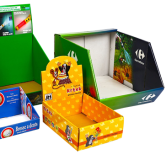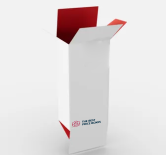
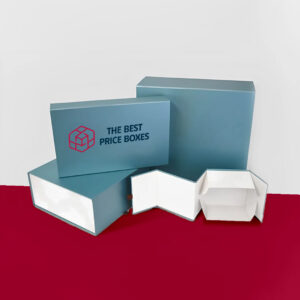
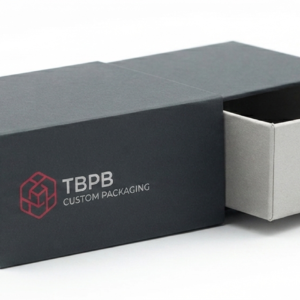
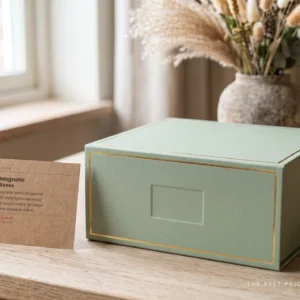

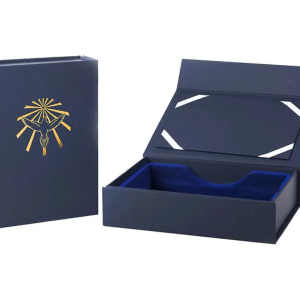

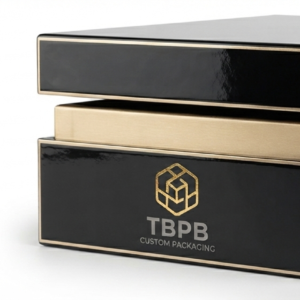

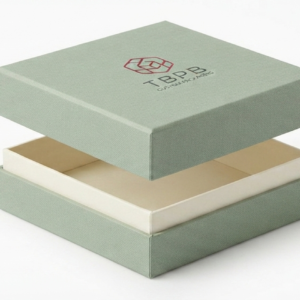
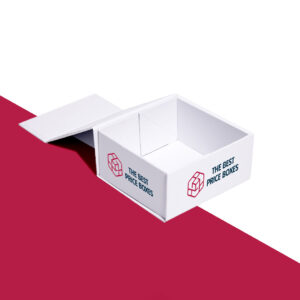
A folding carton is one printed sheet, die cut and creased, that folds into a box and ships flat. A rigid box is built: a chipboard or greyboard core cut into panels, assembled into a shell that does not collapse, then wrapped in a separate printed paper. The printing happens on the wrap, never on the board.
That construction is why a rigid box feels the way it does when someone lifts the lid, and it is also why almost every specification mistake on this product comes from treating it like a carton.
This is the one that catches people out. On a folding carton the wall is a fraction of a millimeter and the difference between inside and outside barely matters. On a rigid box the wall is board plus wrap on every side, so a box built to your external measurements comes back several millimeters tighter on the inside than you expected. On a snug product with an insert, that is the difference between a lid that closes and one that does not.
Measure the product, tell us the internal dimensions you need, and let the outside land where it lands.
Rigid box board typically runs somewhere between about one and three millimeters. Thicker board reads as more valuable in the hand, takes an embossing better and survives a drop. It also adds weight to every unit you ship and bulk to every pallet. If the box is going into a retail display, weight in the hand is worth paying for. If it is going in the mail at volume, that weight is a recurring cost on every order.
| Two-piece lid and base | The classic. Lid lifts clear of the base. Simple, strong, and the easiest to get right the first time. |
|---|---|
| Shoulder neck | Three pieces, with an inner collar that the lid seats against. The lid comes off with a slow draw rather than a pop, which is the effect luxury brands are usually paying for. |
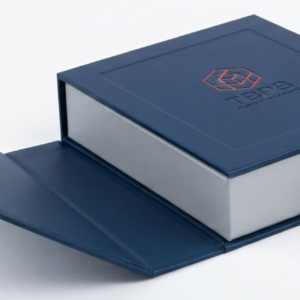
| Book style with magnetic closure | Hinged lid that opens like a cover and snaps shut. Best for anything presented open, since the lid stays attached and out of the way. |
| Drawer and sleeve | An inner tray that slides out of an outer sleeve. Good for sets and multi-part products, and it holds contents in place while it opens. |
| Collapsible rigid | Folds flat for shipping and storage, then locks into a rigid shell at the destination. |
A standard rigid box cannot be flat packed. It leaves the factory assembled, which means every carton you receive is mostly air, and you pay freight on that air and then store it. For a small run nobody notices. At volume, or on an import route, it becomes the largest hidden line in the job.
Collapsible rigid boxes fold flat and lock up on assembly. They give up a little of the solid feel of a fully glued shell, and they save a great deal of space between our factory and your shelf. If you are ordering in quantity and storage is tight, ask about them before you settle on a structure.
The wrap decides the look. Coated art paper takes full-color print and photographic artwork. Uncoated and textured stocks feel better in the hand and mute the color. Specialty wraps, leatherette and cloth among them, do not take four-color print well and are usually paired with foil or a blind emboss instead.
Foil stamping, embossing, debossing, spot gloss and soft touch lamination all sit on the wrap. A soft touch finish shows fingerprints on dark colors, which is worth knowing before you approve a black box.
People buy rigid boxes for things that matter, so the inside usually needs to hold the product still. Die-cut cardboard inserts are the light option. Foam and EVA hold weight and absorb shock. Molded pulp suits a rounded product and reads as more sustainable. Tell us what is going inside and roughly what it weighs, and the insert gets designed with the box rather than after it.
Rigid boxes is the general starting point if you already know the shape you want. Two-piece boxes and shoulder neck boxes cover the lid-and-base family, with the shoulder neck version giving the slower, weightier opening. Book style rigid boxes and magnetic closure rigid boxes hinge open and stay open, which suits anything photographed or presented. Drawer boxes slide out of a sleeve and hold their contents steady while they do it.
Collapsible rigid boxes ship flat and assemble on arrival, which is the structure to look at when freight and storage are the constraint rather than the finish.
By material and finish, white rigid boxes give the cleanest base for color print and rigid kraft boxes carry a natural, uncoated look. Small rigid boxes handle jewelry, samples and anything where the box is most of the perceived value.
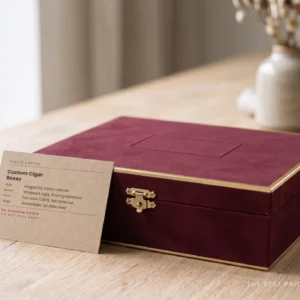
For specific uses, rigid invitation boxes hold flat stationery sets and cigar boxes are built for a heavier, humidity-sensitive product.
No minimum order, so a short run to test a structure before committing is normal here. Sizes are built to your internal dimensions rather than picked from a fixed list, design is free, samples are free, and shipping is free. Reorders run from the approved file.
Rigid boxes are assembled rather than folded, so they take longer to produce than a printed carton of the same size. Build that into your launch date rather than discovering it at the end.
A box built from cut chipboard or greyboard panels assembled into a shell that does not fold flat, then wrapped in a separate printed paper. Phone boxes, watch boxes and most gift packaging that feels solid are rigid boxes. The alternative, a folding carton, is one printed sheet creased to fold.
Standard ones do not, which is the single biggest practical difference from a folding carton. They arrive assembled and take up the space they occupy. Collapsible rigid boxes are the exception and are worth asking about if you are ordering in volume or short on storage.
Thicker board feels more substantial and protects better; thinner board ships lighter and stacks tighter. If the box sits in a retail environment where people pick it up, weight is part of what you are selling. If it goes straight into a mailer at volume, every gram is a recurring cost. Tell us which of the two your box is for and we will recommend rather than guess.
Yes, on the wrap. Coated art paper takes photographic artwork well. Textured and specialty wraps do not, and are normally decorated with foil, embossing or a blind deboss instead. If your artwork is photographic, say so early, because it rules some wraps out.
The board and paper are, and a plain paper-wrapped rigid box goes in with paper recycling in most places. Foil stamping, laminated wraps, magnets and foam inserts all complicate that. If a clean recycling story matters to your brand, it is a decision to make at the finishing stage, not afterward.