



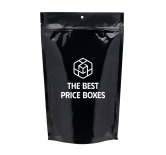
A mylar bag is a pouch made from metallized polyester film (BoPET), usually laminated to a heat-seal layer, that blocks oxygen, moisture, light, and odor far better than paper or plain plastic. The Best Price Boxes prints custom mylar bags with no minimum order and a price-beat guarantee.
What mylar actually is
Mylar began as a DuPont brand name for biaxially oriented polyester film, and people now use it as a catch-all term. A typical bag is a laminate: an outer printable polyester layer, a thin metallized or aluminum foil layer for barrier, and an inner polyethylene layer that melts under heat to seal the bag. The metal layer is what makes the pouch opaque and shiny. Clear mylar skips it, so it protects less against oxygen and light but lets the product show.
Why people choose it
Barrier is the reason. Oxygen speeds up staling, rancidity, and color loss, and moisture ruins anything crisp or powdered. Mylar slows both. Light blocking helps with coffee, supplements, and herbs. Low odor transmission is why the format is common for cannabis and strong-smelling products; see our smell-proof mylar bags. Long-term dry food storage uses the same material, often with oxygen absorbers sealed inside.
Thickness, shape, and closure
Film thickness is quoted in mils, where one mil is 0.001 inch. Thin bags around 3 mil feel light and suit single-serve packs, while thicker laminates around 4 to 5 mil feel sturdier and puncture less. Standard formats include flat pouches, stand-up pouches with a gusseted base, and bags with windows. A zipper adds reclosing; a heat seal makes the closure tamper-evident. Browse stand-up mylar bags, mylar bags with windows, or the whole mylar bags category.
Where mylar is the wrong choice
It does not breathe, so it is poor for fresh produce or anything that needs airflow. It is also not microwave-safe because of the metal layer. A single-material paper bag may be easier to recycle, since laminates are hard to separate. If you sell regulated goods such as edibles, supplements, or cannabis, you own the label copy and any child-resistant requirements; we print the artwork you supply. Ask us to confirm child-resistant options for your spec. See also child-resistant mylar bags.
Specs at a glance
| Spec | Detail |
|---|---|
| Minimum order | None |
| Material | Polyester laminate with heat-seal layer |
| Barrier | Oxygen, moisture, light, odor |
| Formats | Flat, stand-up, window, zipper |
| Size and thickness | Custom, confirm on quote |
Ordering
Send the product, the fill weight or volume, the quantity (one is fine), and your artwork. We return a quote. Have a written quote already for the same specs? Send it and we will beat it. Start from mylar packaging bags or the request a quote page.
Questions buyers ask
Is mylar the same as aluminum foil?
No. Mylar is polyester film, often coated with a thin layer of aluminum vapor to make it metallic. Foil bags use a real aluminum layer. Both block light and oxygen well, and the difference matters mainly for puncture resistance and cost.
Are mylar bags food safe?
Food-grade mylar is widely used for dry food storage, but food-contact compliance depends on the specific film and inner layer. Ask us to confirm the structure for your product, and check your own labeling rules.
Can I order a small run of custom mylar bags?
Yes. There is no minimum order, so a short test run is quoted like any other. Send the size, product, and quantity.
How do I seal a mylar bag?
Heat. An impulse sealer, a hair straightener, or a clothes iron on a flat surface will fuse the inner layer. Seal across a clean edge with no product in the seam for a tight closure.