






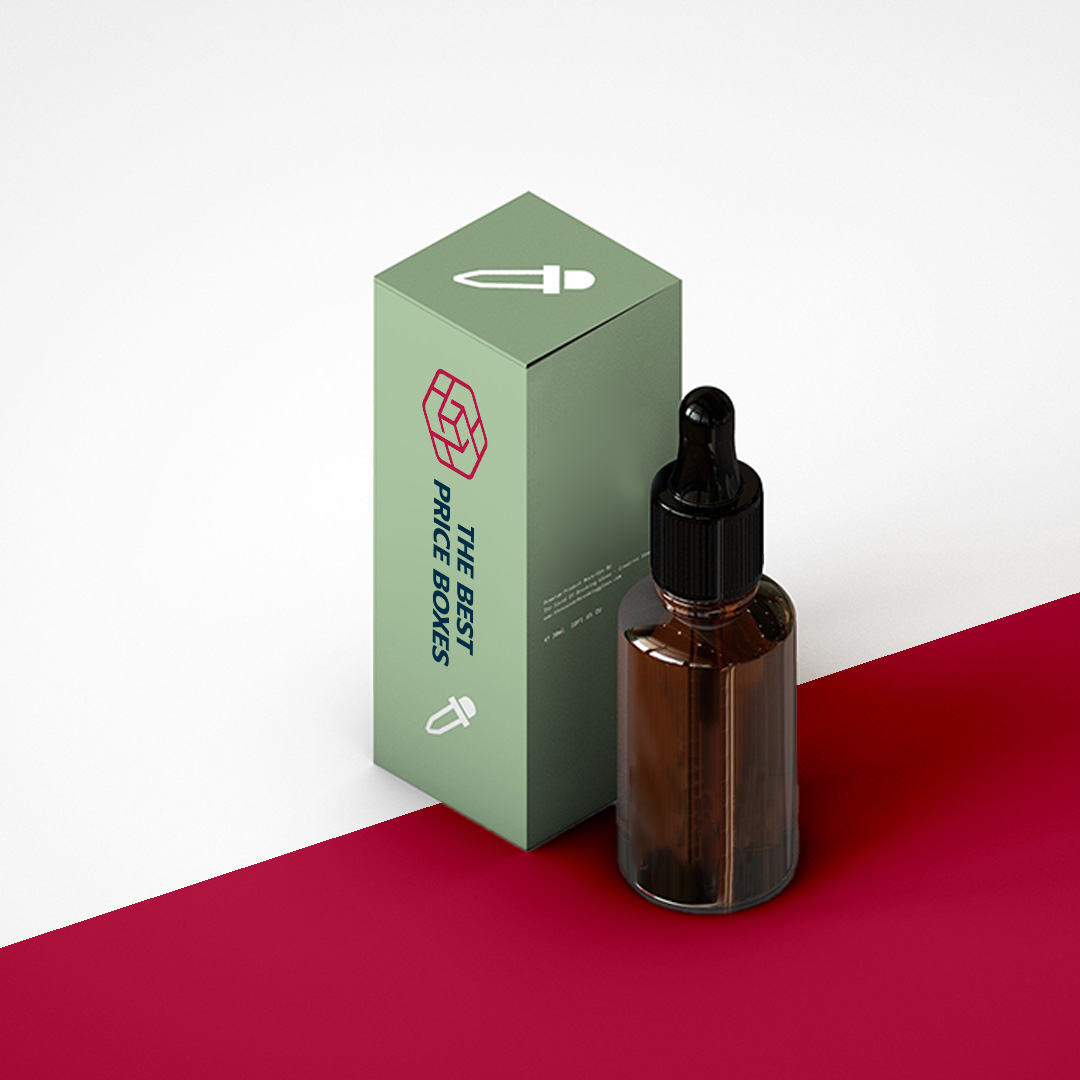
Thirty millilitres is a fill volume. It is not a size. Two bottles that both hold 30 ml can differ by nearly an inch and a half in height, and a carton cut to fit one of them will not close on the other. That is a painless thing to learn on a sample and an expensive thing to learn on a run of ten thousand.
So this page does not describe 30 ml bottle boxes. It gives the measured dimensions of the bottles people actually put in them, taken from suppliers who publish specifications, and shows how the box is derived from the bottle. Where the published figures run out, it says so rather than guessing.
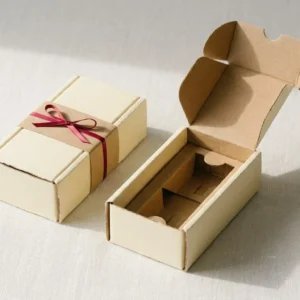
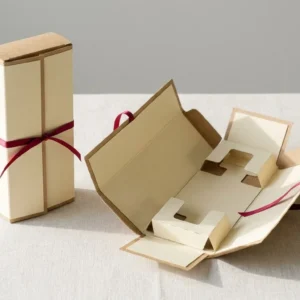
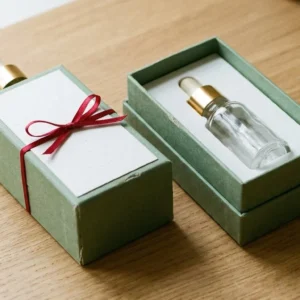
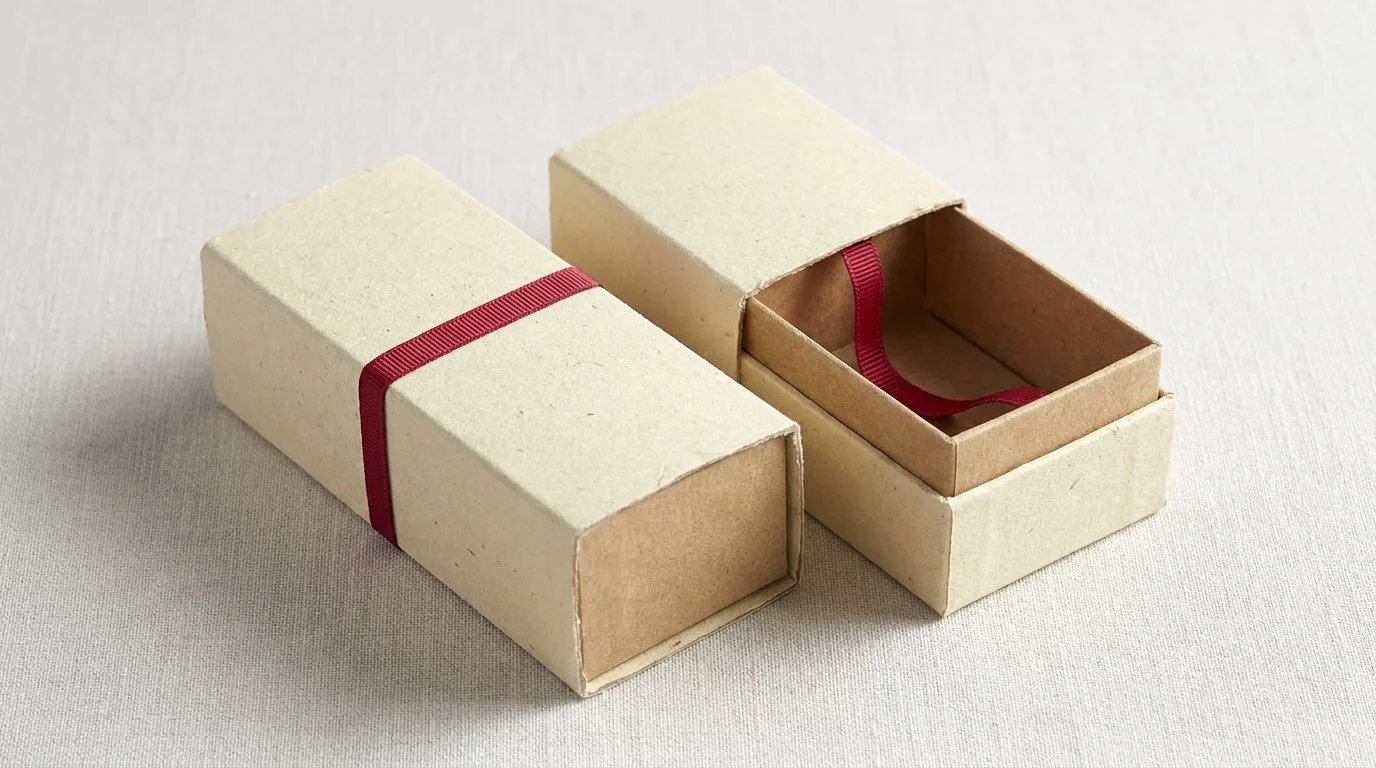
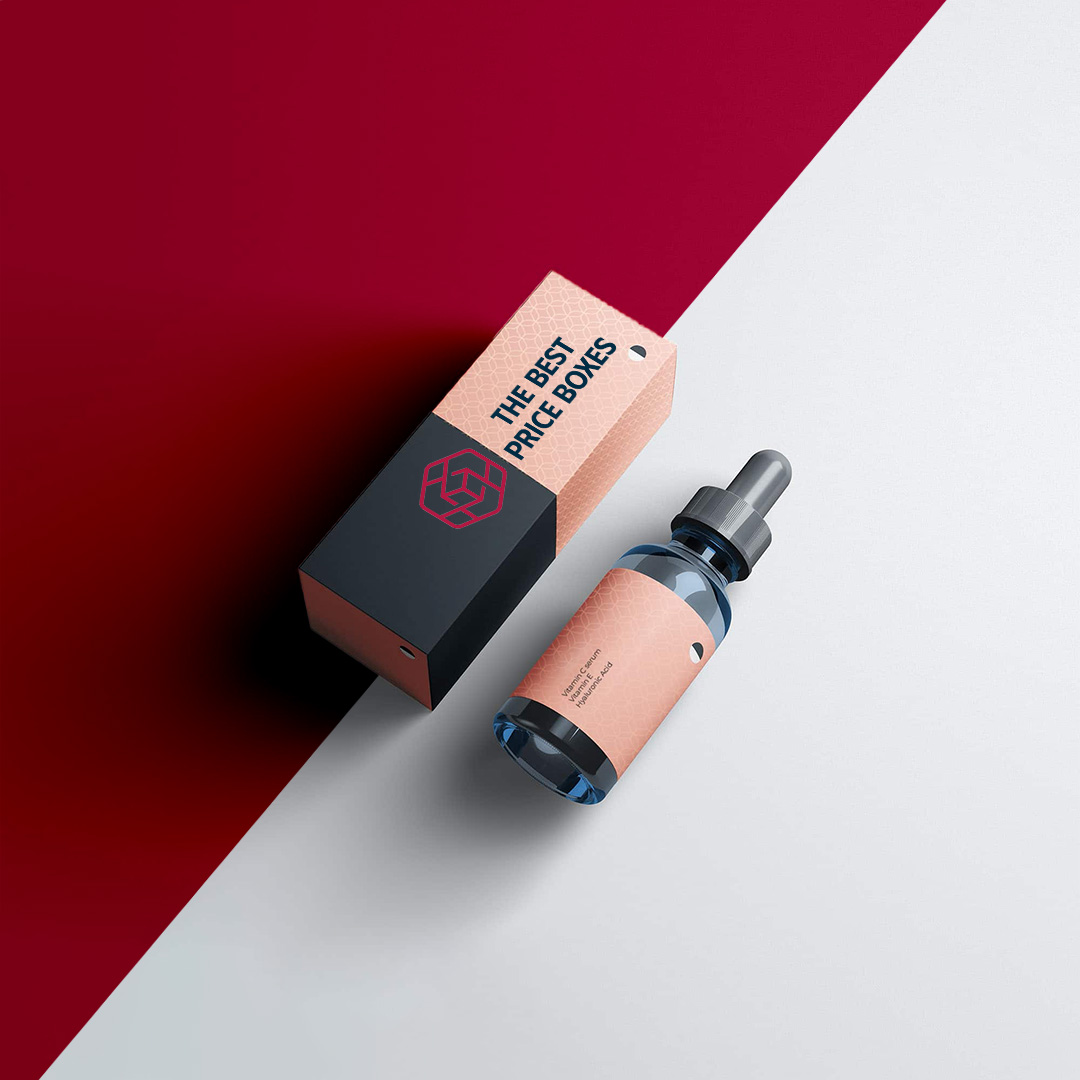
We build 30 ml bottle boxes as straight tuck end, reverse tuck end and two piece rigid cartons, in paperboard, with a fitted insert when the bottle has to stay upright. No minimum order, so a brand can package a 30 ml line without committing to a bulk run.
What a 30 ml bottle actually measures
Three formats cover almost everything sold in 30 ml: the glass Boston round, the glass dropper bottle, and the plastic airless pump. Here is what four suppliers publish for the glass bodies, all of them selling what the trade calls a 1 oz or 30 ml bottle.
| Supplier and bottle | Height | Body diameter | Neck finish |
|---|---|---|---|
| UPC Bottles, amber Boston round | 78.58 mm | 32.8 mm | 20-400 |
| Neville and More, clear dropper bottle | 78.8 mm | 33.0 mm | DIN 18 |
| Burch Bottle, clear Boston round | 3.11 in (79.0 mm) | 1.27 in (32.3 mm) | 20-400 |
| Fillmore Container, clear Boston round | 3.13 in (79.5 mm) | 1.19 in (30.2 mm) | 20-400 |
Now the airless pump, which is where the format stops being comparable at all.
| Supplier and bottle | Height | Diameter | Neck |
|---|---|---|---|
| SKS Bottle, white PP mini airless pump | 101 mm (3.98 in) | 31 mm (1.22 in) | not published |
| TYH Container AIRA30 airless pump | 118.5 mm | 31.6 mm | 18/415 |
Read those two tables together and the number that matters falls out. The shortest 30 ml bottle in the set is 78.58 mm. The tallest is 118.5 mm. That is a range of 39.9 mm, just over an inch and a half, for the same stated volume. A carton built around the first one is not a carton for the second, and no amount of print quality fixes that.
Height is consistent. Diameter is not.
Within the glass group the heights are remarkably close. Four suppliers, four bottles, 78.58 mm to 79.50 mm. That is a spread of 0.92 mm, under a millimetre, and it is small enough that you can design a cavity height for a bare glass 30 ml body before you have chosen a supplier.
Diameter behaves differently. The same four bottles run from 30.2 mm to 33.0 mm, a spread of 2.77 mm. That is three times the height variation, and it is enough to decide whether a bottle slides into a cavity or has to be forced. Two brands can both order a 1 oz amber Boston round, receive bottles that differ by nearly 3 mm across the body, and only find out when one of them tries the other’s carton.
The practical consequence: if you are going to measure one thing before ordering, measure the diameter. Height you can predict from the format. Diameter you have to check on the bottle in your hand.
One honest limitation. None of the four glass suppliers above publishes a dimensional tolerance alongside the figure. Glass is formed in a mold and molded glass varies, so the real number for your bottle sits somewhere around the published one rather than exactly on it. If your bottle supplier will give you a tolerance, ask for it, and design to the top of the range rather than the middle.
The closure is the part nobody publishes
Every dimension in the first table is a bare bottle. The bottle you ship has a cap on it.
We went looking for the height of a standard 20-400 phenolic screw cap, the most ordinary closure there is for a 1 oz Boston round, across several closure suppliers. Not one of them published it. They publish the neck finish, the liner, the material and the color. The height is simply not there. A dropper assembly is worse, because the bulb sits above the collar and the collar height varies by design.
This is why we ask for a capped bottle rather than a bottle specification. The assembled height of a glass 30 ml bottle with its closure cannot be calculated from published data. It has to be measured. If you cannot send a sample, measure the capped bottle from the base to the highest point of the cap and send that figure, not the bottle height from the supplier’s page.
Airless pumps are the exception. Both figures in the second table are for the assembled bottle with pump and overcap, which is why they are so much taller than the glass. If you are packing an airless pump, the published number is usable as it stands.
How we get from a bottle to a cavity
The cavity is the bottle plus clearance. Clearance is what lets a person get the bottle out without a fight and lets the tuck flap close without bowing the panel.
For a plain tuck carton around a single bottle we work to 2 mm to 4 mm total across each horizontal dimension, meaning 1 mm to 2 mm per side, and 2 mm to 3 mm above the capped height. Softer, thinner board wants the upper end. A rigid two piece box wants the upper end as well, because the lid has to travel down over the base without binding.
Worked through on the largest glass bottle in the table, the 33.0 mm dropper body:
| Total clearance | Internal width and depth | External at 18 pt board |
|---|---|---|
| 2 mm | 35.0 mm (1.38 in) | 35.9 mm (1.41 in) |
| 3 mm | 36.0 mm (1.42 in) | 36.9 mm (1.45 in) |
| 4 mm | 37.0 mm (1.46 in) | 37.9 mm (1.49 in) |
If the bottle is not round in plan, or if you want it to sit in a fitted insert rather than float, the arithmetic changes, because the insert takes its own thickness out of the cavity on each side. An insert cut from the same 18 pt board removes roughly 0.9 mm across the width before the bottle goes anywhere near it.
Internal or external, and why the difference is not trivial
Box dimensions are quoted two ways and the two are not interchangeable. Internal is the cavity the product sits in. External is the outside of the finished carton, which is the cavity plus one board thickness on each side.
Paperboard thickness is measured in points, and a point is one thousandth of an inch. So 18 pt board is 0.018 in, which is 0.457 mm. A tuck carton has one thickness of board on each side of the cavity, so external exceeds internal by 0.91 mm across the width at 18 pt, and by 1.22 mm at 24 pt.
Under a millimetre sounds like nothing. On a dimension of 33 mm it is about three percent, and it is the same order of magnitude as the clearance the bottle needs. A specification of 1.3 inches that turns out to mean external, on board of any weight, produces a cavity too small for the bottle it was quoted for. This is why every dimension we put on a drawing is labelled, and why a supplier who quotes you a size without saying which one it is has not actually told you anything.
The industry’s standard 30 ml box, checked against real bottles
Search for 30 ml bottle box dimensions and you will find a widely repeated set of figures: a width and depth of 1.3 to 1.6 inches, a height of 4 to 4.8 inches, with 1.5 by 1.5 by 4.5 inches given as the standard. The sources that publish this do not say whether those are internal or external, and they do not name the bottle.
Held against the measured bottles above, three of those numbers fail.
- 1.3 inches is 33.02 mm. The dropper bottle in the first table is 33.0 mm across the body. That leaves 0.02 mm of total clearance, which is not clearance, it is an interference fit. And if the 1.3 inches was meant as an external dimension, the cavity is about 32.1 mm at 18 pt board and the bottle does not go in at all.
- 4 inches is 101.6 mm. The SKS airless pump is 101 mm assembled. Total clearance 0.6 mm, and again, read as external it becomes a cavity of about 100.7 mm and the bottle is taller than the box.
- 4.5 inches, the stated standard, is 114.3 mm. The TYH airless pump is 118.5 mm. It is 4.2 mm too tall for the standard box whichever way you read the dimension.
The upper end of the published range is fine. 1.5 by 1.5 inches gives 5.1 mm of total clearance on a 33.0 mm bottle, which is 2.55 mm per side, comfortable for a tuck carton. The problem is that a range presented without a bottle and without saying internal or external gives a buyer no way to tell the safe end from the unsafe end. That is not a small editorial omission. It is the whole difference between a box that works and a pallet of cartons you cannot use.
Board grade for a 30 ml carton
A filled 30 ml glass bottle with a closure is a low weight, high value item in a small footprint. The board is not carrying much load. It is carrying the print, the edge crispness and the feel in the hand.
- 16 pt to 18 pt. Light for a carton this narrow. Usable for an airless pump in plastic, and for outer cartons that go straight into a shipper. On a tall, narrow footprint it will bow if the panel is unsupported.
- 18 pt to 24 pt SBS, one side coated. The usual choice. Enough stiffness that a 4 inch tall panel stays flat, a clean white surface for offset print, and a tuck flap that holds its crease.
- 24 pt and above, or a rigid two piece box. For glass droppers and anything positioned as premium, where the box is expected to feel substantial and to survive being opened and closed repeatedly.
The taller the carton relative to its width, the more the board grade matters. A 33 mm wide box standing 100 mm tall is a slender shape, and slender shapes bow. If you are going up towards the top of the height range, go up a board weight with it.
What goes wrong when the size is wrong
Undersized by a millimetre or two on the width, the bottle has to be pushed in. On a filling line that is a rejected unit or a slowed line. In a customer’s hands it is a bottle that will not come out cleanly, and with a glass dropper it is a genuine breakage risk while they are pulling at it.
Undersized on the height is worse, because the tuck flap will not seat. It stands proud, the carton looks unfinished on the shelf, and in transit the flap works itself open.
Oversized is the quieter failure. The bottle moves. On a dropper bottle that means the glass pipette rattles against the bulb and the collar, and over a few hundred miles of van floor that is how droppers arrive loose or leaking. It also reads as cheap, because a customer opening a box can feel the difference between a bottle that is held and a bottle that is rolling around. If the cavity has to be generous for a production reason, that is what the fitted insert is for.
The failure that costs the most is none of these. It is ordering a carton against a bottle specification from a website, receiving bottles from a different supplier at the other end of that 2.77 mm diameter spread, and discovering the mismatch after both the bottles and the boxes have been paid for.
What to send us
A sample bottle, capped, is best. We measure it and you never have to think about any of the above.
If a sample is not practical, send these four things and we can work from them.
- The widest measurement across the bottle body, taken on the bottle itself rather than from a supplier page.
- The total height from the base to the highest point of the closure, with the cap on.
- The format: Boston round, dropper with bulb, airless pump, or something else.
- Whether the bottle should sit in a fitted insert or directly in the carton.
We come back with internal and external dimensions, both labelled, and a board recommendation for the shape. If your bottle supplier has published a tolerance, include it and we will design to the top of it.
Free design services, free samples and free shipping apply here as they do across the range, and there is no minimum order, so the first run can be small enough to test the fit before you commit to volume. If your product is a dropper specifically, our dropper bottle boxes page covers the pipette clearance question in more detail, and bottle product inserts covers the insert side.
Common questions about 30 ml bottle box sizing
How big is a 30 ml bottle box?
It depends entirely on which 30 ml bottle. A glass Boston round body measures about 78.6 mm to 79.5 mm tall and 30.2 mm to 33.0 mm across, before the cap. A 30 ml airless pump measures 101 mm to 118.5 mm tall assembled. Add 2 mm to 4 mm total clearance across the width and 2 mm to 3 mm above the capped height to get the cavity.
What are the dimensions of a 30 ml bottle?
Across four suppliers of nominally identical 30 ml glass bottles, heights ran 78.58 mm to 79.50 mm and body diameters ran 30.2 mm to 33.0 mm. Height is consistent within about a millimetre. Diameter varies by nearly 3 mm, so measure the diameter on the bottle you are actually using.
Is 1.5 by 1.5 by 4.5 inches a safe standard size for a 30 ml box?
The width is fine. 1.5 inches is 38.1 mm, which gives 5.1 mm of total clearance on a 33.0 mm bottle. The height is not universally safe. 4.5 inches is 114.3 mm, and a 30 ml airless pump measured at 118.5 mm assembled will not fit it. Check the height against your own capped bottle.
Are your box dimensions internal or external?
Both, and every dimension we send is labelled. External exceeds internal by one board thickness on each side, which is 0.91 mm across the width at 18 pt board and 1.22 mm at 24 pt. On a 33 mm dimension that is roughly three percent, enough to decide whether the bottle fits.
Will one box fit both a dropper bottle and an airless pump?
Usually not. The shortest 30 ml bottle we measured is 78.58 mm and the tallest is 118.5 mm, a difference of nearly 40 mm. A carton sized for a glass dropper will not close on an airless pump. If a range uses both formats, expect two cartons or one carton sized for the taller bottle with an insert for the shorter.
Do I need to send a sample bottle?
It is the most reliable option, because no closure supplier we checked publishes the height of a standard 20-400 cap, so the assembled height of a capped glass bottle cannot be calculated from published data. If a sample is not practical, measure the capped bottle yourself, base to the top of the cap, and send that with the widest body measurement.
What board weight should a 30 ml bottle box use?
18 pt to 24 pt SBS with one side coated covers most cases. It is stiff enough that a tall narrow panel stays flat and takes offset print cleanly. Go to 24 pt or a rigid two piece box for glass droppers and premium positioning, and go up a weight if the carton is near the top of the height range, because tall narrow shapes bow.
What goes wrong if the box is slightly too big?
The bottle moves. On a dropper bottle the glass pipette knocks against the collar in transit, which is how droppers arrive loose or leaking. It also feels cheap on opening. If the cavity has to be generous for a production reason, a fitted paperboard insert holds the bottle without changing the carton.
More Custom Bottle boxes
See the full Custom Bottle boxes range, or explore related options with no minimum order and our best-price guarantee: